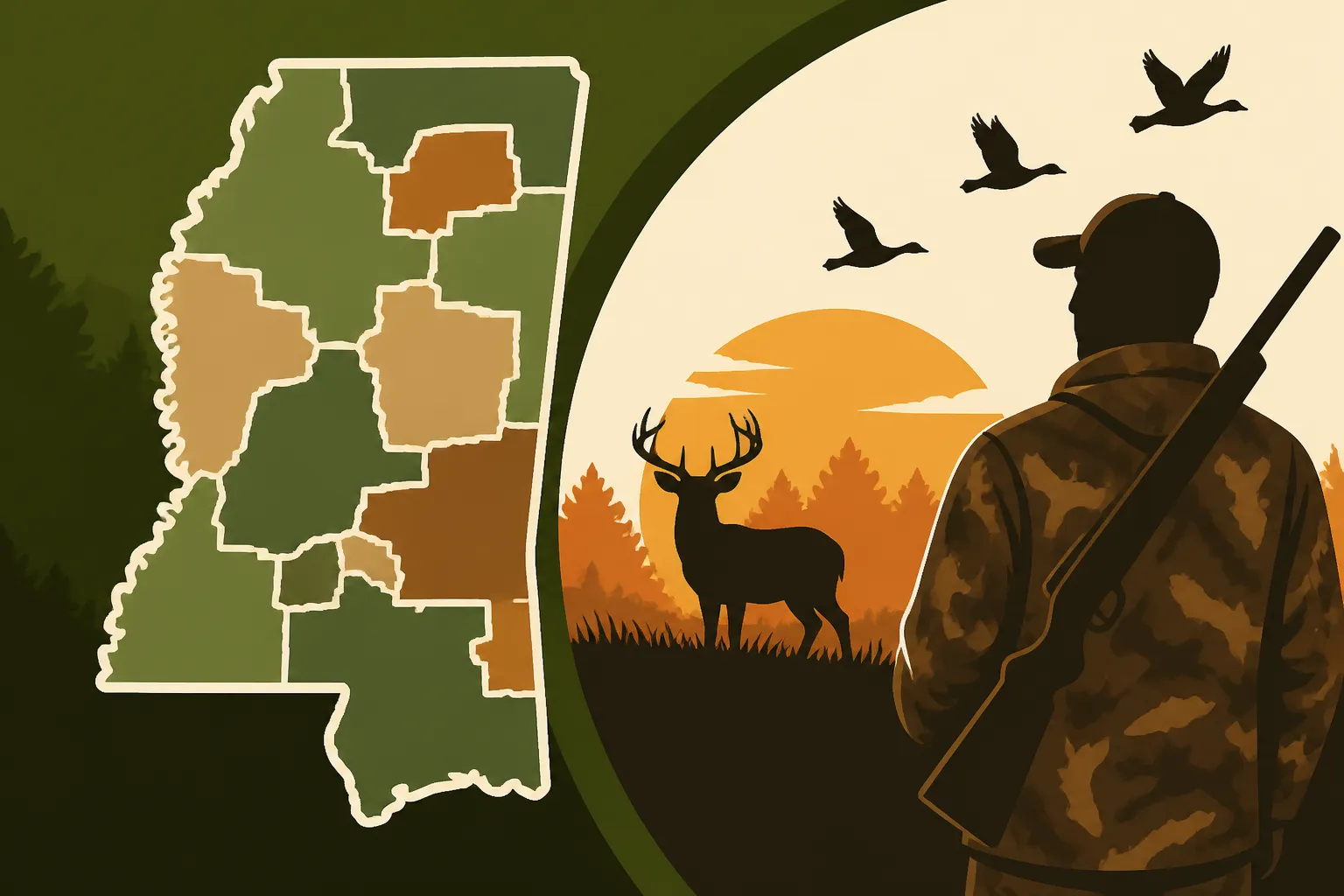
Mississippi Hunting Club Territory Sizes
One of the biggest head-scratchers when you're trying to join a hunting club in Mississippi is figuring out if the club's territory size is actually a good fit for you. It's not just about how many acres they have on paper; it's about what that acreage feels like when you're out there, what kind of hunting pressure it can handle, and whether it aligns with your personal hunting style. This guide will walk you through everything you need to know about Mississippi hunting club territory sizes, from what influences them to how to pick the perfect fit.
Understanding Mississippi Hunting Club Territory
When folks talk about a hunting club's "territory size" in Mississippi, they're referring to the total acreage of land that the club has exclusive hunting rights to. This isn't just a number; it's the canvas on which all the club's hunting activities, wildlife management, and social dynamics play out. It dictates how many hunters can comfortably be in the woods at once, the potential for trophy management, and even the type of game you're likely to encounter. Understanding this foundation is crucial before you even start looking at dues or rules.
What "Territory Size" Really Means for a Hunter
For a hunter, territory size translates directly into elbow room and opportunity. On a smaller tract, you might run into other members more frequently, requiring more coordination and communication to avoid conflicts, or to prevent you from feeling like you're hunting someone else's stand. On the flip side, a vast territory can offer incredible solitude and diverse habitat, but it might also mean more scouting work to pinpoint game, or longer drives to reach your preferred spots. It's a balance between how much ground you like to cover, how much interaction you're comfortable with, and what kind of hunting experience you're chasing. Are you a still-hunter who craves quiet mornings, or do you enjoy the camaraderie of a deer drive with a few buddies? The answer to that question will heavily influence your ideal territory size.
Lease Agreements and Land Ownership Structures
The land a hunting club uses typically comes from either private landowners through a lease agreement or, less commonly, from larger timber companies or even state-managed land within specific programs. Lease agreements are the bedrock of most Mississippi hunting clubs, defining the exact boundaries, duration of access, and any specific stipulations from the landowner. A well-defined lease with clear boundaries is paramount, as it prevents accidental trespassing and ensures the club members know exactly where they can and cannot hunt. Sometimes, a club might piece together several smaller leases from different landowners to create a larger, more contiguous territory. This can be fantastic for diversity but might come with varying rules or access points for each tract. It’s also worth noting that some clubs may own their land outright, offering maximum control and long-term stability, but often at a much higher entry cost for members. Understanding these underlying structures helps you appreciate the true value and permanence of a club's hunting grounds.
Factors Shaping Club Acreage in the Magnolia State
Mississippi is a state with incredibly diverse landscapes, and these natural variations play a huge role in determining how large a hunting club's territory needs to be, or even can be. From the rich bottomlands of the Delta to the rolling hills and dense pine forests, each region presents unique opportunities and challenges that influence land availability and management strategies. The type of game you're after and the overall goals of the club, whether it's managing for trophy bucks or just having a good time chasing small game, also significantly impact territory size.
Regional Differences: Delta vs. Hills vs. Piney Woods
The Mississippi Delta, with its vast agricultural fields, flooded timber, and fertile soils, often lends itself to larger hunting leases. Here, land might be less fragmented by ownership, and the habitat, while productive, can require more acreage to hold a healthy deer population given the expansive nature of the terrain. Delta clubs often have access to incredible waterfowl hunting as well, which can require huge tracts of land to manage water levels and planting.
In contrast, the Hills Unit and the Piney Woods regions are characterized by more varied topography – dense hardwoods, pine plantations, and smaller, often privately owned parcels. Here, clubs might consist of several smaller, interconnected tracts, or focus on a single, strategically important piece of land like a ridge system or creek bottom. Land fragmentation can make assembling huge contiguous blocks more challenging, so clubs might make the most of smaller, well-managed areas. Understanding Mississippi's Four Deer Management Units helps paint a clearer picture of these regional distinctions and how they might affect club territory.
Game Species and Management Goals
The primary game species a club focuses on will directly influence its ideal territory size. If a club is primarily chasing white-tailed deer and striving for quality deer management, they'll often seek larger tracts of land to implement specific harvest strategies, manage food plots, and provide sanctuary areas. A bigger territory allows for a better buck-to-doe ratio and gives bucks more room to mature, reducing pressure. You might even find some clubs that specialize in Hunting Mississippi's Year-Round Feral Hogs, which benefit from large areas for trapping and pursuit.
For clubs focused on smaller game like squirrel, rabbit, or dove, the territory size might be less critical than the diversity of habitat within that territory. A few hundred acres with a mix of hardwoods, brushy fencerows, and open fields can be fantastic for small game, whereas the same acreage might feel cramped for serious deer hunting. Waterfowl clubs, particularly those managing flooded timber or dedicated impoundments, often require significant acreage to create and maintain their prime duck habitats. Ultimately, a club's management goals, whether they're aiming for a certain caliber of deer or a consistent harvest of various species, will inform their territory requirements.
Club Membership and Financial Considerations
The number of members a hunting club intends to have, and their collective financial capacity, are major drivers of territory size. A smaller group of dedicated hunters might pool resources to lease a substantial tract, ensuring ample space per member. Conversely, a larger club might opt for a more extensive lease to accommodate more hunters, spreading the cost but potentially increasing hunting pressure per acre.
Leasing prime hunting land in Mississippi isn't cheap, and the cost per acre can vary wildly depending on location, habitat quality, and landowner demand. For many clubs, the territory size is a direct reflection of what they can collectively afford. Mississippi Hunting Lease Costs can be a significant barrier, and clubs often make careful decisions about how much land they can manage financially without overburdening their members with excessive What Mississippi Hunting Club Dues Include. A well-run club balances the desire for extensive, high-quality habitat with the practical realities of its budget and member base.
Common Territory Sizes and What to Expect
When you're sifting through potential hunting clubs in Mississippi, you'll encounter a wide range of territory sizes. Each category offers a different kind of experience, and understanding these typical ranges can help you set your expectations and find a club that truly fits your hunting style. It's not just about the number; it's about what that number means for your time in the woods.
Small, Intimate Clubs (Under 500 Acres)
These smaller clubs, often consisting of a tight-knit group of friends or family, typically lease tracts under 500 acres. On such a property, you'll likely know every nook and cranny, every ridge, and every creek crossing. The hunting experience here is often very personal and community-focused. You'll probably coordinate stand placements with other members to minimize interference, and a strong sense of camaraderie often develops. The downside can be higher hunting pressure per acre if the club has many members, potentially making deer more wary, especially during peak times like Mississippi Gun Season Opening Day. However, with proper management and limited membership, even a smaller tract can produce consistent opportunities, particularly if it's surrounded by good habitat or connects to larger tracts of unpressured land. It might also mean less travel within the property, making it ideal for those who prefer to walk less or have limited mobility.
Mid-Sized Clubs (500 to 2,000 Acres)
Mid-sized clubs, managing between 500 and 2,000 acres, strike a popular balance for many Mississippi hunters. This acreage often provides enough space for members to spread out, establish multiple stand locations, and implement more effective wildlife management strategies, such as food plots and timber stand improvement. You might have several distinct habitat types within the territory, offering diverse hunting opportunities for different species or during various phases of the season, like during Hunting the Rut in the Hills Unit.
With this size, there's usually less direct competition for specific hunting spots compared to smaller clubs, and deer often have enough room to move without constant human disturbance. These clubs can support a moderate number of members while still offering a feeling of solitude. They are often a good choice for those who want a solid deer hunting experience without the overwhelming scale or cost of a massive lease. Many clubs in the state, particularly in the Hills or Southeast Units, fall into this category, offering a sweet spot between access and elbow room.
Large Leases and Managed Properties (Over 2,000 Acres)
At the upper end of the spectrum are large leases and managed properties exceeding 2,000 acres, sometimes stretching into tens of thousands, especially in the Delta or near large timber holdings. These vast territories offer the ultimate in space, diverse habitat, and potential for exceptional wildlife management. Think sprawling bottomland hardwoods, extensive pine plantations, and numerous food plot locations. On these properties, you can often hunt for days without seeing another club member, experiencing genuine wilderness.
These large leases are ideal for clubs focused on trophy deer management, allowing ample sanctuary areas and diverse age structures within the herd. They can also support a broader range of hunting activities, from deer and turkey to hog and waterfowl. However, they come with higher costs and often require more intensive management efforts, from road maintenance to extensive scouting. Members might need to rely on mapping tools like those from onX Hunt or GoHunt extensively to navigate the vastness, especially when trying to Find Mississippi Property Lines or locate specific features. While the sheer scale can be intimidating, the rewards in terms of quality hunting and solitude can be immense.
The Hunter's Perspective: Pros and Cons of Territory Sizes
Choosing a hunting club isn't just about the rules or the cost; it's deeply personal and often comes down to the kind of experience you're seeking. The territory size directly impacts that experience, offering distinct advantages and drawbacks depending on your preferences. What works for one hunter might be a deal-breaker for another.
Benefits and Drawbacks of Smaller Tracts
Smaller hunting club territories, generally under 500 acres, offer a unique set of benefits. Often, they foster a tighter-knit community among members. You get to know the land intimately, learning every deer trail, every bedding area, and every acorn-dropping oak. This deep understanding of a property can make you an incredibly effective hunter, as you predict deer movement with precision. Communication is usually easier, and planning group hunts or workdays feels more collaborative. Plus, membership dues are typically lower, making them more accessible for many.
However, the drawbacks can be significant. Increased hunting pressure from multiple members on a limited acreage can make deer more nocturnal or push them off the property entirely, especially on heavily hunted public land fringes or during prime season dates. You might find yourself limited in your stand locations, or constantly coordinating with others to avoid encroaching on their setups. If the surrounding properties are also heavily hunted, your small tract might struggle to hold deer consistently. Recovery of a wounded animal can also be more challenging if it crosses a boundary onto unfriendly territory.
Advantages and Challenges of Expansive Leases
On the other hand, expansive leases, those covering thousands of acres, provide an entirely different hunting environment. The most obvious advantage is space – glorious, unadulterated space. You can often hunt for days without encountering another hunter, offering incredible solitude and a true wilderness feel. This allows for diverse strategies, like long still-hunts across vast timber blocks or extensive scouting to locate unpressured deer. Larger tracts also provide more diverse habitat, from hardwood bottomlands to pine thickets, giving you options regardless of the weather or time of season. They lend themselves much better to serious wildlife management, with ample room for food plots, timber stand improvements, and sanctuary areas that allow game to mature and thrive.
The challenges, however, are also considerable. Membership dues are usually significantly higher due to the sheer cost of leasing so much land. The vastness can be overwhelming; finding and patterning deer across thousands of acres requires serious scouting time, effort, and often reliance on mapping technologies like onX Hunt to navigate and pinpoint potential hot spots. More land also means more work, from road maintenance to food plot planting, which might fall on fewer members. And while solitude is a blessing, it can also mean less immediate help if you need assistance tracking a deer or retrieving a downed animal from a remote corner of the property.
Finding the Right Sized Club for Your Hunting Style
So, you've got a good handle on what territory sizes mean and the different experiences they offer. Now, how do you go about finding the club that aligns perfectly with your hunting ethos? It's not just about looking at the number of acres; it's about asking the right questions, doing your homework, and leveraging modern tools to truly understand what you're getting into.
Researching Potential Clubs and Their Acreage
When you start looking for a club, don't be afraid to ask direct questions about their territory size and how many members they have. This will give you a quick calculation of acres per hunter, a key metric for understanding potential pressure. But go beyond the numbers. Ask to see a map of the property. Inquire about the different habitat types present – are there old-growth hardwoods, pine plantations, open fields, or creek bottoms? A club that offers diverse habitat within its acreage might feel larger and provide more varied opportunities than a uniform block of timber, even if the total acreage is similar.
Also, ask about the history of the club and its management philosophy. Are they focused on quality deer management, or more on general recreation? A well-managed smaller tract might produce better hunting than a poorly managed, larger one. Don't forget to inquire about access points, internal road systems, and any special considerations for stand placement or ATV use. It's also a good idea to chat with existing members, if possible, to get their perspective on the territory and how they utilize it. Remember, Finding a Mississippi Hunting Lease is about more than just land – it's about community and shared values.
Leveraging Mapping Tools to Understand Territory
In today's hunting world, mapping apps like onX Hunt and GoHunt are indispensable for evaluating potential club territories. Before you even visit a property, you can use these tools to pull up satellite imagery and topographical maps. Look for natural funnels, pinch points, bedding areas, and water sources within the club's boundaries. Pay attention to the surrounding properties: Are they heavily developed, or are there large tracts of unpressured timber or agricultural fields nearby that could influence deer movement?
You can also use these apps to measure distances, mark potential stand locations, and even simulate walking routes to assess the accessibility of different areas. Understanding Reading Aerial Photos for Hills Unit Deer or even Finding Ground Others Walk Past on public land principles can be applied to private club land. By overlaying property lines with habitat features and topography, you can get a really clear picture of how huntable an acreage truly is. These tools help you move beyond a simple number and visualize the actual hunting potential, ensuring the club's territory size matches your expectations for diverse and productive hunting opportunities. The Using the MDWFP Map Tool can also be incredibly useful for understanding public lands nearby or connecting with state resources.
Disclaimer
This article is for general informational purposes only and does not constitute professional advice. Laws, prices and regulations vary by location and change over time. Consult a qualified professional for guidance on your specific situation.