Setting Up on a Delta Field Edge
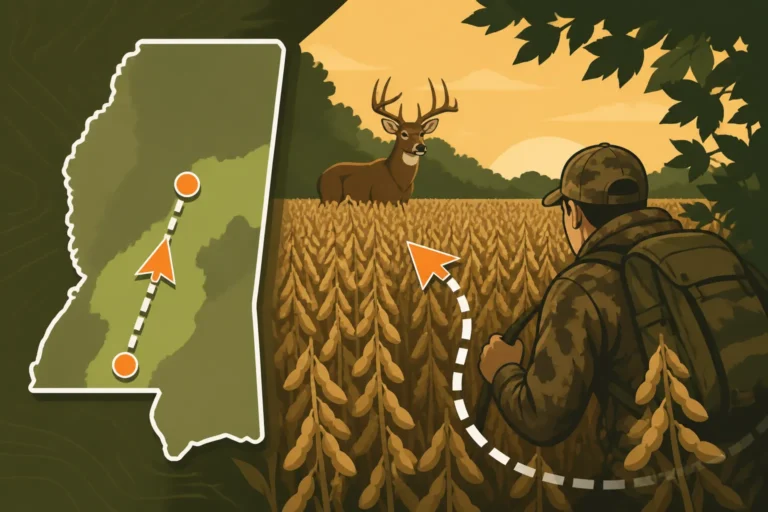
Hunting a field edge in the vast Mississippi Delta can be one of the most frustrating yet rewarding experiences a deer hunter can have. You know the deer are there, often in huge numbers, feeding on those rich agricultural crops, but figuring out where they’ll step out, when, and how to intercept them without blowing your cover? That’s the real puzzle. This guide aims to break down the complexities of setting up effectively on a Delta field edge, transforming those baffling blank stares into successful encounters.
Understanding Delta Field Edge Dynamics
The Mississippi Delta is a unique beast, with its immense agricultural fields offering abundant food sources for deer, particularly when surrounding timber is limited or less appealing. However, these open landscapes present a distinct set of challenges that hunters in more forested regions might not ever encounter. It's crucial to understand these dynamics before you even think about hanging a stand or brushing in a blind.
The Allure and Challenge of Delta Field Edges
Field edges are essentially the supermarket for deer in the Delta. They provide a readily available buffet of soybeans, corn, cotton, and other crops that deer absolutely crave, especially as the season progresses and natural browse diminishes. Bucks will cruise these edges searching for does, and does will bring their fawns out to feed. This makes them incredibly attractive hunt locations on paper. The sheer amount of deer you could see is what keeps hunters coming back, even after a string of empty sits.
However, the very thing that makes them attractive—their openness—also makes them incredibly challenging. Deer in these environments are exposed, making them highly wary of anything out of place. The wind currents can be fickle and swirling, especially near timber breaks or sloughs. Furthermore, these areas often see significant hunting pressure, meaning deer quickly learn to become nocturnal or use very specific, hard-to-access entry and exit points. It’s a constant cat-and-mouse game, and the deer usually have the home-field advantage.
Reading the Land and Deer Movement
Deer in the Delta might seem to materialize out of thin air, but their movements are rarely random. They follow patterns, dictated by food, cover, and prevailing winds. On a field edge, you’ll often find them utilizing thick fencerows, small drainage ditches, or brushy creek bottoms as natural travel corridors, moving from dense bedding cover in nearby swamps or timber blocks to the feeding areas. These linear features provide security in an otherwise exposed landscape.
Pay close attention to where these thicker strips of cover intersect or funnel down to the field. Deer prefer to enter a field where they feel safe, often just inside the tree line, or where a slight rise in topography breaks their silhouette. They'll skirt the edges, using the cover of shadows or tall grass, before committing to the open. Identifying these preferred entry and exit points is paramount. During the rut, bucks might also parallel these field edges, scent-checking for does, making these travel routes hot spots for cruising activity. Understanding the nuances of "Hunting the Rut in the Delta Unit" can further inform your timing.
Mastering Pre-Season Scouting and In-Season Observation
You can’t just walk up to a Delta field edge on opening day and expect success. These areas demand dedicated intelligence gathering, both before the season even begins and throughout your hunting efforts. Think of yourself as a detective, piecing together clues about deer habits and movements.
Pre-Season Aerial Reconnaissance
Before you ever set foot on the ground, fire up your mapping tools. Services like GoHunt are invaluable for understanding the lay of the land in the Delta. Look for patterns: where are the large timber blocks? Are there any small, isolated woodlots or thickets that could serve as bedding areas close to fields? Identify those brushy ditches, creek beds, or fencerows that extend into or along field edges. These are your potential travel corridors.
Pinpoint any bottlenecks or funnels – narrow strips of cover, pinch points where fields meet, or even isolated clumps of trees within a field – that could naturally direct deer movement. Using a mapping app like GoHunt can help you visualize these features in detail, even identifying potential stand sites based on prevailing winds relative to known deer trails. You can also get a good sense of the crop rotation in an area, which significantly impacts deer preference from one year to the next.
Boots-on-the-Ground Sign Reading
Once you’ve done your digital homework, it’s time to hit the dirt. Walk the field edges, but do so strategically, ideally during mid-day when deer activity is low to minimize disturbance. Look for fresh tracks, not just any tracks, but those indicating consistent travel into and out of the field. Are there specific trails that are more worn than others? Note their direction of travel.
Look for rubs and scrapes along the timber line or fencerows. These are prime indicators of buck activity, especially as the pre-rut and rut approach. A series of fresh rubs leading down an edge can tell you exactly where a buck prefers to cruise. Also, pay attention to browse lines or areas where crops are consistently eaten. This tells you which parts of the field the deer are actively feeding in. Combine this with insights from "Scouting Mississippi Public Land Before Season" for a holistic approach.
Locating Hidden Entry Routes
This is where the real secret to successful field edge hunting lies. Deer are incredibly adept at avoiding open exposure. They rarely just pop out into the middle of a field from dense cover. Instead, they'll use subtle features to gain access, often unseen from typical stand locations. Look for small fingers of timber or tall weeds that extend into a field, allowing deer to travel further concealed. Drainage ditches, even shallow ones, can act as miniature highways.
Sometimes, deer will even use standing crops, like tall corn or unharvested cotton, as their final cover before stepping into a more open area. If you can find a subtle dip in the topography or a thicket of briars just a few yards into the field, that’s where they’ll likely emerge. These hidden entry routes are gold, as they put you closer to their point of commitment and often away from where other hunters might focus.
Strategic Placement of Stands and Blinds
Once you’ve identified where the deer are, the next critical step is positioning yourself for a shot without alerting them. On a Delta field edge, this often means considering factors like height, concealment, and, most importantly, the ever-present wind.
Treestand Advantages and Setup Considerations
A well-placed treestand offers a significant advantage on a field edge: elevation. Getting above a deer's line of sight can be crucial in open country. Aim for a height that gives you a good view of the field but also allows you to blend into the canopy. Twenty to twenty-five feet is often ideal, depending on the tree cover. Look for a tree that provides natural back cover – a cluster of limbs, another tree directly behind you, or even a thick vine system. This helps break up your silhouette against the sky.
When you're hanging a stand, consider the angles. You want to be able to cover those key entry points and travel corridors you identified during scouting. Clear shooting lanes, but do so minimally and subtly. Over-trimming will create a "hole" in the canopy that deer will notice. Remember to think about your entry and exit routes to the stand. You need to be able to get in and out undetected, especially in the low light of dawn and dusk. For specific guidance on setting up in similar environments, check out "Hanging a Stand on a Delta Bottomland Funnel."
Ground Blind Benefits and Concealment
Sometimes, a suitable tree isn't available, or the cover is simply too sparse for a treestand. This is where a ground blind shines. Modern ground blinds offer excellent concealment, scent containment, and comfort, especially in cold or wet weather. The key to success with a ground blind on a field edge is superior brushing-in. Don't just pop it up and hunt. Gather natural vegetation from the immediate area – cane, tall grass, branches, leaves – and completely cover your blind. Make it look like a natural clump of brush.
Place your blind well in advance of your hunt, if possible, to allow deer to get used to its presence. Position it slightly back from the actual edge, perhaps 10-20 yards into the timber or brush, to give deer a sense of security before they commit to the open. This also gives you a better chance to see them as they approach. Remember to orient your shooting windows to cover those key entry points. More general tips on "Using a Ground Blind on Mississippi Public Land" and "Brushing In a Blind on a Field Edge" can further assist your setup.
| Feature | Treestand (Delta Field Edge) | Ground Blind (Delta Field Edge) |
|---|---|---|
| Pros | Elevated view, better scent dispersal (sometimes), easier to spot deer from afar. | Excellent concealment, weather protection, scent containment (when sealed), comfortable. |
| Cons | Limited cover, difficult to find suitable trees, exposed to elements, tricky entry/exit. | Requires extensive brushing-in, limited visibility, can spook deer if not placed early. |
| Ideal Scenarios | Edge with mature trees, covering longer shooting distances, less ground-level clutter. | Open edges with sparse trees, consistent wind, hunting with youth/mobility issues. |
| Key Setup | Back cover, clear shooting lanes, secure height, silent entry/exit. | Brush-in thoroughly, placed slightly back from edge, orient for key entry points. |
Playing the Wind and Sun
On any field edge, the wind is king. A shifting or incorrect wind direction will blow your hunt before it even starts. Always, always hunt with the wind in your favor, blowing your scent away from where you expect deer to approach or cross. In the Delta, thermals can be tricky, especially near bodies of water or where elevation changes, however subtle, occur. Mornings often see thermals dropping, carrying scent downwards, while evenings see them rising.
Beyond your scent, consider the sun. A low morning or evening sun shining directly into your face or through your shooting window can make it impossible to see approaching deer clearly. Position your stand or blind so the rising or setting sun is at your back or to your side, allowing you to observe without glare. This might mean having multiple setup options for different wind and sun conditions.
Optimizing Your Hunt: Timing, Tactics, and Adaptability
Even with the perfect setup, timing is everything. Deer behavior changes throughout the season, influenced by food availability, breeding cycles, and human pressure. Successful field edge hunting requires you to adapt your strategy continuously.
The Best Times to Hunt Delta Field Edges
Early season often finds deer gorging on lush crops, making evenings a prime time to catch them feeding. As the season progresses and colder weather sets in, deer become more active during daylight hours, especially during the rut. The "Mississippi Deer Harvest Records" show that many mature bucks are taken during peak rut. Early mornings can be productive if deer are returning from nocturnal feeding, heading back to bedding areas, but often, the most consistent action is the last hour or two of daylight as deer emerge to feed.
Don't overlook the late season. After crops are harvested, waste grain can be a massive draw. Or, if a green field or food plot has been planted, it can become an absolute magnet. "Late-Season Food Sources for Mississippi Whitetails" are often scarce, making any remaining food sources irresistible. You might even catch deer "Hunting Standing Cotton for Late Deer" if fields aren't completely picked, as it offers both food and security.
Adjusting to Pressure and Changing Conditions
Deer in heavily hunted areas like some parts of the Delta quickly learn to avoid daylight activity in open fields. If you’re seeing only nocturnal activity, it's time to adjust. Push deeper into the timber along those travel corridors, closer to bedding areas, to intercept deer before they even hit the field edge. This might mean getting into a stand an hour earlier than you normally would for an evening hunt, or waiting an hour longer in the morning.
Crop rotations are another major factor. What was a hotspot last year might be barren this season. Always check with landowners or use aerial maps to understand what's planted where. Weather changes also play a huge role. Cold fronts often trigger increased deer movement, while warm, stagnant days can shut it down. Don't be afraid to move, even during the hunt, if you realize the wind has shifted or deer are simply not using the area as expected. Sometimes, just changing your entry route or walking an extra quarter-mile to approach from a different direction can make all the difference. Always be ready to adapt, much like "Reading a Delta Slough for a Morning Flight" requires keen observation.
Disclaimer
Hunting is an activity that carries inherent risks. Always prioritize safety, understand and follow all local, state, and federal hunting regulations, and obtain proper licensing before engaging in any hunting activities. The information provided here is for educational purposes and should not replace professional advice or personal due diligence.