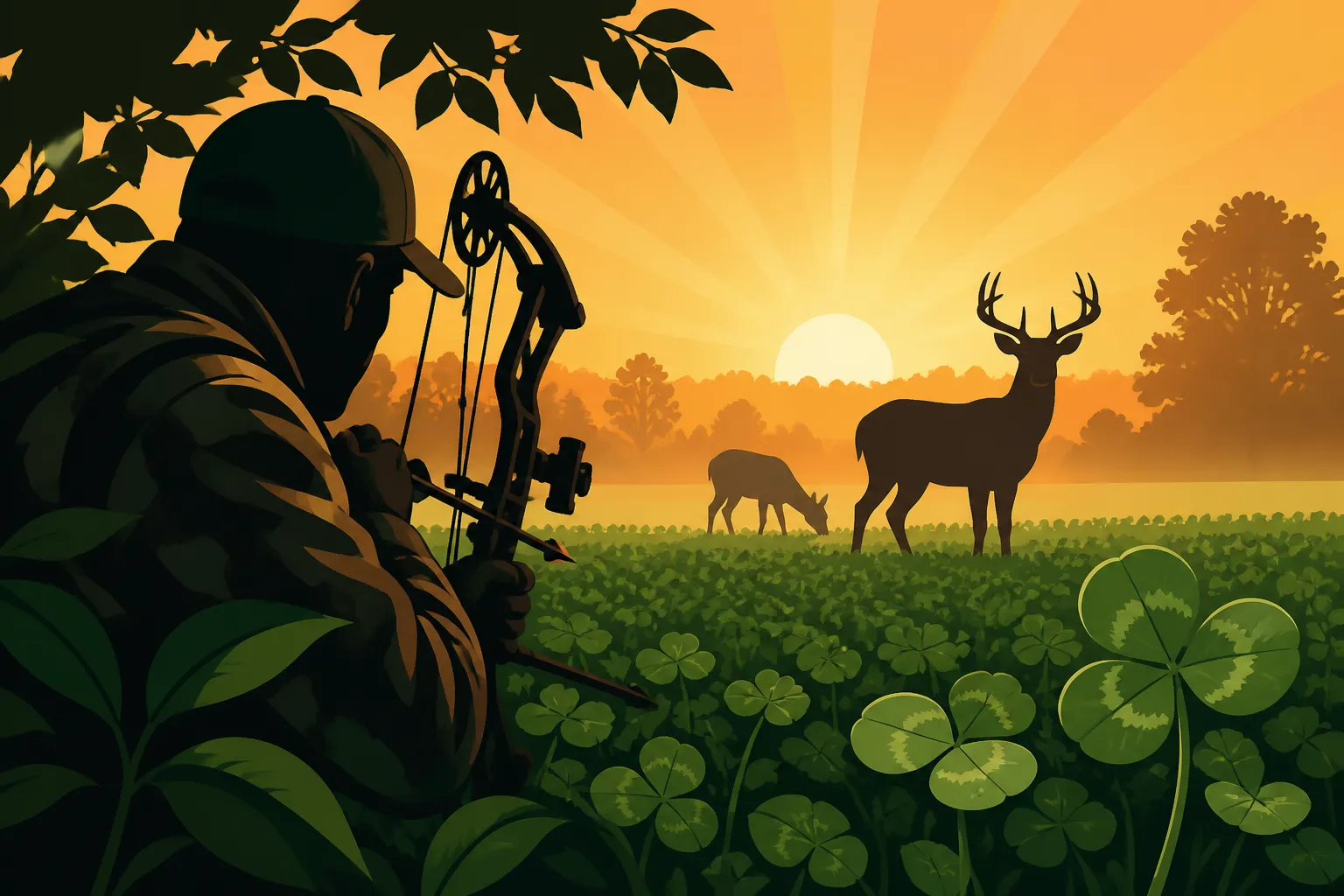
Hunting a Clover Plot at First Light
Slipping into your stand before the sun graces the horizon, hoping to catch a mature Mississippi whitetail feeding peacefully on a lush clover plot, is a dream many of us share. But often, those early mornings can turn into frustrating busts, leaving you wondering if the deer are even using the plot or if you're just not setting up right. This guide aims to clear up the confusion, helping you understand deer behavior around clover at first light and providing actionable strategies to make your early morning hunts more successful.
Why Clover Plots Attract Deer at Dawn
Clover plots are celebrated by deer hunters across Mississippi for a very good reason: they offer a highly nutritious and palatable food source that deer just can't seem to resist. Unlike annual plots that might only thrive for a season, perennial clovers, when managed well, can provide consistent forage for much of the year, making them a prime location for deer. However, relying solely on their attractiveness without understanding how deer use them at first light can lead to disappointment.
The Nutritional Draw of Clover and Deer Habits
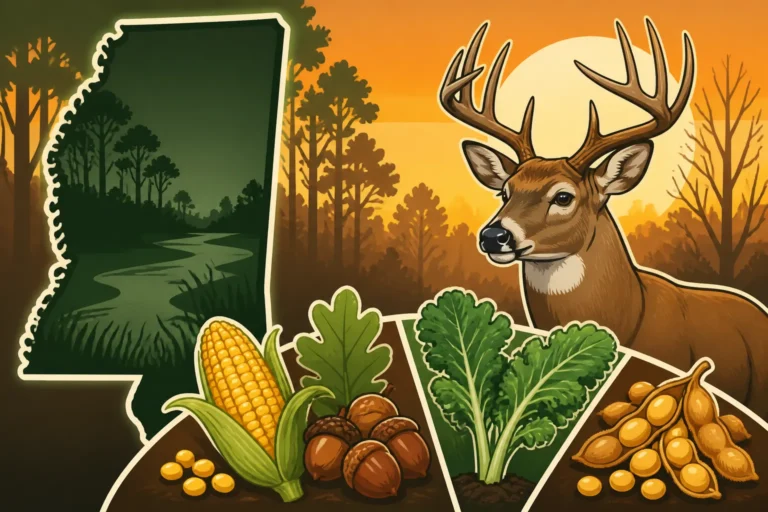
Deer, especially pregnant does and growing bucks, need high-protein diets to thrive. Clover, with its rich protein content, is essentially a deer superfood. It helps bucks grow those impressive racks we all chase and provides does with the energy they need for fawn rearing. In regions like the Delta, where agricultural fields dominate, or the Hills Unit with its mixed timber, a well-maintained clover plot stands out as a consistent buffet. Deer learn these food sources and will travel to them.
However, just because they love it doesn't mean they'll be there exactly when you want them. Deer activity patterns are complex. While they might feed heavily in a clover plot under the cover of darkness, they often start moving towards bedding areas as first light approaches. Your challenge is to intercept them during that transition period. This means understanding not just what they eat, but when and how they move to and from their preferred dining spots. A lot of scouting, perhaps aided by digital tools like GoHunt, can help you predict these movements based on the terrain and surrounding cover.
Understanding Early Morning Movement Patterns
Deer aren't just randomly wandering into a clover plot at dawn. Their movement is strategic, often driven by safety and comfort. As the sky lightens, their natural instinct kicks in to find secure bedding cover. This means they’ll often be leaving a feeding area, not just arriving. You might see a few stragglers still munching, but the bulk of the herd could be moving off.
The key here is to position yourself along those transition routes. Think about where deer are likely bedding down – dense thickets, creek bottoms, or the sanctuary of a vast timber block. Then, look for the most logical travel corridors that connect those bedding areas to your clover plot. These could be subtle depressions in the terrain, fencerows, small fingers of timber, or even just trails through taller grass. Setting up too close to the plot itself might mean you're behind the action, as many deer will have already started their exit. Consider the legal hunting hours on Mississippi public land and plan your approach accordingly, ensuring you're in place well before shooting light.
Optimal Setup Strategies for Early Morning Clover Hunts
Executing a successful hunt over a clover plot at first light demands meticulous planning for your entry, stand placement, and scent control. It’s not just about picking a spot overlooking the green; it's about minimizing your disturbance and maximizing your chances of intercepting deer on their terms.
Strategic Stand Placement and Entry/Exit Routes
Your stand placement is paramount. For a first-light hunt, you want to be positioned not directly in the plot, but rather along the travel routes deer use to approach or leave the plot from their bedding areas. If deer are consistently entering the plot from a particular timber edge, or exiting towards a specific thicket, that's your kill zone. Often, these are natural funnels where two cover types meet. Consider a scenario where a creek bottom acts as a natural corridor connecting a bedding area to a clover plot; that creek bank or a subtle rise near it would be an ideal setup location. Understanding how to use natural terrain features like this is critical, much like "Hanging a Stand on a Delta Bottomland Funnel".
Your entry and exit routes are just as important, if not more so. A noisy or scented walk in the dark can ruin your hunt before it even begins. Plan a route that keeps you out of known deer bedding areas and away from likely travel corridors. Utilize ditches, thick brush lines, or topography to conceal your approach. Always try to walk with the wind in your face on your way in, even if it means taking a longer, roundabout path. The goal is to be a ghost, leaving no trace of your presence. This might mean getting to your stand a full hour or more before first light.
Scent Control and Wind Awareness at Dawn
Scent control isn't just a buzzword; it's a non-negotiable for early morning hunts. As the air cools and often settles before the sun fully rises, thermals can be tricky. You might have a steady wind direction, but local thermals can create swirling air currents, carrying your scent in unexpected directions. Always shower with scent-eliminating soap, wear clean hunting clothes, and use scent sprays. Pay particular attention to your breath and any exposed skin.
More importantly, understand how wind and thermals interact, especially in Mississippi's varied terrain. In the low-lying Delta, "Wind and Thermals in Delta Bottomland" can be particularly challenging. Cool air sinks, often drawing your scent down into low areas like creek beds or drainage ditches. As the sun rises and warms the earth, the thermals reverse, carrying scent upwards. This means a stand that's perfect for a morning hunt with a west wind might be terrible for an evening hunt, or even an hour later on the same morning as thermals shift. Always check the forecast and have a backup plan or alternate stand locations for different wind directions. Using a scouting app like GoHunt to mark multiple potential stand sites based on wind can be a game-changer.
Treestands Versus Ground Blinds
The choice between a treestand and a ground blind often comes down to personal preference, terrain, and the amount of cover available around your clover plot.
A treestand offers several advantages for first-light hunting. It gets your scent higher off the ground, potentially above those early morning swirling thermals, and provides a better vantage point for spotting deer movements. If you're hunting along a timber edge bordering a clover field, a treestand can give you an excellent overview of the plot and any approaching deer. However, getting into a treestand quietly in the dark requires practice and can be challenging without making noise.
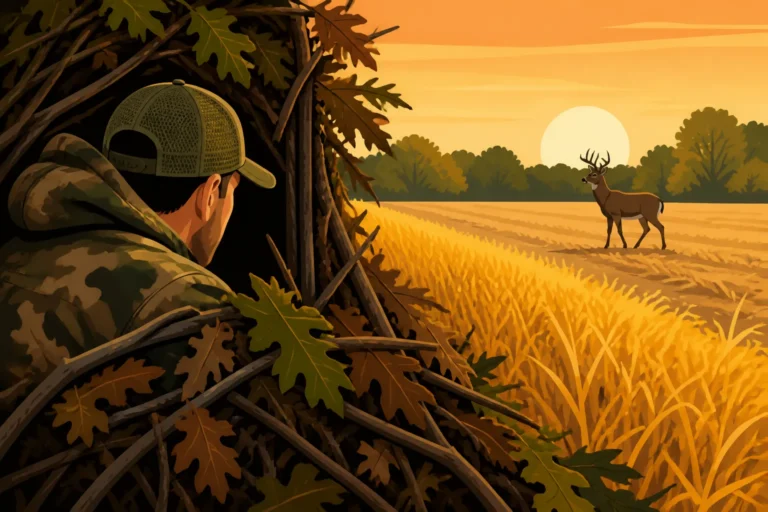
A ground blind, on the other hand, provides excellent concealment and a contained space for scent. If you're hunting a more open clover plot or an area with limited tall, sturdy trees, a well-brushed-in ground blind can be incredibly effective. They offer comfort and protection from the elements, which can be a blessing on a chilly Mississippi morning. For more on this, check out "Using a Ground Blind on Mississippi Public Land". The key is to set them up well in advance, allowing deer to get used to their presence, and ensure they are thoroughly brushed in with natural vegetation.
Here's a quick comparison:
| Feature | Treestand (Elevated) | Ground Blind (Eye-Level) |
|---|---|---|
| Scent Dispersal | Generally better, lifts scent above immediate deer level. | Can contain scent, but a sudden breeze can be problematic. |
| Visibility | Wider field of view, can see over low vegetation. | Limited field of view, requires shooting lanes. |
| Concealment | Relies on tree cover and height for silhouette breakup. | Excellent concealment, blends with surroundings when brushed in. |
| Mobility | Can be moved, but setting up in the dark is noisy. | Less mobile for spur-of-the-moment changes. |
| Entry/Exit | Can be quieter if well-practiced, but climbing is a risk. | Usually easier and quieter entry, especially pre-set. |
| Comfort | Can be less comfortable for long sits in cold/wet weather. | Often more comfortable, especially enclosed blinds. |
| Prep Time | Less on-site brushing, but pre-set stand is ideal. | Requires significant pre-season brushing and deer acclimation. |
Reading the Conditions and Adjusting Your Approach
Deer hunting is rarely a set-it-and-forget-it endeavor. The most successful hunters are those who can read the subtle cues from the environment and adapt their tactics accordingly. This is especially true for first-light hunts over a clover plot where conditions can change rapidly.
The Impact of Weather, Pressure, and Food Sources
Weather plays a massive role in deer activity. A crisp, cool morning after a cold front often gets deer on their feet and moving, making for prime hunting conditions. You might find more deer lingering on clover plots or moving more deliberately. On the flip side, a warm, humid morning with little wind can mean deer are already bedded down earlier or are moving more sluggishly. Rain can also impact movement; a light drizzle might keep deer out longer, but a heavy downpour usually sends them to cover. Pay close attention to these shifts; for instance, hunting "Deer After a Cold Front" often yields great results around food sources like clover.
Hunting pressure, whether from you or other hunters, also dramatically affects deer behavior. If your clover plot is frequently hunted, especially on public land, deer will become more nocturnal or utilize the plot during times of less human activity. They might approach from unexpected directions or use more concealed travel routes. Understanding the "Hunting Pressure on Mississippi Public Land" around your spot is crucial. Sometimes, if the pressure is too high, it's better to find a less frequented area or focus on transition lines much further from the plot itself.
Finally, consider other food sources. Is it a good acorn year? Are there other agricultural fields nearby? If deer have an abundance of options, they might not be as dependent on your clover plot. Your plot might only see activity during specific windows if other, more preferred, food sources are available. This is important to consider for "Late-Season Food Sources for Mississippi Whitetails", where clover can become a primary draw.
Post-Scouting and Interpreting Fresh Sign
Your pre-season scouting is crucial, but it doesn't end there. Every time you approach or leave your stand (discreetly, of course), you should be scouting for fresh sign. Look for fresh tracks in the mud around the plot edges, fresh droppings within the clover, or rub lines and scrape lines on nearby trees. These telltale signs indicate recent deer activity and can confirm whether deer are still using the plot.
If you're seeing consistent fresh sign indicating deer are entering from a particular corner, but your stand isn't set up for that, you might need to adjust. This doesn't necessarily mean moving your stand mid-hunt, but it helps inform your next hunt. Use mapping tools to mark these fresh signs. Maybe deer are bedding closer than you thought, or perhaps they've shifted their main travel corridor due to wind or pressure. Reading "Delta Mud for Fresh Deer Movement" can be highly informative after a rain, revealing exactly where and when deer are traveling.
Avoiding Common Mistakes and Maximizing Success
Even seasoned hunters can make mistakes when targeting clover plots at first light. Being aware of these common pitfalls and actively working to avoid them can significantly increase your chances of success.
Overhunting and Spooking Deer
One of the biggest mistakes hunters make with prime spots like clover plots is overhunting them. If you hunt a plot too frequently, especially if you're leaving a lot of scent or being noisy, deer will quickly learn to avoid it during daylight hours. They’ll either go completely nocturnal on that plot or abandon it altogether. It's a classic case of too much of a good thing.
The solution? Practice restraint. Consider rotating your hunting spots, or only hunting your best clover plots during optimal conditions (e.g., a cold front, the peak of the rut). If you have multiple stands around a plot, use them to your advantage based on wind and entry/exit. Sometimes, letting a plot rest for a few days, or even a week, can allow deer to become comfortable using it during daylight again. Remember, mature bucks are incredibly wary, and the slightest disturbance can send them elsewhere. This is especially true during key periods like the "Hunting the Rut in the Delta Unit" when bucks are more active but also more susceptible to hunter pressure.
Ignoring the Details: Entry, Exit, and Micro-Thermals
We've touched on entry and exit, but it bears repeating: don't underestimate their importance. A quiet, scent-free approach and departure are critical. This means planning your route down to the smallest detail. Where will you step? Is that patch of leaves too crunchy? Is there a low-hanging limb you might brush? Before your hunt, walk your planned route in daylight without your gear to identify potential noise traps.
Micro-thermals are those localized air currents that can defy the general wind direction, especially in rolling terrain or around dense cover. A small dip in the land or a thick cedar grove can create its own little air pocket where your scent can eddy and swirl, giving away your position. Pay attention to your scent stream. If you have a milkweed pod or a puff bottle, use it frequently, especially as the sun begins to rise and thermals start to shift. Being hyper-aware of these localized air movements can prevent you from being "winded" by a cautious deer that might have otherwise walked right by. A topographical map, especially one on a platform like GoHunt, can help you visualize these subtle elevation changes that influence micro-thermals.
Patience and Understanding Deer Behavior
Hunting a clover plot at first light requires patience. You might not see a parade of deer right at legal shooting light. Sometimes, the biggest bucks will hang back in the timber, waiting for more confidence, or for smaller deer to enter the plot first. They might just be passing through a corner of the plot or crossing a trail far from your immediate view. Give the morning time to unfold. Don't fidget, don't check your phone, and don't get discouraged if the first hour is quiet.
Understanding the "Mississippi Deer Herd Size" and how individual deer move through their home range helps. Every deer is an individual, and every day is different. A mature doe might be a creature of habit, but a cautious buck, especially during the post-rut period, will be highly unpredictable. Trust your scouting, trust your setup, and remain alert. Sometimes, that monster buck you’ve been after is just five minutes away from showing up, testing the wind before stepping out.
Disclaimer
Hunting is an inherently dangerous activity. Always prioritize safety, adhere to all local, state, and federal hunting regulations, and obtain proper landowner permission or permits. The information provided in this guide is for informational purposes only and does not substitute for professional instruction or adherence to official guidelines. Always be aware of your surroundings and the capabilities of your equipment.