Mississippi Feral Hog Trapping Rules
Feral hogs are a nightmare, plain and simple. If you're a landowner, farmer, or even just a deer hunter trying to manage your property in Mississippi, you've probably faced the devastating damage these invasive animals inflict. They tear up fields, destroy food plots, contaminate water sources, and compete directly with native wildlife for food. It's a constant battle, and one of the most effective weapons in your arsenal against this relentless enemy is trapping. But knowing the ins and outs of Mississippi's feral hog trapping rules can feel like navigating a minefield. This comprehensive guide will cut through the confusion, explaining exactly what you need to know to trap hogs legally and effectively across our great state.
The Devastating Impact of Feral Hogs in Mississippi
Let's be real, the struggle against feral hogs in Mississippi isn't just an inconvenience; it's a full-blown ecological and agricultural crisis. These aren't native animals; they're an invasive species, and their unchecked proliferation has dire consequences for our state's natural resources and economy. When you wake up to a freshly rooted-up field or find a critical deer food plot turned into a muddy wasteland overnight, you feel that impact directly. They don't just eat; they destroy.
Feral hogs are notorious for their rooting behavior, which is basically them using their powerful snouts to dig up soil in search of roots, tubers, and invertebrates. This looks like a rototiller has gone wild, leaving behind a scarred landscape. This rooting disrupts soil structure, damages crops like corn, soybeans, and sweet potatoes, and can even compromise the integrity of levees and ponds. For farmers, this translates directly into significant financial losses each year, costing millions across the state. Think about the investment in planting and fertilization, only for it to be undone by a sounder of hogs in a single night.
Beyond agriculture, the environmental toll is immense. Their rooting destroys critical habitat for ground-nesting birds, amphibians, and reptiles. They compete with native wildlife, especially white-tailed deer and wild turkeys, for vital food sources like acorns and pecans, particularly during crucial fall and winter months. Hogs also carry diseases that can spread to livestock, pets, and even humans, like brucellosis and pseudorabies. It's a complex web of destruction, and anyone who has spent time afield in Mississippi has seen the tell-tale signs of their presence, from wallows in creek bottoms to rubbed trees and, of course, the ever-present churned-up earth. Understanding the sheer scale of the problem helps drive home why active management, like trapping, isn't just an option—it's a necessity.
Why Trapping Is a Primary Control Method
When you're dealing with a population as prolific and elusive as feral hogs, you need a strategy that's consistent and highly effective. While hunting them certainly has its place – and plenty of us enjoy Hunting Mississippi's Year-Round Feral Hogs – it's often more about recreation than actual population control. Hogs are smart, they learn quickly, and they go nocturnal when pressured by hunting. That's where trapping shines.
Trapping, when done correctly, allows you to remove entire sounders (groups of hogs) at once. This is crucial because feral sows can breed year-round, having multiple litters annually, and piglets can become sexually mature incredibly fast. If you only pick off one or two hogs at a time through hunting, you're barely making a dent in their exponential growth. A well-placed, properly baited trap, however, can capture 10, 15, or even 20+ hogs in a single drop. This kind of mass removal is the only way to effectively reduce their numbers and mitigate their damage over the long term.
It's also a method that can be employed regardless of hunting season, day or night, and often with less disturbance to other wildlife. Once a trap is set and pre-baited, you're letting the hogs come to you on their own terms, often when they feel safe and unpressured. This method allows for targeted removal in areas where traditional hunting might be difficult or unsafe, such as near residential areas or sensitive agricultural fields. For serious landowners and wildlife managers, trapping isn't just a method; it's often the most effective method for sustained feral hog population control in Mississippi.
Understanding Mississippi's Feral Hog Trapping Regulations
Navigating the legalities of feral hog control in Mississippi can sometimes feel like a moving target, but the good news is that the state largely empowers landowners and hunters to take aggressive action. The Mississippi Department of Wildlife, Fisheries, and Parks (MDWFP) recognizes the severe threat these animals pose and has implemented rules designed to facilitate their removal rather than hinder it.
General Statewide Rules for Feral Hog Control
The overarching principle in Mississippi is that feral hogs are considered a nuisance species, meaning they can be taken year-round, day or night, and with very few restrictions on private land. This contrasts sharply with regulated game animals like deer or turkey, which have strict seasons and bag limits. For feral hogs, it's open season, all the time, for a reason – they don't belong here, and they wreak havoc.
This means you don't need a specific "hog tag" or permit to trap them. If you're a resident, you generally need a valid hunting license to carry a firearm or hunt with archery equipment for any species, even hogs, on private land. However, for trapping specifically, the emphasis is on the removal of the nuisance animal, so long as you have permission from the landowner. The MDWFP even allows for night hunting hogs with lights on private land, highlighting the aggressive stance against them. This flexibility is critical for effective management, allowing you to adapt your strategy to the hogs' behavior, which, as we know, often involves becoming nocturnal in response to human presence. Just remember, even with nuisance animals, common sense and safety are paramount. Ensure you have positive identification of your target and always be aware of your surroundings, especially at night.
Specific Trapping Regulations on Private Versus Public Land
Here's where the rules diverge, and it's crucial to understand the difference.
Private Land: The Wild West (with some common sense)
On private land, the rules are incredibly permissive for trapping. If you own the land or have explicit permission from the landowner, you can trap feral hogs 365 days a year, 24 hours a day. There are no size limits, sex restrictions, or daily/seasonal bag limits. The idea is simple: get rid of as many as you can, whenever you can.
You can use a wide variety of traps, from simple snare traps (though these require careful placement to avoid non-target animals) to large, elaborate corral traps designed to catch an entire sounder. Electronic trap gates, which can be triggered remotely via cell signal after confirming hogs are inside, are also perfectly legal and highly effective. Baiting is not only allowed but encouraged, as it's the primary way to draw hogs into your trap.
The main legal considerations on private land are:
- Landowner Permission: You absolutely must have permission from the landowner to trap on their property. Verbal permission is usually fine, but written permission is always best to avoid any misunderstandings or trespassing accusations.
- Safety: Ensure your trapping activities don't endanger people, livestock, or non-target wildlife. While the rules are relaxed for hogs, you still have a responsibility to operate safely and ethically.
- Local Ordinances: Always check if there are any hyper-local city or county ordinances that might put additional restrictions on trapping within specific areas, especially if you're close to a populated town. These are rare for nuisance animal trapping but worth a quick check.
Public Land: More Restrictions, But Still Viable
Trapping feral hogs on public lands managed by the MDWFP, such as Wildlife Management Areas (WMAs) or National Forests, is a different beast entirely. It's generally not permitted without specific authorization, and often, it's explicitly prohibited. The reason for this is primarily safety and the potential for interference with other public land users or research efforts. Traps on public land can be a hazard to hikers, dog walkers, and other hunters.
However, there are exceptions. Some WMAs might occasionally run specific hog trapping programs conducted by MDWFP staff or authorized contractors to reduce populations in critical areas. If you are interested in assisting with feral hog control on public land, your best bet is to contact the specific WMA manager or the MDWFP directly to inquire about any opportunities or specific regulations for that area. It's highly unlikely you'll be able to set up your own traps as a general public user, but understanding if and when programs exist is useful. The MDWFP App can be a great resource for checking specific WMA rules and regulations before you head out.
The rule of thumb for Mississippi public lands is: assume trapping is forbidden unless you have explicit, written permission from the managing authority. This protects you from potential fines and ensures you're not interfering with other conservation efforts or public access.
What to Do After the Catch: Disposal and Reporting
So, you've successfully trapped a sounder of hogs – congratulations! Now comes the critical, and sometimes less pleasant, part: what do you do with them? Mississippi's rules are pretty clear on this: once trapped, feral hogs cannot be released alive. They are considered an invasive species, and releasing them back into the wild, even on your own property, is counterproductive to control efforts and can be illegal as it contributes to their spread.
Euthanasia and Disposal
The most common and humane method for dealing with trapped hogs is euthanasia. This typically involves dispatching them efficiently and humanely within the trap. A well-placed shot with a firearm is the most common method, but ensure you have a safe backdrop and understand proper Shot Placement on a Feral Hog. For safety, always approach the trap cautiously.
Once dispatched, you have several options for disposal:
- Field Dressing/Harvest: Many hunters choose to harvest the meat. Feral hog meat, when handled properly, is excellent table fare. You'll want to Handle a Hog After the Shot quickly, especially in warm Mississippi weather, to ensure meat quality. Keep in mind that feral hogs can carry diseases, so thorough cooking is always recommended.
- Burying: If you're not harvesting the meat, burying the carcasses on your property is a common practice. Ensure you bury them deep enough to prevent scavengers from digging them up and away from water sources.
- Composting: For larger numbers of hogs, some operations opt for composting, which accelerates decomposition.
- Landfill (check local rules): In some areas, local landfills might accept animal carcasses, but you would need to check with your specific county's waste management guidelines, as this varies widely.
Important Note on Disease: While there's no mandatory statewide reporting for harvested feral hogs, it's always wise to be aware of the potential for diseases like brucellosis, which can be transmitted to humans. Wearing gloves when field dressing and practicing good hygiene are highly recommended.
No Mandatory Reporting, But Knowledge Is Power
Currently, the MDWFP does not require hunters or trappers to report individual feral hog kills. However, contributing to broader data collection can be incredibly helpful for wildlife managers. If you use a tool like GoHunt, you might be able to log your harvest, which helps you track your personal success and, if the platform aggregates data, contributes to a better understanding of local populations. While not mandatory, any data shared can help state agencies and landowners understand How Many Feral Hogs Mississippi Has and adjust their management strategies.
Practical Trapping Strategies and Equipment for Mississippi
So, you've got the regulations down, and you're ready to set some steel. Trapping feral hogs isn't just about throwing out a trap; it's a strategic game of chess against a cunning, adaptable opponent. The right equipment, proper baiting, and smart placement are your keys to victory.
Choosing the Right Trap for Your Situation
There's a variety of traps out there, each with its pros and cons, but the goal remains the same: capture as many hogs as possible, safely and efficiently.
-
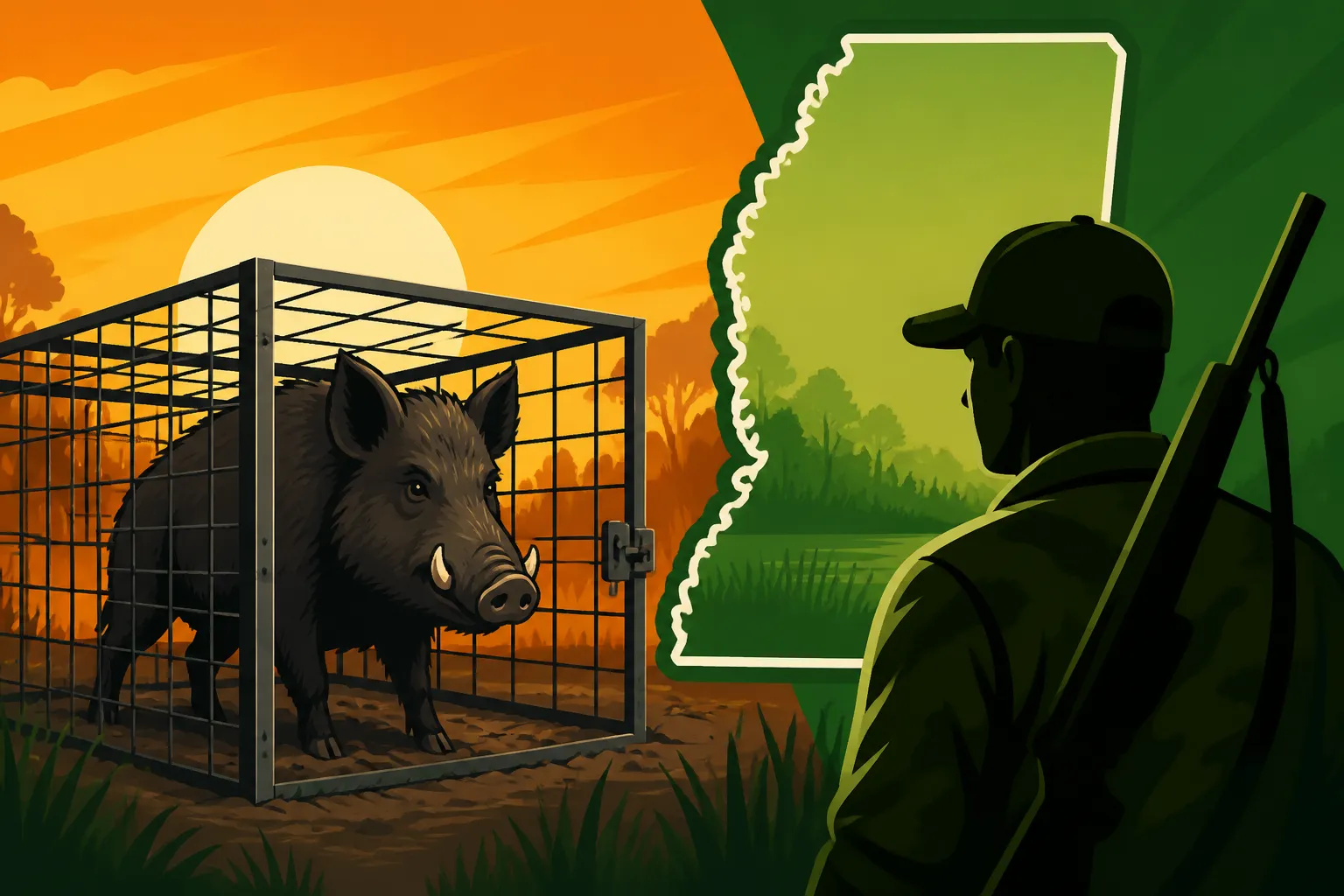
Corral Traps: These are the heavy hitters, designed for mass capture. A corral trap typically consists of multiple panels (often cattle or hog panels) forming a large enclosure, usually circular or square, with a single trigger mechanism. Common gate types include:
- Rooter Gates: These swing inward and are triggered by hogs pushing against a trigger bar or rooting up bait within the trap. They can be very effective but sometimes allow smaller hogs to escape or larger ones to bust out if not reinforced.
- Snare Gates (Guillotine Gates): These drop from the top or swing shut, triggered by a tripwire or pressure plate. They're very effective at containing an entire sounder.
- Saloon Gates (Double-Door Gates): Two doors that swing inward and are held open by a trigger. Hogs push them open to enter, and once the trigger is tripped, they swing shut, trapping the animals.
- Wireless/Cellular Activated Gates: These are game-changers. A camera mounted at the trap site sends live photos or video to your phone, allowing you to visually confirm an entire sounder is inside before remotely dropping the gate. Brands like Jager Pro or Boar Buster offer these systems, making trapping incredibly efficient and reducing the chance of "educating" hogs by dropping the gate too early. If you're serious about trapping, especially bigger sounders, investing in one of these systems is almost always worth it.
-
Box Traps: Smaller, cage-like traps designed for single-hog capture, typically juveniles or smaller adults. They're good for specific problem hogs or smaller properties where a large corral trap isn't feasible. However, they're not efficient for population control.
-
Snares: While legal in Mississippi on private land for hogs, snares require careful placement to minimize the risk to non-target animals like deer or pets. They are effective for individual hogs traveling specific trails but are not ideal for mass capture. Always check your snares regularly and ensure they are breakaway types if possible, to prevent injury to other species.
Here's a quick comparison:
| Trap Type | Target Hogs | Initial Cost | Effort to Set Up | Advantages | Disadvantages |
|---|---|---|---|---|---|
| Corral Trap (Manual) | Whole Sounders | Medium | High | Catches many hogs at once; highly effective | Can "educate" hogs if triggered too early; requires frequent checks |
| Corral Trap (Remote) | Whole Sounders | High | Medium | Catches many hogs; minimizes trap shyness; efficient | Higher initial cost; requires cell service or Wi-Fi |
| Box Trap | Individual Hogs | Low | Low | Portable; good for small areas; less intrusive | Catches only one or a few hogs; not for population control |
| Snares | Individual Hogs | Very Low | Medium | Inexpensive; portable; effective for trails | High risk to non-target animals; requires frequent checks; not for mass removal |
Baiting Strategies That Actually Work
Bait is your best friend when it comes to trapping. Hogs are voracious eaters, and a consistent food source will draw them in and keep them coming back. The key is consistent pre-baiting.
- Fermented Corn: This is the gold standard. Take cracked corn, put it in a container (like a 5-gallon bucket or drum), add water and a little yeast or sugar, and let it ferment for a few days. The sour, alcoholic smell is irresistible to hogs. You can find detailed guides on Building and Freshening a Hog Bait Site online. This type of bait is incredibly attractive and cost-effective.
- Commercial Attractants: Many companies offer commercial hog attractants, often with strong sweet or pungent odors. While they can work, they're usually more expensive than corn.
- Sweet Feeds: Foods like stale donuts, pastries, or even overripe fruit can be effective. Hogs have a sweet tooth!
- Protein Sources: Some trappers use dog food or other protein-rich feeds, but fermented corn usually has the edge due to its potency and cost.
Pre-Baiting is Crucial: Don't just set your trap and bait it. For several nights before you even set the trap, bait the area where you plan to put the trap, leaving the gate open or even laid down. Let the hogs get accustomed to feeding there, feeling safe. Once they are consistently hitting the bait, then slowly introduce the trap panels and eventually the gate. This minimizes trap shyness. You're building their confidence, making them believe this is a safe, reliable food source before you spring the surprise.
Setting Up Your Traps for Maximum Success
Location, location, location! Setting up your trap effectively means understanding hog movement and behavior.
- Scout Thoroughly: Look for fresh hog sign: rooted areas, wallows, tracks, rubs on trees, and trails. Pay attention to pinch points, creek bottoms, and travel corridors between bedding and feeding areas. Using a mapping app like GoHunt can help you mark sign and identify optimal trap locations before you even step foot on the property.
- Visibility and Access: Hogs aren't usually shy about open spaces if food is present, but consider human access for checking and removing captured animals.
- Water Sources: Hogs love water for drinking and wallowing, so placing a trap near a consistent water source can be very effective, especially in hotter months.
- Secure the Trap: Ensure your trap is sturdy and secure. Hogs are incredibly strong and will test weak points. Use T-posts driven deep into the ground to secure corral panels, especially the gate. If you're using a remote system, make sure the camera has a clear view and good cell signal.
- Camouflage (Optional but helpful): While not strictly necessary, sometimes camouflaging the trap or making it less conspicuous can help reduce initial trap shyness, especially if you're dealing with very wary hogs. This might mean weaving some native brush into the panels or placing it against a natural backdrop.
Remember, patience is a virtue in hog trapping. It might take several days or even weeks of pre-baiting before you're ready to set the trigger. Don't rush it; a single bad experience can make a sounder trap-shy for months.
Common Challenges and Best Practices for Effective Trapping
Even with the best equipment and bait, feral hog trapping isn't always straightforward. These are intelligent, adaptable animals, and they can quickly become "educated" if you make mistakes. Knowing how to overcome common hurdles and adhere to best practices will significantly improve your success rate.
Overcoming Trap Shyness and Educated Hogs
One of the biggest frustrations for trappers is dealing with hogs that have been pressured or had a bad experience with a trap. They'll often feed around the perimeter of the trap but refuse to enter, or only send in the smaller, less wary individuals. This is called trap shyness, and it can derail your efforts for weeks or even months.
- Extended Pre-Baiting: If hogs are wary, extend your pre-baiting phase significantly. Keep the trap gate tied open, or even remove it entirely for a week or two, letting them come and go freely, building their confidence. Think of it as a free restaurant where they can eat without consequences.
- Disguise the Trap: Sometimes, the visual of a metal cage or panels spooks them. Try weaving natural vegetation like branches, cane, or tall grasses into the panels to break up the silhouette. Make the trap blend into the environment as much as possible.
- Avoid Human Scent: Hogs have an incredible sense of smell. While it's hard to eliminate all human scent, try to minimize it. Wear clean boots, handle trap components with gloves, and don't linger around the trap site.
- Move the Trap (if possible): If a specific location consistently yields trap-shy hogs, consider moving the entire setup to a different area where you're seeing fresh sign. A change of scenery can sometimes reset their caution.
- Remote Triggering is Key: This is where technology truly shines. With a remote camera and cellular-activated gate, you can see the entire sounder inside the trap before you trigger it. This eliminates the risk of dropping the gate on only a few hogs, or worse, scaring them away with a faulty manual trigger. This investment pays off by consistently catching whole sounders and avoiding educating them. Using a tool like GoHunt can help you identify high-traffic areas for initial trap placement, making the scouting process more efficient.
Safety Considerations and Ethical Trapping
While we're fighting a nuisance species, maintaining ethical standards and ensuring safety is still paramount.
- Personal Safety: Trapped hogs, especially large boars, can be incredibly dangerous. They are stressed, cornered, and can inflict serious injury. Never enter a trap with a live hog. Use caution when approaching and dispatching.
- Firearm Safety: If dispatching with a firearm, ensure you have a clear, safe backdrop. Be aware of your surroundings, especially if trapping near residences or public access points. Proper Shot Placement on a Feral Hog ensures a humane kill.
- Non-Target Animals: This is particularly important for snare users. Mississippi has abundant deer, turkeys, and even black bears in some areas. Snare placement needs to be precise to avoid accidentally catching non-target species. Check traps regularly (daily is best) so any non-target animal can be released quickly and safely. Corral traps, by design, are less likely to catch non-target animals, but it can still happen, especially if they are designed poorly or baited with things appealing to other animals.
- Humane Dispatch: Once a hog is trapped, it should be dispatched humanely and efficiently. Prolonged stress or suffering is unethical. Learn proper techniques for a quick, clean kill.
- Respect Private Property: Whether it's your land or someone else's, respect the property. Don't leave trash or damaged equipment, and always secure gates and access points.
Utilizing Technology for Better Trapping Outcomes
In the modern age, technology has made hog trapping more effective and less labor-intensive. Embrace it!
- Remote Cameras and Cellular Gates: As mentioned, these are game-changers. Brands like Jager Pro, Boar Buster, or even custom setups with cellular trail cameras and remote gate openers, allow you to monitor your trap from anywhere. You can receive real-time photos or videos on your phone, see exactly which hogs are in the trap, and trigger the gate when the entire sounder is present. This drastically increases catch rates and prevents trap shyness.
- Mapping Apps: Using a robust mapping app (like GoHunt) on your phone or tablet allows you to mark hog sign, track movement patterns, and pinpoint optimal trap locations. You can drop pins for sightings, wallows, rooted areas, and even plot out the best entry and exit routes for setting and checking traps. This helps you identify key areas to pre-bait and deploy your traps, especially when trying to understand how Feral Swine Sightings in Central Mississippi are spreading or where How Many Feral Hogs Mississippi Has in specific areas might be highest.
- Thermal Imaging/Night Vision: While primarily used for night hunting, these tools can also be invaluable for scouting. You can observe hog behavior around a bait site or trap at night without disturbing them, helping you understand their patterns and refine your baiting and placement strategies. This might be overkill for casual trappers but is a powerful tool for dedicated hog control efforts.
By combining an understanding of Mississippi's trapping rules with smart strategy, the right equipment, and a little help from modern technology, you can effectively manage the feral hog population on your property. It's a continuous battle, but with persistent effort and the right approach, you can make a real difference.
Disclaimer
The information provided in this guide is for informational purposes only and is not legal advice. Hunting and trapping regulations can change, and it is the responsibility of each individual to consult the most current Mississippi Department of Wildlife, Fisheries, and Parks (MDWFP) regulations and any local ordinances before engaging in any hunting or trapping activities. Always prioritize safety and ethical practices.