Mississippi River Batture Public Access
For many Mississippi hunters, finding accessible public land can feel like searching for a needle in a haystack, especially when you crave a truly wild experience away from the crowds. This guide is all about one of our state's most unique and often overlooked public hunting opportunities: the Mississippi River Batture. We’re going to dive deep into what this land is, how to access it, and what you can expect when you venture into this dynamic, untamed landscape.
Understanding Mississippi River Batture Land
The Mississippi River Batture is a truly unique geographical and ecological feature that can be both incredibly rewarding and undeniably challenging for hunters. It's not your typical WMA or national forest, and understanding its nature is the first step to successfully hunting it.
What is the Batture? A Dynamic Landscape
Imagine the mighty Mississippi River, not just as a channel, but as a living, breathing entity that constantly reclaims and reshapes the land along its banks. That's essentially what the batture is: the land between the river's main channel and the man-made levee system designed to protect inland areas from flooding. This strip of land is incredibly dynamic, constantly changing with the river's ebb and flow. It can range from a few hundred yards wide to several miles in places, a fluctuating ribbon of wilderness that the river frequently inundates.
The terrain here is often rugged and unpredictable. You'll find a mix of mature bottomland hardwoods, dense cane thickets, willow stands, and open sandbars. The soil is rich, deposited by countless floods, supporting incredibly vigorous growth. Because it's periodically flooded, the batture habitat is distinct from drier, higher ground. It's a truly wild place, dictated by the river's pulse, offering a raw hunting experience that demands adaptability and a deep respect for nature's power. It’s definitely not for the faint of heart, but for those willing to put in the effort, the rewards can be substantial.
Public Versus Private Land: A Crucial Distinction
This is where it gets a little tricky, and it's perhaps the biggest point of confusion for hunters eyeing the batture. While much of the batture is technically publicly owned, primarily by the federal government (U.S. Army Corps of Engineers) or the state, private landowners often have easements or grazing rights, or even own tracts within the batture. The key takeaway is that "batture" doesn't automatically mean "public hunting ground." You must verify land ownership and public hunting access for specific areas before stepping foot on them.
This is where tools like onX Hunt become absolutely invaluable. You can overlay property lines onto satellite imagery, clearly showing federal, state, and private parcels. Don't rely on assumptions. Just because there's no fence doesn't mean it's public. A property line on a map is your definitive answer. Always assume private unless you have explicit proof otherwise. Hunting private land without permission, even if it feels "wild" and remote, is trespassing, and that's a headache you definitely want to avoid. Always double-check Mississippi Trespass and Permission Law before heading out.
Legalities and Access for Batture Hunters
Hunting the batture isn't as simple as driving up and walking in. There are specific rules, land ownership complexities, and unique challenges that you need to be aware of to ensure your hunt is legal and enjoyable.
Understanding Land Ownership and Public Access Points
As we touched on, the batture is a mosaic of different ownerships. While the U.S. Army Corps of Engineers (USACE) manages vast stretches, providing public access for hunting, there are also areas that are privately owned or leased. It's not uncommon for a large farming operation to lease batture ground right up to the river's edge, even if that ground frequently floods. This means that while you might see fantastic looking deer habitat, it might be off-limits.
Your primary goal should be to identify specific tracts managed by the USACE or state agencies where hunting is permitted. These public access points might be few and far between, often requiring a boat launch or a long walk down a levee road. Be prepared for limited infrastructure. You won't find neatly paved parking lots or designated hunting stands. Often, access involves navigating less-maintained gravel roads or launching a boat into a slough or the river itself. The challenge of simply getting to the hunting grounds is part of the batture experience, and a big reason why pressure can be lower than on some other public lands.
Permits, Licenses, and Special Regulations
Just like any other hunting in the state, you'll need all your standard Mississippi hunting licenses. This includes your basic hunting license, and depending on what you're after, potentially a state waterfowl stamp, a federal duck stamp, or other endorsements. Mississippi Hunting Licenses and What They Cost is a great resource to make sure you're covered.
Beyond the standard state licenses, some batture areas, especially those managed as part of a larger wildlife management area (WMA) or national wildlife refuge system, might require additional permits or have specific sign-in procedures. For instance, if a portion of the batture falls within a WMA, you'll likely need a WMA permit and may be subject to stricter check-in/check-out rules, bag limits, or weapon restrictions. Always check the regulations specific to the exact parcel of land you plan to hunt. Don't assume that "general batture rules" apply everywhere. The MDWFP website is your best friend here, as is the individual WMA's regulations if applicable.
One critical regulation unique to batture hunting is often tied to methods of transport and retrieval. Since much of the land is remote and can be boggy, ATVs might be restricted, or only allowed on specific trails. Retrieving game can be a massive undertaking, especially a big buck in dense, wet cover. Understanding these rules before you connect with an animal will save you a lot of heartache and potential legal trouble.
Navigating the Batture: Challenges and Tools
The Mississippi River Batture is not a place for the unprepared. Its ever-changing nature, dense vegetation, and remote access present unique navigational challenges that demand specialized tools and a healthy dose of caution.
The Dynamic Nature of River Land
One of the biggest hurdles when hunting the batture is its constantly shifting landscape. The river dictates everything. A sandbar that was dry last month might be underwater today. A slough you could easily wade across in September could be a deep, fast-moving channel in November. This constant flux means that your scouting efforts can become outdated quickly, especially after heavy rains upstream or significant river level changes. Topographical maps can offer a general overview, but they rarely capture the current reality of the batture floor.
Visibility can also be a major issue. The dense cane thickets, willow groves, and bottomland hardwoods create an almost impenetrable wall of vegetation in many spots. This makes it incredibly easy to get disoriented, even for experienced woodsmen. Without a reliable navigation system, you can quickly find yourself turned around, especially if you're deep in the timber and the sun is obscured. It’s a truly humbling experience, realizing how quickly the familiar can become foreign.
Essential Tools for Batture Navigation
Given the challenges, a modern GPS unit or a reliable mapping app on your phone is not just a luxury; it's an absolute necessity. I can't stress this enough. Relying solely on a compass and paper map in this environment, while a good skill to have, is simply not enough for safety and efficiency.
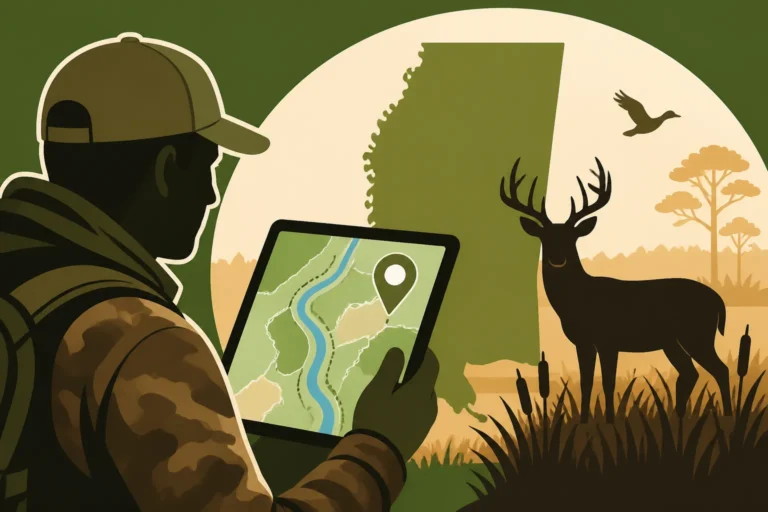
This is where onX Hunt shines brighter than almost anything else. With onX Hunt, you can download offline maps to your phone, which is critical because cell service is often nonexistent deep in the batture. These maps will show you detailed satellite imagery, topo lines, and, most importantly, property boundaries. Being able to see exactly where public land ends and private land begins, even in the densest cover, is invaluable. You can mark your truck, your stand locations, potential game trails, and even blood trails. I know hunters who swear by its ability to keep them from accidentally stepping onto leased ground. Another great resource for general scouting and understanding the larger landscape can be found through platforms like GoHunt, which provide broader data and tools, though perhaps not as granular for real-time property lines as onX Hunt.
Beyond your mapping app, always carry a physical compass and know how to use it as a backup. A portable charger for your phone is also a must-have. Additionally, bright flagging tape can be useful for marking your path in and out, though remember to remove it after your hunt to leave no trace. Understanding Reading Aerial Photos for Hills Unit Deer can be adapted to help you identify key features in the batture, even if the terrain is different.
Hunting Opportunities in the Batture
The wild and remote nature of the Mississippi River Batture, coupled with its rich habitat, creates exceptional hunting opportunities for several species. However, success here often hinges on understanding the unique challenges and adapting your tactics accordingly.
White-Tailed Deer: The Elusive Giants
The batture is famous for growing big, elusive white-tailed deer. The rich soils and diverse forage, combined with relatively lower hunting pressure in the most remote areas, allow bucks to mature. These deer are often accustomed to flooding, seeking out small rises or the levee itself during high water events, then spreading back out as the water recedes.
Hunting these deer requires patience and a good understanding of river dynamics. During low water, deer will often stick to the dense cover provided by cane thickets and young hardwoods, especially those areas with good browse. As the river rises, they may concentrate on higher ground or along the levees, creating unique funnel opportunities. Scouting is paramount, and it needs to be dynamic. What was a hot spot last week might be under three feet of water this week. Look for rub lines, scrape lines, and fresh tracks in the mud along slough edges or receding water. Hunting the Rut in the Delta Unit provides valuable insights into deer behavior in bottomland areas, which can be adapted for the batture.
Stands here are often placed strategically on small ridges, along slough edges, or overlooking areas where deer might cross during fluctuating water levels. Ground blinds can also be effective, especially if you can brush them in naturally to blend with the dense surroundings. Understanding how deer move through thick cover and react to changing water levels is key to success.
Waterfowl and Small Game: A Hunter's Paradise
Beyond deer, the batture can be a waterfowl hunter's dream, especially when river levels are high enough to flood timber and low-lying fields. Wood ducks, mallards, and other dabblers flock to these temporarily flooded areas, offering incredible hunting. Finding these pockets of flooded timber or natural depressions that hold water requires extensive scouting, often by boat or kayak, to pinpoint where birds are loafing and feeding.
The dynamic water levels mean that a fantastic spot one day might be dry or too deep the next. Hunters often set up on the edges of sloughs, in flooded timber pockets, or even along the main river channel for pass shooting. You'll need durable decoys, excellent calling skills, and the willingness to get wet and muddy. Waterfowl Hunting the Mississippi Delta offers great foundational knowledge that can be applied to the batture's unique waterfowl opportunities.
Small game hunting, particularly for squirrels and rabbits, can also be fantastic in the batture. The dense cover and abundant mast crops support healthy populations. Squirrels will be found in the mature hardwoods, especially where oaks and pecans are present. Rabbit hunting is often done with beagles, pushing rabbits out of thick briar patches and cane. The density of the cover means shots are often close and fast, making for exciting hunting.
Feral Hogs: A Year-Round Pursuit
Feral hogs absolutely thrive in the batture environment. The dense cover provides excellent bedding, the rich soils offer abundant rooting opportunities, and the proximity to water is ideal for wallowing. These highly destructive animals are present year-round, and hunting them is often encouraged. Hunting Mississippi's Year-Round Feral Hogs highlights the importance of keeping these populations in check.
Hogs can be hunted in the batture using a variety of methods: still-hunting through thickets, spot-and-stalk along sandbars or field edges (if any exist), or even night hunting where regulations permit and it's safe to do so. They often travel in sounders, so if you find sign, there are likely more nearby. Look for rooted-up areas, wallows, and fresh tracks in the mud. Thermal optics can be incredibly effective for night hunting, allowing you to pick out hogs against the dense background. Given their nomadic nature and the challenging terrain, hog hunting in the batture is a test of perseverance.
Safety and Ethics in the Batture Environment
Hunting the Mississippi River Batture offers a truly wild experience, but with that untamed nature comes a heightened responsibility for safety and ethical conduct. This isn't your average hunting trip; it demands extra precautions and a deep respect for the environment and fellow hunters.
Navigating River Hazards and Environmental Risks
The Mississippi River itself poses significant dangers. Strong currents, submerged debris, fluctuating water levels, and unstable banks are all serious considerations, especially if you're using a boat. Always wear a life vest when on the water, even if you're a strong swimmer. Inform someone of your float plan, including your put-in and take-out points, and estimated return time. River conditions can change rapidly, turning a calm stretch into a treacherous one in a matter of hours.
Beyond the river, the batture's terrain is rugged. Expect to encounter venomous snakes (cottonmouths, rattlesnakes), especially in warmer weather. Watch your step in thick cover and avoid reaching into areas you can't see. Mosquitoes, ticks, and other biting insects are prevalent, so insect repellent is not optional. The dense vegetation and uneven ground also present a high risk of falls or getting lost. This is where your reliable navigation tools, like onX Hunt with offline maps, become lifesavers.
Ethical Hunting and Respect for the Land
Ethical hunting is always paramount, but in a shared, wild space like the batture, it takes on even greater importance. This means knowing your target, making clean shots, and being committed to recovering your game, no matter how difficult the terrain. Blood trailing a deer through dense cane in the batture can be an epic endeavor, but it's your responsibility as a hunter. Tracking a Deer Through Mississippi Leaf Litter offers useful tips, but know that batture mud and dense growth add extra layers of challenge.
Leave no trace. Pack out everything you pack in, and then some. This includes spent casings, food wrappers, and any flagging tape you used. The batture is a wild place; let's keep it that way. Don't litter, don't cut down live trees unnecessarily, and minimize your impact on the vegetation. Respect other users of the land, whether they are other hunters, anglers, or conservationists. Your actions reflect on all hunters.
Chronic Wasting Disease (CWD) Considerations
Mississippi has established Chronic Wasting Disease (CWD) management zones, and some of the counties adjacent to the Mississippi River, which contain batture land, might fall within these zones. It is absolutely crucial to be aware of Mississippi's Chronic Wasting Disease Zones and any specific regulations that apply to carcass movement or mandatory testing.
If you harvest a deer in a CWD-affected area, you will likely be subject to specific rules regarding how you can transport the carcass and whether testing is required. These regulations are in place to help prevent the spread of this devastating disease. Always check the latest MDWFP regulations before you hunt, especially if you plan to move the deer carcass out of the county where it was harvested. This might involve leaving certain parts of the animal at the harvest site or using designated CWD sampling stations. Awareness and compliance are key to protecting Mississippi's deer herd.
Planning Your Batture Hunt: Strategy and Preparation
A successful batture hunt isn't just about showing up; it's about meticulous planning, specialized gear, and adapting your strategy to this truly wild and unpredictable environment.
Scouting: The Foundation of Batture Success
Scouting is crucial for any hunt, but it's especially critical and challenging in the batture. Because of the dynamic nature of the river, what you scout in August might be completely different in November. Your scouting needs to be ongoing and adaptive. Start by studying satellite imagery, using tools like onX Hunt, to identify higher ground, sloughs, potential travel corridors, and dense cover. Look for areas where deer might concentrate during high water, such as fingers of high ground extending into the lowlands or trails leading up to the levee.
Once you're on the ground, focus on fresh sign. Look for tracks in the mud along receding water lines, fresh rubs on trees, and active scrape lines. Pay attention to water levels and how they might influence deer movement. If you find a promising area, try to understand the prevailing wind patterns and how they might affect your approach. Scouting Mississippi Public Land Before Season provides a good general framework, but remember to overlay the unique challenges of the batture. Access can often be the biggest limiting factor; sometimes you'll need a boat or canoe to even reach prime spots.
Essential Gear for the Batture Environment
Your gear list for a batture hunt will differ from a typical woods hunt. Here's a breakdown of what you'll need:
- Navigation: A reliable GPS or mapping app (like
onX Huntwith downloaded offline maps), backup compass, portable charger for your phone. - Waders/Boots: Knee-high rubber boots are often the minimum, but chest waders might be necessary if water levels are up. Expect to get wet and muddy.
- Waterproof Gear: Rain gear is a must, and dry bags for your electronics and extra clothing are essential.
- First Aid Kit: Comprehensive, with emphasis on snakebite kit, insect repellent, and blister care.
- Headlamp/Flashlight: With extra batteries. Getting stuck out after dark in the batture without light is not an option.
- Game Retrieval: A sturdy game cart (if terrain allows), heavy-duty rope, and a sharp knife are critical. Consider a quartering kit if you expect a long pack-out.
- Communication: A satellite messenger or two-way radio might be a good idea if you're in an area with no cell service and hunting with a partner.
- Snacks/Water: Pack more than you think you'll need. Hydration is key, especially during physically demanding hunts.
Adapting Hunting Tactics to River Cycles
The key to consistently finding game in the batture is to understand and adapt to the Mississippi River's cycles.
Low Water Periods: During low water, the batture expands, and game animals spread out across the broader landscape. Deer will utilize the dense cover for bedding and the richer soils for feeding. Focus on identifying natural funnels created by sloughs, changes in vegetation type, or small rises in elevation. The hunting here can resemble typical bottomland hunting, but with even denser cover and more challenging access.
High Water Periods: This is when the batture truly transforms. As the river rises and floods the lowlands, game animals are forced onto higher ground. This can concentrate deer along the main levee, onto small islands or "ridges" within the batture, or even into patches of higher timber. These pinch points can offer incredible hunting opportunities, but they also require meticulous scouting to find where the deer are being pushed. Waterfowl, of course, thrive during these times, moving into newly flooded areas. This is when a boat or kayak becomes an invaluable scouting and hunting tool. Understanding Wind and Thermals in Delta Bottomland can be crucial as animals seek refuge in specific areas.
Always remember that the batture is dynamic. What works one season might not work the next, or even week to week. Flexibility and persistence are your greatest assets when chasing game in this wild, untamed slice of Mississippi.
| Feature | Typical WMA Hunt | Mississippi River Batture Hunt |
|---|---|---|
| Land Dynamics | Generally stable, managed habitat | Constantly changing with river levels, prone to flooding |
| Access | Often designated parking, marked trails, limited ATV | Limited, often requires boat/kayak, long walks, rugged roads |
| Navigation | Defined trails, some cell service, maps available | Highly challenging, dense cover, no cell, indispensable mapping apps (onX Hunt) |
| Hunting Pressure | Can be high, especially on weekends | Generally lower in remote areas due to access difficulty |
| Terrain | Varied, but often more predictable | Rugged, muddy, dense vegetation, sandbars, sloughs |
| Primary Game | Deer, turkey, small game, waterfowl | Mature deer, abundant waterfowl (seasonal), feral hogs, small game |
| Hazards | Standard outdoor risks | River currents, flooding, venomous snakes, getting lost, extreme mud |
| Scouting | Can be done well in advance | Needs continuous, dynamic scouting due to river changes |
| Required Gear | Standard hunting gear | Waterproof everything, waders, advanced navigation, heavy retrieval gear |
Disclaimer
This article is for general informational purposes only and does not constitute professional advice. Laws, prices and regulations vary by location and change over time. Consult a qualified professional for guidance on your specific situation.