Mississippi Trespass and Permission Law
One of the biggest anxieties for any hunter in Mississippi is navigating property lines. Whether you're hunting public land adjacent to private tracts or trying to respect boundaries on a new lease, accidentally trespassing can turn a great day into a legal nightmare. This guide will walk you through Mississippi's trespass and permission laws, helping you understand your rights and responsibilities so you can hunt with confidence and respect for landowners.
Understanding the Basics of Mississippi Trespass Law
Mississippi's trespass laws are designed to protect private property rights, and as hunters, it's our fundamental responsibility to know and respect these boundaries. Ignoring them, even unintentionally, can lead to serious legal repercussions and damage the reputation of all hunters. It's not just about avoiding a fine; it's about maintaining a positive relationship with landowners and the broader community.
Defining Trespass in a Hunting Context
At its core, trespass means entering another person's land or property without their permission. In a hunting context, this specifically applies to setting foot on private land, whether to scout, hunt, or retrieve game, without the express or implied consent of the landowner. It doesn't matter if you didn't see a "No Trespassing" sign, or if you only "just crossed the line" for a second. The moment you step onto land that isn't yours or public, and you don't have permission, you are technically trespassing.
Mississippi law differentiates between various forms of trespass, but for hunters, the key distinction often lies in whether the act was accidental or intentional, and whether it involves hunting or merely being present. Hunting on someone else's property without permission is generally viewed more seriously than, say, accidentally walking onto a corner of their land while mushroom hunting. The state places a high value on private property, and hunting is an activity that demands a heightened level of awareness regarding where you are and whose land you're on.
The Importance of Knowing Property Boundaries
It sounds simple, right? Just know where you're hunting. But anyone who's spent time in the field knows that property lines can be incredibly vague, poorly marked, or even completely nonexistent to the naked eye. Sometimes it's a forgotten old fence row swallowed by kudzu, other times it's an invisible line drawn on a map that traverses a dense thicket. Relying solely on your memory or a general sense of direction is a recipe for trouble, especially when you're focused on a game animal.
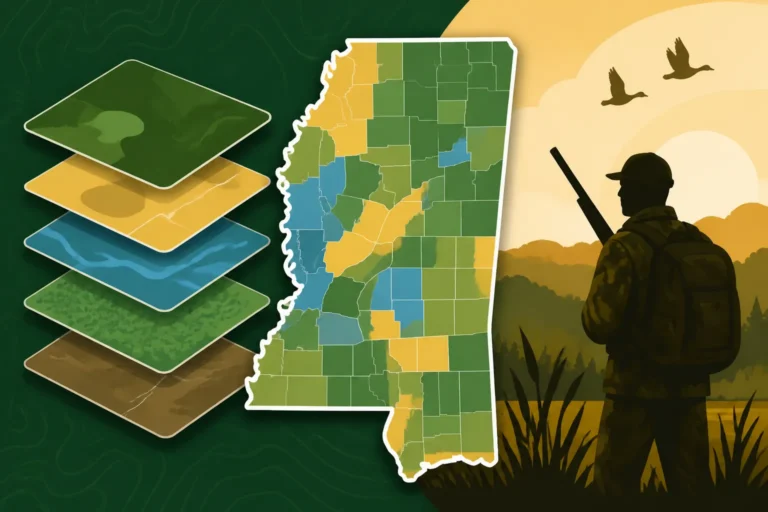
This is where modern technology becomes indispensable. Mapping applications like onX Hunt and GoHunt have revolutionized how hunters can identify and track property boundaries in real-time. These tools overlay property lines, landowner names, and land ownership types (public vs. private) onto detailed satellite imagery and topographic maps, often showing land parcels down to the individual owner. Before you even set foot in the woods, you can use these apps to understand the lay of the land, identify potential access points, and pinpoint areas to avoid. During your hunt, a quick glance at your phone can confirm your location relative to those crucial lines. This proactive approach not only keeps you legal but also builds confidence, allowing you to focus on the hunt itself rather than constantly worrying about straying. Finding Mississippi Property Lines is a task made much easier with these tools.
Civil vs. Criminal Trespass
In Mississippi, trespass can be categorized as either civil or criminal, with different implications for hunters. Understanding this distinction is crucial. Civil trespass typically involves an offense against the property owner that results in some form of damage or interference, even if minor. For instance, if you cross a landowner's property without permission but do no damage, they might sue you for civil damages (though this is rare in simple hunting scenarios). The burden of proof lies with the landowner, and the outcome is usually monetary compensation.
Criminal trespass, however, is a more serious matter. This occurs when you enter or remain on someone's property without authorization, often involving intent or in defiance of clear warnings (like "No Trespassing" signs). Hunting on posted or clearly private land without permission almost always falls into the criminal trespass category. This involves law enforcement, potential arrest, fines, and even jail time, depending on the severity and frequency of the offense. The state prosecutes criminal trespass, not the individual landowner, because it is seen as an offense against the public good. For hunters, falling into the criminal trespass category can also lead to the loss of hunting privileges, a penalty far more impactful than a simple fine for many.
The "Posted" Sign: What It Really Means in Mississippi
"No Trespassing" signs are a universal symbol, but in Mississippi, there are specific legal requirements for how land must be posted for those signs to carry the full weight of the law. While any sign can indicate an owner's desire for privacy, proper posting makes it unequivocally clear that entry is forbidden and elevates a simple trespass to a more serious offense.
Legal Requirements for Posting Land
Mississippi law specifies how land should be marked to establish "posted" property. Generally, land is considered legally posted if purple paint marks are visible on trees or posts, or if "No Trespassing" signs are placed at intervals around the property. The paint marks must be readily visible to a person approaching the property, usually at eye level, and applied to trees or posts not more than 100 feet apart, especially at corners and along visible boundaries. Similarly, signs must be conspicuously placed.
The key here is visibility and consistency. A single faded sign half-hidden in the brush is unlikely to hold up as clear legal posting for an entire large tract. The intent is to give reasonable notice to anyone approaching the property that entry is prohibited. If you're hunting near a private boundary, it's your responsibility to be vigilant for these markings. This is where those mapping apps come in handy again; they can help you understand where those posted boundaries should be, making you more alert to visual cues on the ground. When land is properly posted, there's little room for argument about "not knowing" you were on private property. Mississippi Posted Land Rules details these requirements further.
Implied vs. Express Permission
Understanding the difference between implied and express permission is crucial for hunters. Express permission is explicit: the landowner has directly told you, "Yes, you can hunt my land," or "You have permission to retrieve your deer." This can be verbal, or even better, in writing. This is the gold standard for access and leaves no room for doubt.
Implied permission, on the other hand, is trickier. It's not explicitly stated but inferred from actions or circumstances. For example, if a landowner has allowed you to hunt their land for years without objection, and nothing has changed, there might be implied permission. However, relying on implied permission is risky for hunters. A new landowner, a change in their disposition, or even a misunderstanding can quickly turn implied permission into trespass. It’s always best to seek express permission, especially if you haven't spoken to the landowner recently. Never assume permission just because a gate is open or you've hunted "close to" their land before.
Hunting Clubs and Leased Land Posting
Many private hunting lands in Mississippi are managed by hunting clubs or are leased out to groups of hunters. These properties are often diligently posted, sometimes with specific club signs in addition to or instead of generic "No Trespassing" signs. When you see signs indicating "Leased Property" or a specific club name, it means that the land has been granted exclusively to a specific group, and you, as an outsider, have no right to be there without explicit permission from that club or the landowner.
Members of these clubs typically pay dues for exclusive access, and they are often very protective of their hunting grounds. Trespassing on a leased property can lead to confrontation with club members in addition to legal trouble with the state and landowner. If you're looking to join such a group, understanding Mississippi Hunting Lease Costs can give you insight into the investment members make, and why they guard their boundaries so fiercely. Always respect these boundaries, even if they seem like a tempting shortcut or prime hunting spot.
Seeking Permission: Best Practices for Mississippi Hunters
Gaining access to private land can be a game-changer for hunters, offering less pressured animals and potentially better opportunities. However, asking for permission isn't just about a quick "Can I hunt here?" It's about building relationships, showing respect, and demonstrating that you're a responsible individual who will be a good steward of their property.
Approaching Landowners Effectively
When approaching a landowner, first impressions are everything. Don't show up in your hunting camo with a gun in hand. Dress respectfully, appear clean, and be polite. Introduce yourself clearly, state your purpose (that you're a hunter looking for a place to hunt), and immediately offer to provide references or proof of hunter education if they wish. Be prepared for a "no," and accept it graciously if that's their answer. A "no" today doesn't mean a "no" forever.
Highlight what you won't do: you won't leave trash, cut fences, drive off-road (unless specifically allowed), or bring extra people without asking. Offer to help them out with chores if they need it – fixing a fence, clearing brush, or helping with odd jobs can go a long way in building trust. Many landowners are wary of hunters due to bad experiences, so distinguishing yourself as respectful and trustworthy is paramount. This detailed approach is crucial when Asking a Mississippi Farmer for Permission.
The Value of Written Permission
While a verbal "yes" is permission, written permission is always, always preferable. It eliminates ambiguity, provides a clear record, and protects both you and the landowner. A simple written note outlining who has permission, for what dates, for what game, and on which specific parcels of land can prevent misunderstandings. It can also be critical if you encounter law enforcement or other individuals who question your presence on the property.
Consider a small, laminated card or a letter with the landowner's signature, contact information, and the specifics of your permission. This is particularly important for longer-term agreements or if you plan to hunt multiple times. In Mississippi, while verbal permission might be technically legal, having it in writing offers a layer of protection that simply cannot be overstated. You can refer to Do You Need Written Permission in Mississippi? for more in-depth guidance on this topic.
Building Relationships for Future Access
The best way to secure hunting access isn't just a one-time request; it's about cultivating a lasting relationship with the landowner. Follow through on any promises you make. If you say you'll close a gate, close it. If you offer to help with a chore, make sure you do it. Share some of your harvest with them – a package of venison or some dove breast can be a wonderful gesture of thanks.
Checking in periodically, even when it's not hunting season, helps keep that relationship warm. Send them a Christmas card, or just stop by to say hello and see how they're doing. A landowner who trusts you and enjoys your company is far more likely to grant permission year after year, and might even call you when they see deer or hogs causing problems. This long-term approach transforms a transactional request into a valuable partnership.
Retrieving Game: Navigating Property Lines After the Shot
One of the most agonizing situations for a hunter is when a wounded animal crosses onto adjacent private property. Your instinct is to pursue, but the law isn't always on your side, and acting rashly can lead to serious legal consequences.
The Law on Tracking Wounded Game
In Mississippi, simply wounding an animal does not automatically grant you the right to trespass onto private land to retrieve it. This is a common misconception and a very dangerous one. While most ethical hunters feel a strong moral obligation to recover game, that obligation does not supersede property rights. Crossing a property line, even if you clearly saw your deer fall just inside, is considered trespass without explicit permission from the landowner.
The law is clear: you must obtain permission before crossing onto private property to track or retrieve game. This means if your deer runs across the fence onto a neighbor's property, your first step is not to follow it, but to contact that landowner. This can be incredibly frustrating in the heat of the moment, especially if you're worried about losing the animal, but it's the only legal and respectful course of action.
When You Can't Just Cross That Fence
Imagine this scenario: you've made a perfect shot on a beautiful buck, but in its last throes, it jumps a fence onto a neighbor's property you know is posted. Your heart is pounding, and you see the deer pile up just inside the line. It's tempting to hop the fence, grab your deer, and be back on your side before anyone notices. Do not do this. That seemingly quick and harmless act is trespassing, and if caught, it could result in criminal charges, fines, and the potential loss of your hunting license.
If the landowner is unavailable or refuses permission, you're in a tough spot. While it's heartbreaking, you might have to accept the loss of that animal. This is a harsh reality for hunters who deeply value game recovery, but it underscores the absolute importance of respecting property boundaries at all times. Always consider the potential for game to cross boundaries when choosing your stand location and shot angles. Retrieving Game From Private Land in Mississippi expands on this difficult topic.
Proactive Communication for Game Recovery
The best strategy for tracking game across property lines is to be proactive. If you regularly hunt near a property line, try to establish communication with the adjacent landowner before the season begins. Explain that you hunt next door and ask if they would be open to granting permission for game recovery in the unfortunate event that a wounded animal crosses their boundary.
Even if they don't grant permission to hunt, they might be more amenable to a recovery request if you've already introduced yourself and built a rapport. Having their contact information readily available can save precious time when a deer needs to be tracked quickly. This upfront effort can make all the difference between recovering your game legally and facing a frustrating, or even unlawful, situation.
Special Considerations: Waterways, Roads, and Public/Private Interfaces
Mississippi's diverse landscape means that property lines aren't always straightforward fences in a field. Waterways, public roads, and the fuzzy edges where public and private lands meet present unique challenges for hunters trying to stay on the right side of the law.
Navigable Waterways and Riparian Rights
Hunting along or from Mississippi's rivers, streams, and bayous can be a fantastic experience, but it also brings complex questions about property rights. Generally, if a waterway is considered "navigable" by law, the public has the right to travel on it. However, this right of passage does not automatically extend to hunting adjacent private land from the water or setting foot on the banks of private property.
Riparian rights (rights of landowners whose property abuts a body of water) typically extend to the center of non-navigable streams and to the low-water mark of navigable ones. This means that while you might be able to float down a river, shooting at game on private land from your boat, or stepping onto the bank of private property without permission, is still trespassing. It's a nuanced area of law, and when in doubt, always err on the side of caution and assume the adjacent land is private, requiring permission.
Road Rights-of-Way and Shooting from Public Roads
Another common area of confusion is hunting near public roads. Generally, public roads include a "right-of-way," which is a strip of land on either side of the paved surface dedicated for public use. While you might technically be on public access within that right-of-way, shooting from or across a public road is often illegal and incredibly dangerous. Most counties and municipalities have ordinances prohibiting discharge of firearms within a certain distance of a public road, or even parallel to it.
Furthermore, just because you are in a public road right-of-way doesn't give you permission to track game that runs into adjacent private property, nor does it allow you to step off the right-of-way onto that private land without permission. Always check local ordinances regarding shooting near roads, and never use a public road as a base for hunting private land without explicit permission.
Identifying Public vs. Private Boundaries
For hunters accessing public lands, whether it's a National Forest or a Wildlife Management Area, understanding where that public land ends and private land begins is absolutely paramount. These boundaries are often not clearly marked with fences, especially in vast timberlands or remote areas. It's easy to inadvertently stray a few yards onto private property when you're focused on a trail or a deer sign.
This is precisely where digital mapping tools like onX Hunt and GoHunt are not just helpful, but essential. They use GPS to pinpoint your exact location on a map that clearly delineates public and private land boundaries, often color-coded. Many apps also display the landowner's name for adjacent private tracts, which can be invaluable if you need to seek permission for retrieval or access. Before heading into any public area, downloading the offline maps for your hunting zone with these applications can prevent costly mistakes, especially in areas with spotty cell service. onX Layers for Mississippi Land Status can show you how these tools visualize this critical information. Don't leave home without them!
Here's a quick look at the core differences in types of access and permission:
| Type of Access | Description | Best Practice for Hunter | Risk Level for Hunter |
|---|---|---|---|
| Public Land | Land owned by state or federal government, open to public use (often requires specific permits/licenses for hunting). | Verify regulations, acquire necessary permits (e.g., Mississippi WMA Permit Requirement), and respect boundaries. | Low (if legal and aware) |
| Private Land (Posted) | Land clearly marked with "No Trespassing" signs or purple paint. Entry explicitly forbidden without permission. | NEVER enter without explicit, preferably written, permission from the landowner. | Very High |
| Private Land (Unposted) | Land not explicitly marked as forbidden, but still private property. | ALWAYS assume private and seek permission before entering. | High |
| Verbal Permission | Landowner grants permission verbally. | Confirm specifics (dates, areas, game). Consider sending a follow-up text or email to confirm. | Moderate |
| Written Permission | Landowner grants permission in a signed document, detailing specifics. | Keep a copy with you at all times. This is the safest and most recommended method. | Low |
| Leased Land | Private land rented by a hunting club or individual. Often well-marked with club signs. | Treat as strictly private; only enter if part of the lease or with explicit permission from lessee/landowner. | High |
Consequences: What Happens If You Trespass in Mississippi
Beyond the immediate frustration and embarrassment of being caught, trespassing while hunting in Mississippi can have significant and long-lasting consequences. These aren't just minor inconveniences; they can impact your ability to hunt in the future and your reputation in the tight-knit hunting community.
Penalties for Hunting Trespass
The legal penalties for hunting trespass in Mississippi can vary depending on the specifics of the situation, such as whether the land was posted, if game was actually taken, or if there were aggravating factors like property damage or resisting officers. Generally, criminal trespass is a misdemeanor. This can result in fines, which can range from a few hundred dollars to more substantial amounts, depending on the severity of the offense and the discretion of the court.
In some cases, particularly for repeat offenders or when property damage is involved, jail time is a possibility, though usually for short periods. Even if you're not formally arrested, a citation and a court appearance are almost guaranteed, costing you time, money, and considerable stress. The court process itself can be a significant penalty, pulling you away from work and family obligations. These legal repercussions are designed to deter illegal entry and uphold private property rights.
Loss of Hunting Privileges
For many hunters, the most severe consequence of a trespass conviction isn't the fine or the potential jail time, but the loss of hunting privileges. Mississippi, like most states, has provisions to revoke or suspend hunting licenses for individuals convicted of game and wildlife violations, including hunting trespass. This could mean a suspension for a year, several years, or even a lifetime ban, depending on the nature and number of offenses.
Imagine being told you can't hunt for a season, or even longer, all because you took a shortcut or didn't bother to ask permission. For avid hunters, this is a crushing blow, cutting them off from a passion and a tradition. This suspension can also be reciprocal with other states, meaning a Mississippi conviction could affect your ability to hunt legally across state lines. The long-term impact on your hunting opportunities is a powerful reason to always ensure you have proper permission.
The Reputational Damage in the Hunting Community
Beyond the legal and financial penalties, there's a less tangible but equally damaging consequence: your reputation. The hunting community in Mississippi is often a close-knit one, particularly in rural areas. Word travels fast, and a hunter known for trespassing or disrespecting property rights quickly gains a negative reputation. Landowners talk to each other, and once you're branded as someone who can't be trusted, gaining future access to private land becomes exponentially more difficult, if not impossible.
This reputational damage isn't just with landowners; it can affect your standing with other hunters, clubs, and even local wildlife agencies. A bad reputation can close doors to hunting opportunities, make it harder to join a lease, or simply earn you a cold shoulder at the local co-op. Being a responsible, ethical hunter is about more than just following the letter of the law; it's about upholding the unwritten code of respect and integrity that defines our sport. Don't let a moment of impatience or carelessness ruin your standing in the community you love.
Disclaimer
This article is for general informational purposes only and does not constitute professional advice. Laws, prices and regulations vary by location and change over time. Consult a qualified professional for guidance on your specific situation.