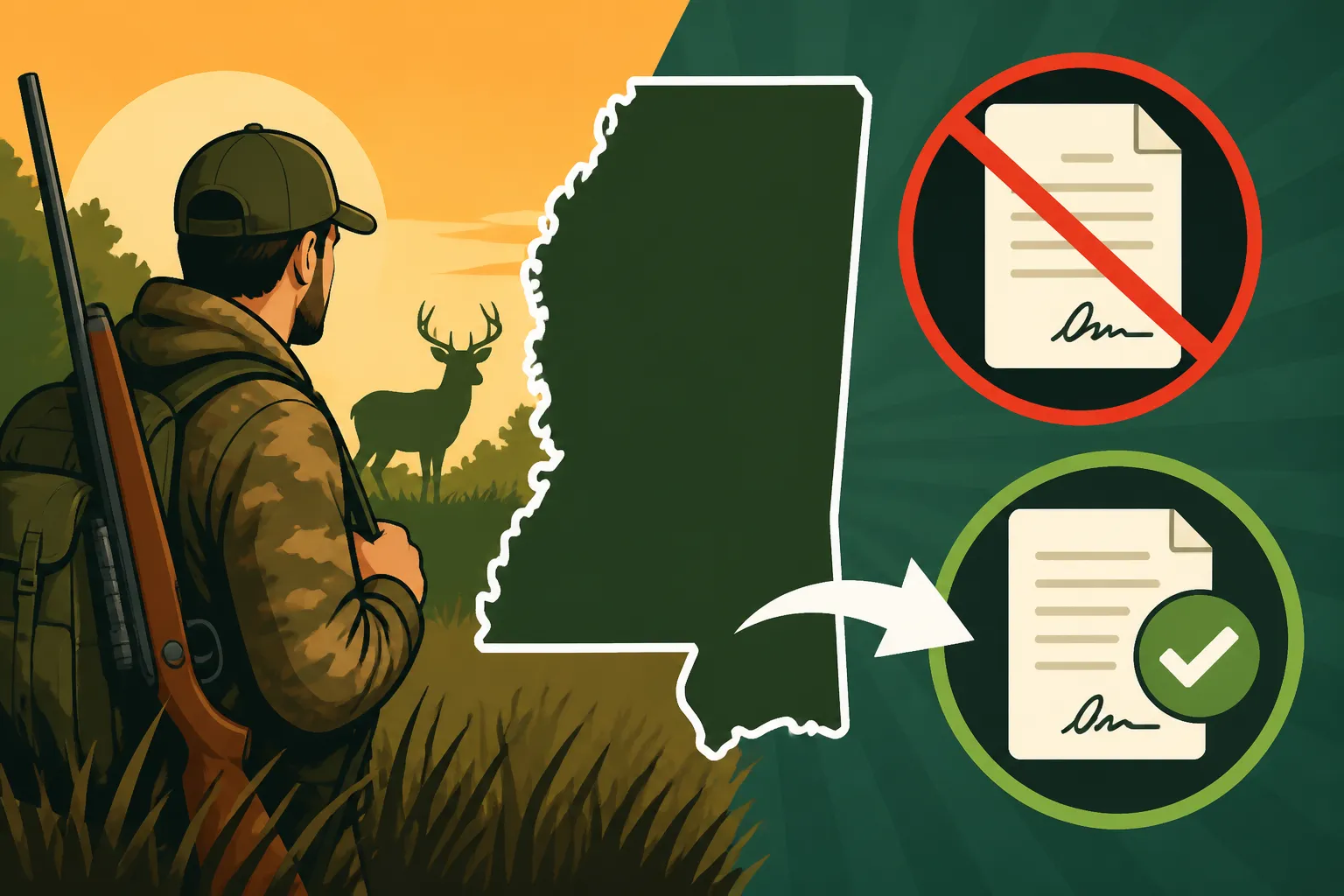
Do You Need Written Permission in Mississippi?
It's a common scenario across Mississippi: you've been granted access to hunt a prime piece of private land, maybe by a friendly handshake or a quick phone call. You head out with high hopes, only to be met with confusion, or worse, confrontation, because someone else—perhaps a different family member or even a new renter—isn't aware of your verbal agreement. This guide is here to untangle the complexities of land access in our state and clarify whether you truly need written permission to hunt in Mississippi, helping you navigate those boundaries with confidence and respect.
Understanding Mississippi's Trespass Laws for Hunters
Navigating the nuances of private land access in Mississippi can feel like trying to track a mature buck through thick bottomland fog. There’s a lot of local tradition and informal understanding, but when it comes to the law, things are pretty clear, even if they're often overlooked in practice. The core of it boils down to showing respect for a landowner's property and having the necessary documentation to prove you have that right to be there.
The Legal Framework: What "Posted" Really Means
In Mississippi, simply having property means it's generally understood to be private. However, the law provides specific provisions for "posted" land. When a property owner takes the time and effort to put up "No Trespassing" signs, purple paint, or clearly mark their boundaries, they are leaving no room for doubt. These markings serve as a very explicit declaration that entry is forbidden without their direct permission. This isn't just a suggestion; it carries legal weight. If land is properly posted, entering it without permission is a clear violation of Mississippi Trespass and Permission Law.
Consider a farmer who has struggled with unauthorized hunters on his pecan grove. He's put up bright orange signs every fifty feet, and he means business. If you step foot on that land, even if you truly didn't see a sign (though you should always be looking), you're legally in the wrong. The law is designed to protect landowners from exactly these kinds of intrusions. So, before you ever step out of your truck, make sure you've visually confirmed the property status.
Verbal vs. Written Permission: The Mississippi Standard
Now, here's where much of the confusion lies. Mississippi law does not always explicitly require written permission for hunting private land. A verbal agreement with the landowner can, in many cases, be legally sufficient. A handshake, a phone call, or even a casual conversation over coffee can constitute permission. Many long-standing hunting traditions in our state are built on these kinds of informal understandings, passed down through generations or neighborly goodwill.
However, just because it can be legally sufficient doesn't mean it's the safest or clearest option. Imagine you've hunted your Uncle Billy's back forty for years on a verbal "sure, go on ahead." But then Uncle Billy's health declines, and his son, who lives out of state, suddenly inherits the property and isn't privy to your long-standing arrangement. Without anything in writing, you could find yourself in a very awkward, potentially legally fraught situation. Or perhaps the landowner simply forgets the specifics of your conversation, or there’s a dispute about the exact boundaries you were allowed to hunt. Verbal agreements, while convenient, are inherently fragile.
The Peril of Implicit Permission
Sometimes, hunters operate under what they perceive as "implicit permission." This might be the case if a gate is always left open, or a fence has been down for years, leading a hunter to believe access is generally accepted. Or, it could be hunting land where folks have "always" hunted, and no one has ever said otherwise. While intent matters in legal proceedings, assuming permission can land you in serious trouble. "I thought it was okay" is rarely a winning defense against a trespass charge.
Take the example of an old logging road that cuts through multiple properties. You've always used it to access public land, and you've never seen a gate or a sign on it. But what if one of those property owners decides to start enforcing their property rights? Your long history of use doesn't grant you an official right of way. Always err on the side of caution. If there's any doubt, assume you don't have permission until you've received explicit, undeniable confirmation from the actual property owner. This proactive approach saves headaches and maintains good relations in the hunting community.
Why Written Permission is Your Best Defense (Even When Not Required)
While Mississippi doesn't always mandate written permission, making the extra effort to get it can save you a world of trouble and heartache. Think of it as an insurance policy for your hunting season—you hope you never need it, but you'll be eternally grateful if you do. In a state where hunting land is often a patchwork of private and public parcels, clear documentation is truly invaluable.
Clarity and Documentation: Eliminating Guesswork
A well-crafted written permission slip removes all ambiguity. It acts as a clear, concise record of the agreement between you and the landowner. Verbal agreements, as we discussed, are prone to misinterpretation, forgotten details, or simple changes of mind. What did you agree to? Which specific parcel of land? For how long? What species? Was it just for deer, or can you chase Mississippi's Year-Round Feral Hogs too? All these questions can create friction.
With written permission, there's no "he said, she said." The document specifies the exact dates or duration of the permission, the specific areas of the property you're allowed to access (perhaps even outlining boundaries on a map), and any conditions or restrictions the landowner might have. For instance, a landowner might grant permission only for archery season, or only for still-hunting, prohibiting deer drives. Having these details spelled out protects both you and the landowner from future misunderstandings. It's the ultimate show of respect for their property and their wishes.
Protection Against Misunderstandings and Accusations
The biggest advantage of written permission is the legal protection it offers. Should a dispute arise—whether it's with the landowner, their family, or even a law enforcement officer who's been called out to investigate a trespass complaint—you have concrete proof of your right to be there. This isn't a hypothetical situation; it happens more often than you might think. Property changes hands, heirs have different ideas, or neighbors might mistakenly report you.
Consider a situation where you're hunting a parcel that's historically been open, but a new neighbor buys the adjacent property and is very particular about boundaries. If you cross onto their land, even accidentally, and they call the sheriff, your verbal agreement with the original landowner might not hold water with the new neighbor or the responding officer. But if you have a signed document clearly outlining your permitted area, you can quickly clear up any confusion. This is particularly crucial if you're a nonresident hunter, as misunderstandings can escalate quickly when you're not known in the local community.
Modern Tools for Property Line Verification
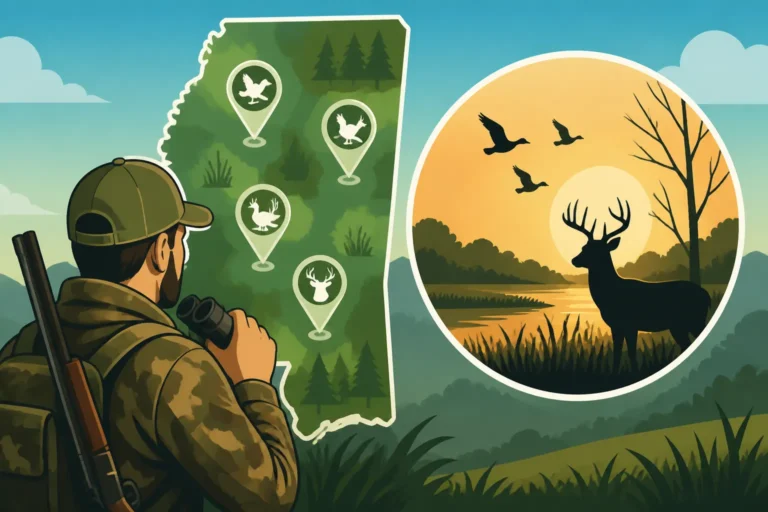
While not a substitute for formal written permission, technology can be a powerful ally in clarifying land boundaries and preventing accidental trespass. Modern mapping applications like onX Hunt and GoHunt provide invaluable services for hunters. These tools allow you to view detailed property lines, landowner names, and even access public land boundaries right on your phone or GPS device. This is crucial for Finding Mississippi Property Lines in complex areas.
Imagine you're hunting a parcel with a notoriously unclear boundary on one side. Before apps like onX Hunt, you'd be guessing, or relying on old fence lines that might not be accurate. Now, with a few taps on your phone, you can see exactly where the private land ends and public land begins, or where one private property stops and another starts. While these apps don't grant permission, they are indispensable for confirming your location relative to the permission you do have. They help you stay within your agreed-upon boundaries, which, in turn, helps build trust with landowners and prevents legal issues.
Crafting an Effective Written Permission Agreement
Alright, so you're convinced that written permission is the way to go – smart move! Now, what exactly should that document look like, and what absolutely needs to be included to make it truly effective? It doesn't have to be a legal novel written by a fancy lawyer, but it does need to hit a few key points to be ironclad. The goal is clarity and mutual understanding, plain and simple.
Essential Elements of a Permission Slip
A good written permission agreement should cover all the bases, leaving no room for doubt or misinterpretation. Think of it as a checklist that both you and the landowner agree upon. Here's what you absolutely want to include:
- Identification of Parties: Full legal names and contact information for both the landowner(s) granting permission and the hunter(s) receiving it.
- Property Description: A clear and specific description of the property being accessed. This should include the physical address, county, and ideally, a legal description or parcel number if the landowner has it. A simple map outlining the permitted hunting area, signed by both parties, is also an excellent addition.
- Dates and Duration: The exact dates the permission is valid, or a specific duration (e.g., "for the entire 2024-2025 deer season," or "from October 1, 2024, to January 31, 2025"). Be specific to avoid year-to-year ambiguity.
- Permitted Activities: Clearly state what activities are allowed. Is it just deer hunting? Can you hunt small game, turkeys, or Hunting Mississippi's Year-Round Feral Hogs? Is scouting allowed before the season? What about setting up trail cameras or Hanging a Stand on a Delta Bottomland Funnel? Spell it out.
- Conditions and Restrictions: Any specific rules the landowner has. This might include "no ATVs," "park only in designated areas," "no open fires," "do not interfere with farming operations," or even "report all harvests to me."
- Signatures and Date: Both the landowner and the hunter(s) must sign and date the document. This signifies mutual agreement. If there are multiple hunters, all should sign, or each should have their own individual permission slip.
Having a template on hand can be incredibly useful when you're Asking a Mississippi Farmer for Permission. You can adapt it on the spot to fit their specific land and requests.
Hypothetical Scenarios and Added Details
Let's run through a couple of real-world scenarios to illustrate why those extra details matter.
Scenario 1: The "Friend of a Friend" Land
You get permission to hunt from a friend, who says his buddy owns some great ground. Your friend gives you the landowner's number, you call, and he says, "Sure, hunt whenever." A verbal go-ahead, easy. But you don't know the exact boundaries. A week later, you shoot a deer that runs onto land you thought was part of the deal, only to find it's a completely different owner who is much less friendly.
- Written Solution: The permission slip would have required the landowner to clearly delineate the boundaries, perhaps by marking them on a satellite image printout. It would have also clarified if you had permission to track wounded game onto adjacent properties, or if specific arrangements needed to be made.
Scenario 2: The Evolving Farm Property
You've had verbal permission to hunt a farmer's timber block for five years. This year, he decided to clear-cut half of it and convert some of his pasture into a new soybean field. Your usual hunting spots are gone, and what's left is now much closer to his home. He's fine with you still hunting, but he'd prefer you don't drive your truck through the new field.
- Written Solution: A renewed written agreement could specify the new boundaries, acknowledge the clear-cut areas, and explicitly state "no vehicle access beyond the main gate" or "foot traffic only in new agricultural fields." This adapts to the changing land use and maintains a respectful relationship. It also might specify any changes to what game can be hunted in the now-open areas.
By thinking through these possibilities ahead of time, your written permission becomes a living document that anticipates and addresses potential issues, making for a much smoother and more enjoyable hunting season.
Permission Slip Table Example
Here’s a simple table illustrating the key components you should aim for in a written permission slip:
| Category | Essential Details to Include | Why It Matters |
|---|---|---|
| Landowner Info | Full Name, Phone Number, Email, Physical Address | Identifies who is granting permission; vital for contact and verification. |
| Hunter Info | Full Name, Phone Number, Email, Hunting License Number, Physical Address | Identifies who is receiving permission; for accountability and emergency contact. Your Mississippi Hunting Licenses and What They Cost will likely be needed. |
| Property Details | Physical Address of Property, County, Legal Parcel ID (if available), Description of Boundaries (e.g., "North of CR 123, West of Big Creek"), Attached Map | Clearly defines the exact land parcel(s) accessible, preventing accidental trespass. Using onX Hunt or GoHunt to draw boundaries on a map to attach is great. |
| Dates/Duration | Specific Start/End Dates (e.g., "10/1/2024 to 1/31/2025"), or "For the duration of the 2024-2025 Mississippi Deer Season" | Prevents ambiguity about when permission is valid; ensures it's not assumed year after year without renewal. |
| Permitted Activities | "Deer Hunting (Archery & Gun)," "Turkey Hunting," "Hog Hunting," "Scouting," "Placing Trail Cameras," "Shed Hunting" | Clarifies exactly what the hunter is allowed to do, avoiding conflicts over unauthorized activities. |
| Restrictions | "No ATVs," "Park in designated area only," "No open fires," "No driving on fields," "Report all harvests," "Access via north gate only" | Outlines any specific rules or limitations set by the landowner, showing respect for their property and operations. |
| Emergency Contacts | Additional numbers for landowner/hunter | Crucial for any unforeseen events or emergencies while afield. |
| Signatures | Landowner Signature(s), Hunter Signature(s), Date of Signing | Legally binds both parties to the agreement and confirms mutual understanding and consent. |
Remember, this isn't just about protecting yourself; it's about building and maintaining a good relationship with the landowner. A well-prepared hunter who respects boundaries and agreements is far more likely to get continued access.
Navigating Public Versus Private Land Boundaries
Even with the best intentions and a solid permission slip, the real world of Mississippi hunting means constantly being aware of boundaries. Our state's landscape is a mosaic of private farms, timber company tracts, national forests, and wildlife management areas, often right next to each other. Understanding where one ends and another begins is absolutely critical for staying legal and safe.
Knowing Exactly Where You Stand
One of the biggest headaches hunters face is unknowingly crossing a property line. It happens. You're focused on a game trail, following a ridge, or just trying to get to your favorite stand, and suddenly you're on land you don't have permission to be on. This is where relying on good old-fashioned map reading combined with modern technology becomes indispensable. Scouting Mississippi Public Land Before Season is not just about finding game; it's about finding boundaries.
Before you even step foot in the woods, use mapping tools like onX Hunt or GoHunt to digitally mark all property lines, especially those adjacent to where you'll be hunting. These apps can be a lifesaver, showing you property ownership and boundaries in real-time on your phone. Even if you have written permission for a specific parcel, knowing the lines of neighboring properties, particularly if they are Mississippi Posted Land Rules, helps prevent accidental incursions. Always carry a paper map and compass as a backup, especially in areas with poor cell service, which is common in many of our best hunting spots.
What to Do If You Accidentally Trespass
Despite all your careful planning, mistakes can happen. You might misread your GPS, or a game animal might lead you astray. If you realize you've accidentally crossed onto private property where you don't have permission, the most important thing is to act quickly and respectfully. Do not try to hide or sneak out.
Immediately stop hunting, unload your weapon, and make your way directly back to the property you have permission for. If you encounter the landowner or anyone else, be honest and apologetic. Explain that it was an unintentional mistake, point to your mapping app if it helps explain the confusion, and assure them you are leaving immediately. A simple, sincere apology often goes a long way in de-escalating a situation and preventing it from turning into a formal complaint or legal issue. Trying to conceal your presence or argue will only make matters worse.
The Sticky Situation of Retrieving Wounded Game
This is a classic dilemma that almost every hunter faces at some point: you make a good shot on a deer, but it runs onto an adjacent property for which you don't have permission. This is arguably the most sensitive of boundary issues, and it requires extreme caution and respect. Mississippi law generally does not grant you the right to trespass to retrieve game, even if you know the animal is there.
If your animal crosses a property line onto land you don't have permission to access, you absolutely must make a good-faith effort to contact the landowner for permission to retrieve it. This is where those good relationships and clear communication come into play. If you cannot reach the landowner, or if they deny permission, you are legally stuck. It's a tough pill to swallow, but it's crucial to respect private property rights. Trying to sneak onto the property can lead to serious trespass charges. In some cases, a game warden might be able to mediate or assist, but their primary role is law enforcement, not granting access. For more specifics, check out Retrieving Game From Private Land in Mississippi.
Navigating these boundaries, whether by carrying a robust onX Hunt subscription, a paper map, or simply by fostering strong relationships and always getting written permission, is a cornerstone of ethical and responsible hunting in Mississippi. It keeps you legal, safe, and respectful of the land that provides so much enjoyment.
Disclaimer
This article is for general informational purposes only and does not constitute professional advice. Laws, prices and regulations vary by location and change over time. Consult a qualified professional for guidance on your specific situation.