Warren County Public Land for Deer
Finding quality public land for deer hunting near Vicksburg, especially in a county like Warren County, can often feel like searching for a needle in a haystack amidst vast private holdings. Many hunters get frustrated by crowded spots or simply not knowing where to begin. This guide aims to clear the confusion, giving you a detailed look at the public land opportunities for deer hunting in Warren County, Mississippi, and equipping you with the knowledge to make your next hunt successful.
Warren County's Unique Deer Hunting Environment
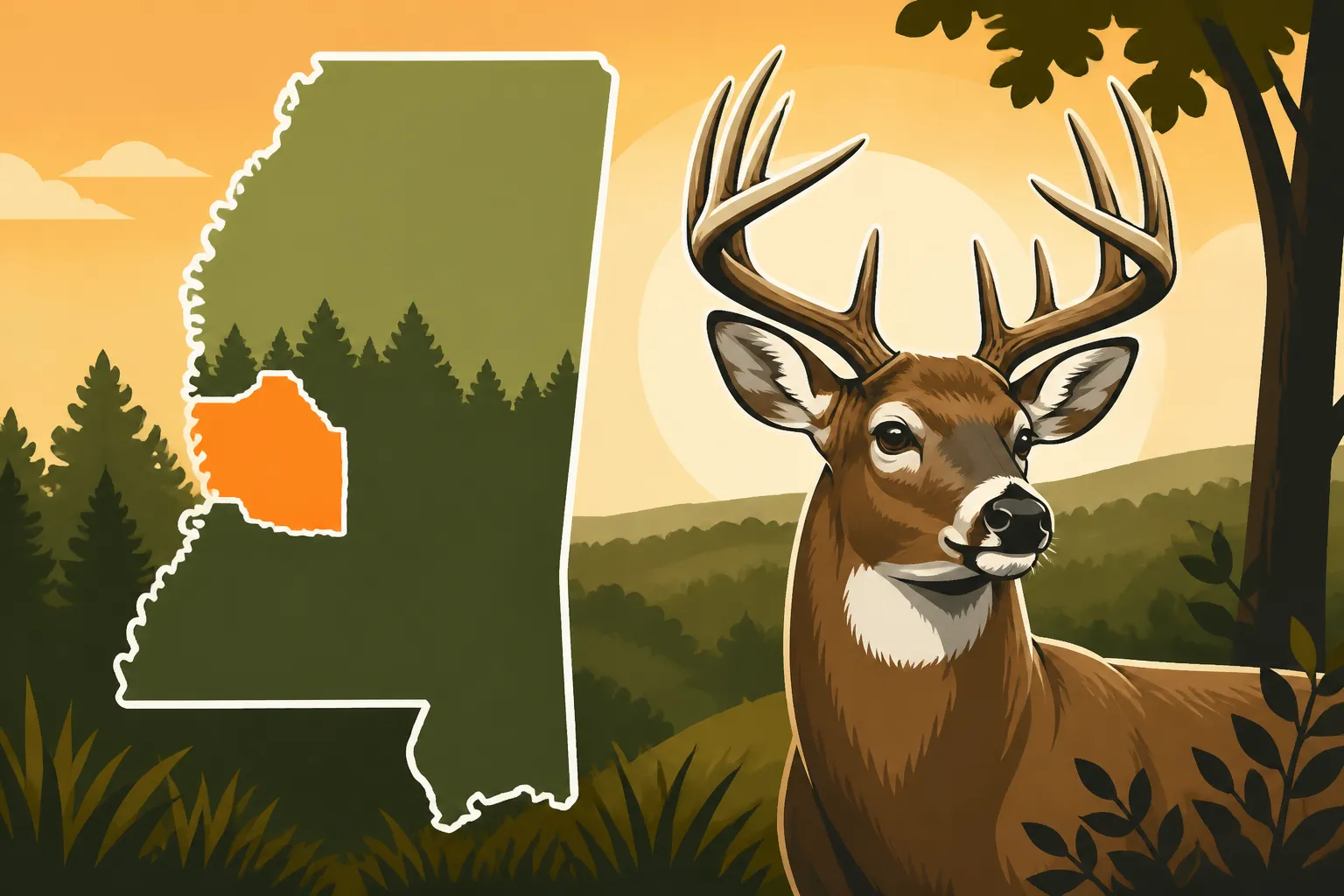
Warren County, Mississippi, presents a fascinating blend of hunting environments that offer unique challenges and rewards for deer hunters. Situated along the iconic Mississippi River, the county's landscape is heavily influenced by the mighty river system, creating diverse habitats that are incredibly appealing to white-tailed deer. Understanding this geographical makeup is the first step toward effective public land hunting here.
Blending Hills and Delta Influences
While much of Warren County falls within the state's Hills Deer Management Unit, its western edge borders the vast Mississippi Delta. This proximity means you'll encounter a captivating mix of terrain types. You might find yourself navigating the rolling, timbered hills characteristic of central Mississippi, complete with hardwood draws, pine thickets, and scattered agricultural fields. Yet, just a short distance away, particularly closer to the river and its tributaries, you'll encounter low-lying bottomland hardwoods, cypress brakes, and swampy areas more reminiscent of the Delta. This ecological crossover provides varied deer habitat and movement patterns, often making for a dynamic hunting experience. Deer in the hillier regions might exhibit typical ridge-running behavior, while those in the bottomlands are more accustomed to navigating water and dense cover. It’s crucial to recognize which influence is dominant in the specific public parcel you're exploring, as it will dictate your approach. Mississippi's Four Deer Management Units explains this breakdown in more detail across the state.
Primary Deer Habitat Features
The deer in Warren County thrive on the abundant natural resources found across its mixed landscape. In the uplands, you'll see a mix of oak and hickory trees, which are prime producers of acorns – a critical fall and winter food source. These areas often feature old logging roads, small clear-cuts now in various stages of regrowth, and dense understory that offers excellent bedding cover. Deer will use these features for travel corridors and security. Down in the bottomlands, you'll find towering cottonwoods, sweet gums, and more cypress and tupelo stands. These areas are often prone to flooding but provide rich forage during dry periods and exceptional cover year-round. Creek bottoms and sloughs act as natural funnels, directing deer movement and creating ideal ambush points. Understanding how deer utilize these diverse habitat features – from feeding in acorn flats to bedding in impenetrable thickets or moving along slough edges – is vital for successful hunting. A good aerial map, like those found on onX Hunt, can illuminate these habitat transitions vividly.
Navigating Public Lands: Focus on Panther Swamp NWR
When we talk about public land deer hunting in Warren County, one name immediately springs to mind: Panther Swamp National Wildlife Refuge. This vast and ecologically significant area is the undeniable centerpiece for public land hunters in the region, offering a genuine taste of Mississippi's wild bottomland hunting.
Understanding Panther Swamp's Offerings and Rules
Panther Swamp National Wildlife Refuge, managed by the U.S. Fish and Wildlife Service, is a sprawling expanse of bottomland hardwood forest, cypress-tupelo swamps, and oxbow lakes. It's truly a gem for the hunter who loves wild country. The refuge is specifically managed to provide habitat for migratory birds and other wildlife, including a healthy population of white-tailed deer. Hunting here is a serious endeavor, demanding respect for the land and adherence to specific regulations that often differ from statewide Mississippi Department of Wildlife, Fisheries, and Parks (MDWFP) rules. Before you even set foot on the refuge, you must check the current year's refuge-specific regulations. These rules cover everything from hunting dates (which can vary from the general state season), legal weapons, bag limits, and even access restrictions. They often have tighter antler restrictions than some state lands, or specific permits required for certain hunts. For instance, some areas might be archery-only, or certain periods may be restricted to youth hunts. Always check the official U.S. Fish and Wildlife Service website for Panther Swamp NWR or their printed brochures. Panther Swamp National Wildlife Refuge Hunting provides a broader overview of hunting this amazing place.
The terrain itself within Panther Swamp is challenging. Expect to deal with water – sometimes shallow, sometimes deep – especially during the late fall and winter. This means waders, knee boots, or even a small boat or canoe can be indispensable for reaching prime areas. The dense understory in many parts provides incredible cover for deer, but it also makes visibility tough, requiring patient hunting and precise shot placement.
Access Points and Zones within the Refuge
Accessing Panther Swamp NWR isn't always as simple as pulling off a main highway. The refuge has several designated public access points, typically marked with signage. Many of these access points lead to interior roads, levees, or walking trails that allow hunters to get deeper into the property. However, many of the best spots require a significant hike, sometimes through extremely rugged and wet conditions. It’s not uncommon for hunters to use bicycles on old logging roads or boats to navigate sloughs and flooded timber.
It's vital to identify specific hunting zones or units within the refuge, as some areas may be closed to hunting, or have different regulations. Using a reliable mapping application like onX Hunt is absolutely non-negotiable here. You can download offline maps to ensure you always know your location, even without cell service. These apps clearly mark refuge boundaries, internal roads, and sometimes even topographic features that can help you plan your entry and exit routes. Pay close attention to any "no hunting" zones or restricted areas, which are often established around refuge buildings, visitor centers, or sensitive wildlife habitat. Scouting these areas thoroughly before the season is open is not just a good idea, it's often the only way to genuinely understand the lay of the land and how deer move through it.
Strategic Deer Hunting for Warren County Public Ground
Hunting public land in Warren County, especially in the challenging environments like Panther Swamp, demands a well-thought-out strategy. It's not just about showing up; it's about preparation, adaptability, and understanding deer behavior in these specific habitats.
Pre-Season Scouting and Digital Tools for Success
Effective pre-season scouting is the cornerstone of any successful public land hunt, and it's particularly critical in Warren County. With large, often dense tracts of land like Panther Swamp, you can't just stumble into a productive spot on opening morning. Start your scouting long before the leaves drop, ideally in late summer or early fall. Look for primary food sources – especially acorn-producing oaks in the uplands or browse in the bottomlands. Identify bedding areas, which are typically dense, secluded thickets offering security cover. Then, connect the dots: find the trails, funnels, and pinch points deer use to travel between these feeding and bedding areas. Old logging roads, creek crossings, and subtle changes in elevation can all serve as excellent travel corridors.
Digital mapping tools are invaluable for this process. Applications like onX Hunt or GoHunt allow you to scrutinize aerial imagery, identify potential bottlenecks, locate water features, and even mark potential stand sites from your couch. You can overlay property boundaries, topographic maps, and even public land designations. Take advantage of their features to mark rubs, scrapes, tracks, and droppings when you're physically in the woods. This helps you build a detailed picture of deer movement over time. Remember, fresh sign is always king, but historical data from your digital maps can help you find areas that consistently hold deer year after year. Scouting Mississippi Public Land Before Season delves deeper into these techniques.
In-Season Tactics for Diverse Terrain
Once the season is underway, your tactics will need to adapt to the varied terrain of Warren County.
- Bottomland Hunting: In areas like Panther Swamp, focusing on funnels created by sloughs, creek bends, or slight rises in elevation can be highly effective. During periods of high water, deer will often congregate on the highest ground available, creating predictable patterns. Hunting the edges of cypress brakes or flooded timber where deer might be feeding on aquatic vegetation or exposed browse can also pay off. Ground blinds can be very effective in these dense, wet environments, offering concealment without the need to find a suitable tree. Remember, scent control is paramount in these stagnant air environments. You'll often be targeting specific travel routes in thick cover, so patience is key. Hunting Delta Unit Bottomland Deer offers additional insights into this type of terrain, which closely mirrors parts of Warren County.
- Hilly and Timbered Areas: In the more undulating parts of the county, concentrate on ridge tops, saddles, and drainages that act as natural travel corridors. Deer will often move along these features, especially during the rut. Identifying south-facing slopes, which get more sun and often retain browse longer into the winter, can also be productive. Rattling and grunting can be surprisingly effective during the rut in these areas, as the sound carries well through the timber. Still-hunting slowly through draws or along ridge lines, stopping frequently to glass, can be a great way to cover ground and intercept moving deer. Still-Hunting Hills Unit Ridges provides excellent strategies for this type of habitat.
Managing Hunter Pressure and Finding Seclusion
Public land, by its very nature, attracts hunters. Warren County's accessible public parcels can see significant pressure, especially on opening days and weekends. To succeed, you need to be willing to go where others won't. This often means walking farther, enduring tougher terrain, or hunting less conventional spots.
Here's how to manage pressure:
- Go Deeper: Most hunters stick close to easy access points. By walking an extra mile or two, you significantly increase your chances of finding undisturbed deer. Use your mapping apps to identify areas that are farthest from roads or commonly used trails.
- Hunt Mid-Week: If your schedule allows, hunting on weekdays will almost always offer a more solitary experience.
- Utilize Water Access: If boating is an option, accessing areas of Panther Swamp via canoe or kayak can get you into spots few other hunters bother with.
- Hunt Off-Peak Times: During the middle of the day, many hunters head back to camp. Deer, however, are still moving. A long, patient sit through the midday can sometimes be your most productive time, especially during the rut.
- Understand Pressure Points: Watch where other hunters park or where trails are heavily worn. These are areas to either avoid or to set up downwind of, anticipating deer being pushed out. Finding Ground Others Walk Past is an invaluable resource for this mindset.
Essential Gear and Preparation for Warren County Hunts
Being properly equipped is non-negotiable when hunting Warren County public land, especially in areas like Panther Swamp where conditions can be demanding and variable. Your gear needs to withstand wet, muddy, and sometimes dense environments, while also supporting your hunting strategy.
Must-Have Equipment for Swamp and Timber Hunts
The diverse terrain of Warren County dictates a thoughtful gear list. Here are some essentials:
- Waterproof Footwear: Whether it's chest waders for crossing sloughs or tall rubber boots for muddy trails, keeping your feet dry is critical for comfort and safety. You can expect to encounter water at some point, even if it hasn't rained recently.
- Durable Rain Gear: Mississippi weather can turn on a dime. A high-quality, quiet rain suit that can be easily packed is a lifesaver, not just for staying dry, but also for breaking wind on colder days.
- Navigation Tools: Beyond your smartphone with onX Hunt or GoHunt (with offline maps downloaded!), carry a backup physical compass and map. Batteries die, and technology can fail. A handheld GPS unit can also provide added reliability.
- Headlamp/Flashlight: For early morning walks in and late evening walks out. Make sure it has a red light option to preserve your night vision and minimize disturbance to wildlife.
- Insect Repellent: Mosquitoes, ticks, and gnats can be relentless, especially in the bottomlands. Permethrin for clothing and a good skin repellent are crucial.
- Game Cart or Drag Sled: If you're fortunate enough to harvest a deer, getting it out of a remote, muddy area can be extremely difficult. A robust game cart or even a heavy-duty drag sled can make the difference between a triumphant recovery and a miserable, exhausting ordeal.
- First-Aid Kit: Accidents happen in the woods. A compact kit with essentials for cuts, scrapes, blisters, and insect bites is a must-have.
- Water and Snacks: Dehydration and low energy can quickly sap your focus. Always carry more water and high-energy snacks than you think you'll need.
- Tree Stand/Ground Blind: Depending on your hunting style and the specific regulations of the public land, bring appropriate concealment. If using a tree stand, ensure it's safe, and follow all safety harness protocols. Remember, many public lands have rules about how long stands can be left up or if they need to be portable. Using a Ground Blind on Mississippi Public Land covers some great options.
License, Permits, and Reporting Requirements
Before you ever head afield, ensure all your legal ducks are in a row. For deer hunting in Mississippi, you'll need a valid hunting license, and depending on your residency status and the species you plan to hunt, additional permits or stamps might be required. For example, non-residents will need a Mississippi Nonresident All-Game License Cost and likely a Mississippi Nonresident Deer Permit Rules. Always carry proof of your license and any necessary permits – often, a digital copy on your phone is sufficient, but having a physical copy can prevent headaches if your phone dies.
Crucially, deer harvest reporting is mandatory in Mississippi. Every deer harvested must be reported to the MDWFP through their online system or mobile app within 72 hours of harvest, or before the deer leaves the state. This data is vital for wildlife management. Failure to report can result in fines and other penalties. Additionally, if you're hunting in a Chronic Wasting Disease (CWD) Management Zone (which can change, so always check the latest MDWFP maps), there might be specific regulations regarding carcass movement or mandatory testing requirements. Always review the most current Mississippi Deer Reporting Requirements to stay compliant and help support the health of the state's deer herd.
Disclaimer
This article is for general informational purposes only and does not constitute professional advice. Laws, prices and regulations vary by location and change over time. Consult a qualified professional for guidance on your specific situation.