Bringing Your Own Rifle on a Guided Hunt
It's a familiar dilemma for any hunter planning a guided trip, especially when traveling a bit: do you trust your tried-and-true rifle, the one you've sighted in meticulously and carried for years, or do you take advantage of the outfitter's gear? This guide will walk you through the practicalities, regulations, and personal considerations involved in bringing your own rifle on a guided hunt in Mississippi, helping you make the best decision for your next adventure in the Magnolia State.
The Undeniable Comfort of Your Own Rifle
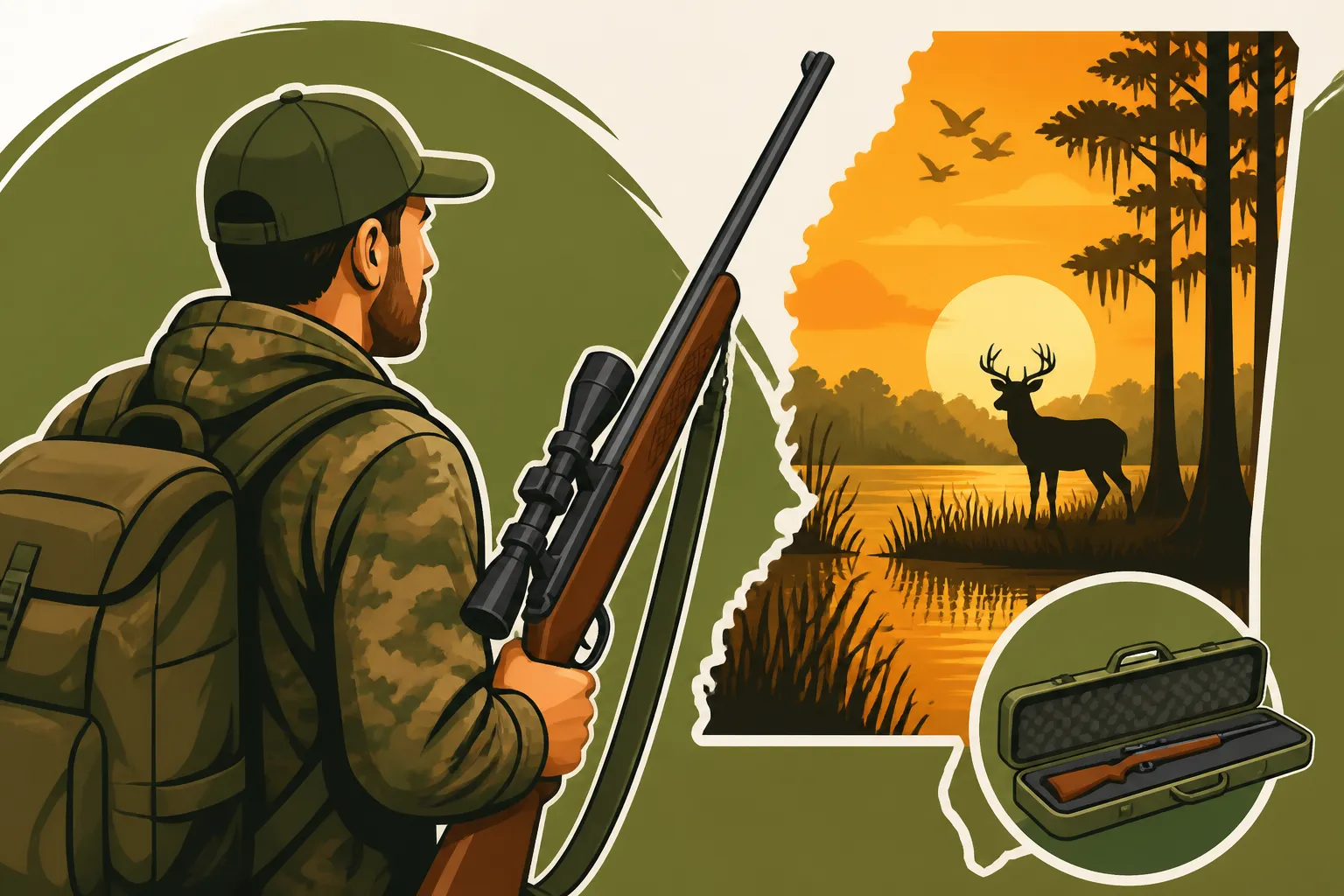
There's a deep, almost instinctual connection a hunter builds with their own firearm. It’s more than just a tool; it’s an extension of your body, a testament to countless hours at the range, and a keeper of many successful memories. When you're facing that crucial moment in the Mississippi woods—whether it's a big Delta buck slipping through thick cover or a hog rooting aggressively in a creek bottom—having your rifle in your hands can make all the difference.
Knowing Your Equipment Inside and Out
The biggest advantage of bringing your own rifle is simply knowing it. You understand its weight, its balance, the feel of the trigger pull, and exactly where it shoots at 50, 100, and even 200 yards. This isn't just about raw accuracy; it's about confidence. When you're sitting in a stand overlooking a green field in the Hills Unit, or waiting in a blind along a cutover edge, that self-assurance can settle your nerves and sharpen your focus. You've practiced with this rifle, you’ve shot it in different conditions, and you know its quirks, if any. There's no learning curve, no uncomfortable surprises when the moment of truth arrives.
Think about it: you’ve spent your own time zeroing this specific rifle, potentially with your preferred hunting ammunition. You know how it performs in various temperatures and humidity levels because you’ve experienced it. Handing that over to a rifle you've never touched before, even a high-quality one from an outfitter, introduces an unknown variable. For many hunters, especially those chasing a trophy or making a significant investment in a guided trip, eliminating as many unknowns as possible is paramount. For more on what rifles are legal here, check out Mississippi Legal Firearms for Deer Hunting.
When an Outfitter's Rifle Might Be the Better Option
While the comfort of your own rifle is powerful, there are certainly scenarios where leaving your firearm at home and using an outfitter’s can be a smart move. Traveling, especially by air, can complicate things significantly, and sometimes an outfitter has specific equipment that's better suited to the local hunting conditions or regulations.
Navigating Travel Logistics with Firearms
The biggest hurdle for many hunters traveling to Mississippi from out of state is the sheer hassle of transporting a firearm. Airlines have strict rules: your rifle must be in a hard-sided, locked case, declared at check-in, and typically requires additional fees. Ammunition also has specific packing requirements. Factor in potential layovers, lost luggage anxieties, and the overall stress of navigating airports with a locked gun case, and it can quickly outweigh the benefits of bringing your own.
Imagine you're flying into Jackson or Memphis for a hunt in the Mississippi Delta. You'll need to make sure your case meets TSA requirements, that your ammo is packed correctly (often in its original packaging, separated from the firearm), and that you allocate extra time at the check-in counter. This can be particularly daunting if you're not a seasoned air traveler with firearms. For some hunters, the peace of mind that comes from simply walking off the plane, heading to the lodge, and having a ready-to-go rifle waiting for them is invaluable. This is especially true for shorter, intense hunts where every minute counts.
Specific Hunt Needs and Local Regulations
Outfitters in Mississippi often specialize in particular types of hunts, and they might have specific rifles that are optimized for those conditions. For example, if you’re doing a thermal night hunt for feral hogs, an outfitter might provide suppressed rifles with thermal optics—equipment you might not own or wish to travel with. Or, perhaps the specific terrain, like dense bottomland hardwoods, calls for a particular caliber or shorter barrel that they keep on hand.
Mississippi also has specific antler restrictions in its different deer management units, like the Delta Unit's twelve-inch spread rule or the Hills Unit's ten-inch spread. While this doesn't directly impact your rifle choice, an outfitter might have rifles specifically sighted for precise shot placement on these legal bucks. If you’re hunting in an area affected by Mississippi's Chronic Wasting Disease Zones, some hunters prefer to use an outfitter’s rifle to minimize any potential complications with transporting game or equipment across CWD lines, though current regulations primarily focus on carcass movement.
Sometimes, an outfitter might even require you to use their rifle for safety or consistency reasons, especially if they have a specific setup or bullet they prefer for their hunting grounds. Always clarify this when booking. Platforms like BookYourHunt are excellent resources for finding detailed outfitter information, including their policies on client-supplied firearms.
Key Considerations Before Making Your Decision
Deciding whether to pack your rifle or rely on the outfitter's equipment requires thinking through several practical and regulatory details. It's not a one-size-fits-all answer, and what works for one hunt might not be ideal for another.
Understanding Outfitter Policies and Expectations
Before you even start packing, always have a direct conversation with your outfitter about their policy on client-owned firearms. Some outfitters are perfectly happy for you to bring your own, expecting you to show up with a sighted-in rifle and knowing your capabilities. Others might prefer or even require you to use their equipment for various reasons:
- Insurance Liability: They may have specific insurance requirements that dictate the use of their own, regularly maintained and inspected firearms.
- Ammunition Control: They might use a specific type of ammunition for ethical kills or to minimize meat damage, and they'll want to ensure all hunters are using it.
- Familiarity with Stands/Blinds: Their rifles might be sighted specifically for the average shot distances in their hunting areas.
- Suppressor Use: For hog hunting or close-quarters deer hunting, they might have suppressed rifles you wouldn't typically travel with.
When you're browsing for guides on services like GoHunt, look for sections describing equipment provided or recommended. If it’s not explicitly stated, ask directly. Clarify if there's an extra charge for using their rifle or if ammunition is included. You don't want any surprises when you arrive at camp.
The Importance of Caliber and Ammunition
Mississippi has specific regulations regarding legal firearms for deer hunting, including minimum caliber rules. While most common deer calibers (.270, .30-06, .308, 6.5 Creedmoor, etc.) are perfectly legal and effective, it's good to be aware. You can learn more about this in Mississippi Minimum Rifle Caliber Rules. If you bring your own rifle, ensure your chosen caliber and ammunition are appropriate for the game you're pursuing and compliant with state law.
If you opt for the outfitter's rifle, inquire about the caliber they typically provide. Make sure you're comfortable with it. If they offer a .30-06, and you've only ever shot a .243, the recoil difference might affect your shot placement under pressure. Also, ask about the specific ammunition brand and bullet weight. This information can help you prepare mentally, or even lead you to practice with a similar setup if possible before your trip.
Practice, Practice, Practice
Whether it’s your rifle or theirs, practice is key. If you decide to bring your own, ensure it’s sighted in and you've refreshed your shooting skills before the trip. Don't wait until the day before you leave. If you plan to use the outfitter's rifle, ask if you can arrive a bit early to spend some time at a range or shooting lane to get accustomed to it. A good outfitter will always allow for this crucial step to ensure a clean, ethical kill. They might even have a dedicated range on their property for clients.
A quick table can help summarize the pros and cons:
| Feature | Bringing Your Own Rifle | Using Outfitter's Rifle |
|---|---|---|
| Familiarity & Comfort | High; established confidence, known zero. | Low initially; requires adaptation and pre-hunt practice. |
| Accuracy | Proven by your own practice; custom to your preferences. | Relies on outfitter's maintenance; unknown until shot. |
| Travel Logistics | Complex; airline rules, fees, potential for loss. | Simple; no firearm transport hassles. |
| Cost | No rental fee, but potentially airline fees. | May involve a rental fee, but often includes ammo. |
| Maintenance | Your responsibility to ensure readiness. | Outfitter's responsibility. |
| Specialized Gear | Limited to your personal collection. | Access to specialized equipment (e.g., thermal, suppressed). |
| Regulations | Must ensure your setup is compliant. | Outfitter ensures their equipment is compliant. |
Logistics of Traveling with Firearms
If you do decide to bring your own rifle to Mississippi, especially if you're crossing state lines, you need to be acutely aware of federal and state laws regarding firearm transportation. This isn't just about avoiding trouble; it's about being a responsible, law-abiding hunter.
Air Travel Regulations
When flying domestically, the Transportation Security Administration (TSA) and your specific airline dictate firearm transport. Generally, firearms must be:
- Unloaded: This is non-negotiable.
- Locked Hard-Sided Container: The case must be specifically designed for firearms and be lockable. Only you should have the key or combination. Some airlines require non-TSA approved locks.
- Declared at Check-in: You must declare the firearm to the airline agent at the ticket counter. They will provide a declaration tag to place inside the case.
- Checked Baggage Only: Firearms are never allowed in carry-on baggage.
- Ammunition: Must be stored separately from the firearm, typically in its original manufacturer packaging or secure container designed for ammo, inside checked luggage. There are weight limits (usually 11 lbs gross weight per passenger).
Always double-check your specific airline's policies well in advance of your flight, as they can vary slightly. A quick call to their customer service line or a check of their website will save you a lot of headaches at the airport.
Driving Across State Lines
If you're driving to Mississippi, the situation is generally simpler, thanks to federal laws like the Firearm Owners' Protection Act (FOPA). This act protects individuals from state and local laws prohibiting the interstate transport of unloaded firearms, provided they are not otherwise prohibited from possessing a firearm and the firearm is:
- Unloaded: Essential for legal transit.
- Inaccessible: Not directly accessible from the passenger compartment. This usually means in the trunk or a locked container in the back of a truck or SUV.
- In a Locked Container: Not always federally mandated for transit through non-prohibited states, but it's always the safest and most prudent practice to keep firearms in a locked case, especially when traveling through varying jurisdictions.
Even with FOPA, it's wise to be aware of the laws in any state you'll be driving through. Some states have stricter definitions of "inaccessible" or "locked container," or specific rules about magazines or certain types of firearms. While you generally don't need a Mississippi hunting license to transport a firearm through the state, you'll certainly need one to hunt. You can read up on those details in Mississippi Hunting Licenses and What They Cost.
The bottom line for any travel with a firearm is to err on the side of caution. If there's any doubt, secure your firearm in a locked, hard-sided case, keep it unloaded, and store it in a place that's not readily accessible. This approach minimizes risk and helps ensure a smooth start to your Mississippi hunting trip.
Final Thoughts on Your Mississippi Guided Hunt
Ultimately, the choice to bring your own rifle or use an outfitter's comes down to a personal balance of comfort, logistics, and trust. There's no wrong answer, only the best answer for your specific situation and hunt. Whether you're chasing White-Tailed Deer Across Mississippi or Hunting Mississippi's Year-Round Feral Hogs, thorough preparation is the key to a successful and enjoyable experience.
Talk to your outfitter, understand their expectations, and assess your travel constraints. If you love the familiarity of your own rifle and are prepared for the travel logistics, by all means, bring it. If the thought of navigating airports with a firearm fills you with dread, or you're eager to try out specialized equipment, then an outfitter's rifle might be your best bet. Either way, focus on being prepared, practicing good gun safety, and enjoying the incredible hunting opportunities Mississippi has to offer.
Disclaimer
This article is for general informational purposes only and does not constitute professional advice. Laws, prices and regulations vary by location and change over time. Consult a qualified professional for guidance on your specific situation.