White-Tailed Deer Across Mississippi
There's nothing quite like the unique challenge and immense satisfaction of pursuing white-tailed deer in Mississippi. Many hunters, both local and those traveling in, often feel overwhelmed by the state's diverse habitats and varying regulations, making it tough to truly understand deer behavior and how to consistently find success. This comprehensive guide is here to unravel the complexities, giving you a deep dive into Mississippi's whitetail population, management strategies, and proven tactics to help you fill your tag.
The Enduring Allure of Mississippi Whitetails
Mississippi holds a special place in the hearts of deer hunters, and for good reason. From the floodplains of the Delta to the rolling hills and piney woods, the sheer variety of terrain means diverse hunting experiences. But it’s more than just variety; it's the rich history, the vibrant deer camps, and the ever-present hope of encountering a magnificent buck that keeps us coming back season after season.
Why Mississippi is a Deer Hunter's Dream
Mississippi's deer herd is robust, estimated to be well over a million strong, making it one of the most deer-dense states in the Southeast. This isn't just a numbers game; it's about opportunity. Whether you're a seasoned veteran looking for a true giant or a new hunter hoping to put venison in the freezer, the Magnolia State offers it. The sheer length of the deer seasons, often stretching from early October all the way through January, provides ample time to hunt a variety of conditions and phases of the rut. Plus, with a relatively generous statewide deer bag limit, you can truly manage your hunting experience to match your goals. It’s not just about one shot at one buck; it’s about a season-long journey. For many, the ability to chase deer for months on end, adapting to changing conditions, is a core part of what makes Mississippi so appealing.
The Challenges and Rewards of Hunting the Magnolia State
Let's be honest, hunting Mississippi isn't always easy. The thick cover in some areas can be frustrating, the humidity can be relentless, and finding quality public land that isn't overly pressured takes real effort. We’ve all been there, pushing through briar patches wondering if there’s even a deer in the county, or sitting through a sweltering December morning. However, these challenges make the rewards even sweeter. That moment when a mature buck steps out of the cypress break in the Delta, or when a Hills Unit buck silently appears on a ridge top, is incredibly gratifying because you know you earned it. The diverse habitat, while challenging, also pushes us to become more adaptable hunters. You learn to read different types of sign, understand varying wind currents, and scout smarter. It’s a continuous learning curve, but one that builds character and skill.
Understanding Mississippi's Deer Management Units
Mississippi is thoughtfully divided into four distinct Deer Management Units (DMUs) to address the unique ecological characteristics and deer populations across the state. These units—Delta, Hills, Southeast, and North Central—each have their own specific regulations regarding season dates, bag limits, and antler restrictions. Understanding these differences is crucial for any hunter hoping to maximize their success and stay legal. If you're coming into Mississippi or just hunting a new part of the state, it's vital to know Mississippi's Four Deer Management Units inside and out.
Delta Unit: Bottomland Giants
The Delta Unit, stretching across the rich alluvial floodplains of the Mississippi River, is renowned for its fertile soils and agricultural abundance. This region often produces some of the state's largest-bodied and biggest-antlered bucks. The landscape here is characterized by vast fields of soybeans, corn, and cotton, interspersed with bottomland hardwood forests, cypress sloughs, and dense cane thickets. Deer thrive on the nutrient-rich forage available year-round, leading to impressive antler growth.
Hunting in the Delta can be both thrilling and challenging. Finding deer often means focusing on the transition zones between agricultural fields and thick cover, or targeting travel corridors along waterways. Access can sometimes be tricky, as much of the Delta is privately owned farmland or large hunting leases. However, public lands like Delta National Forest and Panther Swamp National Wildlife Refuge offer incredible opportunities if you're willing to put in the effort. These public areas, though often dense with cane and water, hold significant numbers of mature deer. Scouting is paramount, and understanding how to read mud and find subtle sign in the thick stuff is a learned skill. A good mapping app like GoHunt can be invaluable here for identifying pinch points and cover.
Hills Unit: Rolling Terrain, Smart Deer
Moving east from the Delta, you encounter the Hills Unit, a vast and varied region covering much of central and northern Mississippi. This unit is defined by its rolling topography, a mix of pine and hardwood forests, clear-cuts, and smaller agricultural plots. Deer here might not consistently reach the colossal body sizes seen in the Delta, but the Hills Unit is famous for producing exceptional bucks and offers a more classic "woods hunting" experience.
Hunting in the Hills often involves more elevation changes and a greater emphasis on timber hunting strategies. Deer movement is heavily influenced by acorn crops, bedding areas on ridge tops, and travel routes through draws and saddles. Hunters frequently rely on identifying natural funnels, fresh sign along logging roads, and food sources that change throughout the season. Deer here tend to be incredibly wary due to more consistent hunting pressure, making still-hunting and careful stand placement essential. Understanding Still-Hunting Hills Unit Ridges is a key tactic, as bucks often hug the leeward sides. Access is a mix of private timberland and public national forests like Homochitto and Bienville, along with numerous Wildlife Management Areas (WMAs).
Southeast Unit: Piney Woods and Coastal Influence
The Southeast Unit covers the lower half of the state, characterized by extensive pine plantations, mixed pine-hardwood forests, and some areas influenced by the Gulf Coast's proximity. Deer densities here are generally healthy, and while not as known for massive racks as the Delta, the Southeast Unit still offers excellent hunting, particularly for those who enjoy hunting thick cover and working hard.
Hunting in the Southeast often means adapting to denser vegetation and the unique challenges of pine forests. Clear-cuts in various stages of regrowth provide excellent bedding and browse, creating natural sanctuaries for deer. Hunters here might focus on hunting edges of clear-cuts, creek bottoms, or areas where pine stands transition into mature hardwoods. The extended archery season in the Southeast Unit provides additional opportunities for bowhunters, often lasting into February. It's a great place to practice patient hunting, often calling for strategic ground blind setups or carefully placed ladder stands overlooking bedding areas or travel corridors within the dense piney woods.
North Central Unit: A Blend of Habitats
The North Central Unit, nestled primarily in the northeastern part of the state, offers a mosaic of habitats, blending characteristics of both the Hills and Delta units on a smaller scale. You’ll find rolling topography, mixed forests, and agricultural lands, making for a diverse hunting experience. This unit generally has solid deer populations and offers good hunting for those willing to learn its nuances.
Deer hunting in the North Central Unit often involves combining strategies used in the Hills and Delta. Hunters might find success glassing smaller agricultural fields from elevated stands in the mornings or evenings, then transitioning to still-hunting timbered creek bottoms or oak flats during midday. The mixture of terrain means deer can utilize a wide variety of food sources and cover types, requiring adaptable scouting and hunting plans. Like other units, public land access exists, including parts of the Tombigbee National Forest and several WMAs, offering opportunities that mirror the state's varied deer habitat.
Mississippi Deer Population and Health
The health and population of Mississippi's white-tailed deer are critical aspects for hunters and wildlife managers alike. While the state boasts a robust herd, it's not without its challenges. Understanding the dynamics of the population helps us appreciate the management efforts and what we can do as hunters to contribute to a thriving deer future.
Current Population Estimates and Trends
As mentioned, the Mississippi deer herd is estimated to be well over a million animals, a testament to effective management practices and abundant habitat. While populations fluctuate based on factors like weather, habitat conditions, and hunting pressure, the overall trend has remained strong for many years. The Mississippi Department of Wildlife, Fisheries, and Parks (MDWFP) closely monitors these numbers through various surveys, harvest reports, and scientific studies. These efforts help ensure that hunting regulations, such as the statewide deer bag limit, are set appropriately to maintain healthy populations while providing ample hunting opportunities. For those really interested in the data, the MDWFP's annual harvest reports offer a fantastic snapshot of trends and regional successes, showing us which counties are leading the charge in deer harvests and buck age structure. It’s fascinating to see how the herd adapts year to year. Knowing these numbers, you can easily use an app like GoHunt to cross-reference public land availability with areas of high deer density.
Factors Affecting Deer Health: EHD and Nutrition
Deer health is influenced by a myriad of factors, with nutrition and disease being paramount. Mississippi's fertile soils, especially in the Delta, provide excellent natural forage and agricultural crops that contribute to superior deer health and antler growth. However, even in good areas, periods of drought or overpopulation can stress the herd.
One significant natural factor is Epizootic Hemorrhagic Disease (EHD), a viral disease transmitted by biting midges, often referred to as "no-see-ums." EHD outbreaks are common in the Southeast, especially during late summer and early fall when midge populations peak. The severity varies year to year; some years see localized die-offs, while others have widespread impacts. Symptoms include fever, swelling, and internal hemorrhaging, often leading deer to seek water, where many succumb. While EHD can be devastating locally, deer can develop immunity, and widespread herd impacts are usually temporary. Hunters are encouraged to report sick or dead deer to the MDWFP to help monitor outbreaks. Beyond EHD, quality nutrition remains the cornerstone of a healthy deer herd, impacting everything from fawn survival rates to a buck's antler growth timeline.
The Ever-Present Threat of Chronic Wasting Disease (CWD)
Perhaps the most serious long-term threat to Mississippi's deer herd is Chronic Wasting Disease (CWD). This neurological disease, always fatal, affects deer, elk, and moose. It's caused by abnormal proteins called prions that slowly destroy brain tissue. CWD was first detected in Mississippi in 2018 in Isaac County, and since then, the MDWFP has been aggressively monitoring and managing its spread.
Mississippi has established specific Mississippi's Chronic Wasting Disease Zones in affected counties. In these zones, special regulations are often in place, including mandatory testing of harvested deer during specific periods, restrictions on carcass movement, and supplemental feeding bans. These measures are crucial to slow the spread of CWD. Hunters play a vital role in this effort by complying with regulations, getting their deer tested when required, and understanding how to handle deer carcasses responsibly. The goal is to contain the disease and protect the long-term health of our cherished deer herd. It's a serious issue, and staying informed through MDWFP updates is essential for all Mississippi hunters.
Mississippi's Unique Rut Dynamics
Understanding the rut is like holding the key to deer hunting success, but in Mississippi, it's a complicated lock with many tumblers. Unlike states with a predictable, statewide rut, Mississippi’s breeding season for white-tailed deer is notoriously scattered, varying significantly not just by region but often by specific county and even local habitat. This makes for a fascinating, albeit challenging, hunting experience.
Why the Rut Varies So Much Across the State
The primary reason for Mississippi's dispersed rut is a historical one, stemming from past deer restocking efforts. During the early to mid-20th century, deer populations were critically low across much of the state. To restore the herd, deer were transplanted from various parts of the Southeast, each population potentially carrying its own genetic predisposition for breeding cycles. As these different populations interbred and expanded, their diverse rut timings became ingrained in the local herds.
Additionally, factors like nutrition, doe-to-buck ratios, and environmental conditions can slightly influence when bucks and does get serious about breeding. For instance, areas with consistently rich forage and older age structures might see slightly earlier or more intense rut activity. This means a hunter in the Delta might be seeing peak chasing in December, while a hunter a couple of hours away in the Hills Unit could be experiencing a much later, more muted rut in January. This variability is why relying on a single "peak rut" date for the entire state is a recipe for frustration.
Peak Rut Times by Management Unit
While highly localized variations exist, general peak rut timings can be associated with Mississippi's four DMUs:
- Delta Unit: This is often the earliest and most intense rut in the state. Historically, the Delta experiences peak breeding activity from late November through mid-December. You'll see bucks actively chasing, making scrapes, and fighting over does during this window. Early December can be an explosive time to be in the Delta. Learning about Hunting the Rut in the Delta Unit can give you an edge.
- Hills Unit: The Hills Unit rut typically falls a bit later than the Delta. Most of the Hills sees peak breeding activity from mid-December into early to mid-January. While there will be some pre-rut activity in late November and early December, the real fireworks often don't kick off until after Christmas. This can make for some fantastic late-season gun hunting. If you're targeting this area, mastering Hunting the Rut in the Hills Unit is crucial.
- Southeast Unit: This unit often has the latest rut across the state. Peak breeding here commonly occurs from late January through mid-February. This late rut aligns perfectly with the extended archery season in the Southeast, offering bowhunters unique opportunities to hunt actively breeding bucks when other seasons are winding down. It's a different game, but a rewarding one.
- North Central Unit: The North Central Unit generally experiences a rut that mirrors the later end of the Hills Unit, typically from early to late January. This area's diverse habitat means local pockets might swing a bit earlier or later, but a general January timeframe is a good starting point for your hunt planning.
It’s truly a testament to the state's diversity that you can effectively chase the rut for months by moving across the state, almost like a migratory hunter following the activity.
Strategies for Hunting Each Rut Phase
To consistently find success during the rut, you need to understand the different phases and adjust your tactics accordingly:
- Pre-Rut (Varies, often November-early December in Delta, Dec in Hills): Bucks are starting to feel frisky, actively making scrapes and rubs, and moving more during daylight. They're still focused on food but are also starting to search for does. This is a great time for calling (grunts, light rattling) and hunting food sources, transition areas, and fresh sign. Stands overlooking scrape lines along a logging road can be highly effective.
- Peak Rut (Varies, see above): This is when bucks are actively chasing does, sometimes oblivious to their surroundings. Focus on doe bedding areas and travel corridors between them. Bucks will cruise these areas looking for receptive does. Aggressive calling, like rattling and grunting, can be very effective as bucks are eager to challenge rivals. During this phase, you might even consider strategic deer drives with three or four hunters on larger public tracts to stir up deer.
- Post-Rut (Varies, often late December-January in Delta, Feb in Hills/Southeast): After the intense breeding, bucks are exhausted and have lost significant body weight. They’ll shift their focus back to high-calorie food sources to recover. Hunting late-season food sources for Mississippi whitetails, like remaining acorns, green fields, or standing crops, becomes critical. Don't overlook thick cover adjacent to these food sources, as bucks will bed close to where they feed to conserve energy. This can be a great time for patient, all-day sits, especially after a cold front.
Antler Regulations and Trophy Potential
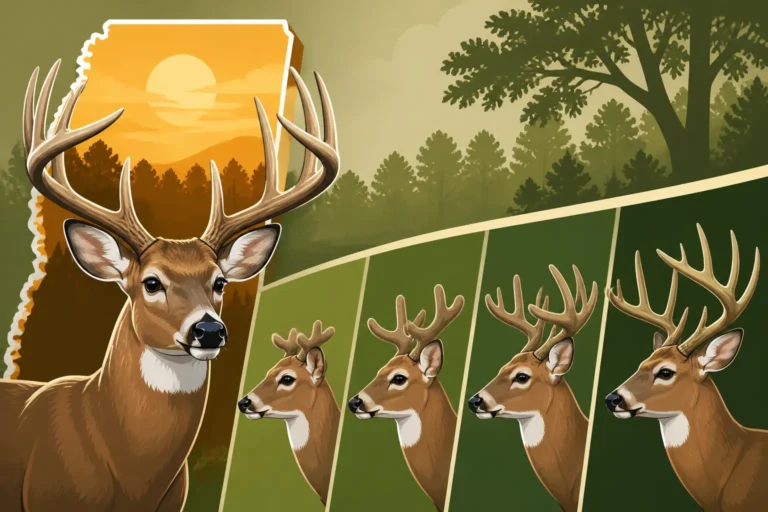
Mississippi is known for its impressive deer herd, and while not every hunter is chasing a record book buck, the state's antler regulations play a significant role in managing the herd and enhancing trophy potential. These rules are designed to protect younger bucks, allowing them to mature and reach their full genetic potential, which ultimately benefits the entire herd.
Understanding Antler Point Restrictions APRs by Unit
The MDWFP employs specific Antler Point Restrictions (APRs) that vary by management unit, aimed at improving buck age structure and overall herd health. It's absolutely crucial to know the rules for the unit you're hunting to avoid violations.
- Delta Unit: This unit has one of the more stringent APRs. A legal buck in the Delta Unit must have at least 12-inch main beams OR an inside spread of at least 15 inches. This rule is designed to protect younger bucks in an area with high nutritional value, allowing them to grow into the large-antlered deer the Delta is famous for. For many hunters, being able to quickly judge a legal buck under Delta Unit restrictions is a skill refined over years.
- Hills Unit and Southeast Unit: These units share a similar APR. A legal buck must have at least 10-inch main beams OR an inside spread of at least 13 inches. While still promoting buck maturity, these restrictions are slightly less stringent than the Delta's, reflecting the differing habitat and growth potential in these regions. Again, developing an eye for judging a legal buck under Hills Unit restrictions is a practical skill.
- North Central Unit: The North Central Unit's APR is the same as the Hills and Southeast Units: 10-inch main beams OR an inside spread of at least 13 inches.
These regulations can sometimes be a point of frustration for hunters, especially when a decent young buck steps out that doesn't quite meet the criteria. But remember, these rules are in place for the long-term benefit of the herd, aiming for more mature bucks for everyone down the line.
The Debate: APRs and Herd Health
The implementation of APRs has sparked considerable debate among hunters and wildlife managers. On one side, proponents argue that APRs protect young bucks, leading to an older age structure within the buck population. This means more mature bucks are available for breeding, which can improve genetics, and more often, simply means more big-antlered bucks for hunters to pursue. Studies have shown that an older age class of bucks can also lead to a more defined and intense rut, as fewer young bucks compete for breeding opportunities.
On the other hand, some hunters express concerns about passing up what they consider a "good" deer, or the difficulty in accurately judging antlers in low light or thick cover. There are also debates about whether APRs truly improve genetics on a wide scale or if environmental factors are more dominant. Despite the ongoing discussion, the MDWFP continues to utilize APRs as a key tool in its deer management strategy, adapting them as needed based on population data and research. The goal is always a healthy, balanced herd that provides quality hunting opportunities.
Chasing Mississippi's Boone and Crockett Bucks
For many, the ultimate prize is a Boone and Crockett (B&C) class white-tailed buck. Mississippi has a proud history of producing world-class whitetails, especially from the Delta region. While a B&C buck is a rare feat, the potential is certainly there. The state's rich soils and strong genetics provide the ingredients for exceptional antler growth.
Counties like Issaquena, Sharkey, and Washington in the Delta are frequently mentioned when discussing Best Mississippi Counties for Big Bucks. These areas, with their mix of agriculture and dense bottomland cover, allow bucks to grow old and reach their full potential. However, big bucks can show up anywhere in the state, often in areas with less hunting pressure or specific habitat features. Chasing a true giant requires more than just luck; it demands meticulous scouting, understanding buck movement patterns, and often, dedicating significant time to a specific deer. Many hunters use trail cameras year-round, analyzing aerial photos on platforms like GoHunt, and scouting after season to identify potential trophy areas and individual deer. It's a long game, but the dream of a Mississippi Boone and Crockett buck keeps many hunters motivated.
Effective Deer Hunting Tactics for Mississippi Terrain
Hunting deer in Mississippi demands a versatile approach. The diverse landscapes, from the flat, wet Delta to the rolling, timbered Hills, mean that a one-size-fits-all strategy simply won't cut it. To consistently find success, you need to understand how to adapt your tactics to the specific terrain and deer behavior you're encountering.
Public Land Strategies for Success
Public lands in Mississippi, including National Forests and Wildlife Management Areas (WMAs), offer incredible hunting opportunities but often come with added challenges like hunting pressure and limited access. Success on public land hinges on several key principles:
- Go Deeper and Harder: Most hunters stick close to roads and easily accessible areas. To find less pressured deer, you often need to walk further, navigate tougher terrain, or even utilize a boat or kayak to access remote pockets. Finding ground others walk past is a classic public land tactic that works wonders in Mississippi.
- Pre-Season Scouting is Non-Negotiable: Don't just show up opening morning. Spend significant time before the season opens Scouting Mississippi Public Land Before Season. Look for fresh sign, identify bedding areas, food sources, and travel corridors. Use mapping apps to pinpoint bottlenecks, pinch points, and cover. This can make the difference between a tough hunt and a successful one.
- Adapt to Pressure: On public land, deer quickly learn to associate human activity with danger. They will often become more nocturnal or utilize the thickest, nastiest cover available during daylight hours. Adjust your hunting times, focusing on early mornings and late evenings, and consider hunting during the week when pressure is lower. Setting up on a Delta field edge or utilizing a ground blind on Mississippi public land can be effective strategies, especially if you can brush it in well.
- Utilize Natural Funnels: Look for natural features that constrict deer movement, such as narrow strips of timber between fields, creek bottoms, ridge saddles, or breaks in dense cover. Deer naturally use these funnels for travel, making them prime stand locations. For instance, knowing how to hunt a funnel between two sloughs in the Delta can be incredibly productive.
Private Land Approaches: Food Plots and Habitat Work
Private land hunting offers more control over habitat and hunting pressure, allowing for proactive management strategies to attract and hold deer.
- Strategic Food Plots: Food plots are a cornerstone of private land deer management in Mississippi. Planting diverse food sources, from early season legumes like clover to late-season brassicas and grains, can significantly draw and hold deer. Think about year-round nutrition, not just a fall attractant. Placing smaller, irregularly shaped plots in strategic locations near bedding cover can be more effective than one large, open field. For example, planting a green field planted for deer that is secluded or offers multiple entry/exit points from bedding is a smart move.
- Habitat Improvement: Beyond food plots, consider enhancing natural habitat. This might include hinge-cutting trees to create dense bedding cover, conducting prescribed burns to stimulate new growth, or managing timber to create diverse age classes and forage. Working a fencerow for late-season deer by improving its cover can turn a thin travel corridor into a high-traffic zone. Consulting with wildlife biologists or experienced land managers can help develop a tailored habitat plan.
- Controlling Pressure: One of the biggest advantages of private land is the ability to manage hunting pressure. Implement rules like limiting the number of hunters, rotating stand locations, and establishing sanctuary areas where no hunting occurs. This allows deer to feel safe and encourages them to move more naturally during daylight.
- Trail Camera Surveys: Trail cameras are invaluable for private land. They help monitor deer populations, identify individual bucks, and track movement patterns. Running camera surveys year-round allows you to understand buck age structure, buck-to-doe ratios, and fawn survival rates, informing your harvest decisions. You can even use these cameras to find scrape lines along a logging road that bucks are regularly hitting.
Reading the Landscape: Sign, Scrapes, and Rubs
No matter where you hunt in Mississippi, being able to read the subtle (and not-so-subtle) clues deer leave behind is fundamental to success. Deer sign tells a story of movement, feeding, and breeding.
- Tracks and Trails: Fresh tracks in mud or soft dirt are obvious indicators of recent deer activity. Look for well-worn trails, especially those that crisscross between bedding areas, food sources, and water. These are natural travel routes that deer rely on daily. Reading Delta mud for fresh deer movement can tell you when and where deer are active.
- Scrapes: Scrapes are areas where bucks clear away leaves, urinate, and sometimes rub their forehead glands on an overhanging branch (a "licking branch"). These are communication hubs, especially active during the pre-rut and rut. Find fresh scrapes, particularly along field edges or travel corridors, and you've found a spot where a buck is likely to return.
- Rubs: Rubs are made when bucks rub their antlers against small trees or saplings, removing the bark. Like scrapes, rubs serve as a visual and olfactory signpost, indicating a buck's presence and direction of travel. A line of rubs often points towards a buck's bedding area or a preferred travel route. The size of the rub can sometimes give you an idea of the buck's antler size.
- Bedding Areas: Identifying bedding areas—thick cover where deer rest and feel secure—is crucial. These can be dense thickets, overgrown clear-cuts, or even standing cotton for late deer. Once you locate bedding, your goal is to set up downwind of likely travel routes between bedding and feeding, intercepting deer as they move.
- Food Sources: Deer are constantly seeking food. Whether it's acorns in an oak flat, browse in a clear-cut, or a lush green field, understanding what deer are eating at any given time of year is paramount. Hunting after a poor acorn year means focusing intensely on alternative food sources. Use your GoHunt app to identify different vegetation types and potential food sources within your hunting area.
The Future of Deer Hunting in Mississippi
Deer hunting in Mississippi isn't just a pastime; it's a deeply ingrained tradition and a vital part of the state's cultural and economic fabric. As we look ahead, the future of this tradition depends heavily on sound conservation practices, hunter participation, and adapting to new challenges.
Conservation Efforts and Hunter Contributions
The MDWFP, in collaboration with various conservation organizations and engaged hunters, is at the forefront of ensuring a healthy and sustainable deer population for generations to come. This includes:
- Data Collection and Research: Continuous monitoring of deer populations, health, and habitat conditions is essential. Hunters contribute significantly to this by accurately reporting their harvests through platforms like the MDWFP's app, which provides crucial data for management decisions. Participating in voluntary CWD testing also helps scientists track and contain the disease.
- Habitat Management: The MDWFP actively manages public lands and provides guidance to private landowners on habitat improvement projects. These efforts include prescribed burning, timber stand improvement, and establishing diverse forage areas, all designed to enhance the land's carrying capacity for deer and other wildlife.
- Regulation Adjustments: Based on scientific data, regulations like antler point restrictions and bag limits are reviewed and adjusted to meet specific management goals for each unit. These decisions aim to strike a balance between providing ample hunting opportunities and ensuring the long-term health and genetic potential of the herd.
- Hunter Education and Recruitment: Promoting hunter education and recruiting new hunters is critical. Educating new generations about ethical hunting practices, conservation principles, and wildlife management ensures the continuation of hunting traditions and the financial support they provide for conservation. Mississippi's Hunter Education Requirements ensure that new hunters are well-prepared and responsible afield.
Adapting to Changing Landscapes and Pressures
Mississippi's landscape is not static, and neither are the pressures on its deer herd. Hunters must adapt to these changes to remain successful and contribute to conservation.
- Urban Sprawl and Habitat Fragmentation: As suburban areas expand, deer habitat can become fragmented. This leads to unique challenges, such as suburban archery-only zones and increased deer-vehicle collisions. Hunters in these areas may need to explore different access methods, like knocking on doors in Delta farm country or leveraging small private tracts in Mississippi.
- Climate Change and Environmental Shifts: Changes in weather patterns, such as more intense droughts or prolonged periods of heat, can impact deer health, forage availability, and rut timing. Hunters need to be flexible, adjusting their strategies based on current conditions, such as warm-weather sitting strategies in Mississippi.
- Disease Management: The ongoing threat of CWD demands constant vigilance and cooperation from hunters. Adhering to carcass movement restrictions and participating in testing programs are non-negotiable responsibilities. Understanding how to handle venison from a CWD management zone is paramount for ethical and safe hunting.
- Technological Advancements: The rise of mapping apps like GoHunt, trail cameras, and other hunting technology provides new tools for scouting and strategizing. Embracing these tools can enhance efficiency and understanding of deer movement, but it's important to balance technology with traditional woodsmanship. Using the MDWFP App Without Cell Service is a game-changer for many public land hunters.
The future of white-tailed deer hunting in Mississippi is bright, thanks to a dedicated community of hunters, sound scientific management, and a rich natural resource. By staying informed, adapting our techniques, and committing to conservation, we can ensure that the thrill of chasing a Mississippi whitetail remains a cherished experience for generations to come.
Mississippi Deer Management Unit Overview
To help you keep track of the key differences between Mississippi's primary deer management units, here's a quick overview of their defining characteristics and antler restrictions. Remember, season dates for archery, primitive weapon, and gun seasons also vary significantly by unit, so always check the latest MDWFP regulations before you hunt.
| Management Unit | Primary Habitat Types | Typical Deer Characteristics | Antler Point Restriction (APR) for Legal Buck | Peak Rut Timing (General) |
|---|---|---|---|---|
| Delta Unit | Alluvial floodplains, bottomland hardwoods, agriculture | Large body size, large antlers (high nutrition) | 12" main beam OR 15" inside spread | Late November – Mid-December |
| Hills Unit | Rolling hills, mixed pine/hardwood forests, clear-cuts | Good body size, solid antlers (wary deer due to pressure) | 10" main beam OR 13" inside spread | Mid-December – Early/Mid-January |
| Southeast Unit | Pine plantations, mixed pine/hardwood, coastal areas | Medium body size, solid antlers (thick cover, extended archery) | 10" main beam OR 13" inside spread | Late January – Mid-February |
| North Central Unit | Varied mix of hills, agriculture, mixed forests | Good body size, solid antlers (mix of Delta/Hills traits) | 10" main beam OR 13" inside spread | Early January – Late January |
Disclaimer
The information provided in this guide is for general informational purposes only and does not constitute legal advice. Hunting regulations in Mississippi are subject to change, and it is the responsibility of every hunter to consult the most current Mississippi Department of Wildlife, Fisheries, and Parks (MDWFP) hunting regulations prior to participating in any hunting activity. Always confirm season dates, bag limits, licensing requirements, and CWD zone regulations directly with the MDWFP. Safe hunting practices and adherence to all laws are paramount.