What Cancellation Insurance Covers on a Hunt
You've been planning that dream Mississippi deer hunt, picturing yourself in a Delta flooded timber bottomland, or maybe chasing gobblers in the Hills. You've sent in your deposit, booked your time off, and the anticipation is building. Then, out of nowhere, life throws a curveball: a family emergency, an unexpected illness, or even just a sudden change in work schedule. The agonizing question hits you: what about that hunt? Can you get your money back? This guide is all about understanding hunt cancellation insurance and how it can protect your hard-earned dollars when the unforeseen happens.
The Unpredictable Nature of Hunting Trips
Hunting trips, especially those planned far in advance or involving travel and outfitters, are a significant investment. Unlike a simple day trip to a local WMA, there are many moving parts, and unfortunately, many opportunities for things to go wrong. It's a harsh reality that can leave you out a substantial amount of money if you're not prepared.
Common Reasons Hunts Get Canceled
Life has a way of interrupting even the best-laid plans. It's not always about bad weather, though that's certainly a factor for something like a duck hunt in the Delta. More often, personal circumstances derail a trip. Imagine you’ve booked a prime Mississippi Spring Turkey Season Rules hunt with a guide. Suddenly, a close family member falls ill, or your child has an emergency school event you absolutely cannot miss. These personal, often unavoidable situations are among the most common reasons hunters have to cancel. Maybe your employer unexpectedly changes your vacation schedule, or you have a last-minute business trip you can't get out of. These aren't fun conversations to have with an outfitter, and without protection, they often mean forfeiting your deposit, or even the full cost of the hunt.
Then there are the external factors. What if the outfitter you booked with has an unforeseen issue? Maybe a key piece of their land access falls through, or a severe and unexpected drought means the Mississippi Waterfowl Zones and Seasons you planned won't have the water to attract birds. While many reputable outfitters will work with you in these situations, offering rebooking or sometimes a partial refund, it's not guaranteed, and it doesn't cover your personal costs like travel. Even something as simple as a missed flight connection or a car breaking down on the way to camp can ruin a hunt before it even starts, and these issues typically aren't covered by the outfitter's policies.
The Financial Risk of Pre-Paid Hunts
Booking a quality hunting trip, particularly for sought-after species or prime dates, almost always requires a significant deposit, often 50% or more, paid months in advance. Many outfitters have strict Deposits and Cancellation Terms in Mississippi, stating that deposits are non-refundable, and full payment might be required even if you cancel within a certain window. This is understandable from their perspective; they've held that spot for you, potentially turning away other paying clients. However, it leaves the hunter vulnerable.
Consider a multi-day guided What a Guided Mississippi Deer Hunt Costs where you've paid for the guide's time, lodging, food, and perhaps even a tag package. If you have to cancel at the last minute, that entire investment could be lost. For non-residents, there's the added cost of travel, flights, and potentially renting a vehicle. These expenses, outside of what you pay the outfitter, are almost never recoverable without external insurance. The financial exposure can be thousands of dollars, making it a serious consideration for any hunter making a substantial booking. It's not just about the loss of the hunt, but the very real hit to your wallet.
Understanding Hunt Cancellation Insurance
So, how do you protect yourself from these financial pitfalls? Hunt cancellation insurance works much like travel insurance, but specifically tailored to the unique circumstances of hunting trips. It's designed to reimburse you for non-refundable expenses when covered reasons force you to cancel or interrupt your hunt.
What Standard Policies Typically Cover
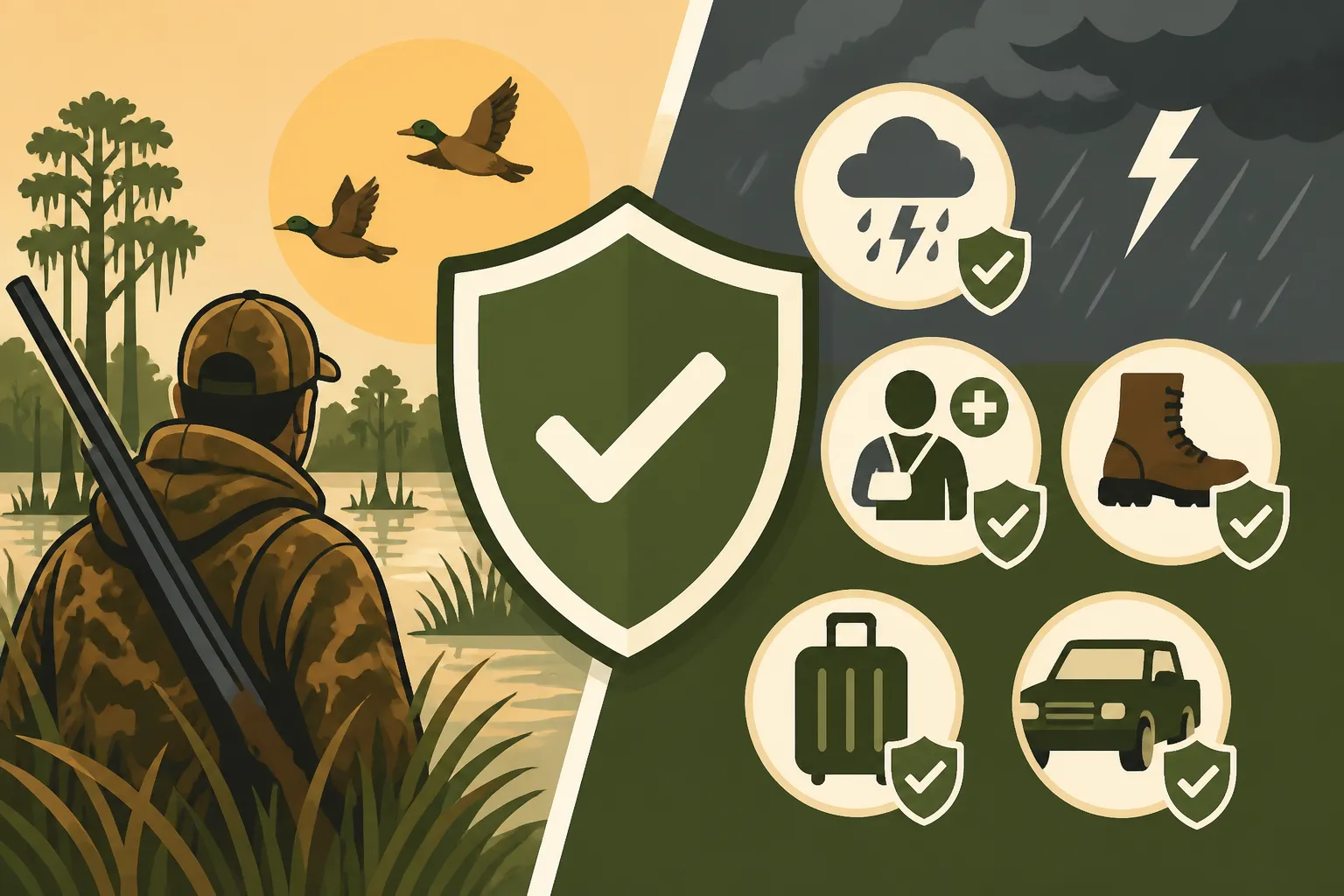
Standard hunt cancellation policies typically provide coverage for a range of unexpected events. These often include medical emergencies, such as a sudden illness or injury to you, a travel companion, or an immediate family member. This is crucial because health issues are perhaps the most common reason for unexpected cancellations. Many policies will also cover severe weather events that make travel impossible or force the outfitter to close, or unforeseen natural disasters that impact your destination.
Furthermore, standard policies might offer protection against certain travel-related mishaps. This could include things like a common carrier (airline, bus, train) cancellation or delay that prevents you from reaching your hunt destination, or even a covered issue with your vehicle on the way. Job loss (under specific conditions, not just quitting) or mandatory jury duty can also be included. When you're Vetting a Mississippi Outfitter Before You Book, it's always wise to ask about their specific cancellation policy, but remember, that's their policy, not your personal insurance. This personal insurance fills the gap where the outfitter's policy ends.
What's Usually Not Covered (Exclusions)
It's just as important to understand what hunt cancellation insurance typically doesn't cover. Most standard policies have specific exclusions that can catch hunters off guard if they don't read the fine print. For instance, a common exclusion is "disinclination to travel." This means if you simply change your mind, or if the hunting forecast looks poor, or you hear that deer movement is slow – these are generally not covered reasons for cancellation. You can't just decide you don't feel like going anymore and expect a payout.
Pre-existing medical conditions are another big one. If you have a known health issue, it might be excluded unless you purchase a policy with specific waivers, often within a short window of your initial deposit. Furthermore, certain types of hunting-specific risks, like if the game population is lower than expected, or if you simply don't harvest an animal, are not covered. Most policies won't cover financial default of the outfitter either, though some higher-end policies might offer limited protection for this. Political unrest, acts of war, or certain epidemics (especially if they were known threats when you booked the policy) can also be excluded. Always, always read the full policy document.
"Cancel for Any Reason" (CFAR) Policies
If the standard exclusions make you nervous, or if you simply want maximum flexibility, then a "Cancel for Any Reason" (CFAR) policy might be what you need. As the name suggests, CFAR provides the ultimate peace of mind because it allows you to cancel your trip for any reason whatsoever, and receive a partial reimbursement, typically 50% to 75% of your non-refundable trip costs. This is the most comprehensive coverage available.
The trade-off, however, is cost. CFAR policies are significantly more expensive than standard cancellation insurance, often adding a substantial percentage to your overall trip cost. They also usually come with specific purchase windows – you often have to buy them very early in your trip planning process, usually within 10-21 days of making your initial deposit. This means you need to decide on CFAR quickly. While it offers unparalleled flexibility – allowing you to cancel because of a sudden work project, a broken down truck that can't be fixed in time to make your drive, or even if a friend backs out of the hunt – it's crucial to weigh the added cost against your personal risk tolerance and budget. Sites like BookYourHunt or GoHunt, while primarily booking platforms, often have resources or links to insurance providers that offer these types of specialized policies.
Here's a quick comparison of the two main types of coverage:
| Feature | Standard Hunt Cancellation Insurance | "Cancel For Any Reason" (CFAR) Insurance |
|---|---|---|
| Coverage Scope | Specific, predefined covered perils (illness, injury, severe weather, job loss, etc.) | Any reason at all, including reasons not typically covered by standard policies |
| Reimbursement | Up to 100% of non-refundable costs (for covered reasons) | Typically 50-75% of non-refundable costs |
| Cost | Lower premium | Significantly higher premium |
| Purchase Window | Can often be purchased closer to departure, but certain benefits may have time limits | Strict purchase window, usually 10-21 days of initial trip deposit |
| Peace of Mind | Good for unexpected emergencies | Maximum flexibility and peace of mind |
| Best For | Hunters primarily concerned with major, unforeseen events | Hunters who want to protect their investment from any unforeseen circumstance or change of plans |
How to Choose the Right Policy for Your Mississippi Hunt
Selecting the right hunt cancellation insurance isn't a one-size-fits-all decision. It requires a bit of homework to match a policy to your specific needs and the nature of your planned hunt. Don't just grab the first one you see; take the time to compare.
Assessing Your Personal Risk Factors
Before you even look at policies, take a moment to assess your own situation. Are you a Nonresident License Options hunter traveling a long distance to hunt in Mississippi? If so, your travel risks (flights, connecting transportation) are higher than someone driving a couple of hours. Do you have any underlying health conditions, or are your travel companions or immediate family members prone to health issues that could disrupt plans? If so, you might need a policy that offers robust medical coverage or a pre-existing condition waiver.
Consider your job security, too. While no one expects to lose their job, if your employment situation feels less stable, a policy covering job loss might be a smart move. Think about the type of hunt. Is it a highly weather-dependent hunt, like Waterfowl Hunting the Mississippi Delta? If so, robust weather-related cancellation clauses are vital. If it's a big-dollar What a Trophy Delta Buck Hunt Costs trip, the financial risk is higher, warranting more comprehensive coverage. By understanding your own potential vulnerabilities, you can better target the features you need in a policy.
Comparing Providers and Policy Details
Once you have a sense of your risk factors, it's time to start comparing actual policies. There are several reputable travel insurance providers that offer specialized hunting trip insurance. Don't just focus on the price tag; delve into the details of what is specifically covered and what is excluded. Look at the maximum reimbursement limits – does it fully cover your total non-refundable trip costs, including deposits for the outfitter, flights, and other pre-paid expenses?
Pay close attention to the definition of "immediate family member" if family emergencies are a concern. Check the terms for "severe weather" – some policies are very specific about what constitutes a covered weather event. Many providers have a summary of benefits that's easier to digest than the full policy document, but always refer back to the full text for the definitive rules. Use online comparison tools or check directly with major travel insurance companies. Sometimes, the outfitter themselves might recommend a provider, but always do your own research. Even hunting-specific platforms like BookYourHunt or GoHunt may offer partnership links to insurance providers or provide guidance on what to look for, so it's worth checking their resources.
Key Questions to Ask Before Buying
When you're down to a few policy options, don't hesitate to contact the insurance provider directly and ask pointed questions. This is where you can clarify any ambiguities.
Here are some crucial questions:
- What exactly constitutes a "covered reason" for cancellation? Get specific examples for illness, weather, and travel delays.
- Are pre-existing conditions covered? If so, what are the requirements (e.g., purchase window, medical review)?
- What is the maximum reimbursement for my specific trip cost? Does it cover all non-refundable expenses, including my flight and outfitter deposit?
- What is the claims process like? What documentation will I need if I have to file a claim?
- What are the specific exclusions in this policy? Ask them to highlight anything they think is commonly misunderstood.
- Is there a "Cancel for Any Reason" option, and what are the specific terms and cost if I choose it?
- What are the deadlines for purchasing this policy relative to my initial trip deposit?
Remember to also factor in the outfitter's own Mississippi Outfitter Cancellation Policies Compared when making your decision. Your personal insurance should ideally complement, not duplicate, what the outfitter already offers. Getting a Written Quote From a Mississippi Outfitter that clearly outlines their cancellation terms can be a critical piece of documentation for your insurance claim if needed.
Navigating a Claim When Things Go Sideways
Having insurance is one thing; successfully filing a claim is another. The process usually isn't complicated, but it does require diligence and accurate documentation. The last thing you want after a stressful cancellation is to have your claim denied due to missing paperwork.
Documenting Your Reason for Cancellation
The single most important aspect of a successful insurance claim is thorough documentation. If you have to cancel your hunt, immediately start gathering evidence for the reason. If it's a medical issue, get a doctor's note that clearly states you (or the affected family member) are unable to travel or participate in the hunt. For a job loss, obtain a termination letter from your employer. If severe weather is the cause, gather official weather reports or advisories from a credible source, or documentation from your airline or the outfitter confirming closures or cancellations.
You'll also need to prove your financial loss. Keep all receipts and confirmations: the outfitter's invoice showing your deposit and any payments, flight confirmations, car rental bookings, and any other pre-paid, non-refundable expenses. The insurance company will require proof of what you paid and that those payments are indeed non-refundable according to the vendor's terms. This might include the outfitter's written cancellation policy or even a copy of your Mississippi Outfitter Contracts and What to Read. The more detailed and organized your documentation, the smoother the claims process will be.
The Claims Process Step-by-Step
Once you have all your documentation in order, initiating a claim is usually straightforward.
- Contact Your Insurance Provider Immediately: Most policies require you to notify them as soon as possible after the event that causes your cancellation. Don't wait until the scheduled hunt date has passed.
- Fill Out the Claim Form: The provider will send you a claim form, either online or by mail. Fill it out completely and accurately, providing all requested information.
- Submit Documentation: Attach all your gathered evidence. This includes the proof of cancellation reason (doctor's note, employer letter, weather report) and proof of financial loss (outfitter invoices, flight receipts, confirmation of non-refundable payments).
- Cooperate with Inquiries: The insurance company might have follow-up questions or request additional documentation. Be responsive and provide whatever they need to process your claim efficiently.
- Review the Decision: Once your claim is processed, you'll receive a decision. If approved, you'll be reimbursed according to the policy terms. If denied, the insurer should provide a reason, and you'll typically have an opportunity to appeal if you believe there's been a misunderstanding or you have further evidence.
While no one ever wants to cancel a hunt, having hunt cancellation insurance provides a crucial safety net. It protects your financial investment and allows you to reschedule that dream trip to Mississippi with less stress, knowing that life's unexpected turns won't completely derail your hunting plans. For non-residents especially, considering the cost of Booking a Mississippi Hunt as a Nonresident, this can be a truly invaluable tool for peace of mind.
Disclaimer
This article is for general informational purposes only and does not constitute professional advice. Laws, prices and regulations vary by location and change over time. Consult a qualified professional for guidance on your specific situation.