What Happens If Water Levels Drop Mid-Season
There's nothing quite like the heartbreak of watching water recede from your prime hunting spot. You've scouted, you've planned, maybe even paid for a guided trip, only for Mother Nature to pull the rug out from under your feet. Especially in a state like Mississippi, where so much hunting, particularly waterfowl, hinges on water, a mid-season drop can feel like a devastating blow. It's a common frustration that can turn a highly anticipated hunt into a scouting trip, but it doesn't have to be a total loss. This guide is here to walk you through what to expect when water levels fall mid-season and, more importantly, how to adapt your Mississippi hunting strategy to still find success.
The Immediate Impact on Waterfowl Hunts
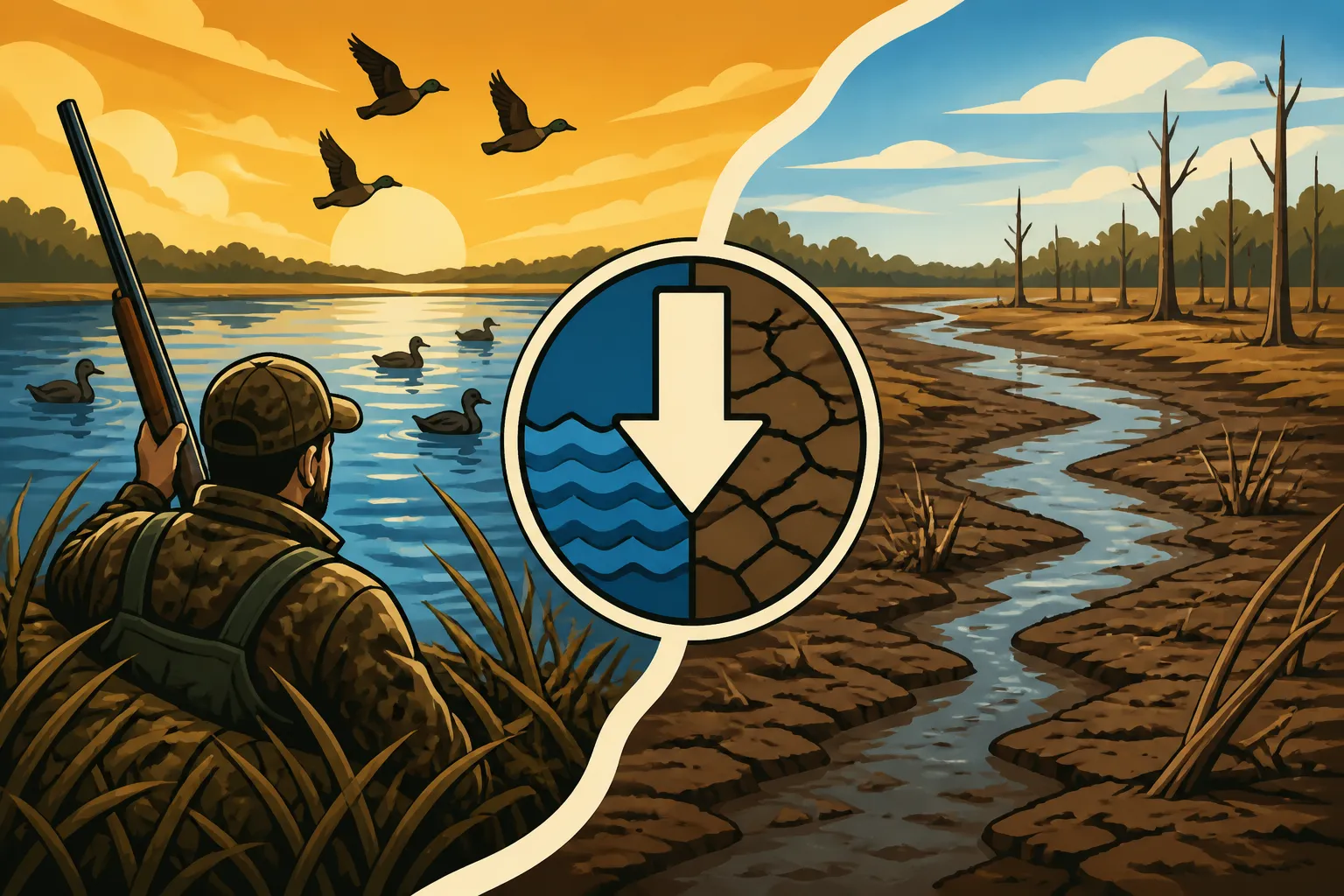
When the water starts dropping in the middle of duck season, it can feel like your carefully laid plans are literally drying up. Mississippi's waterfowl hunting often relies heavily on flooded timber, greentree reservoirs, and backwater sloughs. These areas are magnets for ducks, providing food, cover, and safe resting spots. When that water vanishes, or even just recedes significantly, the entire dynamic shifts, and quickly.
Changes in Bird Behavior and Habitat
Ducks are inherently tied to water, and their behavior is acutely sensitive to its presence and depth. A drop in water levels forces ducks to abandon previously good feeding and loafing areas. This means those flooded oak flats you scouted, or the shallow cypress brakes you expected to hunt, might become dry land or too shallow for birds to feel secure. They'll quickly relocate to deeper pockets of water that remain, often in areas that are harder to access or might not have been on your radar.
Furthermore, food sources can become inaccessible or dry out entirely. Submerged vegetation that ducks were gleaning might now be exposed and less appealing. This forces them to seek out new feeding grounds, often leading them to larger, more stable water bodies or even private agriculture fields that might still hold water from irrigation or rainfall. It's a scramble for survival, and hunters need to think like ducks to keep up. Suddenly, a strategy centered on Hunting Flooded Timber for Wood Ducks might need to pivot dramatically to find whatever new, smaller pools exist.
Accessibility Challenges for Hunters
Beyond the birds themselves, dropping water levels create significant logistical challenges for hunters. Areas previously accessible by boat or even a short wade might become impassable. Think about trying to navigate a mud flat with a pirogue or wading through knee-deep muck where there was once navigable water. It’s not just difficult; it can be dangerous and exhausting.
This often means longer walks, dragging gear through heavier terrain, and potentially losing access to your prime spots altogether. Public lands, especially those without managed water control, are particularly susceptible. Hunting the Mississippi River Backwaters can become a completely different game when sandbars emerge and channels disappear, making navigation treacherous or impossible. Hunters on Wildlife Management Areas (WMAs) often face similar issues, as many rely on natural rainfall or river levels to flood their units.
How Falling Water Changes the Landscape for Other Game
While waterfowl hunters feel the immediate sting of dropping water levels, the ripple effect extends to other game species too. Deer, hogs, and even small game rely on water sources, and changes in availability can impact their movement patterns and where you're likely to find them.
Impact on Deer and Hog Movements
Deer, especially in the Delta, often use sloughs, creek bottoms, and wet areas as travel corridors and bedding cover. When these areas dry up, deer are forced to shift their routes, potentially exposing them in more open areas or funneling them into different, perhaps less obvious, travel lanes. The same applies to feral hogs. Hogs absolutely love wet, muddy areas for rooting, wallowing, and staying cool. A drying landscape pushes them towards any remaining water sources, which might be previously overlooked pockets or even human-made ponds.
A classic scenario involves a drying slough or cypress brake in the Delta. What was once a thick, wet bedding area and travel route becomes walkable, forcing deer to use adjacent, higher ground. This can sometimes work in a hunter's favor, as it concentrates deer movement onto narrower, more predictable paths. However, it can also disperse them if alternative water sources are plentiful but spread out. Understanding Hunting the Rut in the Delta Unit becomes even more complex when the landscape changes mid-season due to water loss, as bucks might be searching for does in completely new areas.
Changes in Food and Cover Availability
Water levels directly influence vegetation. As water recedes, certain plants that thrive in wet conditions might die back, while new, perhaps less desirable, forage becomes exposed. For deer, this can alter their feeding patterns. Acorns in previously flooded timber, for example, become more accessible, drawing deer to spots that were underwater earlier in the season. Conversely, preferred browse might dry out, forcing deer to seek greener pastures elsewhere.
For hogs, exposed mud flats can sometimes mean easier rooting for tubers and grubs, but ultimately, they will gravitate towards areas with consistent moisture and food. Small game, like rabbits and squirrels, also depend on certain habitats that might be affected. A drying creek bed, for instance, could alter where a rabbit feels safe bedding down or where squirrels prefer to forage for nuts that were previously waterlogged. When you're Squirrel Hunting Delta Bottomland Hardwoods, paying attention to how water levels have changed the forest floor is crucial.
Adapting Your Strategy When the Water Drops
A mid-season water drop demands flexibility and a willingness to adjust your entire hunting approach. Stubbornly sticking to your initial plan will likely lead to frustration and empty game bags. Instead, view it as a challenge that forces you to become a more observant and adaptable hunter.
Prioritizing Scouting and Reconnaissance
The absolute first step when water levels fall is to scout, scout, scout! Old knowledge becomes quickly outdated. This means getting out there and physically checking your spots, not just relying on memory or maps. Pay close attention to remaining water sources – even small puddles can be duck magnets in a dry landscape. Look for fresh tracks around these isolated water bodies.
If you can't get boots on the ground, use satellite imagery and topographic maps to identify lower-lying areas that might still hold water or funnel animals towards those remaining spots. Tools like GoHunt can be invaluable here, allowing you to overlay different map layers and understand the terrain's nuances. Look for depressions, oxbows, or even drainage ditches that might be retaining water. Pay attention to how deer and hogs are now moving around these newly exposed or dried-up areas. Reading Aerial Photos for Hills Unit Deer can be adapted to understand drainage and remaining water in flatter bottomland as well.
Adjusting Tactics and Equipment
Your gear and tactics will likely need an overhaul. If boat access is gone, be prepared for longer walks and consider lighter, more portable setups. A mobile ground blind or a lightweight run-and-gun approach for ducks might replace your permanent timber setup. If you're a duck hunter, you might need to leave the boat at home and switch to chest waders for deep wading, or even hip boots for smaller, shallower pockets.
For deer and hog hunters, this means shifting focus to those new travel corridors, identifying fresh rub lines or hog wallows near remaining water. Consider Using a Ground Blind on Mississippi Public Land in a new location, perhaps overlooking a small, isolated pond that has become a critical water source. The key is to be nimble. Don't be afraid to leave your familiar spots behind and explore new territory that now offers better potential due to the altered landscape.
Navigating Guided Hunts and Outfitters During Low Water
Booking a guided hunt often comes with certain expectations, and a mid-season water drop can throw a wrench into those plans. It's vital to understand how outfitters manage these situations and what you, as the client, should do.
Communicating with Your Guide
Open and honest communication with your guide or outfitter is paramount. As soon as you hear about significant water level drops, reach out. Most reputable outfitters are already well aware of the conditions and will have contingency plans in place. Ask them directly how the low water is affecting their typical hunting areas and what alternative strategies they are employing. Are they moving to different properties? Are they focusing on field hunts instead of flooded timber?
Don't be afraid to ask tough questions about what your options are. Are they offering partial refunds, rescheduling, or focusing on other game species if duck hunting becomes unfeasible? Platforms like BookYourHunt often allow you to read reviews and inquire about an outfitter's flexibility and transparency in dealing with unpredictable conditions. Being proactive in your communication can save a lot of stress and disappointment later on.
Understanding Outfitter Policies and Adaptations
Every outfitter will have different policies regarding unforeseen circumstances like drastic water level changes. Before you book, it’s always wise to ask about their contingency plans for weather events or environmental changes that could impact the hunt. Some outfitters might have access to multiple properties or different types of hunting (e.g., dry field hunts versus flooded timber) that allow them to adapt more readily. Others might specialize in one type of hunt and be more limited.
Consider this table comparing how different types of Mississippi outfitters might adapt to dropping water:
| Outfitter Type (Primary Focus) | Initial Water Level | Mid-Season Water Drop Impact | Typical Adaptations |
|---|---|---|---|
| Flooded Timber Duck Lodge | High, managed | Significant bird relocation, difficult access | Shift to natural sloughs, focus on dry field hunts if available, use specialized shallow-water boats. |
| Mixed-Bag Delta Outfitter | Moderate, natural | Bird dispersal, changes in deer/hog travel | Prioritize remaining deeper water for ducks, scout new deer/hog funnels near water, offer predator hunts. |
| Hills Unit Deer Guide | Less water-dependent | Minor impact on deer/hog, but can affect travel corridors | Adjust stand locations to cover new trails to remaining water, focus on thermal hubs. |
| Private Land Hog Specialist | Varied | Hogs concentrate near any remaining water | Target isolated ponds or creek bottoms, utilize thermal/night hunting more effectively. |
A good outfitter will be transparent about the challenges and proactively work to provide the best possible experience given the conditions. They understand that a happy hunter is a repeat client, and their reputation depends on their ability to adapt. When considering Booking a Delta Duck Lodge, always inquire about their specific strategies for managing unpredictable water conditions.
Disclaimer
This article is for general informational purposes only and does not constitute professional advice. Laws, prices and regulations vary by location and change over time. Consult a qualified professional for guidance on your specific situation.