Physical Demands of a Delta Deer Hunt
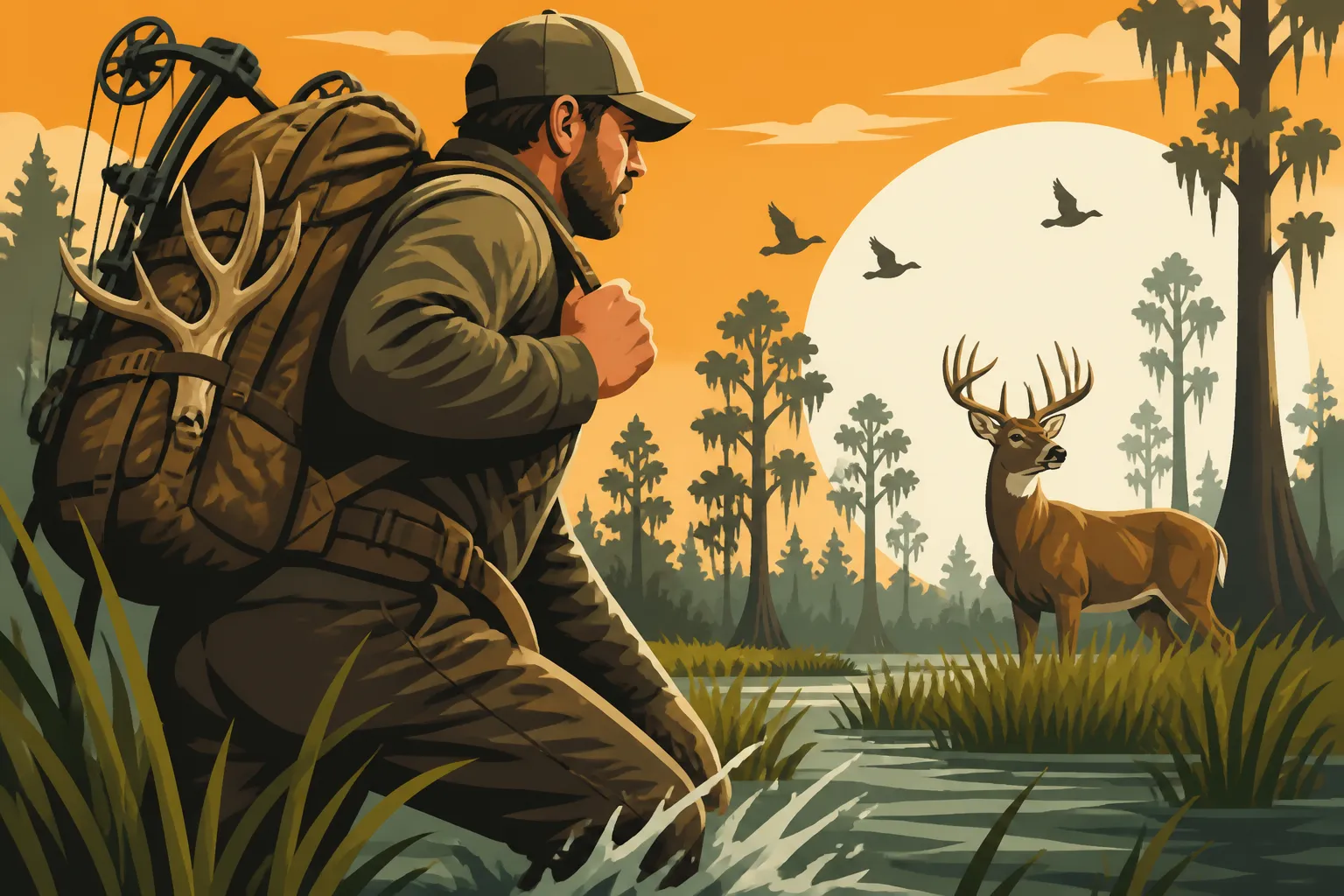
Hunting in the Mississippi Delta often conjures images of massive bucks stepping out of cypress brakes or ducks piling into flooded timber. What many don't realize until they experience it firsthand, however, is just how physically demanding these hunts can be. This guide will walk you through the real-world physical challenges you can expect when pursuing deer in the unique, often unforgiving, environment of the Mississippi Delta, preparing you for the sweat and grit involved.
Navigating the Delta's Unique Terrain and Water Challenges
The Mississippi Delta is a land defined by water and thick, often impenetrable, vegetation. Unlike the rolling hills or pine forests found elsewhere in the state, hunting here means contending with a landscape that actively tries to slow you down. It's a true test of agility, balance, and sheer willpower.
Bottomland Hardwood Undergrowth and Obstacles
Imagine trying to walk through a thorny maze designed by nature, often with the added challenge of soft, uneven ground beneath your feet. That's the reality of a Delta bottomland. The undergrowth isn't just a few scattered saplings; it's a dense tangle of briars, grapevines, greenbrier, palmetto, and thick hardwood regeneration. Every step requires lifting your feet high, pushing through branches, and avoiding hidden trip hazards like fallen logs or cypress knees.
This isn't just an annoyance; it's a significant energy drain. Your leg muscles are constantly working overtime, not just to propel you forward, but to clear obstacles. Your arms get a workout, too, as you push aside thickets. Trying to move quietly through this kind of cover is a monumental task, often leading to slow, deliberate, and exhausting progress, especially when you're trying to sneak into a stand before daylight or execute a quiet stalk. Many experienced hunters will tell you that a hundred yards in dense Delta bottomland can feel like a quarter-mile walk across open ground.
Crossing Sloughs, Creeks, and Muddy Backwaters
Water is an intrinsic part of the Delta ecosystem, and it means you're almost guaranteed to encounter it during a hunt. Sloughs, drainage ditches, and backwater areas are common, and often, the most productive deer sign is found near these water features. This means crossing them. Sometimes, it's a shallow trickle you can step over, but more often, it's a muddy, knee-deep, or even waist-deep channel that requires careful navigation.
Wading through thick, silty mud is incredibly taxing. Each step is a struggle as the mud suctions around your boots, demanding extra effort to pull your foot free. If there's standing water, you're not just dealing with mud, but also the added resistance of water pushing against your legs. You might find yourself searching for old beaver dams or fallen trees to cross, which presents its own set of balance challenges, especially with a pack and weapon. And let's not forget the possibility of unexpectedly stepping into a deeper hole or dropping off an unseen ledge. Dragging a Deer Out of a Slough is a prime example of how water features amplify the physical challenge of a successful hunt.
The Endurance Test: Long Hauls and Tracking Exhaustion
Delta deer hunting, particularly on public lands like Delta National Forest, isn't typically a short stroll from the truck to a cozy blind. It often demands significant endurance, both for getting to your hunting spot and for the arduous task of tracking a downed animal.
The Long Haul to Your Stand
Finding productive areas and avoiding Hunting Pressure on Mississippi Public Land often means venturing deeper into the woods, far from easy access points. This translates to longer walks, sometimes miles, to reach your chosen stand location. These aren't pleasant, flat trails. You're covering ground through the thick undergrowth and water challenges we just discussed, often in the dark before dawn.
Carrying your gear – your backpack, your rifle or bow, possibly a heavy climbing treestand and climbing sticks – makes these long hauls even more arduous. You're working up a sweat and burning calories long before legal shooting light even breaks. Then, after the hunt, you have to make the return trip, often just as tired. Proper physical conditioning, with an emphasis on cardio and leg strength, is absolutely crucial. Many hunters underestimate this aspect, especially if they're used to hunting more accessible private lands or open country. You can find insights into ideal access points by Reading Aerial Photos for Hills Unit Deer and applying similar principles to the Delta.
Tracking and Recovery in Dense Delta Cover
The thrill of a successful shot is quickly followed by one of the most physically demanding parts of Delta deer hunting: tracking and recovery. Deer, especially when wounded, can travel surprisingly far, and a blood trail in the Delta's dense cover can be incredibly difficult to follow. You'll be crawling on your hands and knees, pushing through briars, and slogging through mud and water, all while meticulously searching for drops of blood or overturned leaves.
The focus required for tracking, combined with the physical exertion of navigating the terrain, is exhausting. If the deer makes it into a slough or a particularly thick patch of cane, the difficulty skyrockets. Retrieving a deer, especially a mature Delta buck that can easily weigh 200+ pounds live weight, from the depths of the bottomland is a monumental task. This isn't just about dragging; it often involves hoisting, pulling, and working your way through thickets, sometimes over long distances. Thinking about Where Delta National Forest Bucks Bed might lead you to areas with higher retrieval difficulty.
The Weight of Your World: Gear Management and Deer Extraction
Every piece of gear you bring into the Delta adds to your physical burden, and the moment you tag a deer, the weight of the world truly descends. Proper gear selection and a realistic understanding of extraction logistics are key to managing these demands.
Carrying Essential Equipment in the Field
A successful Delta deer hunter needs more than just a weapon. You're typically carrying a day pack filled with water, snacks, calls, binoculars, a first-aid kit, a headlamp, rain gear, and scent control items. Many hunters also carry a small saw or clippers for clearing shooting lanes. If you're using a climbing treestand or hang-on stand with sticks, that's another 20-30 pounds of awkward, bulky equipment you have to carry in and out. This load adds considerable strain to your shoulders, back, and legs as you navigate the challenging terrain.
Thinking about what's truly essential versus what's just "nice to have" becomes critical. Every ounce matters when you're hiking through knee-deep mud or pushing through a wall of greenbrier. Some hunters even opt for lighter rifle setups or minimalist archery gear to shave weight. When scouting potential hunt locations, services like GoHunt can provide detailed topographic maps and satellite imagery, helping you plan routes that minimize elevation changes or known water obstacles, thereby reducing the physical strain of carrying heavy gear.
Treestand Deployment and Deer Extraction
Setting up a treestand in the Delta's often leaning or vine-covered trees requires significant upper body strength and balance. You're hoisting climbing sticks, securing your stand, and maneuvering your body, all while being mindful of safety. Taking it down and packing it out after a long day adds another layer of fatigue. For those utilizing public lands, adhering to rules for Treestand Rules on Mississippi Public Land is paramount, and these rules can sometimes influence the types of stands you can use, further impacting setup difficulty.
Then there's the grand finale: getting your deer out. If you're lucky enough to have a deer drop near a dry, accessible area, it's still hard work. But if it goes down in a slough, or a mile deep in a cane brake, you're looking at hours of back-breaking labor. This often involves gutting the animal on the spot to reduce weight, and then the slow, arduous process of dragging, pulling, or even floating the deer out. The thick mud and dense undergrowth make every inch a fight. Having a solid plan for Field Dressing a Deer in Warm Weather and considering a game cart (if terrain allows) can significantly lighten the load, but often, it comes down to brute force and teamwork, especially with a mature buck like those found in the Delta.
Battling the Elements: Weather and Wildlife Factors
Mississippi's weather and abundant wildlife add their own unique layer of physical demands, testing your resilience and tolerance for discomfort.
The Grinding Humidity and Heat
Even outside of the peak summer months, Mississippi's humidity is a force to be reckoned with. Early archery season in the Delta can see temperatures still climbing into the 80s, coupled with oppressive humidity that makes even light exertion feel like a workout. This isn't just uncomfortable; it's physically draining. High humidity makes your body work harder to cool itself, leading to rapid dehydration and fatigue. You'll be sweating profusely, soaking your clothes, and constantly needing to replenish fluids. A good Warm-Weather Sitting Strategy in Mississippi involves hydrating well before the hunt and carrying plenty of water.
Even as temperatures drop into cooler rifle seasons, humidity often remains high, making the air heavy and damp. This dampness can penetrate clothing, making you feel chilled even when the temperature isn't extremely low. The constant battle against being too hot and sweaty from exertion, then too cold from damp clothing, demands mental and physical stamina.
Navigating Insect Pressure
The Delta's rich, wet environment is a breeding ground for insects, particularly mosquitoes, gnats, and ticks. While bug spray is essential, it's not always a perfect shield. Mosquitoes can be relentless, especially in low-light conditions or near standing water, turning a quiet sit into a constant battle of swatting and itching. Their bites, while annoying, also contribute to mental fatigue and can break your concentration.
Ticks are another constant concern, requiring diligent checks after every hunt. While not directly a physical demand during the hunt, the vigilance required to avoid them, and the after-hunt checks, add to the overall physical and mental burden. The discomfort of insect bites, combined with the other physical challenges, can erode even the most seasoned hunter's resolve. Preparing for this environment is key, and understanding what to expect can help you mitigate the discomfort.
Here's a quick look at how Delta terrain types can impact your physical exertion:
| Delta Terrain Feature | Typical Physical Demands | Key Challenges | Required Fitness Level |
|---|---|---|---|
| Dense Bottomland Hardwoods | High leg strength, endurance, agility, upper body for pushing through | Thick undergrowth, briars, uneven ground, hidden obstacles | High |
| Sloughs/Creek Crossings | High balance, leg strength (wading), core strength (lifting feet) | Deep mud, water resistance, slippery banks, unseen drop-offs | High |
| Old Field Edges/Clear-Cuts | Moderate leg endurance, some agility for negotiating debris | Overgrown grasses, briar patches, uneven ground, hidden ditches | Moderate |
| Levee/Road Access | Low to Moderate leg endurance | Long walks, potentially some soft ground, limited shade | Low to Moderate |
| Flooded Timber (Wading) | High leg strength, balance, cold tolerance | Water resistance, mud, uneven underwater terrain, cypress knees | Very High |
Whether you're booking an outfitted trip through platforms like BookYourHunt or planning a self-guided adventure using tools from GoHunt, it’s important to communicate your physical capabilities or thoroughly scout your intended hunting area. Understanding the Physical Demands of a Delta Deer Hunt before you go is the best way to ensure a safe and successful experience in this truly unique and rewarding hunting landscape.
Disclaimer
This article is for general informational purposes only and does not constitute professional advice. Laws, prices and regulations vary by location and change over time. Consult a qualified professional for guidance on your specific situation.