Hunting Small Woodlots Near Suburban Jackson
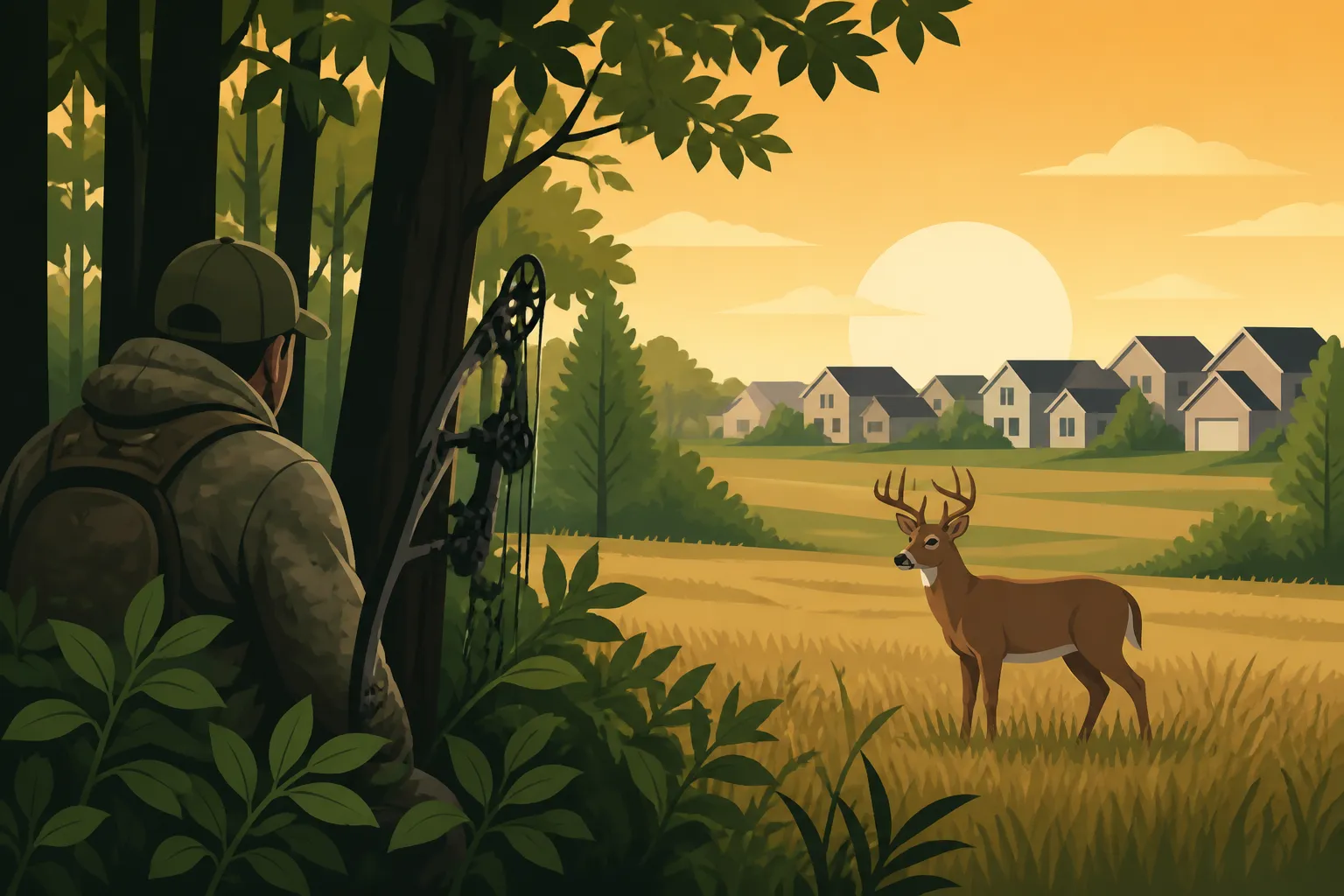
It's tough, isn't it? You love the hunt, but sometimes life plants you right in the middle of civilization, far from those sprawling public land tracts or a big private lease. For many of us living near urban centers like Jackson, finding quality hunting ground feels like an impossible dream. This guide is all about tackling that challenge head-on, showing you how to unlock fantastic opportunities in the often-overlooked small woodlots scattered around suburban Jackson.
Understanding the Landscape: Small Woodlots Around Jackson
Hunting close to home, especially near a bustling area like Jackson, comes with its own unique set of hurdles. But don't let the proximity to subdivisions and traffic deter you; these often-forgotten pockets of timber can hold some incredible surprises for the persistent hunter.
The Unique Challenges of Suburban Hunting
The first thing you'll notice when you even start thinking about hunting near Madison, Flowood, Brandon, or Clinton is the sheer amount of human activity. Pressure is high, and the deer, while often numerous, are usually much warier than their deep-woods cousins. You've got to contend with residential property lines, the constant drone of traffic, barking dogs, and people out walking. It can feel like you're trying to hunt in a beehive, and honestly, it’s enough to make many hunters throw in the towel before they even start.
Another major frustration is the perception that these areas don't hold "good" deer. While you might not be seeing pictures of Boone and Crockett monsters in your local neighborhood watch group, the reality is that many mature bucks thrive in these overlooked spots. They learn to navigate the fringes of human activity, often bedding incredibly close to homes where they feel safe from traditional hunting pressure. The trick is understanding how they use these spaces and how to hunt them without disturbing the peace or alerting every doe in the county.
Identifying Productive Small Woodlots
So, where do you even begin to look for these hidden gems? Start with a bird's-eye view. Tools like Google Maps, and especially dedicated hunting apps like GoHunt or onX Hunt, are your absolute best friends here. Zoom in on the areas just outside the immediate city limits of Jackson, Flowood, Brandon, and even out towards places like Clinton or Raymond. Look for irregular-shaped patches of woods, often bordered by fields, suburban developments, creeks, or industrial areas. These aren't the expansive, unbroken timber tracts you might dream of, but rather smaller, fragmented blocks.
Pay close attention to anything that creates a "funnel" or "pinch point." This could be a creek bottom winding between two subdivisions, a thick fencerow connecting two larger woodlots, or even just a particularly overgrown brushy area adjacent to a commercial property. Deer love these thick, nasty places that offer cover and security. Old logging roads, utility easements, and power lines that cut through these smaller timber blocks can also be excellent travel corridors. Even a small stand of oaks or persimmon trees, often overlooked by landowners who don't hunt, can be a major draw during the fall and winter. You might be surprised at what you find when you start Reading aerial photos for Hills Unit deer. Don't discount those little islands of green amidst a sea of rooftops or cultivated fields.
Gaining Access to Private Land Woodlots
Finding these promising woodlots is only half the battle, right? The next, often more daunting, step is actually getting permission to hunt them. This is where most hunters stumble, often because they're uncomfortable with the idea of asking or don't know the right approach. But with a bit of courtesy and persistence, you'd be amazed at the doors that can open.
The Art of Knocking on Doors (or Sending Letters)
Forget just showing up in your camo rig, looking like you're about to stage a covert operation. The most effective way to gain access is by being a friendly, respectable neighbor, even if you don't live next door. Dress neatly, approach landowners with a genuine smile, and be upfront about what you're asking for. Start by introducing yourself and explaining why you're interested in their specific property – maybe you noticed some good deer sign, or it looks like a quiet spot.
Crucially, don't just ask, "Can I hunt your land?" Instead, offer value. Many landowners, especially those who don't hunt themselves, might be dealing with issues like nuisance deer eating their landscaping, or even a growing feral hog problem. This is where you can shine. "Mr./Ms. Smith, I've noticed quite a few deer around your property, and I'd be happy to help manage the population if you're experiencing any issues with them browsing your plants. I'm a very careful hunter, and I prioritize safety above all else." You could even offer to help with other tasks around the property, like clearing brush or checking on the place when they're away. Remember, you're building a relationship.
If knocking on doors feels too intrusive, a well-written, polite letter can sometimes be a good first step, especially if you can't find the landowner at home. Include your contact information and briefly state your intentions and willingness to be a responsible guest. Always, always, be prepared to get a "no," and accept it gracefully. But every "yes" is a golden opportunity. And when you do get that permission, make sure you understand the boundaries. Tools like GoHunt and onX Hunt can help you accurately Finding Mississippi property lines and stay on the straight and narrow.
Building Trust and Maintaining Relationships
Getting permission is just the beginning. Keeping it requires diligence and respect. The cardinal rule: never, ever give them a reason to regret saying yes. This means communicating clearly about when you'll be on the property, where you'll be, and what you plan to do. If they have specific rules (e.g., no hunting on Sundays, stick to certain areas, only bowhunting), follow them to the letter.
Don't overhunt the property. If it's a small woodlot, too much pressure can quickly push deer out or make them completely nocturnal. A successful hunt isn't just about bagging an animal; it's about being a good steward of the land and a good guest. If you're successful, consider offering some of the harvested game as a thank you. Even a simple text after your hunt letting them know you're off their property and that you appreciate the access goes a long way. Building this trust often leads to long-term access, and sometimes, even more opportunities as they might mention you to their friends or neighbors who also have small tracts of land. Remember, these relationships are gold, and it's always worth the effort to maintain them.
Tactical Approaches for Hunting Small Woodlots
Hunting these smaller, high-pressure areas requires a different mindset and approach than you might use in vast wilderness. Precision, stealth, and a deep understanding of deer behavior are paramount.
Low-Impact Scouting and Entry/Exit Routes
In a small woodlot, every step you take matters. Excessive scouting can quickly educate the deer and push them out. Your initial scouting should be mostly visual, relying on those aerial maps to identify potential funnels, bedding areas, and food sources. Once you have a few spots picked out, make quick, surgical strikes to confirm sign. Look for rubs, scrapes, and tracks. If you find a promising area, don't linger. You want to leave as little human scent and disturbance as possible.
Consider using cellular trail cameras sparingly, placed on key travel corridors or scrape lines, to monitor deer movement without constantly walking in. They can provide invaluable intelligence on what deer are using the area and at what times. When planning your entry and exit routes, think like a deer. Use the thickest cover available, creek beds, drainage ditches, or fencerows to mask your movement and scent. Always play the wind, entering and exiting so your scent cone doesn't blow into potential bedding or feeding areas. This is especially critical since deer will often bed incredibly close to their food sources in these smaller tracts, making a quiet, scent-free approach vital.
Effective Stand and Blind Placement
Given the limited acreage, your stand or blind placement needs to be absolutely perfect. You won't have the luxury of moving your setup repeatedly. Focus on natural funnels where deer are forced into a narrow travel path. This could be where two thickets meet, a bottleneck between a creek and a road, or simply the edge of a dense bedding area next to a small, isolated food plot or natural browse. Deer often move surprisingly quickly through these small woodlots, using them as safe havens to transition between larger feeding areas like agricultural fields and more extensive cover.
Ground blinds are often ideal for these situations. They offer excellent concealment, can be set up quietly, and allow you to blend into the surroundings without drawing attention to an elevated stand, which can feel out of place in a smaller, more open woodlot. Being able to set up Using a ground blind on Mississippi public land or private land quickly and efficiently can make all the difference. If you prefer a tree stand, a portable climber or a lightweight hang-on stand gives you flexibility to adapt to changing deer patterns or wind directions. Look for trees that offer natural back cover and break up your silhouette. Remember, shooting lanes will likely be tighter, so practice shooting in confined spaces.
| Stand Type | Pros | Cons | Ideal for Small Woodlots |
|---|---|---|---|
| Ground Blind | Excellent concealment, easy setup, mobile, good for bows | Limited visibility, can be hot, requires brushing in | High-pressure areas, close-range shots, quick setup |
| Climbing Stand | Highly mobile, good visibility, quiet once up | Requires suitable trees, more setup time, can be noisy climbing | Adapting to deer movement, varying wind, changing locations |
| Hang-On Stand | Versatile, good shooting lanes, relatively quiet | Requires pre-set sticks/steps, less mobile than climber | Fixed pinch points, long-term setups, precise location scouting |
Adapting Hunting Strategies to Small Acreage
Traditional hunting methods sometimes need a tweak for small woodlots. Still-hunting, moving slowly and deliberately through the woods, can be incredibly effective. Take a few steps, stop, scan, listen, then repeat. The deer are likely close, so stealth is paramount. With such limited space, short, quiet deer drives with just one or two pushers and one or two standers can also be productive, especially if you know the general bedding areas and escape routes. Just be sure to coordinate carefully and inform the landowner.
Focus your efforts during prime movement times: first light and last light. Deer will often stage in these small woodlots before heading to larger feeding areas or retreating to thick cover for the day. Calling strategies like Rattling volume in thick cover or using Grunt calls in mature Mississippi timber can also work, but use them sparingly and with less aggression than you might in a larger, wilder area. Overcalling can easily spook deer in a confined space. Patience is truly a virtue here. You might not see dozens of deer, but the few you do encounter will often be mature and wary, making the successful harvest all the more rewarding.
Essential Gear and Safety Considerations
When hunting small woodlots near suburban Jackson, your gear choices and, most importantly, your safety protocols take on added significance. You're not just in the woods; you're on the edge of people's backyards.
Quiet Gear for Close-Quarters Hunting
In environments where deer are highly sensitive to noise, every creak, rustle, or clink can give you away. Invest in quiet clothing – soft, fleece, or wool fabrics are excellent choices. Ensure your backpack doesn't have noisy zippers or buckles. Even your boots should be quiet on dry leaves and twigs. If using a tree stand, apply silencing tape to any metal parts that might clang.
For many, bowhunting becomes the preferred method in these urban fringe areas. Not only is it inherently quieter, but the shorter range of a bow or crossbow also minimizes concerns about projectile travel into unwanted areas. Crossbow rules during Mississippi archery season generally allow them throughout the archery season, offering a quiet, effective option. If you opt for a firearm, consider a suppressor where legal, or choose calibers and loads that minimize noise pollution, if allowed by your landowner. The goal is to be as stealthy as possible, minimizing disturbance not just to the deer, but also to nearby residents who might not appreciate a loud rifle shot on a Saturday morning.
Prioritizing Safety in Populated Areas
Safety is non-negotiable when hunting near residential areas. First and foremost, always adhere to Mississippi's Blaze orange requirements during gun seasons, and even consider wearing it when bowhunting if there's any chance of other hunters being present. More importantly, you must be absolutely certain of your target and what lies beyond it. This isn't just a suggestion; it's a moral and legal imperative.
Understand Mississippi firearms discharge setback rules, which dictate how close you can discharge a firearm to a dwelling. Always know your landowner's expectations regarding firearms. Many will prefer, or even require, bowhunting due to proximity to homes. Before you ever raise your weapon, ensure you have a safe backdrop that will stop your projectile. A small hill, a thick stand of timber, or a deep ravine can provide a natural backstop. Never shoot towards open fields or in a direction where a bullet could potentially travel towards homes or roads.
Before you hunt, have a clear communication plan with the landowner. Let them know your vehicle description, when you expect to be there, and what areas you'll be hunting. This not only builds trust but also prevents misunderstandings or accidental calls to law enforcement from concerned neighbors. Be mindful of non-hunters. People often walk dogs or go for strolls on the edges of these woodlots, and you must assume they could be present at any time. Your actions reflect not just on you, but on all hunters, so always be the epitome of responsibility and courtesy.
Disclaimer
Please remember that hunting regulations, seasons, and licensing requirements can change. Always consult the latest Mississippi Department of Wildlife, Fisheries, and Parks (MDWFP) regulations before planning any hunt. This guide offers general advice and does not supersede official state or local laws.