Rattling Volume in Thick Cover
Many Mississippi hunters struggle to get a consistent response from rattling in our state's incredibly dense woods. That feeling of clashing antlers only to hear silence, or worse, have a deer blow and disappear, is all too common when the cover is so thick you can barely see twenty yards. This comprehensive guide will walk you through how to fine-tune your rattling volume and technique specifically for those heavy thickets and dense cover types found across our state, helping you effectively draw in wary bucks.
Understanding the Challenge of Thick Cover
Rattling effectively in dense habitat isn't just about making noise; it's about understanding how that noise travels and how deer react to it in an environment designed for stealth. The unique challenges of thick cover demand a different approach than what you might employ in more open settings.
The Acoustic Obstacle Course
Thick cover, especially the kind we have in Mississippi with its dense undergrowth, briar patches, and heavy timber, acts like a sound sponge and a visual barrier all at once. When you clash rattling antlers, those sounds don't travel nearly as far as they would in open hardwoods or a field edge. Instead, the leaves, branches, and dense vegetation absorb and distort the sound waves. It’s like shouting into a pillow – the effort is there, but the reach is severely limited. This means if you're using the same aggressive, loud rattling sequences you might employ in a more open setting, you're likely overshooting the mark or, conversely, not projecting enough sound to get past the immediate vicinity.
Think about it from a deer's perspective. They rely heavily on sound in these environments because their vision is so restricted. A loud, sudden crash right on top of them could spook them, especially older, wiser bucks that have survived a few seasons. They're constantly evaluating threats. If a fight sounds like it's happening right next to them but they can't see anything, it raises red flags. It’s critical to understand that the very elements that provide cover for deer also restrict how far and how clearly your rattling calls will be heard. Deer are experts at pinpointing sound sources, but they're equally adept at identifying sounds that don't quite fit the natural acoustic landscape.
This phenomenon is especially true in bottomland hardwoods, where the canopy might be open but the understory is choked with switch cane or palmetto, or in newly regenerated pine thickets common in parts of our state. The density of the cover directly dictates the effective range of your call. Too loud, and you're alerting everything within a small radius to your precise location, likely resulting in a quick exit. Too soft, and your calls don't even penetrate the first few layers of brush to reach a deer just fifty yards away. The key is finding that Goldilocks zone, where the sound is just right for the conditions.
Visual Limitations and Deer Behavior
Beyond sound, thick cover imposes severe visual limitations, for both you and the deer. You might only be able to see 20-30 yards, and often less, which means any deer responding to your rattle will likely be very close when you first spot it. This dictates a completely different hunting approach than, say, hunting an open food plot or a clear-cut where you expect to see deer at 100 yards or more. In these close-quarters situations, a buck often approaches cautiously, trying to pinpoint the source of the sound without exposing himself. He's looking for the fight, but he's also looking for danger.
Deer in thick cover tend to move slowly and deliberately. They'll often circle downwind to get a scent check before committing to a visual. This behavior is amplified when they hear aggressive sounds like rattling. They're wary, and rightly so. They live in a world of predators and competition, and survival often means being exceedingly cautious. So, when you're rattling in these conditions, you're not just trying to make noise; you're trying to simulate a realistic encounter that won't send them bolting. You need to prepare for a close-range encounter and have your weapon ready, because that buck could pop out of nowhere at ten yards. For insights into how different units might impact deer behavior, consider reading about Hunting the Rut in the Hills Unit or even Hunting the Rut in the Delta Unit, as rutting behavior can influence how quickly bucks respond.
Younger bucks might be more impulsive and less cautious, sometimes charging in without much thought. But the older, more dominant bucks, especially those with impressive racks, are the ones that have survived by being smart. They'll use the cover to their advantage, moving silently through the thicket, sometimes even sneaking past your setup if you're not paying attention or if your scent cone gives you away. Knowing that the deer will be close and cautious means your setup, concealment, and readiness are paramount. Every twig snap and rustle of leaves will be amplified in their minds.
Adjusting Your Rattling Strategy for Dense Habitat
Since thick cover changes everything, your rattling strategy needs a significant overhaul. Forget the aggressive, long-distance calls and focus on creating a realistic, localized scene that encourages curiosity without triggering alarm.
Mastering the Art of Subtle Rattling
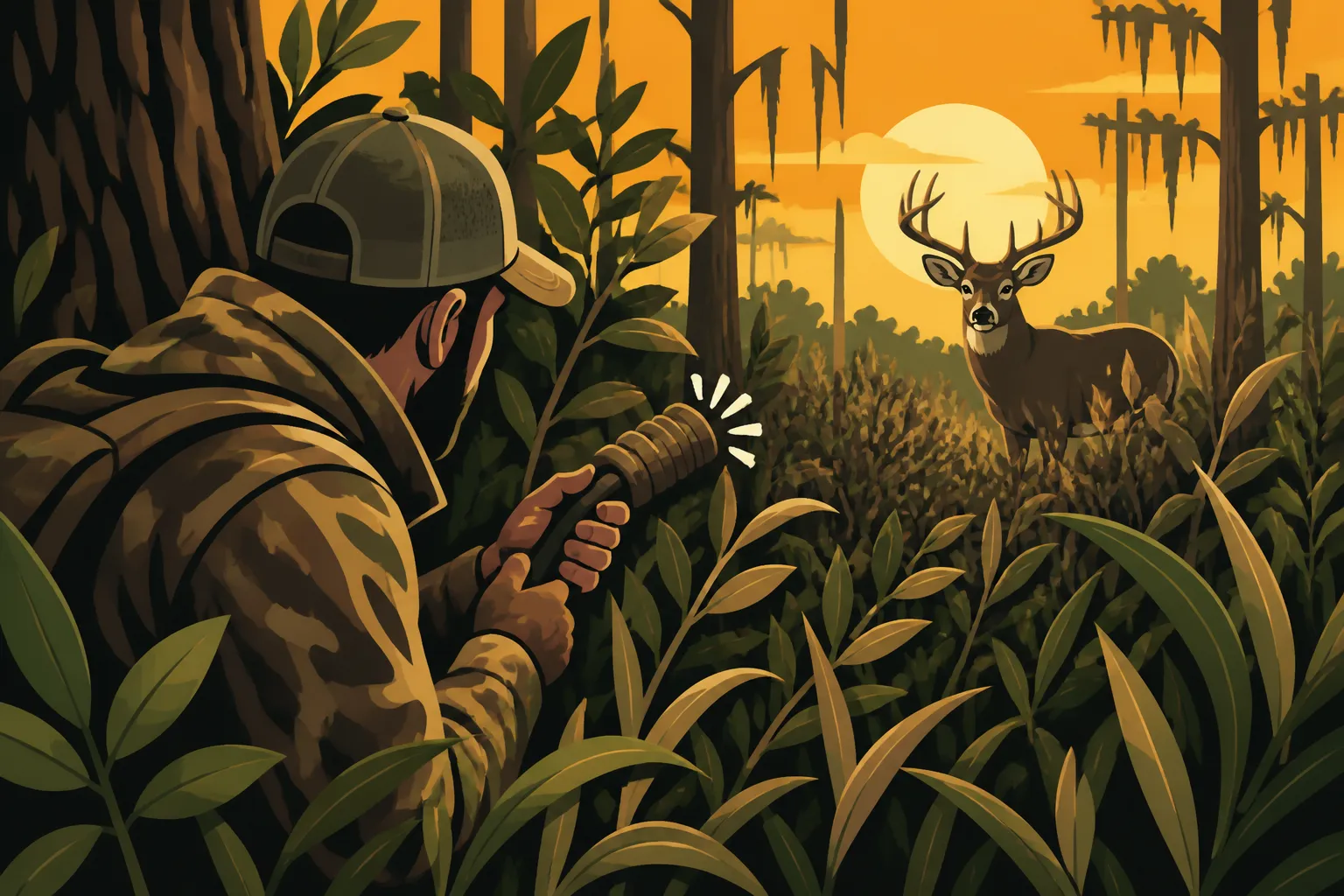
In thick Mississippi cover, less is often more when it comes to rattling volume. Forget those championship-style, smash-and-crash sequences you see on TV that are designed for wide-open Texas ranches. Here, you're aiming to simulate a quick, intense, but contained sparring match, not an all-out brawl. Start with softer, shorter sequences. Gentle clicks and tickles of the antlers, mimicking light sparring or a buck working a sapling, can be incredibly effective. The goal is to pique a buck's curiosity without immediately signaling an overwhelming threat.
When you do introduce some clashing, make it brief and controlled. A few sharp cracks, followed by some grinding and light tickling, then a period of silence. Imagine two bucks briefly testing each other's dominance before backing off. This natural rhythm is far more convincing than a continuous, loud racket. Don't be afraid to incorporate softer sounds like rubbing the bases of the antlers together to mimic an antler rub on a tree or even a branch breaking. These subtle additions build a more realistic soundscape within the dense cover. Many hunters overlook the importance of these smaller details, but they can be game-changers. For more insights on how to tailor your calls, check out our guide on Grunt Calls in Mature Mississippi Timber.
A common mistake is rattling too often or for too long. In thick cover, where deer might take a while to navigate to your position, patience is key. A good sequence might involve 15-30 seconds of varied rattling, followed by 5-10 minutes of absolute silence and intense scanning. Then, repeat. You want to give the deer ample time to hear the sound, process it, and begin moving toward it without feeling pressured. Remember, the sound won't travel far, so a deer might need to move some distance just to get a better auditory fix on your location before committing to an approach.
Incorporating Vocalizations and Scrapes
Rattling isn't a standalone tactic, especially not in thick cover. It's most potent when combined with realistic deer vocalizations. A grunt or two, especially a tending grunt or a challenge grunt, immediately after a rattling sequence, can add incredible realism. The sound of a buck fighting or sparring, followed by a vocalization, tells a more complete story to an approaching deer. It suggests there's a buck there, possibly with a doe, and he's ready to defend his territory. This combination can be particularly effective during the rut, when bucks are highly responsive to both visual and auditory cues of competition.
Consider adding foot stomps or scraping sounds to your sequence. Scrape activity is a huge part of rut behavior, and mimicking it can draw in curious bucks. Use your foot to scuff the leaves, or even break a small branch, immediately following your rattling. This adds another layer of authenticity to your setup. Even the sound of a buck walking through the thicket, pausing, and then starting to spar is a powerful illusion. These small details, often ignored by hunters, can make all the difference in convincing a wary buck that a real interaction is happening nearby. Understanding these subtle signs can also be enhanced by Scouting Mississippi Public Land Before Season to pinpoint areas of recent deer activity.
The key is to blend these sounds naturally. You're not just pressing a button on a call; you're creating a scene. Start with some quiet rattling, maybe a soft grunt, a few more light clashes, and then some foot scuffing. Then, complete silence for several minutes. This simulates a real deer interaction that has pauses and varying intensities. Experiment with different combinations. Every piece of cover is a little different, and what works in a dense pine thicket might need a slight adjustment for a river bottom full of canebrakes. Using a tool like GoHunt to scout aerial photos of potential rattling locations can help you identify areas with good cover and funnel points.
Positioning and Timing Your Rattles Effectively
No matter how perfectly you rattle, if you're not in the right spot at the right time, you're missing the crucial ingredients for success. This is especially true in thick cover, where deer movements are often dictated by small details you might overlook in more open country.
Strategic Setup in Heavy Brush
Where you choose to rattle in thick cover is just as important as how you rattle. Avoid rattling from wide-open spots, even if it feels like you can project sound better. Deer responding in thick cover will invariably approach stealthily, using every bit of available concealment. You need to be equally concealed. Set up tight against a large tree, in a ground blind, or tucked into a dense brush pile, ensuring you break up your outline. Your goal is to be invisible while having a clear shooting lane for the likely close-range shot. For those who prefer ground hunting, our guide on Using a Ground Blind on Mississippi Public Land offers some excellent tips for concealment in various terrains.
Focus on natural travel corridors within the thicket, like old logging roads, creek bottoms, or subtle trails that deer naturally use. These act as funnels, increasing the chances a buck will pass within hearing range and provide you with a clearer shot opportunity. When choosing your setup, always have a good backdrop that helps you disappear. A common mistake is setting up where your silhouette is clearly visible against the sky or a lighter background. This is where an app like GoHunt can be a game-changer, allowing you to study topo maps and satellite imagery to pinpoint those subtle travel routes and ideal ambush points before you even step foot in the woods. Knowing Where Delta National Forest Bucks Bed can also give you a significant advantage in identifying these core thickets.
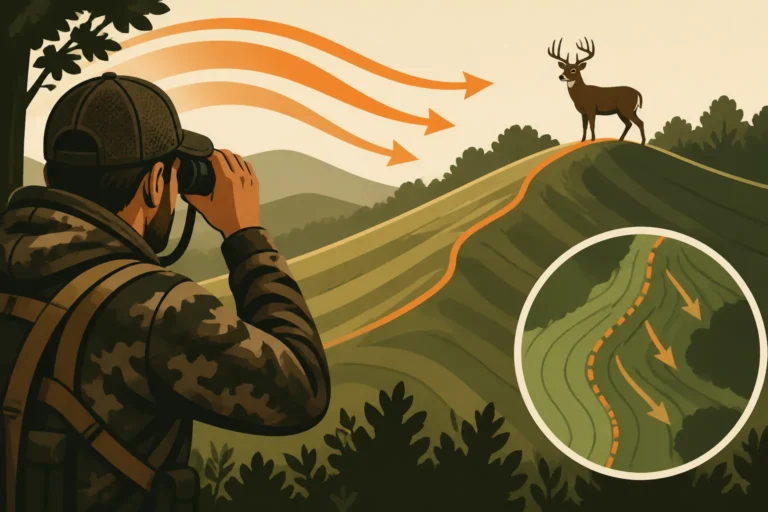
Anticipate the deer's approach. If you expect them to circle downwind, position yourself so that the primary approach vectors are into your wind. This might mean setting up on the leeward side of a ridge or in a way that forces the deer to come from a direction where you have a better visual. Since your visibility is limited, every yard counts. You want to see the deer before it sees or smells you. Remember, a deer's nose is its most powerful defense, especially in an environment where visual cues are limited. For tips on specific terrain, check out our piece on Still-Hunting Hills Unit Ridgelines or Hunting Delta Unit Bottomland Deer.
Reading the Wind and Thermals
Wind and thermals are your best friends and worst enemies in thick cover. In Mississippi, especially during the fall and winter, our winds can be shifty and unpredictable. Always set up so the prevailing wind carries your scent away from where you expect the deer to approach. This sounds obvious, but in dense timber, swirling winds can be a real problem. Pay close attention to how the wind is moving the leaves or a small puff of dust. Even a slight eddy can betray your presence to a buck that's carefully circling downwind.
Thermals, those rising and falling air currents, are particularly important in hilly or undulating terrain. In the morning, air typically flows downhill, and in the evening, it rises. If you're rattling in a creek bottom in the morning, your scent will likely flow down the drainage. In the evening, it will rise with the thermal. Understanding these patterns is crucial for positioning yourself to keep your scent from blowing directly into a buck's approach path. A scent checker, even a simple puffer bottle with baking soda, can give you real-time feedback on how the air is moving at your exact location.
When a buck hears your rattle, his first instinct, especially a mature buck, is to circle downwind to get a scent check. This is an almost universal deer behavior. You need to account for this in your setup. If you can anticipate his downwind approach, you can set up to intercept him before he winds you. This might mean positioning yourself slightly off to the side of the expected approach, or even setting up an ambush point further downwind. The tighter the cover, the more critical this becomes, as you simply don't have the luxury of long-range shots. Learn more about navigating these conditions in Wind and Thermals in Delta Bottomland.
Gear Considerations for Close-Quarters Rattling
Your equipment choices, from the antlers you use to the addition of decoys, play a crucial role in enhancing the realism and effectiveness of your rattling in thick cover.
Choosing the Right Antler Material
Not all rattling antlers are created equal, especially when you're focusing on subtle, close-quarters calling. While real shed antlers provide the most authentic sound, they can be cumbersome and noisy to carry through thick brush. Synthetic rattling bags or compact synthetic antlers offer a good compromise. Brands like Rattling Forks or Knight & Hale produce compact versions that mimic the clashing sound without the bulk. These are great for light, tickling sounds and easy to use without a lot of sweeping arm movements that could give you away.
If you opt for real sheds, choose smaller, lighter antlers for thick cover. A massive set of 150-inch sheds might sound great in a wide-open field, but they’re overkill and impractical in tight quarters. A set of smaller 8-point sheds, or even just the bases, can create plenty of realistic sound without making you feel like you're wrestling a moose in the woods. You want antlers that are easy to manipulate quietly, allowing you to create those subtle clicks, grinds, and light clashes without unnecessary movement or noise when you're trying to remain hidden.
Regardless of what you choose, practice your rattling sequences at home. Get a feel for the different sounds you can produce – light sparring, hard clashing, grinding, and ticking. Understand how to control the volume. You'll want to be able to vary the intensity on the fly, depending on the response (or lack thereof) from the deer. Having a reliable mapping application like GoHunt can help you keep track of potential buck bedding areas and staging points where you might want to try different rattling techniques. Remember, preparing your gear also involves understanding your weapon; for instance, familiarizing yourself with Crossbow Rules During Mississippi Archery Season if that's your tool of choice.
Using Decoys for Added Realism
While a rattling sequence can draw a buck in, a visual cue can often be the final convincing factor. A small, non-threatening buck decoy or even a doe decoy can work wonders in thick cover. Since deer are approaching cautiously, a visual confirmation of another deer can provide the confidence they need to fully commit. Position the decoy quartering away from you, slightly downwind, so that an approaching buck sees the decoy first, draws his attention, and gives you a shot opportunity. Ensure the decoy is visible from the likely approach paths but doesn't telegraph your exact position.
Decoy placement is critical in dense habitat. You don't have the luxury of open sight lines, so your decoy needs to be visible in the small windows that deer will use. Avoid placing it in a spot where it's completely obscured by brush. Think about a slight opening, a bend in a trail, or a subtle rise where it will catch a deer's eye. A quartering-away pose makes the decoy appear less confrontational and often encourages a buck to circle for a broadside view, which can work to your advantage for shot placement. Considering the various challenges of deer hunting, particularly with fluctuating food sources, you might also find value in understanding Late-Season Food Sources for Mississippi Whitetails to predict deer movement.
Be mindful of safety when using decoys, especially on public land during gun season. Ensure you are highly visible to other hunters, perhaps by wearing extra blaze orange on your person, even if your decoy isn't. The purpose of the decoy is to draw attention away from you and towards a convincing visual. In some areas, using a doe decoy can be particularly effective if you're trying to simulate a buck guarding a doe in heat. The combination of rattling, grunting, and a visual decoy can be incredibly powerful for luring in those elusive Mississippi whitetails, especially when you are hunting in close quarters.
| Cover Type | Rattling Volume (Intensity) | Sequence Length | Recommended Sounds | Approach Expectations |
|---|---|---|---|---|
| Thick/Dense Cover | Soft to Moderate | Short (15-30 seconds) | Clicks, light clashes, grinding, twigs snapping, grunts | Cautious, circling downwind, close range (0-40 yards) |
| Moderate/Mixed Cover | Moderate to Aggressive | Medium (30-60 seconds) | Varied clashes, grinding, rubs, grunts, snort-wheezes | More direct, may still circle, medium range (40-80 yards) |
| Open Hardwoods/Fields | Aggressive to Very Aggressive | Long (60-90 seconds) | Loud clashes, bone-breaking sounds, aggressive grunts | Direct, fast, longer range (80-150+ yards) |
Important Hunting Disclaimer
Please be aware that hunting regulations, seasons, and licensing requirements can change. Always consult the latest Mississippi Department of Wildlife, Fisheries, and Parks (MDWFP) official regulations before planning any hunting trip. This guide is for informational purposes only and does not supersede state laws or regulations.