Mississippi Blaze Orange Requirements
Navigating the ever-changing rules and regulations of hunting can feel like a game of whack-a-mole, especially when it comes to something as crucial as safety gear. Many hunters, whether seasoned locals or newcomers to the Magnolia State, find themselves scratching their heads over exactly when and how much blaze orange is truly required in Mississippi. This comprehensive guide is here to clear up all that confusion, ensuring you stay legal, visible, and most importantly, safe in the field.
The Core Blaze Orange Rule in Mississippi
Mississippi’s hunting regulations prioritize safety above all else, and a significant part of that focus is on making hunters easily visible to one another. The blaze orange requirement is perhaps the most universally recognized safety measure in deer season, designed to reduce accidents by making hunters stand out vividly against natural backdrops. It's a color that deer don't perceive in the same way humans do, so while it screams "hunter" to other people, it doesn't give away your position to game animals.
It’s easy to get complacent, especially if you hunt private land that feels isolated, but the rules apply broadly across both public and private lands when specific seasons are open. The intent is simple: minimize the chances of a hunter being mistaken for game, particularly during the high-traffic periods of gun season. Every hunter has a responsibility to understand and adhere to these guidelines, not just for their own safety, but for the safety of everyone else in the woods.
When Blaze Orange is Mandatory for Deer Hunters
The most critical time to don your brightest gear is during any open gun season for deer. This includes the general firearms season, of course, but also any special youth gun hunts or primitive weapons seasons where legal firearms like shotguns, muzzleloaders, or even modern rifles are permitted. If you're out there, and someone else could be out there with a firearm hunting deer, you need to be visible. This isn't just a suggestion; it's a hard and fast rule set by the Mississippi Department of Wildlife, Fisheries, and Parks (MDWFP). The regulations are specifically designed to protect all participants during these inherently higher-risk periods.
Think about it: the woods during gun season can be bustling. You might have deer drives, still-hunters, and folks moving to and from stands. With so much activity, and sometimes varying levels of hunter experience, the chances of an accident increase without clear visibility. Whether you’re walking to your stand an hour before dawn, sitting quietly at midday, or tracking a deer at dusk, your blaze orange needs to be on and visible. Even if you're not actively hunting deer but are present in an area where deer gun season is open, say for small game, the blaze orange rule still applies to ensure your safety. For a detailed look at the general season, check out our guide on Mississippi's Gun Deer Season by Unit.
Minimum Area and Visibility Requirements
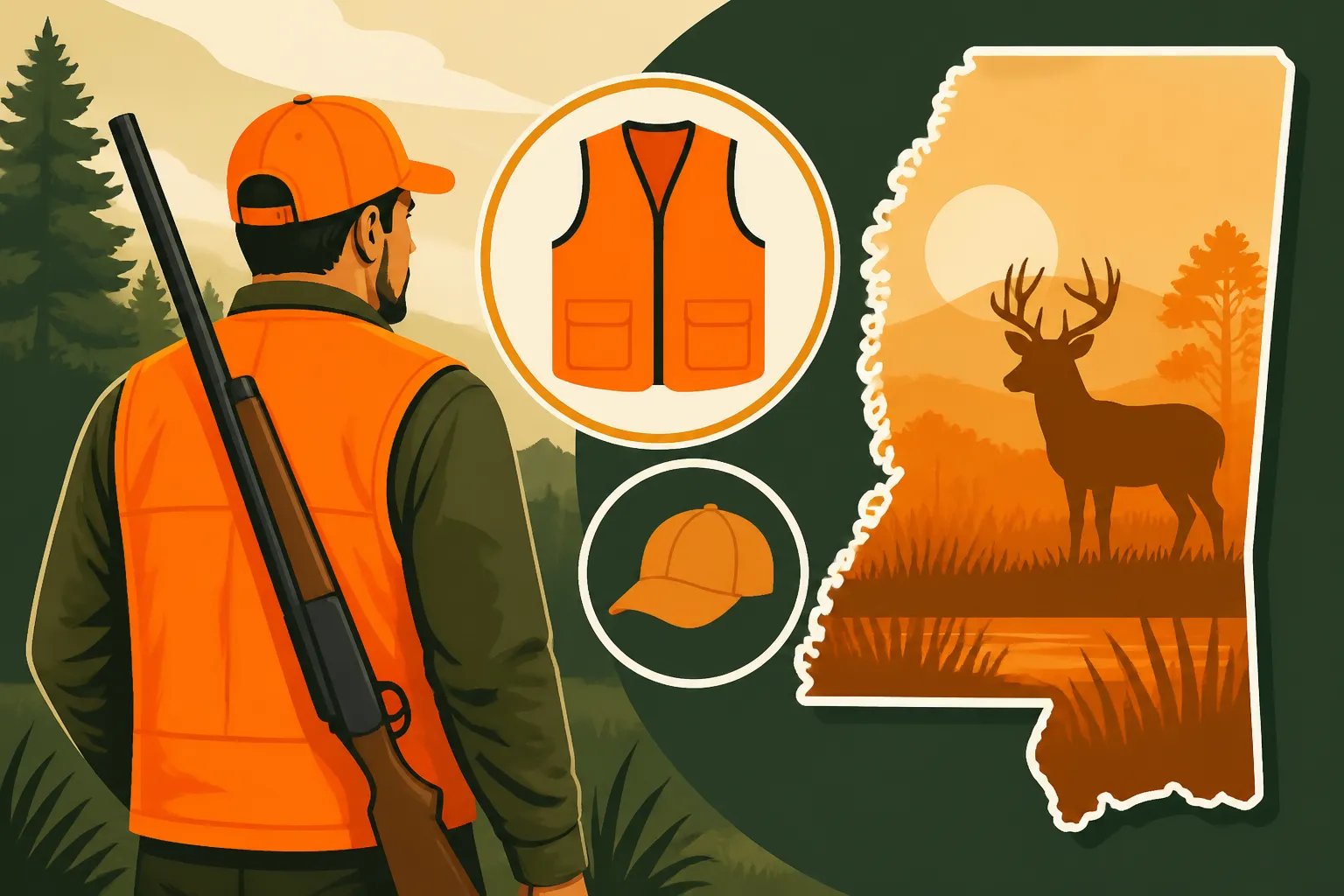
Now, let's get into the nitty-gritty of how much blaze orange. Mississippi law specifies that during any open gun or primitive weapons season for deer, hunters must wear at least 500 square inches of solid unbroken blaze orange or blaze fluorescent pink (more on pink in a bit) on their outermost garment, above the waist. This typically translates to a vest or a jacket. Crucially, at least 100 square inches of that blaze orange or pink must be visible from both the front and the back.
This isn’t just about putting something orange on. It's about ensuring that from any angle, another hunter can clearly identify you as a person, not a deer or other game animal. Imagine you're walking through thick brush; if your vest only covers your chest, your back might be completely obscured. That's why the unbroken surface area and front/back visibility are so important. A cap or hat counts towards the 500 square inches, but it cannot be the only blaze orange item you wear, nor does it typically meet the 100 square inch front and back requirement on its own. It's designed to be a clear, unmistakable signal: "Human hunter present." Some hunters even go above and beyond, wearing more than the minimum, especially if they are frequently moving or hunting in heavily trafficked areas, just to be extra safe.
Scenarios Where Blaze Orange is NOT Required
While blaze orange is a cornerstone of gun season safety, it's not a universal requirement for every single hunting scenario in Mississippi. This is where a lot of the confusion often comes from – understanding the specific exceptions can save you a headache and ensure you're geared up appropriately for your particular hunt. Knowing these distinctions is vital not only for compliance but for maximizing your chances of success during hunts where stealth is paramount.
Mississippi's diverse hunting opportunities mean a one-size-fits-all approach to safety gear isn't always practical or necessary. The exceptions are logical and typically tied to the type of weapon used or the inherent nature of the hunt itself, where visibility might actually hinder rather than help.
Archery Season and Turkey Hunting Exceptions
One of the biggest areas of exemption is during traditional archery season. When you're bowhunting, particularly for deer, the entire strategy revolves around stealth, camouflage, and getting incredibly close to your quarry. Wearing blaze orange would be counterproductive, screaming your presence to every deer within sight. Therefore, during recognized How Mississippi's Archery Season Varies by Unit for deer, blaze orange is generally not required for bowhunters. However, there's a critical caveat: if archery season overlaps with a primitive weapons or gun season in the same area, then the blaze orange rule kicks back in. Always double-check the specific unit regulations and concurrent seasons. This overlap scenario can be a real gotcha if you're not paying close attention to the MDWFP's annual digest.
The same logic applies to spring turkey hunting. Turkeys have incredibly keen eyesight, and any splash of bright color like blaze orange would send them running for the hills. For this reason, blaze orange is explicitly not required for turkey hunters. In fact, wearing it would almost guarantee a silent exit from every gobbler you encounter. Turkey hunting demands full camouflage, from head to toe, to break up your human silhouette. You're trying to blend seamlessly into the environment, not stand out. Our guide on Spring Turkey Hunting in Mississippi delves deeper into these tactics. So, when you're out there trying to call in a big tom, leave the orange in the truck.
Hunting from Enclosed Stands or Blinds
Another important exception applies when you are hunting from an enclosed stand or a ground blind. If your stand is fully enclosed, meaning it has four walls and a roof, and you are hunting from within it, you are generally exempt from wearing blaze orange. The reasoning is that the stand itself provides the necessary visual barrier, preventing your body from being mistakenly identified as game. You're effectively in a "hide." The same goes for ground blinds, as long as they completely conceal you from view. If you're using a pop-up blind or a more permanent structure, and you're inside it, you typically don't need to wear orange.
However, this exception comes with a common-sense condition: if you leave the enclosed stand or ground blind and begin to move through the woods, even for a short distance to retrieve an arrow or head to the truck, you must then put on your blaze orange. The exemption is for being inside the blind, not for the entire hunt. It's a subtle but important distinction. Many hunters will keep a blaze orange vest folded up inside their blind or pack, ready to put on the moment they step out. This foresight can prevent a potential fine and, more importantly, keeps you safe during transit. If you're curious about optimal setups, you might find our article on Using a Ground Blind on Mississippi Public Land helpful for maximizing concealment while adhering to these safety principles.
Understanding Blaze Pink and Other Considerations
Mississippi, like a growing number of states, has embraced alternative safety colors to give hunters more options. While blaze orange has been the standard for decades, blaze pink offers a vibrant and equally effective alternative for those who prefer it. Beyond just color choice, truly understanding hunting safety involves looking at visibility from all angles, considering movement, and the environmental factors that can impact how well you're seen.
This expanded approach to safety gear demonstrates a progressive attitude within wildlife agencies, recognizing that encouraging participation and comfort can go hand-in-hand with maintaining high safety standards. It's not just about the rules, but about the spirit of safety that underpins them.
Mississippi Blaze Pink Options Under Law
In recent years, Mississippi has explicitly approved blaze fluorescent pink as an acceptable alternative to blaze orange. This is a fantastic step, offering hunters, particularly women and youth, another choice for meeting the mandatory visibility requirements. The rules for blaze pink are identical to those for blaze orange: you still need at least 500 square inches of solid, unbroken material worn above the waist, with at least 100 square inches visible from both the front and the back. The intent is the same – maximum visibility for human safety – just with a different color palette.
The science behind blaze pink is similar to orange: deer and other game animals are largely red-green colorblind. To them, both blaze orange and blaze pink appear as shades of grey or dull yellow, blending into the natural background far more effectively than humans perceive. For us, however, both colors pop dramatically, making a hunter stand out against the browns, greens, and greys of the forest. This acceptance of blaze pink reflects a broader movement to make hunting more inclusive and appealing to a wider audience, removing any unnecessary barriers to entry. It's all about ensuring safety without compromising personal preference or style, and you can learn more about this in Mississippi Blaze Pink Options Under Law.
Importance of Visibility Beyond Minimums
While meeting the legal minimums is essential, wise hunters often consider going above and beyond. Think about hunting in heavy fog, dense timber, or during those tricky twilight hours when visibility is naturally reduced. In such conditions, just barely meeting the 500 square inch requirement might not be enough to truly stand out. Wearing a full blaze orange or pink jacket, rather than just a vest, can significantly increase your visible profile. Adding a blaze orange hat, if allowed for your particular hunt, also helps, especially when your upper body might be partially obscured by a backpack or other gear.
Consider your movement patterns too. If you're still-hunting or walking through thick cover, your blaze orange might get temporarily obscured by branches. The more surface area you have covered, the greater the chance that some portion of it will always be visible. This is where quality gear from brands like GoHunt, known for their durable and thoughtfully designed hunting apparel, can make a difference. Their gear often integrates these safety features with practical hunting needs. The goal isn't just to avoid a ticket; it's to avoid an accident. Extra visibility offers an extra layer of protection, particularly when hunting in areas with high Hunting Pressure on Mississippi Public Land. It’s a small investment for a potentially life-saving benefit.
Practical Tips for Staying Safe and Legal
Adhering to Mississippi's blaze orange requirements isn't just about following the law; it's about being a responsible, ethical, and safe hunter. Beyond simply buying a vest, there are practical steps you can take to ensure you're always visible and prepared, especially when you consider the varying conditions and types of hunting throughout the state. Being proactive about safety not only protects you but also contributes to a safer hunting environment for everyone.
It’s easy to overlook the small details in the excitement of a hunt, but these details are precisely what can prevent accidents. From choosing the right gear to educating those new to the sport, a thoughtful approach to blaze orange can make all the difference.
Choosing the Right Blaze Orange Gear
Selecting your blaze orange or pink gear should be more than an afterthought. First, prioritize quality. A cheap, flimsy vest might tear easily, reducing its effective surface area, or fade quickly under UV exposure, making it less vibrant over time. Look for durable materials that can withstand the rigors of the field – briars, snags, and repeated washing. Many high-quality hunting vests and jackets are designed with hunters in mind, offering features like pockets, silent fabrics, and comfortable fits that don’t restrict movement.
Consider the fit as well. You want something that fits comfortably over your other layers, allowing for a full range of motion, but not so baggy that it becomes a snagging hazard. Make sure it stays visible and doesn't ride up or get bunched when you're shouldering a firearm or climbing into a stand. Brands often offer different weights of blaze orange gear, from lightweight mesh vests for warmer early-season hunts to insulated jackets for colder late-season days. For instance, a quality vest from GoHunt will not only meet the area requirements but also be built for durability and comfort in the field. Remember, if it's uncomfortable or restrictive, you might be tempted to take it off, which defeats the entire purpose. Don't forget to review our general advice on What to Pack for a Guided Mississippi Hunt, where safety gear is always a top consideration.
Educating New Hunters and Youth
The next generation of hunters is our responsibility, and that includes instilling good safety habits from day one. When taking a youth hunter out, especially during Mississippi's popular Hunting the Mississippi Youth Gun Weekend, emphasize the importance of blaze orange. Explain why it's required, not just that it's required. Talk about target identification, shot zones, and how blaze orange helps other hunters see them clearly. Make it part of their routine, just like checking their firearm or knowing their hunting plan. For young hunters under certain age limits, Mississippi has specific Mississippi Hunter Education Requirements which often include detailed discussions on blaze orange and overall hunter safety.
It's also crucial for mentors to lead by example. If you're hunting with a youth or a new hunter, make sure you're both wearing your blaze orange correctly. Double-check their gear before heading into the woods. Consider getting them blaze orange gear that they find comfortable and even "cool" – if they like wearing it, they’re more likely to keep it on. For those just starting out, Mississippi also offers programs like the Mississippi Apprentice Hunter License Rules which allow new hunters to gain experience under the direct supervision of an experienced mentor, providing a perfect opportunity to reinforce these critical safety practices.
Common Misconceptions and Legal Consequences
Despite clear regulations, misunderstandings about blaze orange requirements persist. It’s easy to fall prey to old wives’ tales, outdated information, or simply misinterpreting the specific wording of the law. However, in hunting, ignorance is rarely bliss – especially when it comes to safety and legal compliance. Understanding these common pitfalls can help you avoid unnecessary risks and legal trouble.
The stakes are high, not just in terms of potential fines, but in the realm of personal safety and the integrity of the hunting community. A clear head and accurate information are your best allies in the field.
The Dangers of Assuming or Guessing
One of the most dangerous habits a hunter can develop is assuming or guessing about regulations. "Oh, it's just a vest, close enough," or "No one else is out here, so it doesn't matter," are phrases that can quickly lead to trouble. The MDWFP regulations are quite specific for a reason. For example, some hunters might assume that camouflage patterns with blaze orange integrated into them meet the requirements. While these can offer some visibility, they often do not provide the solid, unbroken 500 square inches required, nor do they guarantee the 100 square inches visible from front and back. The law specifies solid blaze orange or pink. If you’re unsure, always err on the side of caution and wear a dedicated blaze orange vest or jacket over your camo.
Another common misconception is believing that blaze orange is only needed when actively shooting, or only on public land. As discussed, if gun deer season is open, the requirement applies whenever you are afield, whether you’re walking to your stand, tracking game, or even retrieving equipment. And it applies on both public and private lands. A quick check of the current MDWFP hunting digest or their official app is always the best source of information, especially when preparing for any of Mississippi's specific hunting windows or seasons, such as during Muzzleloader Deer Hunting in Mississippi when primitive weapons are in play. Trusting hearsay or your memory alone is a recipe for potential danger and legal issues.
Penalties for Non-Compliance
Failing to meet Mississippi’s blaze orange requirements isn't just a minor infraction; it carries real legal consequences. Hunters found in violation can face fines, and in some cases, even have their hunting privileges suspended. Wildlife enforcement officers patrol the woods diligently, and they take these safety regulations very seriously. A citation for not wearing blaze orange can quickly turn an otherwise enjoyable hunting trip into a costly and frustrating experience.
Beyond the legal penalties, there’s a more profound consequence: the increased risk of an accident. Blaze orange is a proven safety measure that reduces the chance of being mistaken for game. By not wearing it, you're not only breaking the law but also putting yourself and others at a higher risk. Every year, hunting accidents occur that could have been prevented with proper visibility. As ethical hunters, we have a responsibility to uphold safety standards, not just for ourselves, but for the entire community. Staying current with all regulations, including details on Mississippi Legal Firearms for Deer Hunting and other specific gear requirements, is part of being a responsible sportsman and ensuring that hunting remains a safe and respected pastime for everyone in the Magnolia State.
| Hunting Type / Season | Blaze Orange/Pink Required? | Minimum Coverage | Notes |
|---|---|---|---|
| Deer Gun Season | Yes | 500 sq. inches total (100 front/100 back) above waist | Includes Youth Gun, Primitive Weapons if firearms are legal. |
| Deer Archery Only | No | None | Unless overlapping with gun/primitive weapons season. |
| Turkey Hunting | No | None | Stealth is key; full camo recommended. |
| Small Game (during open deer gun season) | Yes | 500 sq. inches total (100 front/100 back) above waist | If any gun deer season is open in the area. |
| Waterfowl | No | None | Generally not required, camouflage is typical. |
| From Enclosed Stand/Blind | No | None | Only when inside the enclosed structure. Must wear when moving outside. |
Disclaimer
The information provided in this guide is for general informational purposes only and does not constitute legal advice. Hunting regulations in Mississippi can change. Always consult the official Mississippi Department of Wildlife, Fisheries, and Parks (MDWFP) website or their most current hunting digest for the definitive and most up-to-date regulations before heading into the field.