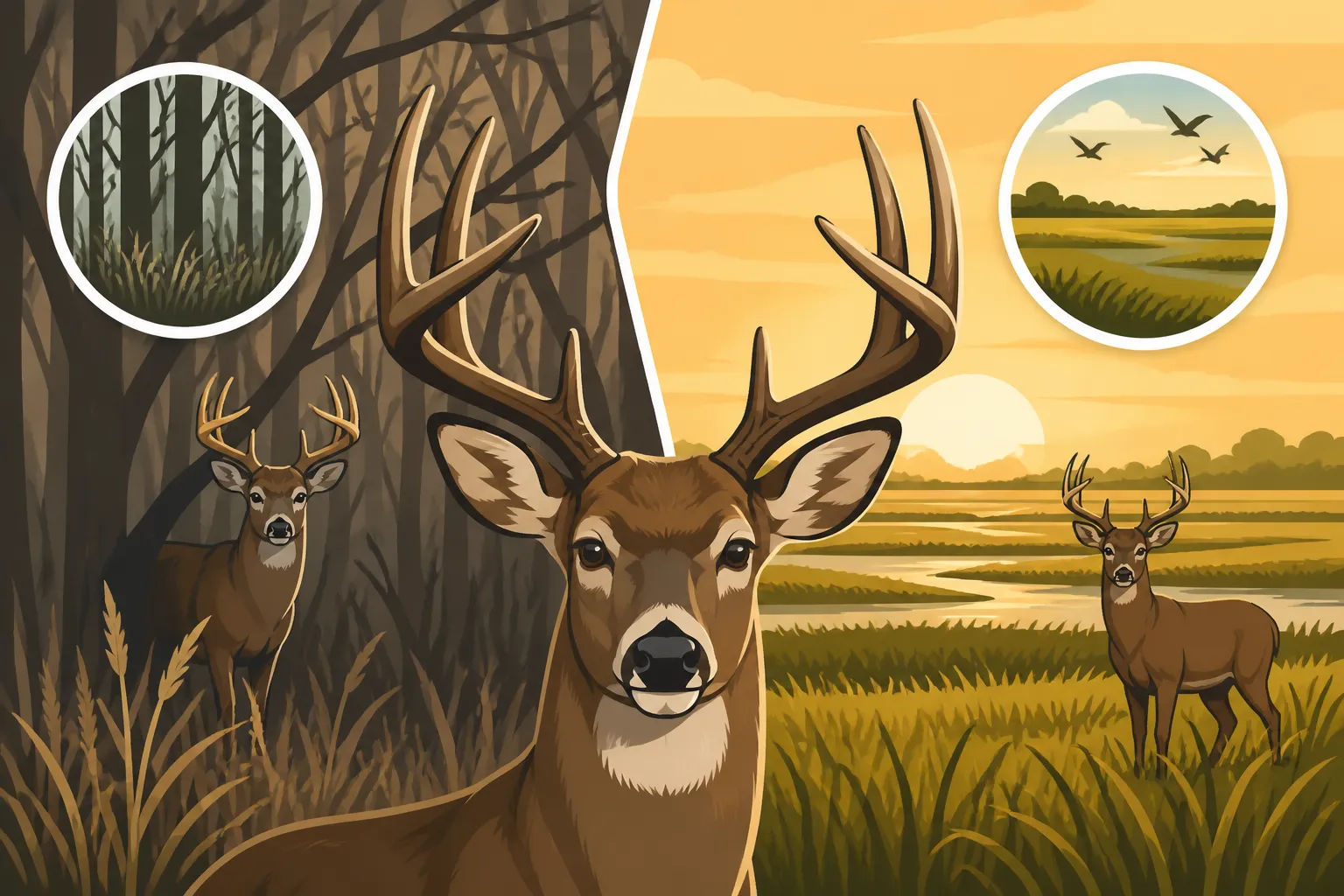
Why Delta Bucks Need a Bigger Spread
It can be incredibly frustrating to be sitting in a stand, see a buck that looks good, but then have that gnawing uncertainty about whether its antlers actually meet the legal spread requirement. In Mississippi's Delta Unit, this challenge is amplified because the regulations specifically call for a wider spread. This guide is here to unravel the mystery behind why Delta bucks need a bigger spread, what those rules mean for your hunt, and how you can confidently identify a legal buck when that moment of truth arrives.
Understanding Mississippi's Delta Unit Antler Restrictions
Hunting deer in Mississippi means getting to know our state's diverse geography and how that impacts management. The Mississippi Department of Wildlife, Fisheries, and Parks (MDWFP) divides the state into different deer management units, and each one has its own specific set of rules designed to help the deer herd thrive. The Delta Unit, with its unique environment, presents some of the most distinct antler restrictions you'll encounter, particularly when it comes to antler spread.
The Specifics of the 12-Inch Rule
For many years now, hunters in the Delta Unit have operated under what's commonly known as the "12-inch spread rule." This isn't just a suggestion; it's a mandatory regulation. To be considered a legal buck for harvest in the Delta, a deer must have an outside antler spread of at least 12 inches OR have an unbranched antler on at least one side. So, if you're looking at a buck with a respectable rack, but those main beams don't extend past its ears (which is a common way to estimate 12 inches in the field), it's likely not a legal harvest unless it also happens to be a spike on one side. This rule applies throughout the entire season, from the quiet days of early archery season to the intensity of the gun season. It's a critical detail that every hunter stepping into the Delta's bottomlands absolutely must understand and abide by. For a full breakdown, you can always refer to the official Delta Unit Antler Restriction Rules.
It’s easy to feel the pressure when a nice deer walks out and you're trying to make that split-second judgment. We’ve all been there, second-guessing ourselves. That 12-inch measurement can feel like an eternity when a buck is walking past your stand. But this rule isn't just to make our lives harder; it's steeped in some really smart wildlife management principles. It’s about more than just numbers; it’s about shaping the future of the Delta's deer population. Hunters often wonder why this specific number was chosen and why it’s enforced so strictly. The answer lies in a blend of biological factors and long-term goals for the herd.
Why This Rule Exists
The primary reason for the 12-inch spread rule in the Delta Unit boils down to encouraging hunters to pass on younger bucks. You see, when hunters consistently harvest younger bucks with smaller racks, it skews the age structure of the herd. It reduces the number of bucks that get to live long enough to reach their full antler-growing potential. By implementing a higher bar for antler spread, the MDWFP aims to protect 1.5 and 2.5-year-old bucks, allowing them to mature into 3.5, 4.5, and even older age classes. This leads to an older, healthier buck population, which in turn leads to bigger, more impressive antlers down the line. It's a delayed gratification approach that really pays off for the herd in the long run.
Beyond just antler size, allowing bucks to age impacts the overall health and genetics of the herd. Older bucks are often better breeders, and a diverse age structure can lead to a more resilient population. It also helps with balancing the buck-to-doe ratio, which can improve rut activity and overall fawn recruitment. This management strategy isn't unique to Mississippi, but it's particularly well-suited to the Delta where the habitat is so rich. The idea is that if you let those younger bucks walk, they'll come back next year (or the year after!) with an even more impressive rack, contributing positively to the herd before they're harvested. It's a testament to patience and a belief in the inherent potential of the Delta's whitetails.
Biological Foundations for Bigger Delta Bucks
The Delta Unit is unique, not just in its regulations, but in its ecological makeup. This region offers a prime environment for deer to not only survive but truly thrive and grow large. Understanding these underlying biological factors helps us appreciate why the 12-inch rule is so effective and necessary for this particular area. This isn't just any part of Mississippi; the Delta is a special place for deer hunting, and the deer here often reflect that abundance.
The Role of Nutrition and Habitat
Let's be real, the Mississippi Delta is a giant food plot for deer. It's renowned for its incredibly rich, fertile soil, which translates directly into superior nutrition for deer. This region is primarily composed of vast agricultural fields—think soybeans, corn, and cotton—interspersed with bottomland hardwood forests, sloughs, and cypress breaks. The combination of high-energy row crops and natural browse from the hardwoods provides an almost year-round smorgasbord for whitetails. All that protein and energy from agriculture and lush natural vegetation fuels antler growth in bucks. Simply put, well-fed deer grow bigger bodies and, consequently, bigger antlers. This excellent nutrition is one of the primary reasons Why the Delta Grows Big Bucks.
Compare this to areas with poorer soils or less diverse forage, and you'll immediately see the difference. In areas where deer are constantly struggling to find adequate nutrition, antler growth is often stunted, and body weights are lower. In the Delta, deer typically have access to an abundance of high-quality food sources, allowing them to allocate more energy towards antler development once their body growth needs are met. This isn't just about survival; it's about optimal development. This rich nutritional base is a foundational component of why the Delta can sustain a population capable of producing bucks with such impressive racks, making that 12-inch spread a realistic and achievable management goal. It's a truly unique ecosystem that supports impressive wildlife.
Genetics and Age Structure in the Delta
Beyond nutrition, genetics play a significant role in antler potential. While nutrition can influence how well a buck expresses its genetic potential, the inherent genetic blueprint determines what that potential even is. The Delta's deer herd, through years of natural selection and strategic management, has developed strong genetics for antler growth. When you combine those good genes with phenomenal nutrition, you have a recipe for some truly remarkable bucks. Furthermore, the 12-inch spread rule actively contributes to improving the age structure of the buck population. By protecting younger deer, more bucks are allowed to reach older age classes.
An older age structure means more bucks are living long enough to fully express their genetic potential. A 1.5-year-old buck, no matter how good his genetics, simply hasn't had the time to grow a massive rack. A 4.5 or 5.5-year-old buck, however, has had several years of optimal nutrition and growth, allowing him to put on significant bone mass. The MDWFP's focus on deer management, which includes strict antler restrictions in the Delta, directly influences this age structure. The goal is to ensure a healthy balance, where enough younger bucks survive to become those impressive, mature animals we all dream of seeing (and hopefully harvesting!). This thoughtful approach results in a healthier and more robust deer herd overall, a benefit to both deer and hunters alike. You'll find that the Mississippi Deer Population Estimate often reflects the success of these programs in producing a robust and mature herd.
MDWFP Management Goals and Hunter Compliance
The MDWFP doesn't just pull these numbers out of a hat. There's a lot of science and careful consideration that goes into crafting deer regulations, especially in a productive area like the Delta Unit. Their goals are multi-faceted, aiming for both biological health of the herd and quality hunting experiences for us, the hunters. Compliance with these rules is key to their success.
Promoting Mature Buck Harvest
The primary management goal behind the Delta's 12-inch spread rule is quite simple: to promote the harvest of mature bucks while protecting younger, developing bucks. In areas without such restrictions, there's a higher likelihood that hunters will take the first legal buck they see, which often means younger deer with smaller racks. This can lead to a phenomenon known as "trophy-out" or "high-grading," where the gene pool for antler quality is inadvertently diminished by removing the best young specimens. The 12-inch rule acts as a filter, requiring hunters to exercise patience and allow more bucks to reach their physical prime.
This strategy leads to a more balanced and older age structure within the buck population. When bucks live longer, they have more opportunities to breed, spreading their superior genetics throughout the herd. It also creates a more exciting hunting experience, as the chances of encountering a truly mature, large-antlered buck increase significantly. It’s a win-win: healthier deer and happier hunters. The data consistently shows that when these antler restrictions are properly implemented and followed, the overall quality of the deer herd improves dramatically, especially in terms of antler size and age distribution. This careful management is crucial for Mississippi's deer, ensuring that our hunting heritage remains strong for generations to come.
Estimating Antler Spread in the Field
Alright, this is where the rubber meets the road. It's one thing to read about a 12-inch spread, and another entirely to accurately estimate it when a buck is walking quickly through thick cover at dawn or dusk. This is probably the biggest source of anxiety for hunters in the Delta. The classic field method, and probably the most reliable, is to compare the buck's antler spread to the width of its ears when they are in an alert, forward position. For most mature whitetail bucks, the ear-tip-to-ear-tip measurement is roughly 14-15 inches. So, if a buck's main beams extend noticeably outside its ears, you're likely looking at a legal 12-inch spread or more. If they appear to be inside the ears, or just barely at the tips, it's probably best to pass, especially if you're not 100% sure.
It takes practice, and honestly, passing on a deer you're not sure about is always the safest and most ethical choice. Using good optics is key here. A quality binocular or spotting scope can make all the difference in making that crucial judgment call. Don't rely solely on what you see through your scope, as magnification can sometimes distort distances and proportions. Take your time, get a good look, and if there's any doubt, let that buck walk. Remember, there's always another hunt, and the integrity of the Delta's deer herd (and your hunting license!) depends on accurate judgment. Some hunters even carry a small, foldable ruler to hold up to their binoculars to help train their eye, though this isn't practical in a real hunting scenario. Practice observing deer on trail camera photos or during scouting trips to hone your estimation skills.
Hunting Strategies Under Delta Regulations
Hunting the Delta Unit requires a bit of a different mindset and strategy than you might employ in other parts of the state, precisely because of these antler restrictions. It's not just about finding deer; it's about finding legal deer, and that means being more selective and often more patient. But with the right approach, hunting in the Delta can be incredibly rewarding.
Scouting for Legal Bucks
Scouting is always important, but in the Delta, it becomes absolutely critical for identifying legal bucks before the season even starts. Instead of just looking for any deer sign, you're specifically looking for signs of mature bucks. This means paying close attention to rubs, scrapes, and tracks that indicate a larger-bodied animal. Early season trail camera use is invaluable here. Place cameras on pinch points, field edges, and travel corridors where bucks are likely to pass. Reviewing those photos allows you to get a good read on the antler development and spread of the bucks in your area, letting you know if you have legal deer around. Tools like GoHunt can be incredibly helpful for mapping out potential bedding areas, food sources, and travel routes, helping you focus your camera placement.
Look for buck sign around historical deer bedding areas and feeding areas. In the Delta, these often include dense thickets near agricultural fields, the edges of cypress sloughs, or the higher ground within expansive bottomland timber. Identifying consistent patterns of movement for older bucks can give you a huge advantage. Remember that Delta bucks, especially the older ones, can be incredibly elusive. They often don't move during daylight hours until the rut kicks in or cooler weather pushes them. So, understanding their preferred habitat and travel routes, often indicated by larger, more aggressive rubs, is paramount. Take the time to really understand the terrain, even if it's flat. Identify those subtle funnels between two sloughs or the hidden pockets of cover where a mature buck might feel secure.
Adapting Your Hunting Approach
Since you're targeting mature bucks with a significant spread, your hunting approach needs to be tailored to their habits. This means being even more scent-conscious, quieter, and patient. Mature bucks are incredibly wary, and any mistake can send them packing. Focus on morning and late afternoon hunts, particularly during the peak of the rut, when bucks are most actively cruising for does. The Delta's Hunting the Rut in the Delta Unit often sees bucks throwing caution to the wind, presenting better opportunities. Consider using a quality scent control regimen and setting up stands or ground blinds in locations that minimize your intrusion into their core areas.
Choosing the right stand location is also key. Look for natural funnels, like narrow strips of timber between two fields, or pinch points along a creek or slough. These are areas where deer, especially mature bucks, are naturally funneled into a predictable travel path. Patience is truly a virtue when hunting for big Delta bucks. You might sit for several hunts without seeing a legal shooter, but when that moment comes, you'll be glad you held out. Remember that passing on a young buck isn't a failure; it's an investment in the future of the herd and your own hunting success. Utilizing mapping apps like GoHunt can help you analyze terrain and identify those prime stand locations before you even step foot in the woods, giving you a crucial edge. Don't be afraid to adjust your plans based on current conditions and recent deer activity – that flexibility is often what separates successful Delta hunters from the rest. For treestand placement, especially in the big timber, check out strategies for Hanging a Stand on a Delta Bottomland Funnel.
Disclaimer
Hunting regulations and seasons can change. Always consult the latest Mississippi Department of Wildlife, Fisheries, and Parks (MDWFP) official regulations before heading into the field. This guide is for informational purposes only and should not be considered legal advice.