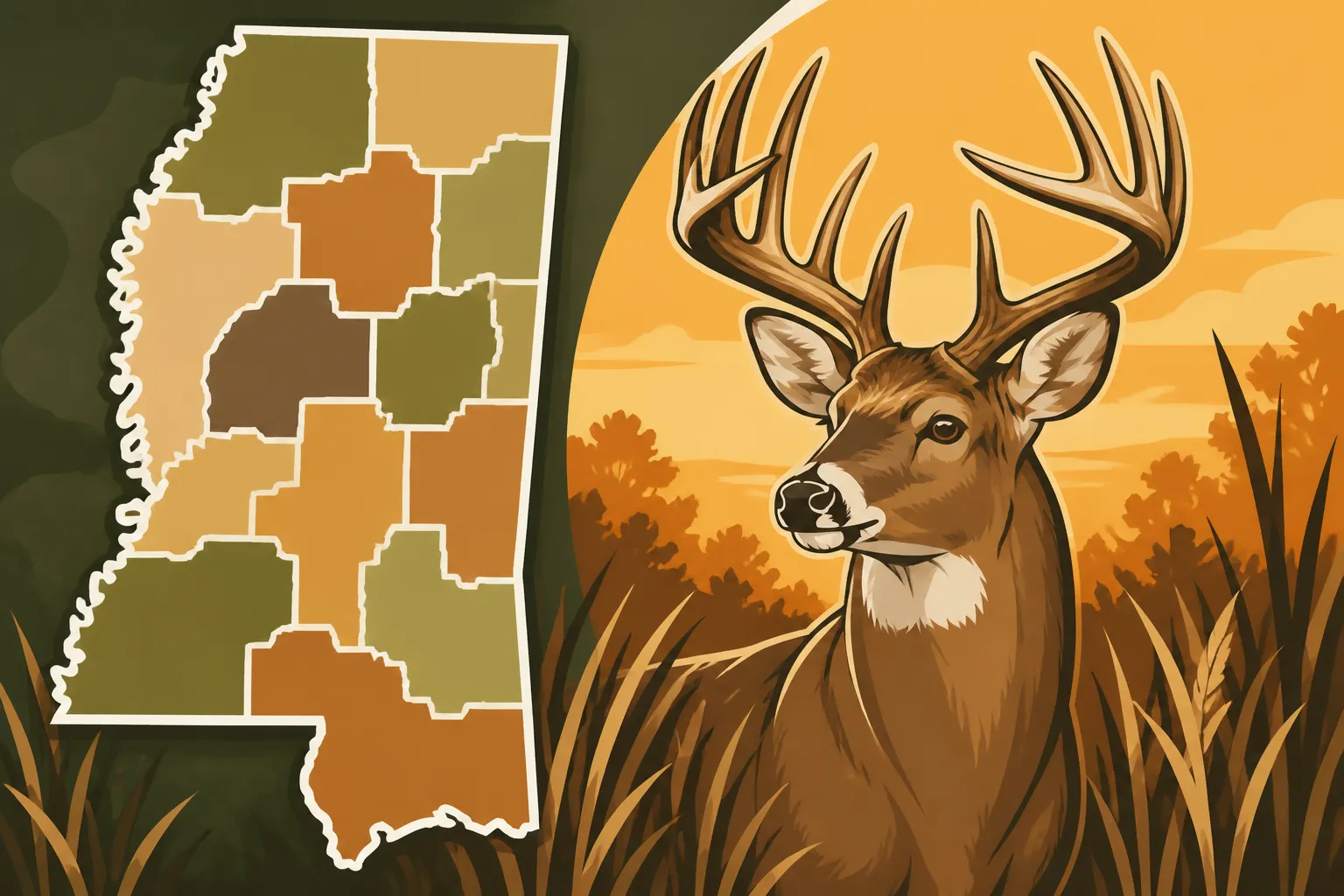
When the Mississippi Rut Peaks by Unit
It's a common story: you've put in the time scouting, hung your stand, and you're ready for that perfect moment, only to feel like you're always a step behind the deer. The truth is, many hunters miss out on the most explosive action of the season because they don't fully understand the nuanced timing of the whitetail rut across different parts of Mississippi. This guide is here to shed light on those crucial windows, helping you pinpoint exactly when and where the deer will be most active in each of the state's management units, so you can make every minute in the woods count.
Understanding the Whitetail Rut in Mississippi
The whitetail rut is arguably the most anticipated period of the hunting season for deer hunters, and for good reason. It’s when deer behavior, especially that of mature bucks, changes dramatically, offering unique opportunities that are rare at other times of the year. But what exactly is the rut, and why does its timing matter so much to us as hunters?
What is the Rut and Why Does it Matter?
At its core, the rut is the annual breeding season for white-tailed deer. It’s a biological imperative, driven by hormones and a primal urge to perpetuate the species. For does, it’s when they enter estrus and become receptive to breeding. For bucks, it’s a time of intense competition and relentless searching for those receptive does. This isn't just about a few days; it's a multi-stage event that unfolds over several weeks.
From a hunting perspective, the rut is a game-changer. Bucks, normally elusive and often nocturnal, become far more active during daylight hours, sometimes seemingly throwing caution to the wind. They're on their feet, scent-checking areas, chasing does, and challenging rivals. This increased movement, often in broad daylight, means a higher probability of encountering mature bucks that might otherwise be invisible. Hunters who understand the different phases of the rut – from the seeking and chasing to the breeding peak – can adjust their strategies to capitalize on these shifts in behavior, placing themselves in the best possible position for success. Missing the peak means missing the best chance at a mature buck.
Factors Influencing Rut Timing
While many hunters debate various triggers, the primary driver for when the rut kicks off and reaches its peak is photoperiod, or the changing length of daylight hours. As the days shorten after the summer solstice, a deer's brain registers this change, triggering a cascade of hormonal responses that lead to the rut. This makes the peak breeding window remarkably consistent year after year in a specific geographical area, often varying by only a few days here and there. It's a biological clock that's difficult to reset.
Other factors often discussed, like moon phase or temperature, don't initiate the rut, but they can certainly influence deer activity during the rut. A sudden cold front during the peak chasing phase, for instance, can often intensify buck movement, making them more visible. Conversely, an unseasonably warm spell might push activity more towards dawn, dusk, or even into the night, but the underlying breeding window remains unchanged. Good nutrition and a balanced buck-to-doe ratio also play a role in the intensity and overall health of the rut, ensuring does are bred efficiently and bucks are able to compete effectively. However, for sheer timing, it's the sun's cycle that calls the shots.
Peak Rut Dates Across Mississippi's Deer Management Units
Mississippi is a diverse state, from the rich Delta farmlands to the rolling hills and piney woods of the south. This geographical and ecological variety, combined with historical deer genetics and management practices, means that the whitetail rut doesn't happen at the same time statewide. The Mississippi Department of Wildlife, Fisheries, and Parks (MDWFP) divides the state into four primary Deer Management Units: Delta, Hills, North Central, and Southeast. Understanding the general peak rut dates for each of these units is paramount to planning a successful hunt. While the photoperiod is the ultimate governor, centuries of localized deer populations have resulted in distinct, sometimes widely varying, breeding windows that hunters need to respect.
The Delta Unit Rut: A Late-Season Frenzy
Ah, the Delta Unit. This region, characterized by its fertile bottomlands, massive agricultural fields, and flooded timber, is legendary for growing big bucks. What often catches hunters from outside the area off guard is just how late the rut typically kicks in here. While many hunters in other states might be cleaning their guns by Christmas, Delta bucks are often just getting started.
The peak rut in the Delta Unit generally occurs from late December through the second or third week of January. You might see some sporadic chasing and pre-rut activity in early December, but the full-blown, heavy-chasing phase often doesn't ignite until after Christmas. This late timing is widely attributed to the genetics of the deer herd in this specific region, a lineage that has evolved to breed later in the year. During this intense period, bucks will be covering significant ground, scent-checking scrapes, freshening rubs, and relentlessly pursuing does. You'll see them cruising field edges at dawn and dusk, cutting through timber blocks, and often chasing does across openings. This late rut timing can present unique challenges and rewards, especially considering potential cold weather or water levels in the low-lying areas. For a deeper dive into hunting these giants, check out our guide on Hunting the Rut in the Delta Unit.
Hills Unit Rut: Classic November Action
Moving eastward from the Delta, you hit the Hills Unit, a vast region of rolling topography, mixed hardwoods, pine plantations, and smaller agricultural plots. This is where many hunters experience what they consider to be the "classic" whitetail rut, largely mirroring the timing found in many northern states.
The rut in the Hills Unit typically peaks in mid-November, often from the second week through the third week of the month, though strong activity can extend into early December. This is when the woods come alive with buck sign. Fresh rubs appear overnight on saplings and small trees, scrape lines along logging roads or field edges are torn up daily, and grunt calls or rattling sequences can often provoke a response. Bucks are actively seeking and chasing does, making them more susceptible to calling and decoy strategies. The terrain here—ridges, saddles, and creek bottoms—creates natural funnels that can become hotspots for buck movement during this intense period. Understanding these travel patterns is key. Our article on Reading a Ridge for Hills Unit Deer offers some excellent advice for navigating this terrain effectively.
North Central Unit Rut: A Consistent Mid-November Window
The North Central Unit, sharing a border with the Hills Unit, exhibits rut timing that is quite similar to its western neighbor. This unit features a blend of agriculture, extensive timberland, and some public hunting opportunities, creating varied habitats for deer.
Hunters in the North Central Unit can expect the peak rut activity to also fall within the mid-November timeframe, typically from the second to the fourth week. Much like the Hills, you'll see intense chasing, heightened buck aggression, and a strong response to calling strategies during this period. The mixed habitat of hardwoods and pine often means deer use cover extensively, even during the rut, so focusing on transition zones between different cover types or along natural travel corridors can be highly productive. While the specific peak might shift by a few days year to year based on local conditions, the general window remains consistent, offering a reliable target for hunters planning their prime hunting days.
Southeast Unit Rut: The Earliest Opportunities
Venture down to the Southeast Unit, and you’ll encounter Mississippi’s earliest whitetail rut. This region is characterized by its piney woods, bottomland swamps, and proximity to the Gulf Coast. The deer here follow a different biological clock compared to their northern and western cousins.
The peak rut in the Southeast Unit often begins as early as late October and continues strongly through the first two weeks of November. This early timing is a significant advantage for bowhunters, as it often means active rut behavior can occur before the gun seasons fully open, giving archers an exceptional opportunity at mature bucks. While the overall intensity might sometimes feel a bit more spread out compared to the concentrated frenzy of the Delta or Hills, bucks are still actively seeking and chasing does, leaving plenty of fresh sign. Understanding this earlier window is crucial for hunters planning trips to this part of the state, ensuring they are in the woods when the action is at its highest. For those looking to capitalize on early season opportunities, consider the insights in our piece on Hunting the Southeast Unit's Longer Archery Run.
Here's a quick overview of the general peak rut timings for Mississippi's Deer Management Units:
| Deer Management Unit | Primary Peak Rut Window | Notes on Behavior | Key Habitats |
|---|---|---|---|
| Delta Unit | Late December – Mid-January | Intense chasing, often after Christmas. Bucks cover extensive ground. | Bottomland hardwoods, agricultural fields, flooded timber. |
| Hills Unit | Mid-November – Early December | Classic "chasing phase," high daylight activity. Responsive to calls. | Rolling hills, mixed hardwoods, pine plantations. |
| North Central Unit | Mid-November – Late November | Consistent activity mirroring Hills Unit. Bucks use transition zones. | Mixed hardwoods, pines, scattered agriculture. |
| Southeast Unit | Late October – Mid-November | Earliest rut window, good for bowhunters. Bucks actively seeking. | Piney woods, swamps, coastal plains. |
How to Pinpoint and Hunt the Rut Effectively
Knowing the general peak rut dates for your unit is a fantastic starting point, but true hunting success during this critical time often boils down to on-the-ground intelligence and adapting your tactics. The rut is dynamic, and while there's a biological peak, local conditions can influence daily activity. This is where diligent scouting, tactical adjustments, and smart use of modern tools truly pay off.
Scouting for Pre-Rut and Peak Rut Sign
Even with a calendar date, the woods themselves are your best indicator of what's happening. Pre-rut and peak rut sign tells a story, and learning to read it is essential. Weeks before the peak, bucks begin to make their presence known through rubs and scrapes. Fresh rubs—where bucks have polished their antlers on small trees—indicate their presence and rising testosterone. Look for rub lines, which can show you travel corridors. Scrapes, particularly primary scrapes with an active licking branch overhead, are communication hubs for deer. When these scrapes are being visited and freshened regularly, it's a clear signal that bucks are on the prowl. Pay attention to their size and freshness; a muddy, recently pawed scrape with a broken licking branch is prime.
Using trail cameras strategically on travel corridors, pinch points, and near these scrape lines can provide invaluable real-time information about buck activity, daylight movement patterns, and even an indication of doe receptiveness. Modern mapping tools, like those offered by GoHunt, can help you identify these potential pinch points and funnels before you even step foot in the woods, allowing for more efficient scouting. Remember, deer behavior shifts quickly, so daily scouting, even if it's just a quick check on key areas, keeps you dialed in. Our guide on Scrape Lines Along a Logging Road can provide further insights into interpreting these vital signs.
Adjusting Your Tactics for Each Rut Phase
The rut isn't a single event; it's a progression, and your hunting tactics should evolve with it.
During the pre-rut, bucks are feeling the urge, establishing dominance, and beginning to seek out does, but the does aren't quite ready yet. Focus your efforts around prime food sources, transition areas between bedding and feeding, and natural funnels. Bucks will be cruising these areas, checking for the first receptive does. Stand setups that offer good visibility over a food plot or along a major travel route are ideal.
As the rut moves into its peak (the chasing phase), chaos erupts. Bucks are actively chasing does, and both are on the move. This is when aggressive tactics can really shine. Set up in travel corridors, saddles, creek bottoms, and areas with a high density of does. Bucks will be relentlessly searching. This is prime time for calling strategies, including grunt calls, snort-wheezes, and rattling. Sometimes, simply rattling hard for a minute and then waiting patiently can bring an eager buck crashing in. For tips on effective vocalizations, check out Rattling and Grunting in Mississippi. Bucks might be so focused on does that they ignore smaller perceived threats.
The post-rut sees a decrease in intense chasing. Bucks are often exhausted and have lost significant body weight. They'll shift their focus back to recovery, seeking out high-energy food sources and thick cover to rest. Your tactics should reflect this, moving away from aggressive calling and back to focusing on feeding areas and secure bedding spots.
Utilizing Technology and Resources
In today's hunting world, technology can be a powerful ally. Apps like GoHunt provide detailed satellite imagery, topographical maps, and property boundaries, helping you identify prime stand locations, escape routes, and potential funnels. You can mark fresh sign, track historical observations, and even overlay weather patterns to predict deer movement. This kind of detailed mapping can transform your approach to the woods, making your scouting more efficient and your stand placements more strategic. Many hunters use GoHunt to record their observations year after year, building a valuable personal database of rut activity.
Beyond personal observation and apps, leveraging official resources like the MDWFP website and their Scouting With the MDWFP App can provide broad-scale data, season dates, and unit-specific regulations, which is crucial for legal and ethical hunting. Combining your personal scouting data with these broader resources, including community forums and local intel often found on hunting platforms like GoHunt, can create a comprehensive picture of what to expect in your hunting area. Remember, information is power when it comes to consistently finding deer during the rut.
Common Misconceptions and Local Nuances
Hunting the rut can be both exhilarating and frustrating. There's a lot of folklore and traditional wisdom surrounding this time of year, some of which holds true, and some that is simply mistaken. Understanding the difference, and recognizing the specific nuances of Mississippi's deer, can significantly improve your chances.
Weather's Role vs. Photoperiod
One of the most enduring debates among deer hunters is the role of weather in the rut. It's common to hear hunters say, "The rut won't start until we get a good cold front!" While a cold front can absolutely intensify deer movement, making bucks more visible and active during daylight hours, it does not initiate the rut. As we've discussed, photoperiod is the primary driver of the actual breeding cycle. The does will come into estrus when their biological clock dictates, regardless of the temperature.
What a cold front does do is provide more comfortable conditions for deer to move, especially bucks that are already in a heightened state of activity. A crisp, cool morning after a sharp temperature drop can feel electric in the woods, with deer seemingly everywhere. Conversely, unseasonably warm weather during the peak rut might cause bucks to become more nocturnal, moving primarily under the cover of darkness to avoid overheating. However, the breeding is still happening. Hunters need to adjust by being in the woods earlier, staying later, and focusing on shady, cooler areas or water sources during warm spells. The rut is on a fixed calendar; the weather just dictates how actively you might see it.
The "Second Rut" or Late Breeding
Another common term you'll hear is the "second rut." This isn't quite a distinct, statewide rut that happens again later in the season. Instead, it typically refers to a couple of scenarios. First, it accounts for does that were not successfully bred during the primary rut cycle, which can happen for various reasons, including the unavailability of a buck or simply not conceiving. These does will cycle back into estrus roughly 28-30 days after their initial peak. You might see a resurgence of buck activity, often by younger bucks, during this time.
Secondly, it can refer to fawn does—female fawns that reach a sufficient body weight and maturity to come into estrus during their first winter. This is more common in areas with excellent nutrition and healthy deer populations. While these later breeding opportunities don't produce the same frenzied, widespread chasing as the primary rut, they can certainly offer pockets of intense activity and provide late-season hunting opportunities, particularly in early to mid-January in units like the Hills or North Central, or even into February in the Delta. It’s an opportunity to catch a buck still on the move, but it requires patience and keen observation, as the action is far less predictable than the primary peak.
Hunter Pressure and Rut Behavior
Even during the peak rut, Mississippi's deer are not invincible, and especially on public lands or heavily hunted private tracts, hunter pressure can significantly impact their behavior. While the biological urge to breed is powerful, deer are still survival-oriented animals. Heavy hunting pressure, particularly during opening weekends of gun season or in easily accessible areas, can push bucks into thicker cover, shift their movement to nocturnal hours, or cause them to utilize less obvious travel corridors.
This means that simply being in the woods during the peak rut isn't always enough. You might need to adjust your approach by going deeper into public lands, seeking out overlooked pockets of cover, or even changing your entry and exit routes to minimize disturbance. Our article on Hunting Pressure on Mississippi Public Land delves into strategies for dealing with crowded woods. Remember, even if a buck is "rut crazy," a whiff of human scent or a loud approach can still send him packing. Combine knowledge of rut timing with an understanding of how Finding Ground Others Walk Past can lead to success, even during high-pressure periods. The smartest hunters during the rut are those who understand both deer biology and human impact.
Disclaimer
This article is for general informational purposes only and does not constitute professional advice. Laws, prices and regulations vary by location and change over time. Consult a qualified professional for guidance on your specific situation.