Mississippi Buck Age Structure
It's no secret that every deer hunter in Mississippi dreams of that mature buck, the one with character in its antlers and wisdom in its eyes. But what often gets overlooked in the pursuit of a trophy is the fundamental importance of understanding Mississippi's buck age structure and how it directly impacts not just your chances of success, but the overall health and vitality of the deer herd across our diverse landscapes. This guide will dive deep into why buck age matters, how you can try to determine it, and what factors shape the age classes you'll encounter in our woods.
Why Understanding Buck Age Structure is Crucial for Mississippi Hunters
Many hunters focus solely on antler size, and while impressive headgear is certainly a motivator, it's really a byproduct of age, nutrition, and genetics. Understanding the age structure of the buck population in your hunting area is like looking at the blueprint of the herd's health and potential. It tells you a lot more than just how many deer are running around; it tells you about the quality of those deer.
The Link Between Age and Antler Development
Think about it this way: a young, robust 1.5-year-old buck is still growing. His body is primarily focused on putting on weight and developing bone and muscle, not necessarily maximizing antler growth. While he might have a decent rack for his age, he hasn't reached his full potential. It's usually not until a buck reaches 3.5 years old, and often 4.5 or even 5.5 years old, that his antlers truly hit their peak in terms of mass, spread, and points. When you see a buck with a wide, heavy rack and long tines in Mississippi, chances are he's not a yearling. He's an older, more mature animal who has had the time to develop.
This is why management strategies often focus on letting younger bucks walk. If too many young bucks are harvested, the herd never gets a chance to produce those truly magnificent older deer. It creates a constantly regenerating population of young bucks, which can be frustrating for hunters looking for bigger challenges and larger trophies. By understanding this natural progression, you can make more informed decisions when that young buck steps out, deciding whether to let him mature for another season or two. This ties directly into topics like Mississippi Buck Age Structure.
Impact on Herd Health and Reproduction
Beyond just antler size, a healthy buck age structure is vital for the overall well-being of the deer herd. A diverse age structure, with a good representation of older bucks, helps ensure a robust and efficient breeding cycle. Mature bucks are typically better breeders; they're more experienced, more dominant, and generally more effective at breeding does when they come into estrus. This leads to healthier fawns and a more synchronized rut, reducing the protracted breeding cycles that can sometimes happen when there's a lack of older bucks.
When there's an imbalance, such as too many young bucks and too few older ones, you can sometimes see problems. Younger bucks might breed later in the season, leading to fawns born later, which can have lower survival rates heading into winter. It can also lead to more competition among younger bucks, which might seem like a good thing for hunters, but it often means less energy directed towards antler growth and more towards simply surviving and fighting for breeding rights. A balanced buck-to-doe ratio and a diverse age structure are cornerstones of sound deer management, ensuring the long-term health and vitality of Mississippi's deer populations.
How to Estimate a Buck's Age in the Field
Estimating a buck's age in the heat of the moment, especially if he's moving, is one of the trickiest parts of deer hunting. It takes practice, keen observation, and an understanding of the visual cues. While you might not always get it 100% right, learning these methods can greatly improve your ability to identify mature bucks and make smart harvest decisions.
Visual Cues: Body Characteristics and Antler Proportions
When you're looking at a buck in the field, it's tempting to fixate on the antlers, but his body will tell you far more about his age. Young bucks, those 1.5 to 2.5 years old, often have a "racy" or "leggy" appearance. Their bodies seem lean, and their legs look disproportionately long for their torso. Their necks are usually thin and blend smoothly into their shoulders. Their antlers, while they might be impressive for their age, will often look large compared to their narrow face and neck.
As a buck matures into the 3.5-year-old class, his body starts to fill out. You'll notice his neck begins to swell, especially during the rut, and he'll develop a deeper chest. The "leggy" look starts to disappear as his torso becomes more substantial. By 4.5 years and older, a buck will have a distinctly "blocky" or "barrel-chested" appearance. His neck will be thick and muscular, blending seamlessly into a broad chest and shoulders. His belly may even sag a bit, and his legs will look shorter in proportion to his heavy body. At this age, his antlers often seem more proportionate or even small compared to his massive body and thick neck.
For example, when you're scouting areas like the Delta unit, with its rich bottomland habitat, you might find bucks reaching that blocky, mature look even earlier due to superior nutrition. Using tools like GoHunt can help you scout historical harvest data or understand local regulations that promote older age structures, helping you anticipate the kind of bucks you might see. Remember, it's the total package – body, neck, and then antlers – that gives you the best clues.
Jawbone Aging: The Definitive Method Post-Harvest
While field aging is an art, the most definitive way to determine a deer's age is through examining its jawbone and tooth wear after harvest. This is often done by wildlife biologists or seasoned deer managers, but hunters can learn the basics too. The number of teeth, their eruption pattern, and the degree of wear on the molars are all indicators of age.
For instance, a 1.5-year-old buck will still be replacing its milk teeth. You might see three teeth on each side of the lower jaw, with the third premolar often having three cusps. By 2.5 years, all permanent teeth are usually in, and the third premolar will have two cusps. As the deer gets older, the crowns of the molars begin to wear down. A 4.5-year-old buck will show significant wear, particularly on the first molar, with the enamel and dentin being almost even. Past 5.5 years, the teeth can be heavily worn, almost to the gum line, especially on the front molars. This method, while requiring the deer to be harvested, provides invaluable data for understanding the actual age structure of the deer you are taking from the population. Learning how to properly extract and examine a jawbone can contribute valuable information to local management efforts and your own understanding of the herd.
Factors Influencing Mississippi's Buck Age Structure
The age structure of Mississippi's buck population isn't random; it's a direct result of a complex interplay of environmental conditions, human activity, and regulatory frameworks. Understanding these factors can help you predict what kind of bucks you're likely to encounter in different parts of the state.
Hunting Pressure and Harvest Regulations
Perhaps the most significant factor influencing buck age structure is hunting pressure and the regulations set by the MDWFP. If hunters consistently harvest young bucks, few deer will ever reach older age classes. This is why many areas, especially public lands, struggle to produce a high number of mature bucks. Everyone wants to pull the trigger on a legal deer, and often, the first legal buck seen is the one taken.
However, Mississippi has implemented specific antler restrictions in certain units, such as the Delta Unit Antler Restriction Rules and the Hills and Southeast Unit Antler Restriction Rules. These rules are designed to protect younger bucks and allow them to mature. For example, the Delta Unit requires bucks to have at least a 12-inch main beam spread OR a main beam length of at least 15 inches. This means that many 1.5 and 2.5-year-old bucks, whose antlers haven't reached these minimums, get an automatic pass for another year or two, significantly shifting the age structure towards older animals in those managed areas. Similarly, the Hills Unit has a 10-inch main beam spread rule. These regulations are critical tools that allow a higher percentage of bucks to survive to older age classes, leading to better antler quality and a more natural buck age structure.
Habitat Quality and Nutrition
The saying "you can't grow big antlers on poor dirt" holds true in Mississippi. Habitat quality and the availability of nutrient-rich forage play a massive role in how quickly bucks mature and how large their antlers become at a given age. Areas with abundant, high-quality food sources – like the fertile Delta bottomlands – tend to produce larger-bodied, healthier bucks with better antler development at younger ages compared to areas with poorer soils or less diverse forage.
For example, a 2.5-year-old buck in the Delta might already have an impressive rack, whereas a 2.5-year-old in a more marginal pine forest might have a much smaller set of antlers. However, if both are allowed to reach 4.5 or 5.5 years, the Delta buck will likely still be superior. Good nutrition means bucks can allocate more energy to antler growth once their skeletal and body growth are complete. This is why you often hear about Why the Delta Grows Big Bucks; it's a combination of rich habitat and often, effective antler restrictions. Public land hunters can use mapping tools like those from GoHunt to identify prime habitat areas, understand terrain, and anticipate where deer might find the best forage, influencing where they might expect to find older age class bucks.
Disease and Predator Presence
While less direct than hunting pressure, factors like disease outbreaks and predator populations can also indirectly influence buck age structure. Large-scale disease events, such as EHD (Epizootic Hemorrhagic Disease), can disproportionately affect certain age classes or reduce the overall deer population, thus altering the age structure in the short term. Similarly, a healthy population of predators like coyotes or bobcats might have some impact on fawn survival, which over many years could subtly influence the recruitment of young bucks into the age structure.
However, in Mississippi, healthy adult bucks are generally quite resilient. While predators may pick off the young, weak, or sick, their impact on the adult buck age structure is usually less pronounced than human harvest. Still, these ecological factors are part of the broader picture that shapes the deer populations we hunt.
Regional Variations in Mississippi's Buck Age Structure
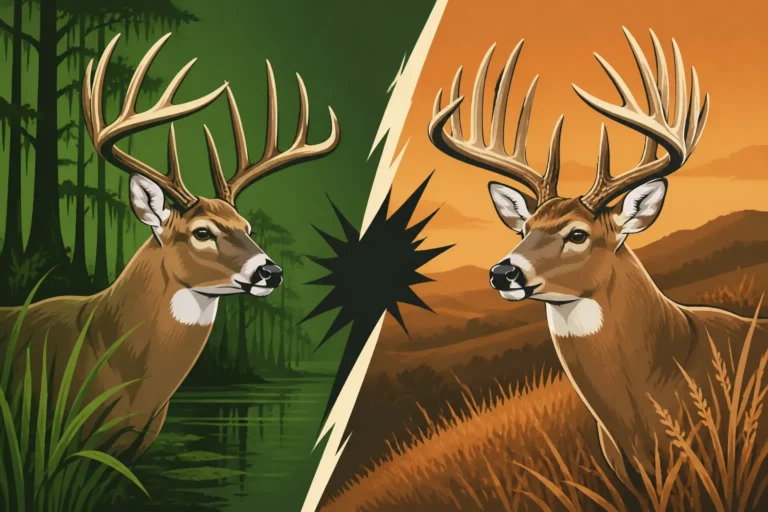
Mississippi is a state of diverse landscapes, and with that diversity comes regional differences in deer populations and their age structures. From the fertile Delta to the rolling hills and the piney woods, hunters will find different challenges and opportunities.
Delta Unit: The Land of Older Bucks
The Mississippi Delta Unit is renowned for its potential to produce mature, large-antlered bucks. This isn't just folklore; it's rooted in the unique combination of extremely rich bottomland habitat, excellent nutrition from agricultural fields, and specific antler restrictions designed to promote older age classes. As discussed in Delta Unit Antler Restriction Rules, the minimum antler spread or length ensures that a significant portion of 1.5 and 2.5-year-old bucks are protected from harvest.
This deliberate management strategy, combined with the superior genetics and nutrition, allows bucks in the Delta to reach 3.5, 4.5, and even 5.5 years of age at a higher rate than in other units. The result is a buck age structure that often boasts a higher percentage of mature deer, offering hunters a greater chance at encountering and harvesting a truly trophy-class animal. While hunting can be challenging in the vast tracts of timber, the reward often justifies the effort. Understanding Hunting the Rut in the Delta Unit can also help pinpoint when these older bucks are most active and visible.
Hills Unit: Balancing Opportunity and Management
The Hills Unit, which covers much of central and northern Mississippi, presents a different scenario. With its varied terrain, from hardwood draws to pine plantations and mixed timber, habitat quality can be more variable than the Delta. The Hills and Southeast Unit Antler Restriction Rules with their 10-inch spread minimum also protect younger bucks, but the impact can be different given the habitat.
In many parts of the Hills, there's a strong emphasis on balancing harvest opportunity with deer management goals. While trophy potential exists, the age structure might not be as skewed towards ultra-mature bucks as in the Delta. You'll find a good mix of age classes, from yearlings to middle-aged bucks, with older, blockier deer often found in less pressured areas or on well-managed private lands. Hunters in the Hills often focus on general herd health and sustainable harvest, contributing to a balanced population. Information on Deer Density by Mississippi Unit can further illustrate these regional differences.
A Hunter's Role in Shaping Buck Age Structure
Ultimately, as hunters, we play the most significant role in shaping the buck age structure in Mississippi. Every decision to pull the trigger, or to let a young buck walk, contributes to the health and future of the herd. Becoming more educated about age structure, understanding the regulations in your specific hunting unit, and practicing responsible harvest can lead to better hunting experiences for everyone.
Embracing quality deer management principles means looking beyond just the immediate gratification of a harvest and thinking about the long-term health and balance of the deer population. It means appreciating the younger bucks for their potential, and patiently waiting for the opportunity to harvest a truly mature animal that has reached its full potential, a testament to healthy habitat and sound management practices. Whether you're hunting public land or a private lease, understanding and respecting buck age structure is key to a sustainable and rewarding hunting future in Mississippi.
Disclaimer
This article is for general informational purposes only and does not constitute professional advice. Laws, prices and regulations vary by location and change over time. Consult a qualified professional for guidance on your specific situation.