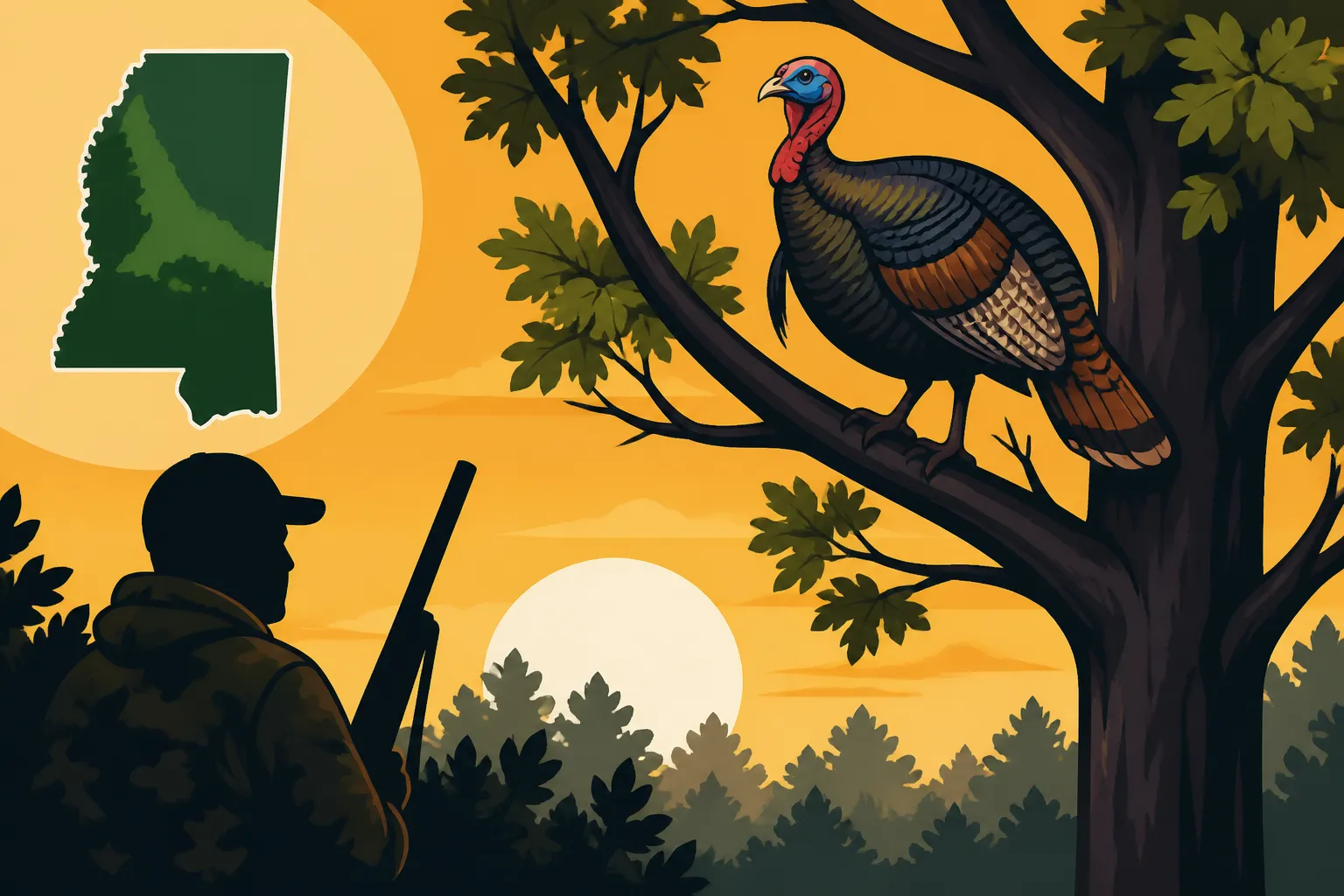
Mississippi Turkey Roost Tree Preferences
It can be incredibly frustrating to spend hours scouting for wild turkeys, only to have them seemingly vanish into thin air when it comes time to find their roost. Many hunters struggle with understanding exactly where Mississippi gobblers prefer to spend their nights, leaving them guessing when the morning hunt begins. This guide will walk you through the key factors influencing turkey roosting preferences in Mississippi, from tree species to landscape features, helping you become a more effective scout and hunter.
Understanding Why Turkeys Roost Where They Do
Wild turkeys aren't just picking any old tree to sleep in; their roosting choices are driven by instinct and survival. It’s a calculated decision, even if it looks random to us sometimes. Think about it from a turkey's perspective: they need to feel safe, conserve energy, and be ready to hit the ground running (or strutting) come morning.
Safety and Predator Avoidance
The primary reason a turkey flies up to a limb for the night is safety from ground predators. Coyotes, bobcats, foxes, and even feral hogs are always on the prowl in Mississippi, and a turkey on the ground after dark is a vulnerable turkey. Roosting provides elevation, making it much harder for these predators to ambush them. They look for trees that offer a clear line of sight, allowing them to spot potential threats before committing to a landing, and ideally, they want limbs that are sturdy enough to support their weight but far enough off the ground to deter climbing predators. Often, you'll find them on limbs over open water or steep terrain, which adds another layer of security. This instinctual need for safety is a huge driver, and it's why you'll rarely find a smart old gobbler just settling for any old sapling.
Proximity to Food and Water
While safety is paramount, turkeys also consider convenience. They don't want to fly a mile to their food source every morning or evening. Ideal roost sites are often relatively close to good feeding areas—whether that's a sprawling agricultural field, a hardwood bottom full of acorns, or a patch of wild berries. Similarly, water sources like creeks, ponds, or sloughs are often nearby. This minimizes the energy expenditure for their morning fly-down and their evening flight up. If a turkey can feed heavily, drink, and then take a short flight to a secure roost, that's a perfect end to their day. It's a balance of security and efficiency that dictates these decisions, especially for a large flock of Wild Turkeys in Mississippi.
Weather Protection and Thermal Regulation
Turkeys are hardy birds, but they're not immune to the elements. During harsh weather, their roosting choices can shift. On cold, windy nights, they might seek out denser stands of timber that offer more protection from the wind, rather than an exposed lone tree. Conversely, on warmer nights, they might prefer more open canopy that allows for better airflow. The type of tree also plays a role. Evergreens, like pine, can offer more shelter from rain and snow than deciduous hardwoods during the winter months. Understanding these subtle shifts based on the forecast can give you a real edge. A rainy, blustery night might push them into a thick pine plantation, while a clear, calm evening could see them on those big, isolated oaks.
Common Roost Tree Species in Mississippi
Mississippi's diverse landscape means turkeys have a variety of trees to choose from. Their preferences often depend heavily on the specific habitat they find themselves in, from the rich bottomlands of the Delta to the rolling piney woods. Knowing which trees to focus on in your specific hunting area is a critical piece of the puzzle.
Hardwoods of the Delta and Hills
In areas like the Mississippi Delta and the state's central Hills Unit, mature hardwoods are often the go-to. Think towering oaks, particularly water oaks, willow oaks, and Nuttall oaks, which not only provide excellent roosting limbs but also drop a crucial food source: acorns. Cottonwoods and sycamores, especially those growing along river bottoms or creek edges, are also prime candidates due to their immense size and strong, high limbs. These trees often stand taller than the surrounding canopy, offering that critical vantage point turkeys desire. When you're Setting Up Against a Big Oak in these regions, you're often targeting a known or suspected roost.
Here's a quick look at common hardwood roost trees and their features:
| Tree Species | Typical Height (Feet) | Branch Structure | Preferred Location | Notes for Hunters |
|---|---|---|---|---|
| Water Oak | 60-80 | Spreading, often horizontal | Bottomlands, creek edges | Excellent limb structure, often near water |
| Willow Oak | 80-100 | Upright, but with strong lateral limbs | Moist flats, open woods | Can be very tall, provides good visibility |
| Nuttall Oak | 70-100 | Strong, wide-spreading | Bottomlands, moist uplands | Large, sturdy limbs, common in Delta |
| Sycamore | 80-120 | Irregular, massive limbs | Riverbanks, floodplains | Distinctive bark, very large, often isolated |
| Cottonwood | 70-100 | Broad, spreading crown | Stream banks, wet areas | Fast-growing, often the tallest tree around |
Pine Trees in the Southern and Central Regions
As you move into the Piney Woods region of South Mississippi or the pine-dominated areas in the central part of the state, longleaf and loblolly pines become much more important. Turkeys will absolutely roost in pines, especially those with strong, horizontal limbs. They often prefer older, mature pines that have self-pruned their lower branches, leaving a clear trunk for security and thick upper limbs for roosting. These trees can offer excellent cover from the elements, particularly in winter or during a cold rain. Don't overlook a thick stand of mature pines, especially if there's an open understory beneath them. It's a common misconception that turkeys only roost in hardwoods, but a big pine can be just as appealing, especially in its native habitat.
Cypress and Tupelo in Water-Dominated Areas
When you're hunting the swamps and low-lying areas of Mississippi, especially near major river systems or the Gulf Coast, cypress and tupelo trees come into play. These majestic trees, often found standing in water, provide unparalleled security. A turkey roosting over water is about as safe as it can get from most ground predators. They'll seek out the tallest trees with sturdy limbs, often the ones that rise above the general canopy of the swamp. While these areas can be challenging to access, identifying a cypress or tupelo roost over a slough or flooded timber can be a goldmine, especially when trying to Roost Hunting Mississippi Gobblers.
Reading the Landscape for Roosting Sign
Finding a turkey roost isn't always about stumbling upon a gobbler at last light. Smart hunters learn to read the landscape and look for subtle clues that indicate a regular roosting area. This kind of detective work can pay off big time, giving you a serious advantage when the season opens.
Locating Primary Roosting Corridors
Turkeys, like most wildlife, are creatures of habit. They often use the same general travel corridors to move between feeding areas and roosting sites. These corridors might be along a ridge line, a specific creek bottom, the edge of a field, or a logging road. Look for these natural travel routes during your scouting. Pay attention to areas where multiple terrain features converge, creating a bottleneck or a natural funnel. These are often the places where turkeys will pause before flying up or after flying down. Using a mapping app like GoHunt on your phone or computer can really help here. You can identify potential travel corridors and then zoom in on areas with suitable roost trees nearby. Over time, you’ll start to see patterns in where birds appear and disappear, leading you right to their evening flight paths.
Identifying Key Roost Trees by Evidence
Once you've identified a potential roosting corridor, it's time to look for tangible evidence on the ground. Turkeys leave behind a number of signs beneath their preferred roost trees:
- Droppings: This is the most obvious sign. Turkey droppings are distinct, and beneath a regular roost, you'll find an accumulation of them. Gobbler droppings are typically J-shaped, while hen droppings are more coiled.
- Feathers: Look for discarded feathers, particularly larger primary and secondary wing feathers or tail feathers. These are often shed during their flight up or down, or simply fall out during the night.
- Limbs: Sometimes, you can even see signs on the roost limbs themselves. Over time, the bark might be worn smooth in places where turkeys regularly land and shuffle their feet.
- Scratching and Dusting: While not directly tied to the roost tree itself, nearby scratching in the leaf litter (indicating feeding) or dusting bowls (where they clean themselves) can confirm that turkeys are regularly using the area.
It's a lot like solving a puzzle, and each piece of sign gives you a clearer picture of their habits. When you find multiple types of sign under a likely tree, you've probably found a primary roost.
Using Technology to Pinpoint Potential Roosts
Modern technology has revolutionized turkey scouting. Satellite imagery and topographic maps are invaluable tools for identifying potential roost sites even before you set foot in the woods. Look for:
- Tall, isolated trees: On satellite maps, these often appear as prominent, singular trees or small clusters that stand out from the surrounding canopy, especially along field edges or within clearings.
- Water features: Scan for creeks, ponds, and sloughs. Roost trees near or over water are a classic setup for turkeys.
- Ridge lines and creek bottoms: These provide natural travel routes and often have suitable trees growing along them.
- Habitat changes: Turkeys often roost near the transition zones between different habitat types, like where a hardwood bottom meets a pine ridge or a field edge.
GoHunt and similar mapping applications allow you to mark these potential spots digitally, creating a detailed scouting plan. You can use these features to understand Mississippi Public Land Hunting Hours and plan your approach effectively. Then, once you're on the ground, you can confirm your suspicions by looking for physical sign. This combination of aerial reconnaissance and on-the-ground verification is incredibly efficient.
Adapting Your Tactics to Mississippi Roost Preferences
Once you've done your homework and hopefully located some prime roost trees, it's time to translate that knowledge into successful hunting tactics. Understanding their roost preferences dictates how you approach, how you call, and where you set up.
Early Morning Approaches
The moments just before and after fly-down are some of the most exciting and critical in turkey hunting. If you know where a gobbler is roosting, you can position yourself strategically before he even thinks about hitting the ground.
- Silent approach: Get to your chosen setup location well before first light, using the darkness and any available cover to remain completely undetected. Noise is your enemy here.
- Positioning: Set up within easy calling distance but far enough away that the turkey won't easily pinpoint your exact location when he flies down. Often, being slightly uphill or on the opposite side of a natural barrier (like a small creek or thick fenceline) can work wonders.
- Call sparingly: A soft tree yelp or an owl hoot to locate him on the limb is often all you need. Once he's responded, stay quiet until he flies down, unless he's obviously moving away. You want to pique his interest, not pressure him.
- Decoy placement: If using decoys, set them up where they'll be visible to him once he flies down, but not directly under the roost. Often, placing them 20-30 yards from your position towards the likely fly-down path is effective.
Remember, the goal is to be in position and ready before he wakes up. This might mean getting out there when it's still pitch black, but that's part of the magic of Calling a Mississippi Gobbler Off the Roost.
Evening Roosting Strategies
Scouting for roosts in the evening can be just as productive as hunting them in the morning. Locating where birds put themselves to bed provides invaluable information for the next day's hunt.
- Listen for gobbles: As the sun starts to dip, listen intently for those characteristic gobbling sounds. Turkeys often gobble on the roost several times before flying down, and then again after they've settled in for the night.
- Listen for wing beats: This is the most definitive sign. A mature tom flying up to roost makes a surprisingly loud "whoosh" sound with his wings. Pinpointing this sound helps confirm the exact tree or cluster of trees.
- Maintain distance: Keep your distance. You don't want to spook birds off their roost. Use binoculars to scan likely trees from afar, staying concealed.
- Mark the spot: Once you've located a roost, mark its location on your GoHunt app or physical map. This allows you to plan your morning approach with precision.
- No hunting roosted birds: It's generally considered poor sportsmanship and often illegal (always check Mississippi Spring Turkey Season Rules for specific regulations) to hunt birds directly on the roost. The strategy is to locate them, then position yourself for a clean shot once they're on the ground.
Calling and Setup Considerations Near Roosts
The type of roost and the surrounding terrain should influence your calling and setup choices. A "one-size-fits-all" approach rarely works with wily gobblers.
- Thick cover roosts: If birds are roosting in dense pines or a thick bottomland, your calling needs to be a bit more aggressive to cut through the cover, but still realistic. Your setup might need to be closer, as visibility will be limited. Consider using a ground blind if allowed and practical, like when Using a Ground Blind on Mississippi Public Land.
- Open timber/field edge roosts: In more open hardwoods or along a field edge, a softer, more subtle call might be all that's needed. You'll have better visibility, so you can set up further back and use decoys more effectively. Turkeys flying down to a field edge often like to strut there before committing to the woods.
- Calling after fly-down: Once a gobbler flies down, listen to his direction. If he's moving towards you, light clucks and purrs might be enough. If he's moving away or ignoring you, try a slightly louder series of yelps or cutts to get his attention and pull him back. Patience is key. Sometimes, the less you call, the more curious and eager he becomes.
- Escape routes: Always consider a gobbler's escape route. Set up so that he has to come past your shooting lane to get away, rather than offering him an easy exit without coming into range.
Understanding Where Mississippi Gobblers Roost is more than just a piece of trivia; it's a fundamental part of successful turkey hunting in our great state. By paying attention to safety, food, water, and habitat, you can decode their preferences and put yourself in prime position when the season opens.
Disclaimer
This article is for general informational purposes only and does not constitute professional advice. Laws, prices and regulations vary by location and change over time. Consult a qualified professional for guidance on your specific situation.