Field Dressing a Deer in Warm Weather
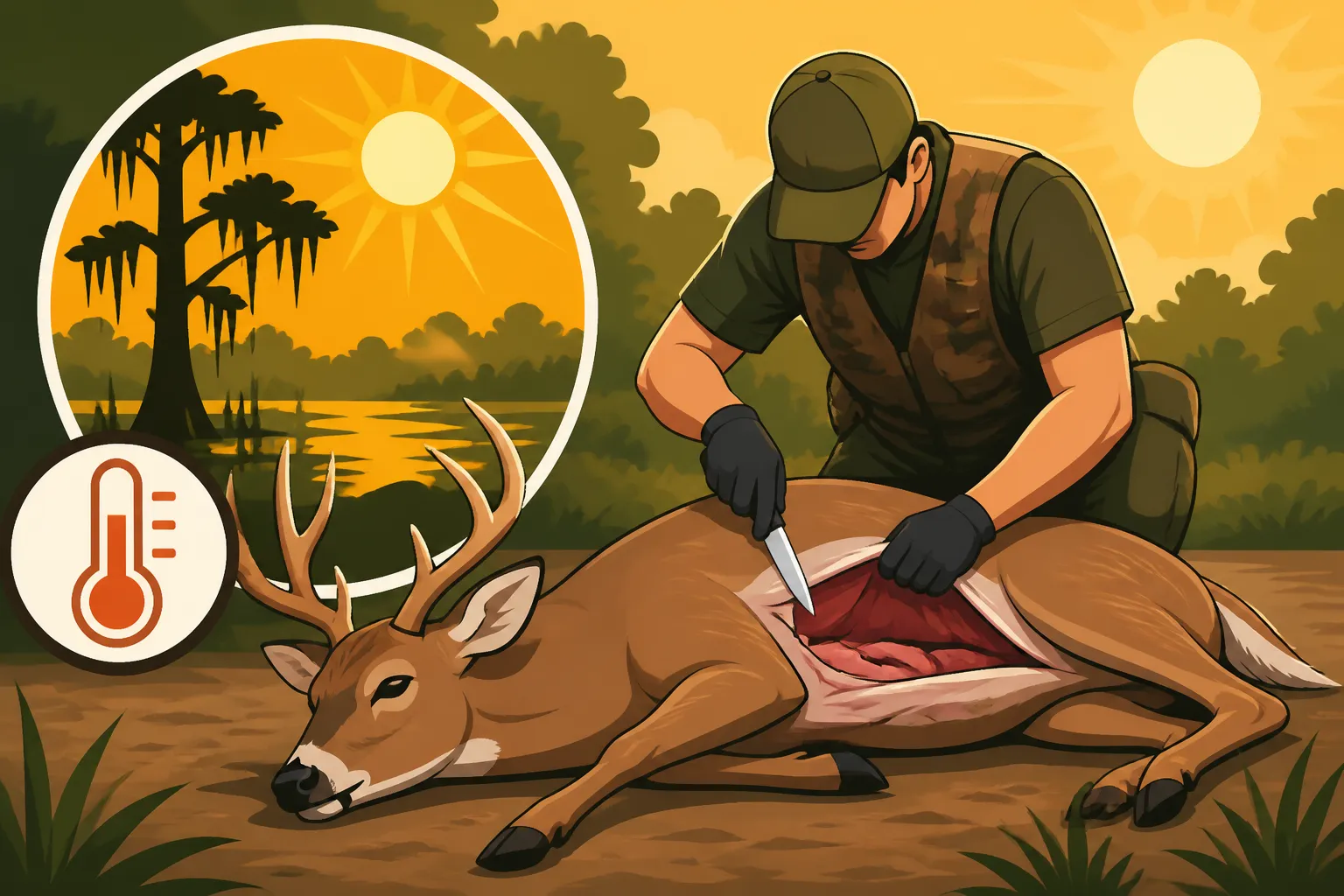
You've finally made that perfect shot, the deer is down, and now comes the real race against time, especially when you're hunting in Mississippi's notoriously warm weather. The difference between delicious venison and spoiled meat often boils down to how quickly and effectively you field dress your deer. This guide isn't just about cutting open an animal; it's about mastering the art of rapid, clean field dressing to ensure your hard-earned harvest stays cool and prime for the table, even when the thermometer is still reading high.
The Urgency of Field Dressing in Warm Mississippi Weather
There's a unique kind of dread that creeps in after dropping a deer on a warm day in Mississippi. You know the clock is ticking, and every minute spent admiring your trophy or just dragging it through the woods without proper care is a minute closer to potential spoilage. The beautiful thing about hunting in Mississippi is our long seasons, but that also means we often find ourselves facing temperatures that feel more like late summer than late fall, especially during the early archery season or even a late gun hunt.
Understanding Why Heat is the Enemy
When an animal is alive, its body has natural defenses against bacterial growth. But the moment it dies, those defenses shut down. The internal body temperature of a deer is around 100-102°F, and in warm external temperatures, this heat takes a long time to dissipate, especially with all those organs packed inside. This internal warmth, combined with the presence of bacteria from the gut and the environment, creates a perfect breeding ground for spoilage.
Bacteria begin to multiply rapidly, and enzymatic processes within the muscle tissue start to break down the meat. This isn't just about flavor; it's about food safety. Waiting even a few hours on a 70°F day can mean the difference between prime cuts and an unpleasant gamey taste, or worse, meat that has to be discarded. Think about those early September archery hunts when the dew is still heavy on the ground and the afternoon sun beats down; that's when speed truly matters. It’s a frustration many of us know all too well, carefully stalking and making a great shot, only to worry about the heat turning our efforts sour. This is why understanding the biological clock ticking inside that deer is absolutely crucial for any hunter.
Recognizing the Signs of Trouble
If you've ever processed a deer that wasn't properly cooled, you know the tell-tale signs. The first, and most obvious, is often a sour or off-smell when you open the body cavity. This isn't just a faint whiff; it can be quite pungent, an indication that bacteria have had a field day. Another grim sign is the meat "greening" – a greenish discoloration, particularly in the flanks and around the hindquarters, which often starts near the bone. This deep-seated spoilage usually indicates that the internal temperature remained too high for too long.
The impact on venison quality is immediate and severe. Meat that has begun to sour or green isn't just unappetizing; it’s often unsafe to eat and will have a distinctly unpalatable flavor that no amount of seasoning can cover up. The last thing any hunter wants after the time, effort, and expense of a hunt is to see their hard-earned venison go to waste. You want to avoid that "smell test" entirely by being proactive and efficient in the field. Ignoring these warning signs can lead to the heartbreaking reality of having to trash an entire deer, which is a truly gut-wrenching experience for anyone who values the game they harvest.
Essential Gear for a Quick and Clean Field Dressing
You can't expect to perform a lightning-fast, meticulous field dress without having the right tools at your fingertips. Trust me, fumbling for a dull knife or realizing you forgot something critical when the clock is ticking and the flies are swarming is a special kind of misery. Being prepared is half the battle, especially when battling Mississippi's heat.
Your Basic Toolkit
A good, sharp knife is paramount. I'm talking about a fixed-blade knife with a sturdy handle, easy to grip even when wet or bloody. A gut hook can also be incredibly useful for opening the abdominal cavity without puncturing the intestines, saving you valuable time and preventing a mess. I always carry at least two sharp knives, because you never know when one might get dropped, or you might need to swap for a different task.
Beyond the knife, personal protection is key. Always wear gloves – latex or nitrile are ideal. Keep several pairs in your pack. This isn't just about keeping your hands clean; it's about minimizing the transfer of bacteria from your hands to the meat and protecting yourself from potential diseases. A short piece of rope or cord can be a lifesaver for tying off legs or even securing the deer if you're on uneven ground. Wipes or a roll of paper towels will help keep your hands and tools clean as you work, preventing cross-contamination. And if you're hunting in the low light of dawn or dusk, a reliable headlamp is non-negotiable; don't even think about trying to field dress in the dark by feel. Many hunters also swear by a good app for their phone, like GoHunt, which can help you quickly pinpoint your deer's location, saving crucial minutes in the recovery process that would otherwise be spent searching. This kind of technology gives you a real edge in a warm weather scenario.
Smart Additions for the Mississippi Heat
Now, let's talk about the specific gear that becomes absolutely critical when the mercury is climbing. The single most important addition is an ice chest filled with ice. Yes, you're going to put that ice inside the deer. The goal is to get that core temperature down as quickly as possible. Don't underestimate the power of a few bags of ice.
A gallon jug of water, or even a small sprayer bottle with a diluted vinegar solution, can be invaluable for rinsing out the cavity after evisceration. This helps wash away loose hair, dirt, and any residual gut contents, further reducing bacterial load. Game bags are also a must. These breathable cloth bags protect the meat from flies, dirt, and debris while still allowing it to cool. They're far superior to plastic tarps or garbage bags, which trap heat and moisture, accelerating spoilage.
For transport, consider a game cart or sled. Dragging a deer generates friction and heat, and every bit of added heat is detrimental. A cart or sled elevates the carcass off the ground, promoting air circulation and making extraction much faster, especially from those thick Delta bottomlands or dense pine plantations. Quick transport out of the field is paramount. If you're hunting during Mississippi's Gun Deer Season by Unit or any season where temperatures are high, having these items ready in your truck or ATV can make all the difference.
Step-by-Step Field Dressing in the Heat
Okay, the deer is down, and you've got your gear. Now it’s time to get to work. Remember, speed and cleanliness are your top priorities. Every incision, every pull of the organs, needs to be deliberate and efficient.
Initial Preparation and Incisions
First things first: safety. Make sure your firearm is unloaded and secured. Roll the deer onto its back if possible, positioning it so the head is downhill if you're on a slope. This helps gravity work with you later when removing the organs. If you're on flat ground, just get it comfortable for you to work.
The first critical step is to cut around the anus. Use a sharp knife to carefully circle the anus, cutting deep enough to free the rectum. If you have a zip tie or string, you can tie off the rectum to prevent any fecal matter from contaminating the cavity during removal. This is a small step that makes a huge difference in cleanliness.
Next, you'll make the main incision. Starting just below the sternum, carefully slice through the hide and muscle layer all the way down to the pelvis. Be extremely cautious not to puncture the intestines or stomach. Many hunters use a gut hook for this part, or they'll carefully pinch up the skin with one hand and make a shallow cut, then insert two fingers into the opening to lift the skin and muscle away from the organs as they continue cutting with the knife blade facing up. This helps avoid spilling any stomach or intestinal contents into the cavity, which is a major source of bacteria. For those hunting in areas like the Homochitto National Forest, where a quick, clean job is often needed before a long drag, mastering this initial cut is paramount.
Thorough Organ Removal
Once the cavity is open, you'll need to work quickly to remove the entire gut pile. Start by reaching deep into the chest cavity and severing the trachea and esophagus, pulling them down towards the abdominal cavity. You'll likely need to cut through the diaphragm, the membrane separating the chest cavity from the abdominal cavity.
Now, working from the top down or bottom up, carefully pull out all the organs. Make sure you get everything – the stomach, intestines, liver, kidneys, bladder, and heart (unless you plan to save the heart, which you should remove and cool separately). If you tied off the rectum, it should pull through the pelvic opening cleanly with the rest of the gut pile. Be mindful of the bladder; try to remove it without rupturing it.
Once the organs are out, give the cavity a quick visual inspection. If you're hunting in one of Mississippi's Chronic Wasting Disease Zones, you might need to note any anomalies in the lymph nodes or glands for later testing. Otherwise, this check ensures you haven't left any large pieces behind. The entire process of organ removal should be done as quickly as possible to get that internal heat out.
Immediate Cavity Care and Cooling
With the gut pile removed, the deer's internal temperature will start to drop, but you can accelerate this process significantly. First, wipe out the cavity thoroughly with paper towels or clean rags to remove any blood clots, hair, or debris. If you have that water bottle, a quick rinse can help, but make sure to dry the cavity as best you can afterward. Moisture encourages bacterial growth.
Prop the cavity open using sticks or spreaders to allow maximum air circulation. This is crucial for convection cooling. If you have ice, now is the time to pack it inside the chest and abdominal cavities. Don't be shy; fill it up. This direct contact with ice will draw heat out of the carcass at an incredible rate. You can also drape a damp, cool cloth over the outside of the deer, but avoid completely covering it with a non-breathable material, as that will trap heat.
Finally, get those game bags on. They will protect the meat from flies and dirt while still allowing it to breathe and cool. If you can get the deer into the shade, do so immediately. Every effort made to cool the carcass in the field will pay dividends in the quality of your venison later. This step is often overlooked, but it's arguably the most important after gutting for preserving your meat in warm conditions.
Transporting and Further Cooling Your Harvest
The work isn't done just because the deer is field dressed. In warm Mississippi weather, the battle against spoilage continues right up until the meat is safely in cold storage. How you handle the deer from the field to your processing station can make or break your efforts.
Getting Your Deer Out of the Woods
As we discussed, dragging a deer across the ground, especially on a warm day, generates heat and can pick up dirt and debris that further contaminate the carcass. This is where a good game cart, sled, or even an ATV comes into its own. If you have to drag, try to do so carefully, minimizing contact with the ground, perhaps by wrapping the deer in a tarp (but remember to remove it for cooling once stationary).
If you're loading the deer into a truck bed, avoid throwing it directly onto a hot bed liner. Lay down a tarp first, and then position the deer. The key is to get it out of direct sunlight as quickly as possible. If you can't get it into an enclosed, air-conditioned space immediately, make sure there's plenty of airflow around the carcass. This might mean propping the legs up, or placing a small cooler under the deer to keep it off the hot truck bed. When pulling a deer out of a dense area, such as after a successful hunt where you've been Reading a Ridge for Hills Unit Deer or deep in the Delta National Forest Hunting, every bit of efficiency counts.
The Cold Chain: From Field to Cooler
The moment your deer is loaded, the mission shifts to maintaining and enhancing that cold chain. If you haven't already, pack the chest cavity full of ice. If you have extra ice, place bags around the outside of the deer too, especially over the thickest muscle groups like the hams and shoulders. Keep the drain plug open on your cooler (if using one for boned-out quarters) or simply ensure melted water has a way to escape from the deer's cavity. You want to continually introduce fresh ice, as melted water will warm up to ambient temperature quickly.
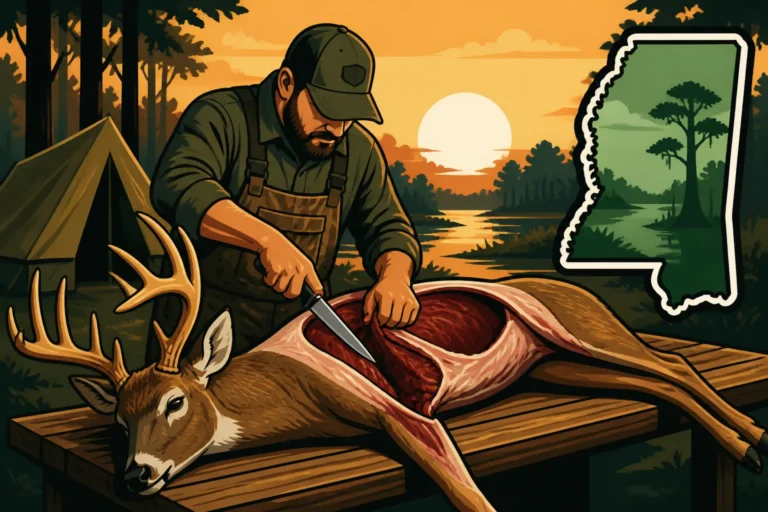
For longer drives, you'll need to monitor the ice and replenish it. I've been known to stop at gas stations multiple times to buy more bags of ice on a hot day. The goal is to get that internal temperature down to a safe range, ideally below 40°F, as soon as possible. If the temperatures are truly scorching and you have a long way to go, consider boning out the deer in the field. This allows you to fit all the meat into coolers packed with ice, submerged directly in an ice bath. While it's more work upfront, it's often the safest bet for preserving all your venison. Remember, you'll still need to follow Mississippi Deer Reporting Requirements for your harvest, regardless of how you transport the meat. If you plan to have a taxidermist mount the deer, be sure to coordinate with them immediately on how to handle the cape and head, as they also need to be kept cool. For specific advice on post-hunt care, our guide on Butchering a Deer at Camp offers further insights once you've transported your harvest.
Here's a quick comparison of warm versus cold weather field dressing priorities:
| Feature/Action | Cold Weather Field Dressing | Warm Weather Field Dressing |
|---|---|---|
| Speed | Important for comfort, but less critical for spoilage. | CRITICAL for preventing bacterial growth and spoilage. |
| Internal Cooling | Air circulation often sufficient; heat dissipation is natural. | Immediate internal cooling with ice is mandatory. |
| Carcass Protection | Primarily from dirt/debris; light covering is fine. | Game bags are essential for bug/dirt protection while allowing cooling. |
| Transport | Can take more time; less concern for heat generation. | Quick extraction with minimal heat generation (carts/sleds recommended). |
| Rinsing Cavity | Optional; usually just a wipe-down. | Recommended to wash out debris and reduce bacteria. |
| Post-Field Care | Hang to cool; may age for days if cold enough. | Immediately get to cold storage (refrigeration/ice bath); no aging. |
| Gear Priority | Knife, gloves, rope. | Knife, gloves, rope, ice, game bags, game cart/sled, water. |
Always prioritize bringing those essential warm-weather items with you. You might not always need them, but when you do, they’re truly a hunt-saver.
Disclaimer
The information provided in this article is for general guidance and informational purposes only. Hunting regulations and best practices can change, and individual situations may vary. Always consult the latest Mississippi Department of Wildlife, Fisheries, and Parks (MDWFP) regulations before hunting. Proper hunter education and safety precautions should always be followed. The author and publisher are not responsible for any injury, loss, or damage arising from the use or misuse of the information contained herein.