Dragging a Deer Out of a Slough
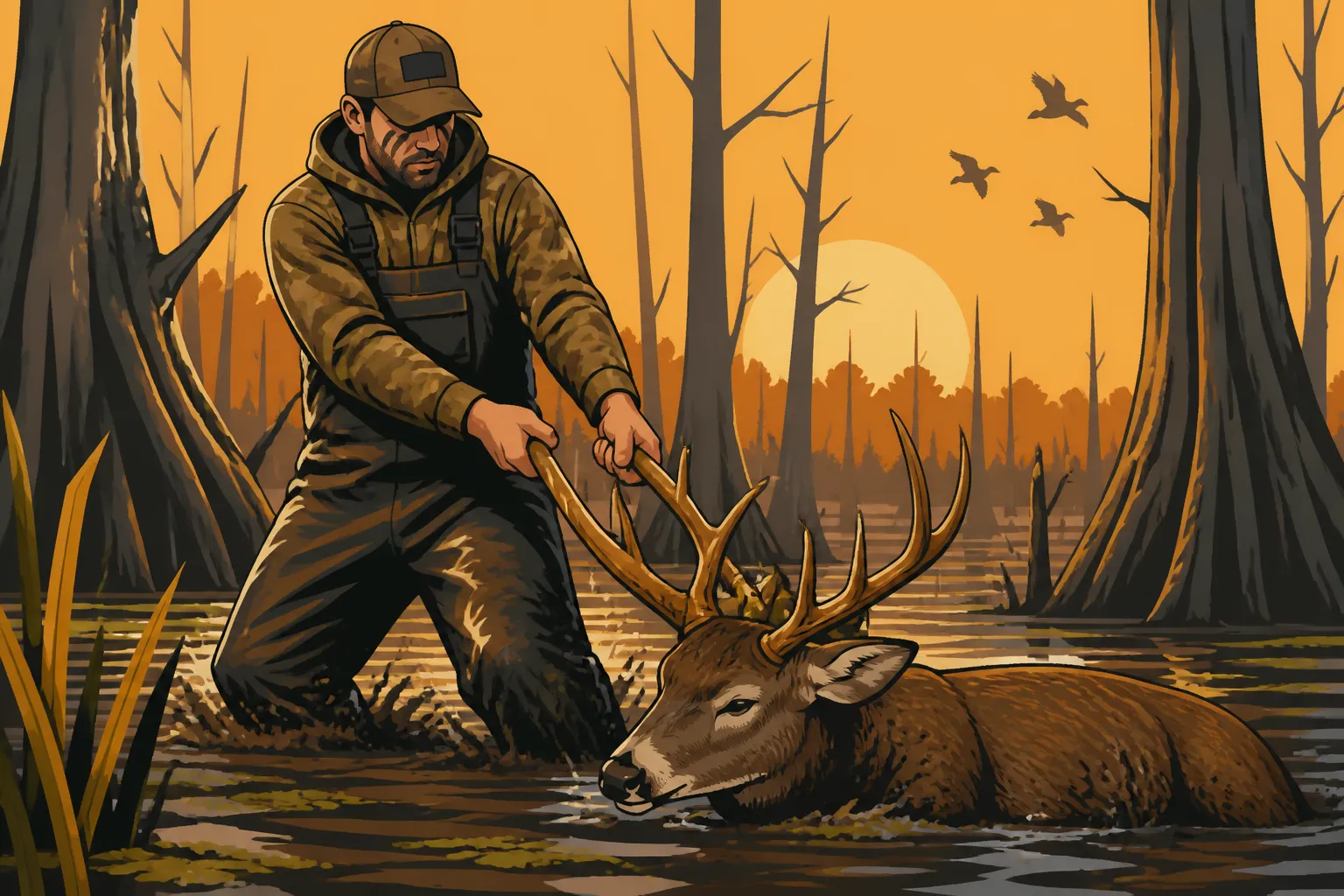
There's nothing quite like the rush of a successful deer hunt in Mississippi, especially when you've put in the scouting and the shot is true. But that thrill can quickly turn into a sinking feeling when you realize your prize buck has taken its last breath right in the middle of a mucky, water-filled slough. Recovering a deer from these notoriously difficult swampy areas can be a daunting, back-breaking, and even dangerous task, leaving many hunters frustrated and wondering how they'll ever get their animal out. This guide is here to walk you through the realities, the necessary gear, and the best tactics for safely and effectively dragging a deer out of a Mississippi slough, helping you turn that despair into a well-deserved freezer full of venison.
Understanding the Challenge of Slough Recoveries
Let's be honest, sloughs in Mississippi are beautiful, teeming with life, and absolutely vital to the ecosystem, but when it comes to recovering a downed deer, they are often a hunter's worst nightmare. We're talking about thick, soupy mud that sucks at your boots, tangled roots and brush that snag every step, and water that can range from ankle-deep to well over your head in places. It's a whole different ballgame than dragging a deer across a dry field or a pine flat.
Why Sloughs Are So Tricky
The unique environment of a Mississippi slough presents several formidable obstacles. First, the mud itself is usually a major culprit. It's not just soft soil; it's often a deep, silty, clay-like concoction that grips onto anything that tries to pass through it. You take one step, and your boot might get pulled off your foot, or you find yourself sinking to your knees. Imagine trying to drag a dead weight, sometimes hundreds of pounds, through that kind of resistance. It feels like you're fighting a losing battle with every inch.
Then there's the water. Many sloughs are essentially shallow, slow-moving creeks or stagnant pockets of water, often fed by seasonal rains or larger rivers. This means variable depths, hidden submerged logs, and often a layer of debris like leaves and sticks that obscure what's beneath the surface. You can step into what looks like a shallow puddle and suddenly find yourself chest-deep. This makes footing incredibly unstable and increases the risk of a fall or injury. The sheer resistance of moving a deer through water, even shallow water, also significantly adds to the effort required.
Beyond the mud and water, the dense vegetation is another major headache. We're talking about briars that claw at your clothes, vines that trip you up, and thickets of brush and small trees that form nearly impenetrable barriers. Even if you manage to clear a path, the deer's antlers and legs will inevitably catch on every stray branch, making a smooth drag virtually impossible. This isn't just an inconvenience; it can truly slow you down and exhaust you, especially when time is of the essence for meat preservation. When you're Hunting Delta Unit Bottomland Deer, these challenges are par for the course.
Assessing the Situation Safely
Before you even think about putting your hands on that deer, you have to prioritize safety. I've seen too many hunters get hurt or put themselves in precarious positions because they rushed in. The first step is always to take a moment, catch your breath, and really assess the situation.
Start by looking at the water depth and the flow. If there's any current, especially after heavy rains, you need to understand which way it's moving and how strong it is. A deer carcass can act like a sail in a strong current, making it incredibly difficult to control. Use a long stick or a fallen branch to probe the depths around the deer and along your intended extraction path. You're looking for hidden drop-offs, submerged obstacles, and areas of deeper mud. If you don't have a stick, move cautiously, shuffling your feet to feel for hazards rather than taking big, blind steps.
Consider the time of day. If darkness is approaching, your risk factors multiply exponentially. Reduced visibility makes it harder to see obstacles, assess water depth, and maintain your footing. Blood Trailing After Dark in Mississippi is already tough, but doing so into a slough is a whole different beast. If you're alone and it's getting late, sometimes the safest bet is to mark the location carefully, pull back to higher ground, and return with help at first light. Your safety and the safety of your hunting partners always come before recovering the animal immediately. Never try to retrieve a deer from deep, moving water alone, especially at night.
Finally, think about your own physical condition. Are you exhausted? Cold? Dehydrated? Trying to tackle a challenging recovery when you're already worn out is a recipe for disaster. Be honest with yourself and don't push beyond your limits.
Essential Gear for a Slough Deer Recovery
You wouldn't head into the woods without your rifle or bow, and you shouldn't attempt a slough recovery without the right gear. This isn't just about making the job easier; it's about making it safer and increasing your chances of success. A few specialized items can make all the difference between a triumphant recovery and a miserable, perhaps even fruitless, effort.
Personal Safety and Preparation
Your personal well-being should always be the top priority. Getting to the deer, let alone getting it out, often means getting wet, muddy, and potentially scratched up.
- Waders or Waterproof Pants/Boots: This is non-negotiable. Even if the water looks shallow, the mud will be deep, and you'll quickly get soaked. Neoprene or insulated waders are ideal, especially in colder weather, providing both waterproofing and a bit of insulation. If waders aren't an option, tall rubber boots paired with waterproof pants are a minimum. Make sure your boots have good traction – those slick, muddy banks are treacherous.
- Gloves: Tough, waterproof gloves are essential. They'll protect your hands from briars, sharp sticks, and the deer's coarse hair, not to mention keeping them cleaner. Look for gloves with a good grip, as you'll be pulling on ropes and potentially the deer itself in slippery conditions.
- Knife: A good, sharp knife is always part of your hunting kit, but it's particularly important here. It can be used to cut tangled brush, free ropes, or even help with an emergency field dressing if the situation demands it.
- First-Aid Kit: Scrapes, cuts, and minor injuries are common in rough terrain. A basic first-aid kit with bandages, antiseptic wipes, and pain relievers is a smart addition to your pack.
- Headlamp/Flashlight: Even if you start the recovery in daylight, things can take longer than expected, and you might find yourself in the dark. A reliable headlamp keeps your hands free, which is crucial when navigating tricky terrain or securing ropes.
Retrieval Tools
These are the items that will do the heavy lifting – or at least, help you leverage what you've got to get that deer moving.
- Heavy-Duty Drag Rope: Forget flimsy twine. You need at least 20-30 feet of strong, durable rope, ideally 3/8-inch or 1/2-inch nylon or polypropylene. Braided rope is generally better than twisted as it's less prone to snagging and unraveling. Make sure it's long enough to secure to the deer and allow you to pull from a stable position on solid ground, or to attach to a different piece of equipment.
- Deer Sled or Cart: While a cart might be tough to maneuver in a slough, a low-profile plastic deer sled can be incredibly helpful once you get the deer to slightly firmer ground. These slick sleds reduce friction significantly, making it much easier to pull the deer across mud, leaves, or even shallow water. Brands like GoHunt offer durable sled options that can really save your back. Look for one with a good tow rope attached or reinforced holes to add your own.
- Manual Winch or Come-Along: If you're dealing with a truly massive buck or a particularly deep, sticky slough, a manual winch (come-along) can be a lifesaver. These tools provide mechanical advantage, allowing a single person to exert tremendous pulling force. You'll need a sturdy anchor point, like a large tree, on solid ground. This can be the difference between getting the deer out and leaving it overnight.
- ATV/UTV or Boat (if applicable): If you have access to an ATV or UTV and the terrain allows, it can drastically cut down on retrieval time. Ensure the vehicle has a winch and that you can safely get it close enough without getting stuck yourself. For sloughs connected to larger bodies of water, a small boat or even a canoe might be the easiest way to float the deer out. This is especially true if you're dealing with expansive Hunting Delta Unit Bottomland Deer areas where water is a constant feature.
Communication and Support
Hunting is often a solitary pursuit, but a tough recovery is a team effort.
- Cell Phone/Two-Way Radio: Always carry a fully charged cell phone in a waterproof bag. Cell service can be spotty in remote areas of Mississippi, so consider a satellite messenger or a two-way radio if you're hunting with partners. Being able to call for help or coordinate with your group is vital.
- Hunting Partners: Don't be a hero. If you know you're headed into a potentially difficult recovery situation, recruit help. Having an extra set of hands (or two) can exponentially increase your chances of success and significantly reduce the physical strain on any single person. This is part of the tradition of Mississippi Deer Camp Traditions – helping each other out.
Step-by-Step Recovery Tactics for a Slough
Okay, you've located your deer, you're safe, and you've got your gear. Now it's time to get down to business. This is where a methodical approach pays off. Rushing or panicking will only lead to more exhaustion and potential problems.
Initial Approach and Securing the Deer
The first step, once you're safely near the deer, is to absolutely confirm it's expired. Give it a wide berth and observe for any movement. Use a long stick to poke it if you're unsure. The last thing you want is a wounded animal jumping up in a tricky environment.
Once confirmed, gently approach the deer, paying close attention to your footing in the mud and water. If you can, try to get to the "upstream" side of the deer if there's any current, to avoid disturbing the water near it too much or having it float away from you.
Now, secure your drag rope. The most effective method is to loop the rope around the deer's antlers (if it's a buck) or around its neck, forming a bridle. This allows you to pull the head, which helps the body slide over obstacles rather than digging in. If you have a second rope, you can also secure it around the hind legs, allowing for two-person drags or to help steer the deer. A good quality drag harness, perhaps from a brand like GoHunt, can also be attached to the deer's body, providing a more centralized pulling point and reducing strain on the neck or antlers. Once the rope is secure, carefully clear any immediate brush or debris that's directly snagging the deer's body.
Manual Dragging Techniques
This is where the grit comes in. If you're relying on human power, efficiency and teamwork are key.
- Single-Person Drag: If you're alone and the deer isn't too large, or the slough is relatively shallow and short, you might attempt a solo drag. The trick is to avoid brute-forcing it. Use short, powerful pulls, stopping to adjust the deer or your footing every few feet. Try to pull the deer along the path of least resistance, looking for slight rises or firmer ground. If possible, try to pull the deer out of the water first onto a bank, even a small one, to reduce water resistance. Leverage your body weight, leaning into the pull, and keeping your back straight to avoid injury.
- Multiple-Person Drag: This is the ideal scenario. With two or more people, you can distribute the weight and power. One person can take the head, while others push or pull from the flanks or hind legs. Coordinate your pulls: "One, two, three, pull!" This synchronized effort is far more effective than everyone pulling at different times. If you have two ropes, one person can pull from the front while another pulls from the rear, guiding the deer and preventing it from getting hung up. Having someone dedicated to clearing the path ahead, cutting small branches, and kicking away debris can also significantly speed up the process. Remember, communication is key. Shouting out "log!" or "deep mud here!" can prevent someone from falling.
Remember, the goal isn't necessarily a straight line. Sometimes, zig-zagging to find firmer ground or to go around a particularly dense thicket is faster and easier than trying to bust through it.
Utilizing Mechanical Advantage
When manual dragging isn't enough, or you want to save your back, mechanical aids are your best friends.
- ATV/UTV Winch: If you've managed to get your ATV or UTV to a stable spot near the slough, its winch can be a game-changer. Spool out the winch cable, attach it securely to your drag rope (or directly to the deer if using a recovery harness), and slowly winch the deer out. Make sure the ATV is anchored securely, either by engaging the parking brake or by having someone sit on it. Be gentle with the winch; sudden jerks can damage the deer or the equipment. Always ensure the cable is running free and clear, and be mindful of anyone standing nearby.
- Manual Come-Along/Winch: If an ATV isn't available, a hand-cranked come-along works similarly. Attach one end to a sturdy anchor point (a large tree, ideally one you can secure from moving) on solid ground, and the other end to the deer. Slowly crank the come-along, moving the deer forward in stages. You'll likely need to reset the come-along several times as the cable length is limited, but each pull will gain significant ground. This is perfect for when you're deeply stuck and just need to get the deer a few yards to a more manageable spot.
- Floating the Deer: In some cases, if the slough is wide and deep enough, and connects to a more accessible body of water, floating the deer might be the easiest option. You can use a small boat or canoe, carefully maneuvering it to the deer and then pulling the deer alongside or even into the boat. Some hunters have even used inflatable rafts or thick plastic sheets to create a makeshift "float" to help the deer glide across water more easily. Just be sure the vessel is stable enough to handle the weight and potential shifting of the deer. This method is particularly effective in areas like the Mississippi River Batture Public Access.
| Recovery Method | Pros | Cons | Best Use Case |
|---|---|---|---|
| Manual Drag | No special equipment needed | Highly strenuous, slow, risk of injury | Small deer, short distances, firmest ground |
| Team Drag | Distributes effort, faster than solo | Still strenuous, requires coordination | Medium to large deer, moderate distances |
| Deer Sled | Reduces friction, protects hide | Still requires pulling effort, can snag | Once deer is out of deepest mud/water, longer distances |
| Manual Come-Along | Huge mechanical advantage, single person | Slow, requires anchor points, resets needed | Very heavy deer, deeply stuck in mud, no ATV |
| ATV/UTV Winch | Fast, powerful, minimal human effort | Requires ATV access, risk of getting ATV stuck | Accessible areas with solid ground for the ATV |
| Floating (Boat/Raft) | Easiest for large deer in deep water | Requires boat/raft access, stable water | Wide, deep sloughs connected to larger waterways |
Post-Recovery Considerations and Preservation
Congratulations, you've successfully wrestled your deer out of the slough! But the job isn't quite over. Now, your focus shifts to preserving the meat and ensuring your efforts weren't in vain. Getting a deer out of a wet, muddy environment means extra care is needed.
Field Dressing in Wet Conditions
Typically, you'd want to field dress your deer immediately after the shot, but a slough recovery often means a delay. Once the deer is on solid ground (or at least less muddy ground), begin field dressing right away. Time is truly of the essence, especially in Mississippi's warmer climate, where bacteria can quickly spoil meat.
- Cleanliness is Crucial: The deer is likely covered in mud, water, and debris. Do your best to clean the outside of the carcass before making any cuts. Use water from a clean bottle you brought, or even cleaner slough water if necessary, to rinse off major mud and grit from the areas you'll be cutting. Minimize contact between the muddy exterior and the exposed meat.
- Elevate if Possible: If you can, try to prop the deer up on its back or side using logs or rocks. This can help keep the body cavity cleaner during the gutting process and allow fluids to drain more easily.
- Quick and Efficient: Work quickly to remove the internal organs. This allows the body cavity to cool down. If the deer has been submerged for any length of time, water might have entered the body cavity. Do your best to drain this out thoroughly.
- Rinse the Cavity: Once the organs are removed, if you have access to clean water, give the cavity a quick rinse to remove any remaining blood clots or debris. Pat it dry with paper towels or a clean cloth if you brought one. The goal is a clean, dry cavity to prevent bacterial growth. For more details on this, check out our guide on Field Dressing a Deer in Warm Weather.
Transport and Storage
After field dressing, the next critical step is getting your deer completely out of the woods and into a cooler environment.
- Minimize Further Contamination: Try to keep the deer as clean as possible during transport. If you used a sled, great. If you're dragging it, try to pick the cleanest path. A tarp can be invaluable here, wrapping the deer to protect it from further mud and debris during the final drag to your vehicle.
- Cool Down Quickly: Mississippi's temperatures can be brutal on venison. As soon as you get the deer to your vehicle, get it to a cooler or processing facility. If you're heading straight to camp, immediately pack the body cavity with ice. Keep the drain plug open in your cooler to allow melted ice and blood to drain, which is essential for proper cooling. Don't let the deer sit in stagnant water.
- Know Your Rules: Before you even head out, be familiar with Mississippi's regulations on deer transportation and reporting. Remember to report your deer harvest through the MDWFP app or website, as required. Also, if you're hunting in or around Mississippi's Chronic Wasting Disease Zones, you'll have specific rules about carcass movement and testing. Always adhere to these to protect the deer herd.
Recovering a deer from a slough is never easy, but with the right preparation, tools, and a safe, methodical approach, you can turn a potentially disastrous situation into a successful end to your hunt. It's a true test of a hunter's resolve and resourcefulness, and successfully navigating it is a badge of honor.
Disclaimer
Please remember that hunting regulations and conditions can change. Always consult the official Mississippi Department of Wildlife, Fisheries, and Parks (MDWFP) website or current hunting guide for the most up-to-date rules, season dates, and safety information before heading afield. Safety should always be your number one priority.