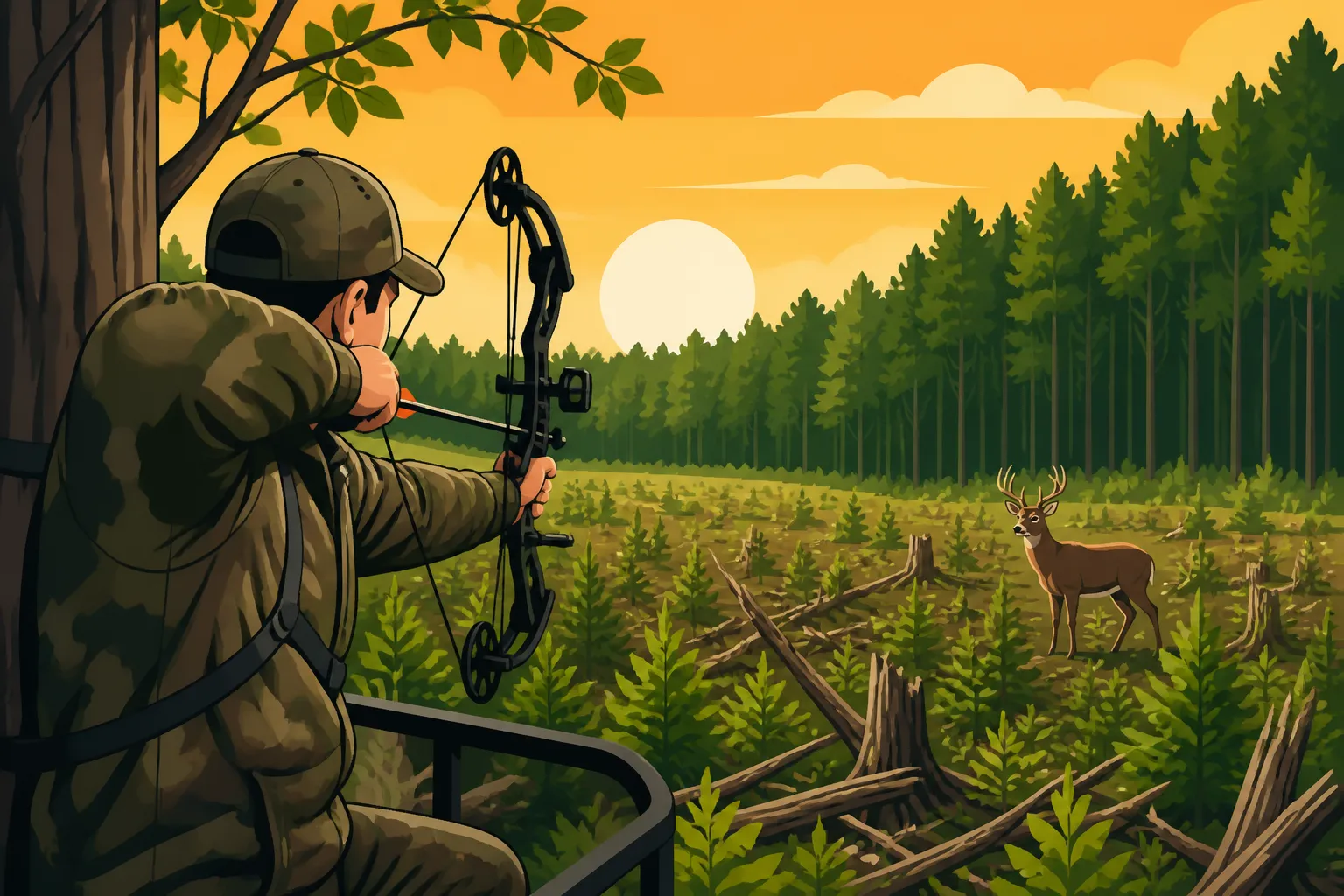
Hunting a Clear-Cut Regrowth Edge
It can be incredibly frustrating to scout a prime timber stand one year, only to return the next season to find it clear-cut, leaving you wondering where all the deer went. But don't despair! While it might look like a wasteland at first glance, a clear-cut with some regrowth actually creates fantastic hunting opportunities, especially along its edges. This guide will walk you through understanding why deer love these areas and how to effectively hunt a clear-cut regrowth edge in Mississippi.
Understanding Clear-Cuts and Deer Behavior
Clear-cuts, for all their initial shock to the landscape, are a natural part of timber management here in Mississippi, and they quickly transform into deer magnets. It’s all about understanding the ecological progression and how it aligns with a deer's survival needs.
The Dynamics of a Recently Cut Area
When a section of timber is clear-cut, it means almost all the trees in that designated area are harvested. Initially, this leaves behind a stark, open landscape of stumps and disturbed earth. Many hunters see this and think, "Well, there goes that spot." And for a short period, they might be right. The immediate aftermath offers little in terms of cover or food. However, this barren phase is fleeting, especially in Mississippi's climate where things grow back quickly and vigorously.
Within months, or certainly by the next growing season, sunlight hits the forest floor in a way it hasn't in decades. This sudden influx of light stimulates a massive burst of new growth. We're talking about briars, honeysuckle, young saplings like sweetgum and oak, pokeberries, and a host of other forbs and browse plants that deer absolutely devour. What was once a shaded, open understory becomes a dense, nutritious buffet.
Why Deer Gravitate Towards Regrowth Edges
Deer, being creatures of comfort and survival, are drawn to these areas for a trifecta of reasons: food, cover, and safe travel corridors. The edge of a clear-cut, where the thick, regenerating growth meets the mature timber, is where all these factors converge perfectly.
Imagine a deer needing to feed. It wants succulent, young browse that's easy to digest and packed with nutrients. A clear-cut, even one just a couple of years old, offers an abundance of this. But deer also need to feel safe from predators, including us hunters. They won't openly feed in the middle of a wide-open clear-cut unless it's dense enough to conceal them, which takes a few years. That's why the edge is so crucial. It allows them to step out of the dense, mature timber, grab a bite, and quickly retreat if they sense danger. This transition zone acts like a natural funnel and security blanket all in one. You'll often find deer working these edges, browsing into the clear-cut or skirting its perimeter, especially during daylight hours.
Scouting and Locating Productive Edges
Finding the right clear-cut edge isn't just about spotting a clear-cut on a map. It's about understanding which edges will be most productive, and that takes some serious boots-on-the-ground work, or at least some good digital scouting.
Reading the Landscape for Hot Spots
Before you even step foot in the woods, modern mapping tools are your best friend. Platforms like GoHunt allow you to use aerial imagery to identify clear-cuts and analyze their features. Look for clear-cuts that aren't perfectly uniform rectangles. Irregular edges, fingers of timber that extend into the cut, or small islands of unharvested trees left standing within the clear-cut are prime areas. These irregularities offer additional cover and break up the deer's line of sight, making them feel more secure.
Also, pay close attention to how the clear-cut interacts with other landscape features. Does a creek bottom or a prominent ridge line run along or through the clear-cut? These natural travel corridors often concentrate deer movement along the edges. A clear-cut bordered by a swampy area, for example, might see deer using the higher, drier edges as their primary travel route. These are the kinds of subtle details that can make or break your hunt. For more extensive preparation, consider diving into Scouting Mississippi Public Land Before Season. Learning to read aerial photos, especially for areas like the Hills Unit, can also be a game-changer when trying to identify these prime locations, as outlined in Reading Aerial Photos for Hills Unit Deer.
On-the-Ground Sign and Interpretation
Once you've identified potential hot spots on your map (perhaps even marking them using your GoHunt app), it's time to hit the ground. The edges of clear-cuts, especially those that have been regenerating for 2-5 years, should be riddled with deer sign. Start by walking the perimeter of the clear-cut, just inside the mature timber line. Look for fresh tracks where deer are entering and exiting the thick stuff.
You'll often find concentrated browsing pressure on young saplings and briars along these edges – a sure sign deer are feeding there. Rub lines and scrape lines are also excellent indicators that a buck is actively using that edge, especially during the pre-rut and rut. These signs won't just be scattered; they'll be concentrated along the defined transition zone. The thicker the regrowth, the more secure deer feel, and the more likely you are to find them moving during daylight hours right on that margin. Pay attention to distinct trails that parallel the edge or cut into the clear-cut at specific points. These are highways for deer.
Effective Hunting Strategies for Regrowth Edges
Hunting a clear-cut regrowth edge isn't like hunting mature timber or open fields. It requires specific tactics to capitalize on the unique patterns deer exhibit in these transition zones.
Stand Placement and Wind Considerations
The dense cover of a regrowth clear-cut makes stealth paramount. Your entry and exit routes are critical. You want to approach your stand without disturbing the deer that are likely bedded or moving nearby. When choosing a stand location, look for a spot that offers a clear shot into the clear-cut, but also allows you to see down the edge line into the mature timber. Often, deer will skirt the edge rather than enter the open clear-cut directly. A good setup might be just inside the mature timber, overlooking a prominent deer trail that parallels the clear-cut.
Wind direction is, as always, king. Because deer are often traveling along the edge, your wind needs to be blowing away from their probable approach. Thermals can be tricky, especially if the clear-cut is on a slope. In the mornings, thermals generally rise, carrying your scent uphill. In the evenings, they fall, pushing your scent downhill. Understanding and adapting to these shifts is crucial. For setups where trees are scarce or cover is needed on the ground, utilizing a ground blind can be highly effective, particularly in areas where you can brush it in well, as discussed in Using a Ground Blind on Mississippi Public Land.
Timing Your Hunt Around Deer Movement
Deer movement along clear-cut edges tends to peak during the low-light hours of dawn and dusk. This is when they are most comfortable venturing out to feed. However, don't rule out midday hunts, especially if the clear-cut offers incredibly thick cover close to the edge. During the rut, bucks might cruise these edges at any time of day, scent-checking for does. Understanding Hunting the Rut in the Delta Unit or Hunting the Rut in the Hills Unit can help you time your hunts when bucks are most active.
Also, keep a close eye on weather patterns. Deer often become more active before and after a significant cold front. A clear-cut edge can be a prime spot to intercept deer moving to feed heavily after a drop in temperature. Learning how to adjust your strategy for Hunting Deer After a Cold Front can yield great results in these areas.
Calling and Scent Control Tactics
Scent control is non-negotiable when hunting clear-cut edges. Deer are often moving slowly, browsing, and are highly attuned to their surroundings. Any human odor drifting into their travel path will send them packing. Utilize scent-eliminating sprays, wash your hunting clothes in scent-free detergent, and store them in airtight containers.
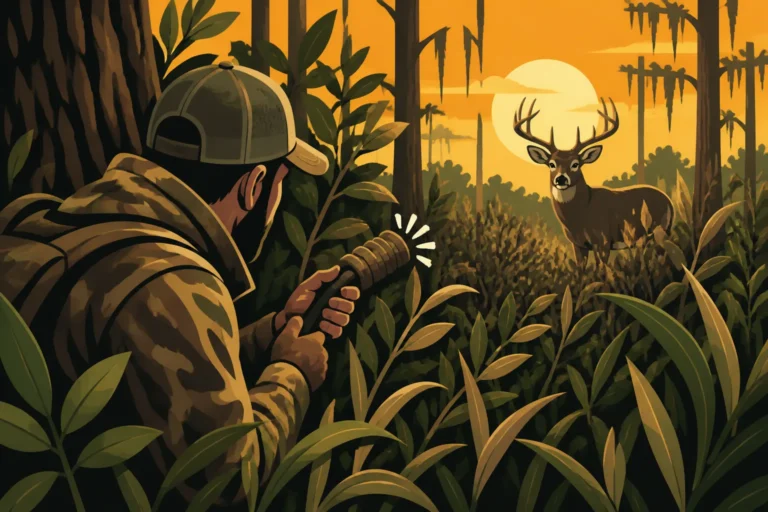
When it comes to calling, clear-cut edges can be excellent places for light rattling and grunting, especially during the rut. The dense cover often means deer are relatively close but out of sight. A few soft grunts or a short rattling sequence might be just enough to pique a buck's curiosity and draw him out from the thick regrowth or from the safety of the mature timber. For more insights on vocalizations, check out Rattling and Grunting in Mississippi. Sometimes, even a subtle doe bleat can pull a buck off a cruising path along the edge.
Equipment and Gear for Clear-Cut Edge Hunting
Having the right gear makes a difference when navigating and hunting these dense transition zones.
Optics and Observation Tools
Good optics are essential. While shots might be close in the thickest parts of the regrowth, deer often pause at the edge, offering a brief window. High-quality binoculars will help you pick apart the dense cover, spotting flicking ears or a twitching tail that you might otherwise miss. Given the often varied terrain around clear-cuts, a solid pair of 10×42 or 10×50 binoculars from a reputable brand like Vortex or Leupold can make all the difference.
Additionally, don't underestimate the power of your mapping application. Utilizing the satellite view from a tool like GoHunt can help you plan your approach and identify potential ambush points from a distance. Being able to mark trails and stand locations on your phone ensures you can find your way in and out silently, even in low light.
Appropriate Firearm or Archery Gear
The nature of clear-cut edge hunting often means you're dealing with relatively close shots, sometimes through small windows in the brush. For archery hunters, this might mean practicing shooting from different angles and with obstructions. If you're using a crossbow, familiarize yourself with Crossbow Rules During Mississippi Archery Season to ensure compliance. A fixed-blade broadhead with a wider cutting diameter can be beneficial for leaving a good blood trail, should the deer bolt back into the thick cover.
For firearm hunters, a rifle in a common deer caliber like .30-06, .308, or even a fast-handling .30-30 or a shotgun with slugs can be perfectly adequate. The key is accuracy at typical hunting distances, which might be anywhere from 20 to 100 yards along these edges. Whatever your weapon, practice shooting quickly and accurately in conditions that mimic what you'll find in the dense woods surrounding a clear-cut.
| Aspect | Recently Cut (0-1 Year) | Young Regrowth (2-5 Years) | Mature Regrowth (5+ Years) |
|---|---|---|---|
| Deer Use | Minimal, occasional crossing | High food & cover, active travel | Good cover, less primary food |
| Food Source | Sprouts, some weeds | Briars, saplings, forbs (primary food) | Limited, browse becomes taller, less dense |
| Cover | Very little | Excellent thick cover, bedding | Dense, but may become too open underneath |
| Visibility for Hunter | High | Low to moderate | Low to moderate |
| Hunting Strategy | Hunt crossings, adjacent timber | Edge hunting (food/cover), high activity | Transition zones, secondary travel |
| Optimal Times | Night, early/late season | Dawn/Dusk, Rut (all day) | Dawn/Dusk, pressured deer |
| Challenges | Exposed, limited deer traffic | Difficult to see, dense shooting lanes | Deer pass through quickly, less lingering |
Disclaimer
Hunting is an activity that carries inherent risks. Always prioritize safety, understand and obey all local and state hunting regulations, and obtain appropriate licenses and permits before heading afield. The information provided in this article is for educational purposes only and should not be considered a substitute for professional guidance or personal judgment. Be aware of your surroundings, hunt responsibly, and respect wildlife and private property.