Decoy Placement for Pressured Mississippi Birds
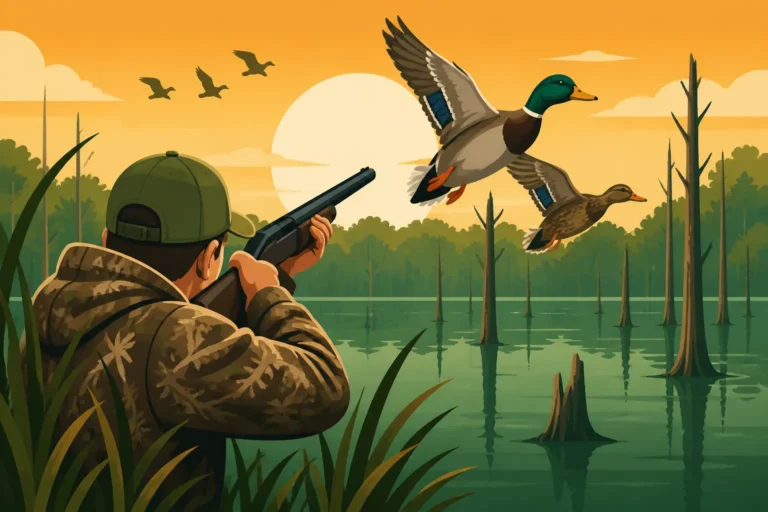
There’s nothing quite as deflating as watching a flock of ducks cup their wings, appear to commit, then suddenly flare at 60 yards, leaving you scratching your head. If you’ve hunted ducks in Mississippi for any length of time, especially after opening day, you’ve undoubtedly encountered birds that act like they’ve got a PhD in decoy recognition. These aren't your naive early-season birds; these are the grizzled veterans who've seen every spread, heard every call, and dodged every volley. This guide is all about tackling that frustrating reality, focusing on advanced decoy placement strategies designed to fool even the most pressured waterfowl in our Mississippi swamps, fields, and sloughs.
Understanding Why Birds Get Pressured in Mississippi
Mississippi is a hunter's paradise, but with that popularity comes pressure. As the season progresses, especially on public lands or popular hunting leases, waterfowl quickly learn to identify common tactics. They develop a keen sense for what looks "off" and what signals danger. It’s not just the shotguns; it’s the human presence, the calls, and most importantly, the static, unnatural decoy spreads.
The Impact of Early Season Pressure
Think about opening day in a place like the Delta. Ducks might fly in blindly, splashing down among decoys with reckless abandon. It’s a magical chaos that often doesn’t last. By week two, sometimes even after the first morning, those birds have had a crash course in hunter education. They’ve seen dozens of spreads, heard countless high-volume calls, and watched their buddies get shot down. This immediate, intense exposure quickly turns them wary. You'll notice they start flying higher, circling wider, and becoming incredibly hesitant to commit. Instead of landing right in the hole, they might swing wide, hover at the fringes of your spread, or just give a quick look before continuing down the flyway. It’s a frustrating shift, transforming what was once a slam-dunk into a challenging chess match.
Identifying Key Pressure Indicators
Recognizing pressured birds isn't just about them flaring. It’s a whole suite of subtle behaviors you need to tune into. Are ducks flying over your spread without even looking? Are they landing a few hundred yards away in an un-decoyed area? Do they only respond to light, subtle calling, if at all? These are all major indicators. In flooded timber, pressured mallards might just tip-toe the tops of the trees, looking for the most secluded pockets, completely ignoring a bustling spread below. Out in a cut cornfield, they might land on the far side, nowhere near your layout blinds, preferring to walk in rather than fly over what they suspect is a trap. Pay close attention to how other hunters in your area are doing – if everyone is struggling, it’s a good bet the birds are educated and cautious. Scouting with tools like GoHunt, or simply spending time observing without hunting, can give you invaluable insights into how birds are reacting to hunting pressure in your specific area.
Strategic Decoy Spreads for Wary Waterfowl
When birds are pressured, the last thing you want is a perfectly symmetrical, tightly packed decoy spread. That screams "fake" to a duck that’s seen it all. Our goal is to create a scene of absolute naturalness, a tableau that whispers, "Come on down, it's safe here."
Low-Visibility Spreads for Field Edges
Hunting those vast Mississippi farm fields, whether it's cut corn, soybeans, or winter wheat, can be incredibly rewarding, but it's also where ducks become notoriously shy. For pressured field birds, less is often more. Instead of a massive spread of a hundred full-body decoys, consider a much smaller, more spread-out approach. Picture a couple of small family groups, maybe 6-12 decoys total, spread out across a wider area to mimic birds naturally feeding and loafing.
Place your decoys in irregular, natural-looking clusters rather than tight V or J formations. Think about how real ducks scatter as they feed; they don't line up. You might have three decoys here, two there, a single one off to the side, all with varied poses – mostly feeders, maybe one or two sentries. This creates a relaxed, unhurried vibe. Position these clusters near natural cover, like a fencerow or a low ditch, giving the illusion of a secure feeding spot. When hunting a standing cornfield in farm country, for instance, you might place a small group right at the edge of the standing crop, with just a few stragglers further into the cut area, suggesting birds moving between cover and food. The key is to make it look like a few birds simply found a good spot and are comfortable, not that an entire flock has descended. Scouting specific field edges where birds have been seen resting or feeding without pressure is critical; an app like GoHunt can highlight these potential hideaways.
Spaced-Out Spreads for Timber and Open Water
The same principle of "naturalness" applies to timber and open water, but with different considerations. In Mississippi's famous flooded timber, like what you find around a Sunflower WMA Greentree Reservoir, birds get incredibly picky. A tight cluster of decoys under a tree often looks like a trap. Instead, spread your decoys out, perhaps along a subtle current or wind line. Mimic small groups of mallards or wood ducks loafing or gently dabbling. Leave plenty of open water—a large "landing zone"—between your blind position and the majority of your spread. This gives the birds room to commit and feel safe.
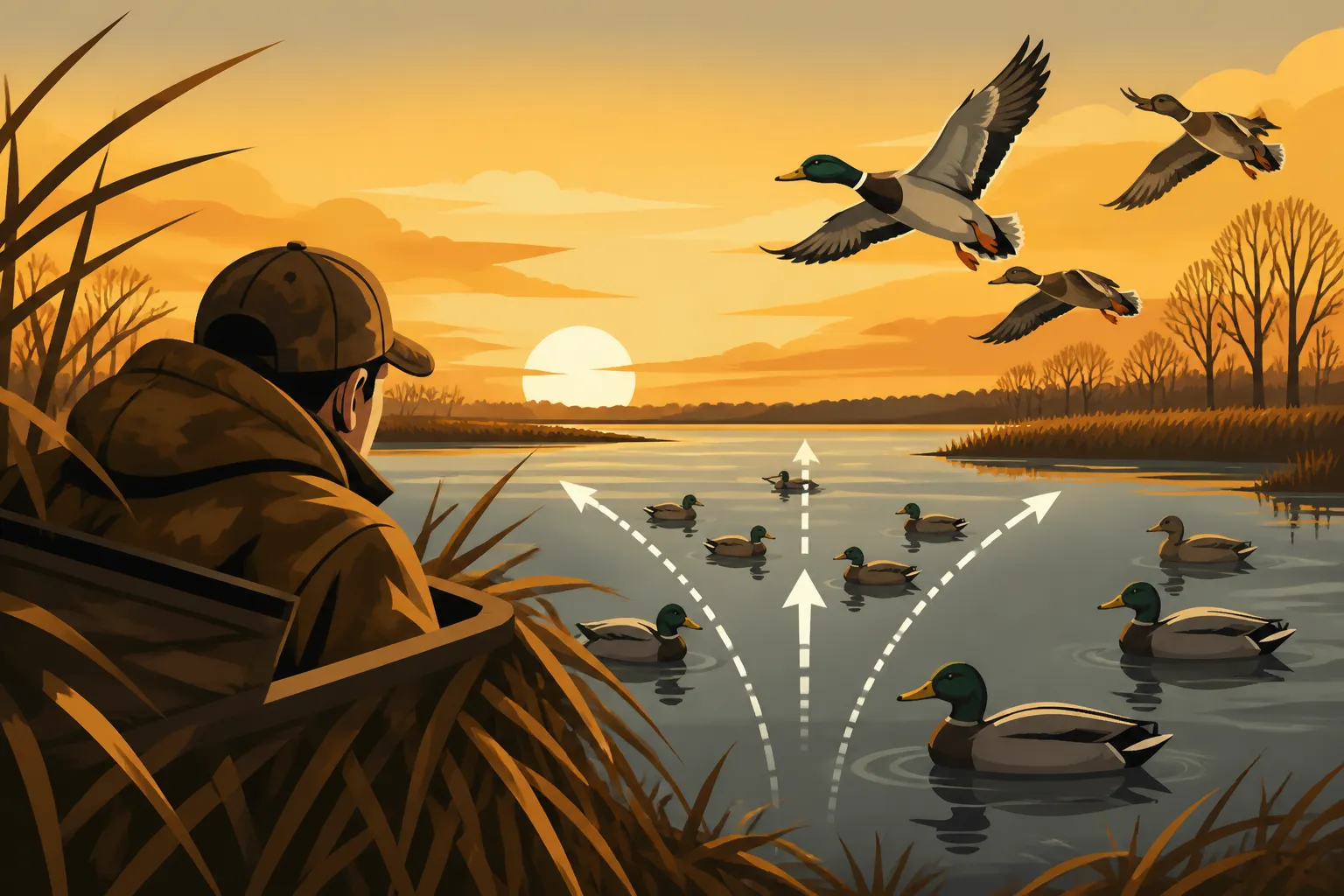
For open water, whether it's a large slough in the Delta or a big oxbow lake, heavily pressured birds will often circle high and observe for a long time. A sprawling, less dense spread is your friend here. Imagine a few small, loose groups of decoys, each containing 3-5 birds, spread across a wide area. Some might be closer to the bank, others further out, simulating ducks moving across the water. Avoid creating a distinct "kill hole" that stands out too much. Instead, let the gaps in your spread look like natural spaces where a cautious bird might feel comfortable pitching in. Consider adding a few sleeper decoys, which show ducks resting their heads on their backs, indicating extreme comfort and safety. This can be particularly effective when you're Hunting Flooded Timber for Wood Ducks or trying to draw in mallards during a slow morning.
Adding Movement and Realism to Your Decoys
Static decoys, no matter how well-placed, can eventually be busted by sharp-eyed birds. Adding subtle, realistic movement is paramount, but there’s a fine line between enticing and alarming.
Subtle Motion for Skittish Birds
We all love watching a spinning wing decoy bring birds in, but for pressured ducks, too much aggressive motion can be a glaring red flag. Imagine a small group of mallards calmly dabbling; a frantic spinner might make them think something is amiss. Instead, focus on subtle motion. A simple jerk string is your best friend. A gentle tug every minute or two, causing a few decoys to dip and ripple, mimics natural feeding activity perfectly. This small disturbance sends out ripples that catch the light and suggest life without being overwhelming.
Battery-operated swimming or feeding decoys that create small, continuous ripples can also be highly effective. The key is to avoid anything that looks too mechanical or unnaturally fast. If you do use spinning wing decoys, consider placing them further out from your main spread, or use them sparingly. Some hunters even cover one wing or position them low in the water to reduce their flashiness for late-season hunts. The goal is to convey contentedness, not a frantic party. When you’re Reading a Delta Slough for a Morning Flight, observe how the real birds interact with the water and replicate that unhurried movement.
Natural Posing and Species Variety
Beyond movement, the actual poses and variety of your decoys make a huge difference. A spread of all upright, alert hen mallards looks incredibly unnatural. Mix it up! Incorporate feeder decoys, which are bent over as if dabbling, and sleeper decoys, as mentioned earlier. Add in a few preener decoys, showing birds cleaning their feathers. These relaxed poses signal safety to incoming birds.
Don't just stick to mallards, either. Mississippi sees a fantastic array of waterfowl. Including a few pintail, gadwall, or wigeon decoys, especially if they're common in your area, adds to the realism. These secondary species often act as confidence decoys, suggesting a diverse, healthy flock. A few Canada goose decoys on the bank can also provide confidence, as ducks often associate their presence with safety. This variety makes your spread look less like a single-species convention and more like a natural gathering. For instance, when you're hunting in a low-light situation, the white on a pintail decoy can really stand out and draw attention, especially for ducks that have seen too many greenheads. Understanding Mississippi Waterfowl Migration Timing can help you choose which species decoys to deploy for maximum effect.
Advanced Tactics for Heavily Pressured Zones
Sometimes, even the most carefully crafted spread of varied, subtle motion decoys isn't enough. When the pressure is intense, you might need to throw out the playbook entirely and adopt some truly minimalist or nuanced strategies.
Minimalist Decoy Approaches
When birds are practically landing on your head in October, you can get away with a lot. But come late December and January, after weeks of relentless gunning, sometimes the best decoy spread is barely a spread at all. For those truly wary, late-season birds, a minimalist approach can be surprisingly effective. This might mean using only 3-5 decoys, placed very far apart, perhaps in a subtle "pair-and-a-loner" configuration. Imagine two pairs of decoys, maybe 20-30 yards apart, with a single drake mallard loafing 50 yards away. This sparse setup looks incredibly natural and unthreatening, signaling a safe, uncrowded space where only the most relaxed birds would gather.
You can even take it a step further: the "one decoy" trick. A single, natural-looking mallard or pintail decoy placed precisely in a perceived safe spot (like a small pocket of calm water in a swift current, or a depression in a field) can sometimes draw in a single, wary bird that would never commit to a larger spread. This tactic works on the assumption that a lone bird is far less suspicious than a flock. This is a high-risk, high-reward strategy, but it can pay off handsomely when nothing else is working on those brutally slow days.
Decoy Placement in Relation to Wind and Sun
Wind and sun are your silent partners in decoy placement. Ignoring them is a rookie mistake, but for pressured birds, optimizing these elements can be the difference between a flare and a finish.
Ducks almost always land into the wind. This is crucial. Position your primary landing zone directly upwind from your blind. This forces birds to approach, slow down, and commit with their wings cupped, presenting the best possible shot. Your decoys should also be positioned as if they are facing into the wind, riding the ripples naturally. If the wind shifts, be prepared to adjust your spread.
The sun's position is equally vital. Avoid placing your decoys in a way that creates harsh shadows or glint off their plastic, which can be unnatural. Ideally, you want the sun at your back, shining onto your decoys. This illuminates them, makes them more visible, and helps to hide your blind from approaching birds. When the sun is in the birds' eyes, they have a harder time discerning details, which can work in your favor, but also makes them less likely to see your spread clearly. Conversely, if the sun is behind your decoys, they can become silhouetted, losing their natural appearance. Always consider how the light will hit your spread throughout the morning or afternoon. This attention to detail, especially when combined with careful camouflage, is what separates a truly effective spread from a mediocre one, particularly for birds that have survived a few rounds of Mississippi's Gun Deer Season by Unit and learned to be extra cautious.
Here's a quick look at how different pressure levels might influence your decoy setup:
| Pressure Level | Decoy Quantity | Spacing | Movement Focus | Species Variety | Key Placement Tip |
|---|---|---|---|---|---|
| Low (Early Season) | High (2-4 dozen+) | Tightly grouped, obvious kill hole | Aggressive (spinners, splashing) | Mostly mallards | Large, inviting landing zone near blind |
| Moderate (Mid-Season) | Medium (1-2 dozen) | Loosely grouped, distinct pockets | Moderate (jerk string, subtle motion) | Mallards + 1-2 others | Landing zone upwind, varied poses |
| High (Late Season) | Low (3-12 decoys) | Widely spaced, irregular clusters | Subtle (light ripples, no spinners) | Mallards + 2-3 others | Mimic resting birds, utilize natural cover and wind |
| Extreme (Busted) | Very Low (1-5 decoys) | Extremely sparse, "loner" setup | Minimal (natural water movement) | Confidence decoys | Target a perceived safe spot, no visible "trap" |
Remember, every day is different, and what worked yesterday might not work today. Keep experimenting with your decoy placement, paying close attention to the birds' reactions. Sometimes, it’s just one small adjustment that makes all the difference. When you are Hunting the Mississippi River Backwaters, you might find that the current plays a significant role in how natural your spread looks, requiring constant minor adjustments. Or when you're Layout Blind Hunting Delta Farm Fields, ensuring your decoys are naturally positioned around your concealed blinds is key to success.
Disclaimer
Hunting involves inherent risks, and conditions in the field can change rapidly. Always prioritize safety, adhere to all Mississippi Department of Wildlife, Fisheries, and Parks regulations, and ensure you have the appropriate licenses and permits before venturing out. This guide is for informational purposes only and does not substitute for professional instruction or adherence to local laws.