Hunting a Green Field Planted for Deer
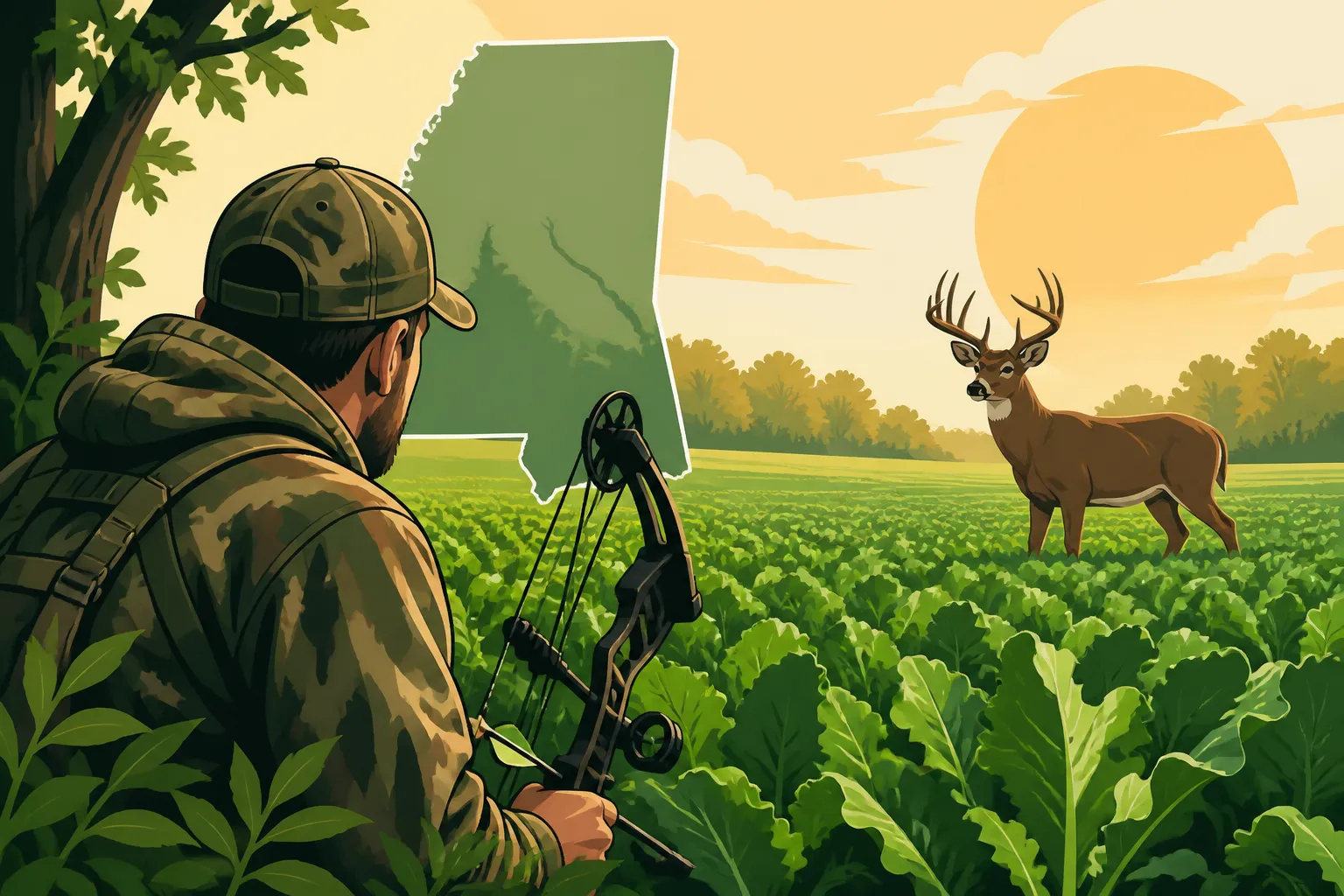
Hunting a green field can be one of the most exciting — and frustrating — experiences for a deer hunter in Mississippi. We’ve all been there: you put in the time and effort, planted that perfect food plot, or found a prime agricultural field, only to have the deer appear well after dark or catch your scent the moment you step out of your truck. This guide is all about giving you the real-world tactics and insights needed to consistently put yourself in a position to harvest deer effectively and ethically from these alluring deer magnets.
Understanding Deer Movement in Green Fields
Green fields, whether they're planted food plots on private land or agricultural fields bordering public hunting areas, are undeniable draws for deer. But just because deer use them doesn't mean they're easy to hunt. You've got to understand the "why" and "when" behind their visits to stand a chance.
Why Deer Use Green Fields
Deer are creatures of habit and opportunity, and green fields offer a compelling combination of both. In the early season, newly sprouted legumes like clover or winter peas provide a high-protein, easily digestible food source that deer crave for antler growth and fawn development. As fall deepens, cool-season annuals such as oats, wheat, and brassicas become critical, offering crucial carbohydrates and energy to build up fat reserves for the rigors of the rut and the colder winter months. This shift in nutritional needs directly influences which fields deer prefer at different times.
Beyond just food, green fields can also serve as social hubs, especially during the pre-rut and rut. Bucks will cruise field edges, scent-checking for does, and does will gather to feed, providing opportunities for bucks to find receptive mates. Imagine a wide-open field on a crisp October evening; it's a natural meeting point, a place where deer feel relatively safe to gather before heading into thicker cover. However, this openness also makes them wary, which is why understanding their approach is key. They rarely just walk out into the middle of a wide-open space in broad daylight without a good reason and a careful approach.
Timing Your Hunts to Peak Activity
This is where many hunters make their biggest mistake: assuming deer will be in the field all day. In Mississippi, especially on private land or heavily hunted public tracts, deer are incredibly nocturnal on green fields. Your best bet for seeing deer in daylight hours revolves around two narrow windows: the first and last hours of legal shooting light. Deer often stage up in nearby cover, scent-checking the field, waiting for the perfect moment of security to enter.
During the morning hunt, deer are typically leaving the field as dawn breaks, heading back to bedding areas. You might catch one lingering, but your chances are higher targeting their exit routes. The evening hunt is usually more productive, as deer are moving from bedding to feeding. This is when patience pays off. You'll often see does and yearlings filter out first, testing the waters before more mature bucks make an appearance. Pay close attention to the wind, as deer will almost always approach a field with the wind in their favor, or quartering to them, allowing them to smell any potential threats downwind. If you're relying on mapping tools, something like GoHunt can help you pinpoint bedding areas relative to your chosen green field, allowing you to anticipate their travel corridors more accurately.
Reading Sign Around the Field Edges
Before you even think about hanging a stand or setting up a blind, you need to become a detective. The edges of green fields are like a deer diary, filled with clues about their behavior. Look for well-worn trails leading into and out of the field, especially where cover transitions from thick woods to open field. These are your primary travel corridors. Are the trails heavily browsed? Are there fresh tracks indicating recent activity? Remember, older, larger tracks often belong to bigger, more cautious bucks who might be using these same paths but only under the cover of darkness.
Scrapes and rubs are also critical indicators. Bucks will create these along field edges, especially during the pre-rut and rut, to communicate their presence. A fresh scrape line along a logging road or a rub on a sapling bordering the field tells you a buck is actively patrolling that area. The size of the rub can give you a clue about the size of the buck. If you find multiple fresh signs, you’re in a prime location. Don’t forget to check for "Scrape Lines Along a Logging Road" – this specific sign can be a goldmine near food sources. Use your binoculars to scan the surrounding timber for broken branches or pushed-over saplings, which can indicate bedding areas or staging points where deer gather before stepping into the open.
Strategic Stand Placement and Entry/Exit
Hunting green fields successfully is less about where the deer are in the field and more about how you access and position yourself around it. Your presence needs to be undetectable from the moment you leave your vehicle until you climb into your stand or blind.
Choosing the Right Stand Type
The type of stand you use for a green field hunt depends heavily on the specific field, the surrounding cover, and your hunting style.
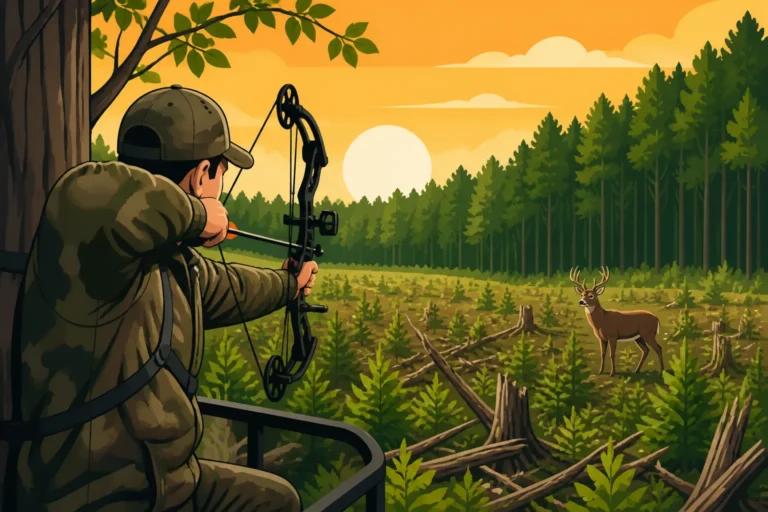
- Treestands: Elevated positions in a treestand offer several advantages. You're above the deer's primary line of sight and their scent cone, making it harder for them to detect you. This is particularly effective on field edges where mature timber provides good cover and height. When selecting a tree, look for one that offers good shooting lanes into the field but also provides a natural backdrop for concealment. Avoid silhouetting yourself against the sky. A good treestand setup can be ideal for long stretches of "Sitting a Field Edge in Late Season". However, getting into a treestand without alerting deer can be tricky, especially in quieter conditions.
- Ground Blinds: Ground blinds excel in situations where suitable trees are scarce or in more open areas where blending into the natural contours is essential. They offer excellent concealment, are often warmer in colder weather, and are more accessible for hunters with mobility issues or those hunting with youth. For a green field, setting a ground blind up well in advance is crucial, allowing deer to get used to its presence. You'll want to brush it in thoroughly, making it look like a natural part of the landscape. Read up on "Brushing In a Blind on a Field Edge" for specific tips. The downside is that your scent cone is at deer level, so wind direction becomes even more critical.
- Tripod/Tower Stands: These offer the best of both worlds: elevation like a treestand but more flexibility in placement like a ground blind. They are usually semi-permanent and are excellent for larger, more open fields where you need to see a wide area. They also provide a stable shooting platform. Their main disadvantage is their visibility; they need to be very well camouflaged and placed strategically to avoid spooking deer.
Ultimately, the best stand type is the one that allows you to remain undetected while giving you a clear, ethical shot opportunity.
Mastering Entry and Exit Routes
This is arguably the most critical component of successful green field hunting. Deer in Mississippi, especially larger bucks, are hyper-aware of human intrusion. A poor entry or exit can ruin a hunt before it even begins, and it can educate deer to avoid that field during daylight hours for weeks.
Always approach your stand or blind using routes that keep you concealed and avoid known deer travel paths. Use natural features like creek bottoms, ditches, standing timber, or topography to your advantage. If possible, plan your approach to take advantage of the wind, ensuring your scent is blowing away from where you expect deer to be. Think about it: if you walk directly through a bedding area to get to your stand, you've already contaminated the area. For evening hunts, try to approach from the downwind side of the field, or at least crosswind, so your scent blows away from where deer will be entering.
Your exit is just as important. If you spook deer leaving your stand, they'll associate that field with danger. Wait until it's completely dark, or until you're absolutely certain the field is clear, before climbing down. Sometimes, the best strategy is to have a buddy pick you up from a safe distance, or have a vehicle waiting that you can quickly get into, minimizing your foot traffic. Consider using mapping apps like GoHunt to plan precise, low-impact entry and exit routes, taking into account wind direction for each specific hunt.
Considering Wind and Thermals
Wind is your greatest ally or your worst enemy when hunting green fields. Deer rely heavily on their sense of smell, and in an open environment, your scent can carry far and wide. Always, always hunt with the wind in your favor, blowing your scent away from where deer are likely to approach or already present.
Thermals also play a significant role, especially in the morning and evening transition periods. As the sun rises and warms the earth, air begins to rise (updrafts). In the evening, as the earth cools, air falls (downdrafts). If your green field is in a valley or draws, these thermal currents can carry your scent directly to deer. For example, in a bottomland green field, morning thermals might rise, taking your scent up, but evening thermals will fall, pushing your scent downhill. Understanding "Wind and Thermals in Delta Bottomland" can be invaluable, even if you're not hunting the Delta specifically, as the principles apply across different terrains. A smart hunter will use an inexpensive wind checker to confirm wind direction and test thermals before and during the hunt, making real-time adjustments if needed.
Adapting to Seasonal Changes and Pressure
Green fields aren't static; they change throughout the season, and so does deer behavior. What works in early fall might be completely ineffective during the late season or after hunting pressure has built up.
Early Season vs. Late Season Strategies
Early in the season, often during Mississippi's archery opener, deer are still relatively unpressured and focused on summer patterns. They might be more apt to visit green fields earlier in the evening or later in the morning. Your focus should be on finding the freshest, most palatable forage. Young, tender clover or early season brassicas might be the ticket. During this time, deer are still recovering from summer stress and focusing on nutrition. Look for patterns involving specific trails leading to these prime food sources.
As the season progresses into the late fall and winter, food sources like standing corn, mature brassicas, or winter wheat become crucial "Late-Season Food Sources for Mississippi Whitetails". Deer are now trying to pack on calories for the cold. Hunting pressure will also be a major factor. You might need to adjust your setup, moving further back into cover along a travel corridor rather than right on the field edge. This is when deer might only visit the very edges of a field, or quickly dart in and out, making long shots more common. A good strategy can be to target fields after a significant frost, as many food sources become sweeter and more attractive to deer once the starches convert to sugars.
Hunting Pressured Deer in Fields
No matter how good your green field is, if it's getting hit hard by other hunters, the deer will become nocturnal or simply avoid it during daylight. When faced with pressured deer, you need to think outside the box. Instead of hunting directly on the field, focus on the travel corridors leading to and from the field. Set up your stand 50-100 yards back in the timber, along a well-used trail that deer take to enter the field. This way, you catch them before they've fully committed to the open area, when they might be less wary.
Also, consider hunting less accessible sides of the field. Are there swamps, thickets, or steep terrain that most hunters avoid? Deer will often use these areas as security cover to approach a field. Even a small, tucked-away green field on public land might hold deer if it's overlooked. Tools like GoHunt's satellite imagery can help identify these hidden gems or less-traveled access points that might offer a unique advantage. Pay attention to how the hunting pressure on Mississippi public land affects deer movement and adapt your strategy accordingly.
Weather's Impact on Field Activity
Weather plays a huge role in how deer use green fields. Cold fronts, especially those following mild weather, often trigger increased deer movement, making them more likely to visit fields during daylight hours. A sudden drop in temperature signals a need to feed heavily to maintain body heat.
Rain can also impact activity. During a light drizzle, deer might still move, as the rain helps mask human scent and noise. However, heavy downpours usually send them to thick cover. The period after a cold rain or snow, when the skies clear and temperatures are chilly but not brutally cold, can be some of the best times to hunt green fields. Deer will often emerge to feed voraciously. Conversely, warm, sunny days, especially in the late season, can make deer less active. They might feed more during the cooler parts of the day, making midday hunts less productive. Understanding "Hunting Deer After a Cold Front" will definitely give you an edge.
Essential Gear for Green Field Success
Having the right gear won't guarantee success, but it will certainly improve your chances and make your time afield more comfortable and effective.
Optics and Rangefinders
In an open green field setting, good optics are non-negotiable. Binoculars are essential for spotting deer as they emerge from cover, often at long distances. A quality pair, like a 10×42, will help you identify deer, check for antlers, and observe their behavior without alerting them. Remember, deer might appear as small specks far across the field, and a clear, bright image is crucial, especially in low light conditions.
A rangefinder is equally important. When hunting over a green field, shot distances can vary significantly, from a mere 30 yards to over 300 yards. Having an accurate rangefinder allows you to confidently make ethical shots, whether you're bowhunting or using a rifle. Pre-range key landmarks around your stand or blind before deer appear, marking distances to different trees, fence posts, or changes in vegetation. This practice will prevent fumbling with your rangefinder at the moment of truth, minimizing movement and noise. Consider a model with angle compensation if you anticipate shooting from an elevated position into a field that isn't perfectly flat.
Concealment and Scent Control
Concealment is critical in open green fields. Wear camouflage that matches your surroundings. If you're hunting against a dark timber backdrop, choose darker patterns. If you're in a more open, grassy area, lighter, browner tones might be better. Face paint or a face mask is also vital to break up the outline of your face, which can be surprisingly reflective or visible.
Scent control, as mentioned earlier, is paramount. Deer can pick up your scent from hundreds of yards away. Shower with unscented soap, wash your hunting clothes in scent-eliminating detergent, and store them in airtight containers until you're ready to hunt. Use scent-eliminating sprays on yourself and your gear before heading into the field. Even if you're meticulous, wind direction is still your primary defense against a deer's nose. Never rely solely on scent control products; they're a supplement, not a replacement for proper wind awareness.
Mapping Tools and Technology
In today's hunting world, digital mapping tools are an absolute game-changer, especially for scouting and hunting green fields. Apps like GoHunt provide detailed satellite imagery, topographic maps, and property boundaries, allowing you to scout from your couch before you ever set foot in the woods. You can mark potential stand locations, map out silent entry and exit routes, and identify hidden funnels or pinch points that deer might use to approach the field.
These tools also help you understand the broader landscape, identifying adjacent bedding areas, water sources, and other food plots. By knowing the entire layout, you can better anticipate deer movement patterns and adapt your strategy on the fly. Many apps even allow you to track real-time wind direction, overlaying it on your map, which is incredibly useful for making in-the-moment decisions about stand adjustments or whether a particular field is even huntable that day. This level of preparation, from "Reading Aerial Photos for Hills Unit Deer" to charting your walk-in, can significantly boost your success rate on green fields.
Disclaimer
The information provided in this guide is for general informational purposes only and does not constitute professional advice. Hunting regulations and conditions can change rapidly. Always consult the latest regulations from the Mississippi Department of Wildlife, Fisheries, and Parks (MDWFP) before engaging in any hunting activities. Ensure you have all necessary licenses and permits and adhere to all safety guidelines.