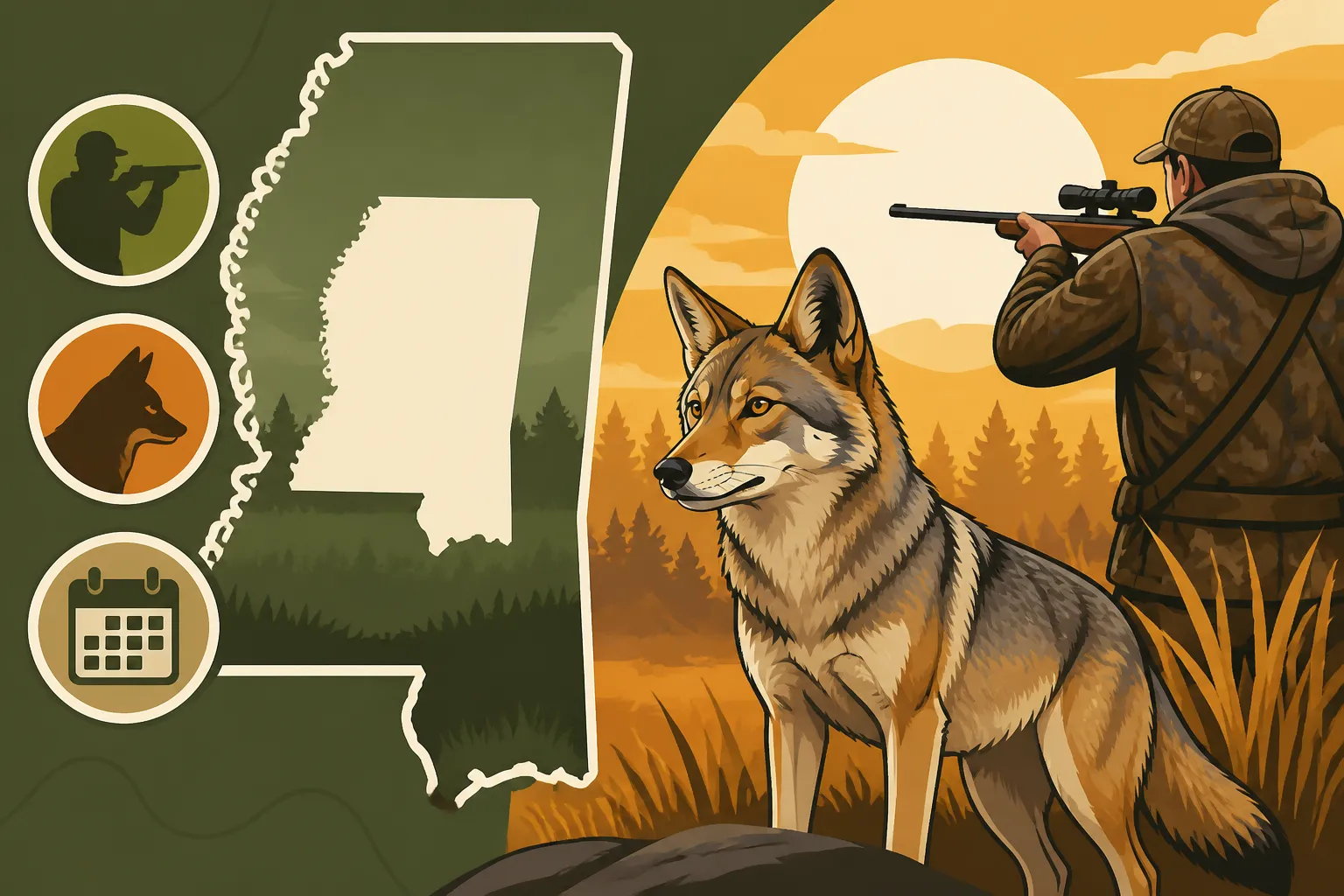
Mississippi Coyote Hunting Season Rules
Trying to figure out the rules for hunting coyotes in Mississippi can feel like a wild goose chase sometimes, especially when you're used to the clear-cut seasons for deer and turkeys. It's frustrating to want to do your part in managing these prolific predators but not be entirely sure of the legal framework. This guide is here to clear up all that confusion, giving you a detailed breakdown of Mississippi's coyote hunting season rules and offering some real-world insights to make your efforts more successful.
Understanding Mississippi's Approach to Coyotes
Unlike white-tailed deer or wild turkeys, coyotes in Mississippi aren't managed with traditional hunting seasons or bag limits. They fall into a unique category, and understanding why the Mississippi Department of Wildlife, Fisheries, and Parks (MDWFP) takes this stance is the first step to becoming a more informed predator hunter.
Why Coyotes Are Treated Differently
Coyotes weren't always a common sight in Mississippi. They are relatively new to the state, having expanded their range eastward over the last century. As they moved in, they filled an ecological niche, but they also quickly became a significant concern for landowners and wildlife managers. Their diet is incredibly varied, including everything from small rodents and rabbits to fawns, ground-nesting birds, and even livestock like calves and poultry. This broad impact on native game species and agricultural interests is precisely why they are managed differently than indigenous game animals.
The MDWFP views coyotes primarily as a nuisance animal that requires population control rather than a game animal to be carefully conserved through regulated seasons. This perspective acknowledges the very real financial losses farmers and ranchers face due to depredation, and the pressure coyotes put on the already fragile populations of other game animals, such as deer and wild turkeys. It's not about eradicating them, which is generally considered impossible, but about mitigating their negative effects and keeping their numbers in check where they cause the most harm.
The Year-Round Open Season Explained
When we talk about Mississippi coyote hunting season rules, the most striking detail is that there isn't really a "season" at all in the traditional sense. For coyotes, it's open season, year-round, 24 hours a day, seven days a week. This means you won't find specific start and end dates in the MDWFP regulations, nor will you find daily or seasonal bag limits. You can literally hunt them any day of the year you choose, provided you adhere to other general hunting laws and land access rules.
This "no closed season" approach is a direct reflection of their status as a nuisance animal. The goal is to provide maximum flexibility for hunters and landowners to manage coyote populations whenever and wherever they are causing problems. For a farmer losing calves, waiting for a specific season to open isn't practical. For a deer hunter seeing fawn recruitment plummet, year-round control is essential. This flexibility is a huge advantage for hunters who want to contribute to wildlife management and enjoy the challenge of predator hunting. It also means that if you're out Hunting Mississippi's Year-Round Feral Hogs or scouting for deer and spot a coyote, you're generally good to go, provided you have the appropriate license.
Key Regulations for Hunting Coyotes in Mississippi
While the year-round aspect simplifies things, there are still crucial regulations you need to be aware of when pursuing coyotes in the Magnolia State. These rules ensure ethical hunting practices, public safety, and respect for property rights.
License and Permitting Requirements
Even though coyotes aren't traditional game animals, you still need a valid hunting license to pursue them in Mississippi. This is a common point of confusion, as some folks assume that because there's no season, there's no license. That's simply not true. If you're a Mississippi resident, you'll need a Mississippi Resident Sportsman's License or an All-Game Hunting License. Non-residents will need to purchase the appropriate non-resident hunting license. The good news is that these general licenses cover coyotes, so you won't need any special coyote-specific permits or tags.
The MDWFP makes it easy to purchase and carry your license. You can typically buy them online through their website, at licensed vendors across the state, or even through their mobile app. Carrying proof of your license while hunting, whether it's a physical copy or stored digitally on your phone, is absolutely essential. Always ensure your license is current before heading out. For a detailed breakdown of costs and options, you can refer to our guide on Mississippi Hunting Licenses and What They Cost.
Legal Hunting Methods and Equipment
Mississippi offers significant flexibility in the methods and equipment you can use for coyote hunting, reflecting the management goal of effective control. Rifles, shotguns, pistols, and archery equipment are all generally permissible. There are no caliber restrictions for rifles, unlike deer hunting, so you can use anything from a .223 to a larger deer rifle. Shotguns are effective for closer shots, especially with heavier loads, and archery equipment provides an exciting challenge for those looking to get up close and personal. Muzzleloaders are also legal to use.
One of the biggest distinctions, and often a point of interest for serious predator hunters, is the legality of night hunting. Mississippi explicitly allows the use of artificial lights for hunting coyotes at night on private land, provided you have express permission from the landowner. This opens up entirely new strategies for targeting these nocturnal animals. You can use handheld spotlights, weapon-mounted lights, or even thermal and night vision optics. When considering night hunting, always be mindful of safety, knowing your target and what's beyond it. For more in-depth information on the specific rules for hunting after dark, check out our piece on Night Hunting Rules for Mississippi Coyotes. Furthermore, advanced mapping tools like GoHunt can be invaluable, allowing you to clearly identify property boundaries, ensuring you're always on land where you have permission and avoiding any trespass issues.
Beyond active hunting, trapping and snaring coyotes are also legal in Mississippi, but these methods typically require a separate trapping license and adherence to specific regulations regarding trap types, placement, and checking intervals. If you're interested in year-round control, understanding these different methods can greatly expand your options.
Private versus Public Land Considerations
Regardless of the species you're pursuing, land access is always a critical factor in Mississippi. This holds true for coyote hunting as well.
On private land, obtaining explicit permission from the landowner is absolutely paramount. Simply because coyotes are considered nuisance animals does not give you carte blanche to trespass. Always ask for permission, ideally in writing, especially if you plan to hunt at night or use methods like trapping. Building a good relationship with landowners can open up significant opportunities, as many are eager to have coyotes removed from their property. Tools like GoHunt's property line layers can be incredibly helpful here, allowing you to accurately identify land ownership and approach the correct individuals for permission. This precision helps you avoid violating What Mississippi Trespass Law Requires.
For public lands, such as Wildlife Management Areas (WMAs) and National Forests, coyote hunting is generally permitted, but often with some specific caveats. On WMAs, you usually need a WMA permit in addition to your state hunting license. Rules on public lands typically restrict hunting to daylight hours, and the use of artificial lights for night hunting may be prohibited or severely limited, even for coyotes. Additionally, some WMAs might have specific dates when predator hunting is allowed, often coinciding with established deer or small game seasons, to minimize conflicts with other hunters. Always consult the specific regulations for the WMA or National Forest you plan to hunt. Information about Hunting Pressure on Mississippi Public Land can give you an idea of areas where you might have more space to call.
For National Forests like the Delta National Forest or Homochitto National Forest, general statewide rules usually apply, but again, always double-check any specific forest orders or local regulations that might be in effect. During gun deer season, you’ll also need to follow blaze orange requirements on public land.
Practical Strategies for Mississippi Coyote Hunters
Knowing the rules is one thing, but consistently calling in coyotes is an art and a science. Here are some practical tips and strategies to help you become a more effective predator hunter in Mississippi.
Best Times and Locations for Success
Coyotes are adaptable creatures, but they do have preferences that can increase your chances of success. They are most active during low-light periods – dawn and dusk. However, during the cooler months of fall and winter, they can be active throughout the day, especially when they need to hunt to survive or when pups are being fed. Overcast days or periods following a cold front can also stimulate movement. During the heat of a Mississippi summer, focus heavily on the early morning and late evening, and target areas with ample shade and water.
Location is key. In Mississippi, coyotes thrive in a variety of habitats. You’ll find them prevalent in agricultural areas like the Delta, where they prey on rodents and fawns in fields. Creek bottoms, timber edges, dense pine plantations, and recent clear-cuts offer excellent cover and travel corridors. Look for signs like tracks, scat, and even dens. Areas where natural food sources are abundant, such as around cattle pastures (where they might target calves or carrion) or thickets holding rabbits, are prime spots. You can leverage mapping applications like GoHunt to scout these locations from your couch, identifying potential travel routes, pinch points, and cover before you ever step foot in the woods. This can greatly assist with Scouting Mississippi Public Land Before Season.
Effective Calling Techniques
Calling is arguably the most effective method for coyote hunting. There are two main categories of calls: distress calls and challenge/territorial calls.
Distress calls mimic injured prey animals like rabbits, fawns, or birds. This is often the most productive type of calling because it taps into a coyote's instinct to investigate an easy meal. Vary the volume and intensity of your distress calls, making them sound realistic. Start soft, get louder, then fade out, mimicking a dying animal. Pause frequently, scanning for a responding coyote.
Challenge or territorial calls include howls, barks, and growls. These can be effective for locating coyotes or drawing in a dominant animal looking to defend its territory. If you know coyotes are in an area, a series of howls can often elicit a response, letting you pinpoint their location. This strategy is particularly useful when you're focusing on Coyote Calling in Mississippi Farm Country or Predator Calling Mississippi Pine Plantations.
When setting up to call, always consider the wind. Coyotes have an incredible sense of smell, and if they catch your scent, your hunt is over. Position yourself so the wind is in your face or quartering. Utilize natural cover, or consider Using a Ground Blind on Mississippi Public Land for concealment. Patience is crucial; sometimes it takes 15-20 minutes or more for a coyote to commit to a call. Don't be afraid to change your calling sequence or move to a new location if nothing responds after a good sit.
Night Hunting Considerations and Safety
Night hunting for coyotes is a thrilling experience that offers a distinct advantage, especially since coyotes are largely nocturnal. However, it comes with increased safety considerations.
Legal Lights: As mentioned, artificial lights are permissible on private land with landowner permission. This includes spotlights, weapon-mounted lights, and advanced thermal or night vision optics. Many dedicated night hunters prefer red or green lights, as these colors are thought to be less alarming to coyotes. Thermal imaging is a game-changer for spotting animals in the dark, giving you an unparalleled edge.
Safety First: When hunting at night, positive identification of your target is non-negotiable. Only shoot if you are absolutely certain it is a coyote and you have a safe backdrop. The darkness can play tricks on your eyes, so take extra precautions. Use a good set of binoculars or a spotting scope (with a light filter if using white light) to confirm your target. Always know your surroundings and what lies beyond your target.
Location and Setup: Night hunting is often most productive in open areas, like pastures, field edges, or clear-cuts, where you can see incoming coyotes from a distance. Set up with a clear field of view and, if possible, a good elevated position. Consider using electronic calls that can project sound further and have remote controls, allowing you to stay hidden while the sound emanates from a distance. The lack of traditional visibility means careful planning of entry and exit routes is crucial to avoid disturbing animals or getting disoriented.
Remember, the goal of year-round coyote hunting is to effectively manage their populations and mitigate their impact. By understanding and adhering to Mississippi's rules, and by implementing effective strategies, you can become a valuable contributor to this important wildlife management effort. For deeper insights into the prevalence of these animals, consider exploring data on Mississippi Coyote Range and Density.
Mississippi Coyote Hunting Rules Summary
| Aspect | Mississippi Coyote Hunting Rules |
|---|---|
| Season Dates | Year-round, no closed season |
| Bag Limit | No daily or seasonal bag limit |
| License Required | Valid Mississippi hunting license (resident or non-resident) |
| Night Hunting | Legal with artificial lights on private land with landowner permission |
| Hunting Methods | Rifles, shotguns, archery, pistols, muzzleloaders, calls, snares (with permit), traps (with permit) |
| Public Land | Generally allowed during daylight, often coincides with other seasons. Check WMA/NF specific rules. |
| Private Land | Requires landowner permission |
| Blaze Orange | Required on public lands during open gun seasons for other species |
Disclaimer
Hunting regulations and laws can change. Always consult the most current Mississippi Department of Wildlife, Fisheries, and Parks (MDWFP) official regulations before engaging in any hunting activities. This article is intended for informational purposes only and should not be considered legal advice.