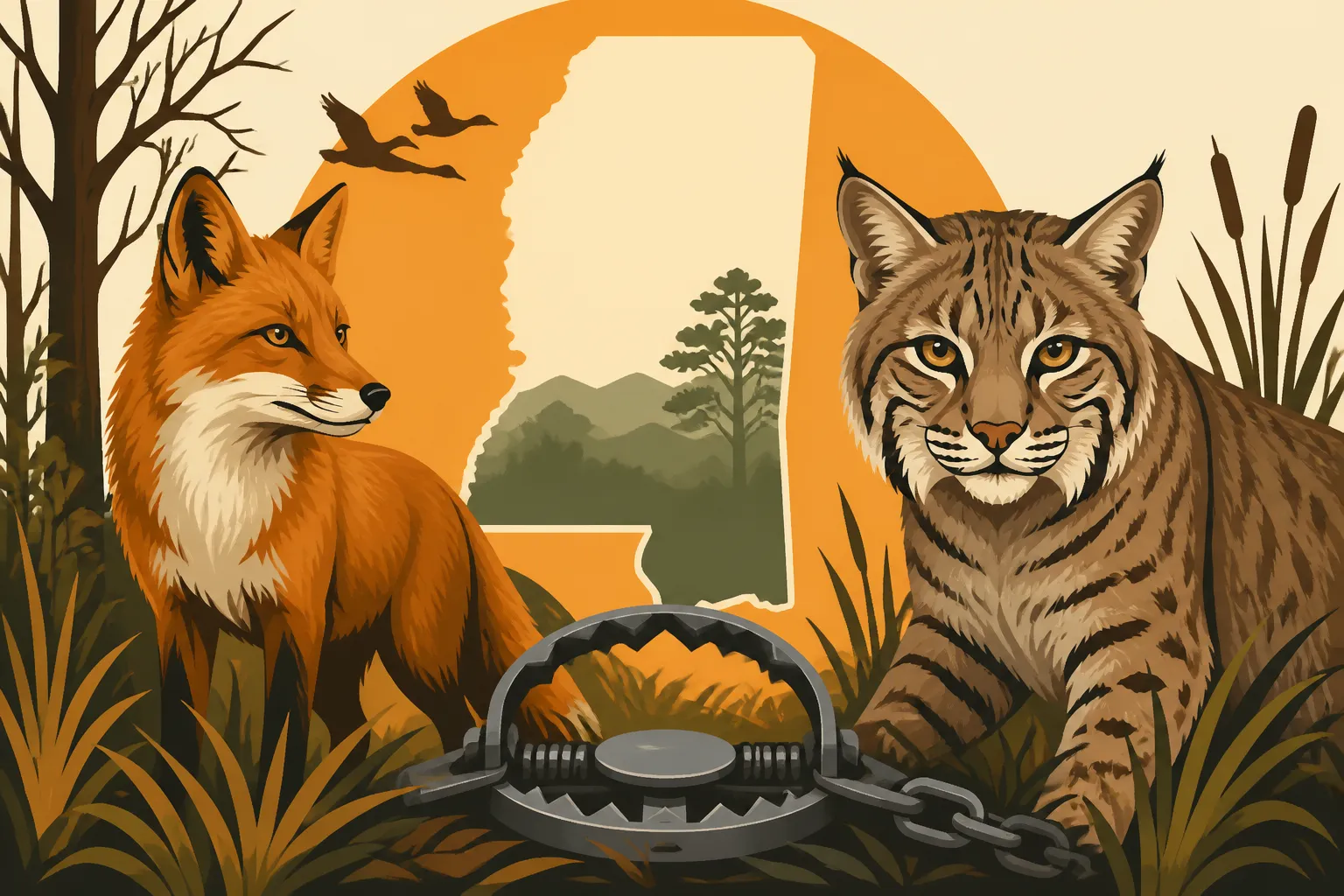
Mississippi Fox and Bobcat Trapping Season
Navigating the specific hunting and trapping seasons in Mississippi can sometimes feel like deciphering a secret code, especially when you're looking to responsibly manage furbearer populations like fox and bobcat. It’s easy to get lost in the regulations, wondering when you can even set a trap or what permits you truly need. This comprehensive guide is here to clear up that confusion, providing you with all the vital information on Mississippi's fox and bobcat trapping season so you can approach the woods with confidence and compliance.
Understanding Mississippi's Furbearer Regulations for Fox and Bobcat
Trapping furbearers in Mississippi, particularly fox and bobcat, isn't just about setting a trap; it's about understanding and adhering to a very specific set of regulations designed to manage these populations sustainably. The Mississippi Department of Wildlife, Fisheries, and Parks (MDWFP) meticulously crafts these rules, and knowing them inside and out is your first and most critical step. Without this foundational knowledge, even the most experienced trapper can run into trouble, so let's break it down.
The Official Trapping Seasons for Fox and Bobcat
Mississippi has established clear, statewide trapping seasons for furbearers, including fox and bobcat. Generally, the season for these animals runs from November 1 to March 1. This window is carefully chosen by the MDWFP to coincide with the prime fur-bearing period, ensuring that trappers are harvesting animals when their pelts are at their thickest and most valuable. It also helps to avoid the critical breeding and denning seasons, which are vital for population health.
It’s absolutely crucial to remember that while these dates are usually consistent, the MDWFP can make adjustments. Factors like population surveys, environmental conditions, or disease outbreaks might lead to slight modifications. Therefore, before you even think about putting a trap in the ground, always consult the most current Mississippi Outdoor Digest published annually by the MDWFP. This small act of due diligence can save you a lot of grief. Don't rely on last year's memory; always check the updated rules. These seasons are statewide, meaning there aren't typically different opening or closing dates for fox and bobcat based on the deer management units, which simplifies things a bit compared to other game species.
When the season does open on November 1st, many trappers are already eagerly awaiting the opportunity. The cooler weather means animals are moving more, and their coats are starting to prime up. This early part of the season can be particularly productive as animals haven't yet become trap-shy from widespread pressure. As the season progresses into January and February, the fur quality often reaches its peak, which is a major draw for commercial trappers. However, the later winter months can also bring more challenging weather, requiring different strategies for trap maintenance and animal comfort.
By March 1st, when the season closes, the furbearers are starting to think about mating, and their fur begins to shed, making it less desirable. Closing the season at this point ensures the animals have ample time for reproduction without undue pressure. This careful timing is a testament to the MDWFP's commitment to both the hunting and trapping heritage and the health of Mississippi's wildlife populations. Understanding these seasonal rhythms not only makes you a compliant trapper but also a more effective and ethical one.
Essential Licensing and Permits for Trappers
Just like any other hunting or fishing activity in Mississippi, trapping requires specific licenses. You can't just head out there with a few traps without the proper paperwork, or you'll quickly find yourself on the wrong side of the law. For residents, you'll generally need a Mississippi Resident All-Game License, which covers a wide array of hunting and fishing activities, including furbearer trapping. If you're coming from out of state, a Mississippi Nonresident All-Game License Cost will be your go-to, or potentially a specific nonresident trapping license if available. Always check the MDWFP website for the most up-to-date pricing and options.
Beyond your standard hunting license, a separate trapping license is often required. This isn't just an arbitrary fee; it helps fund wildlife management and conservation efforts across the state. These licenses confirm that you understand the regulations and are authorized to engage in the activity. It's a small investment when you consider the potential rewards and the privilege of interacting with Mississippi's wild places. Ensure you purchase and carry all necessary licenses before you ever set foot on trapping grounds.
Furthermore, if you plan to trap on any of Mississippi's extensive public lands, such as Wildlife Management Areas (WMAs) or National Forests, you might need additional permits. Many WMAs, for instance, require a WMA permit in addition to your state hunting and trapping licenses. These permits help manage user numbers and specific regulations for those intensively managed areas. It’s also worth noting that anyone born on or after January 1, 1972, must complete a hunter education course to purchase a hunting license in Mississippi, and this often applies to trapping licenses as well. If you're unsure if you meet this requirement, check the rules on Who Needs Mississippi Hunter Education. This ensures that trappers, like hunters, have a baseline understanding of safety and ethical practices.
Legal Trapping Methods and Equipment Restrictions
Mississippi has very specific rules regarding the types of traps you can use and how you can deploy them. This isn't just about safety; it's about minimizing harm to non-target animals and ensuring humane capture. For fox and bobcat, common legal traps include foothold traps, body-gripping traps (like conibears), and snares. However, each type comes with its own set of rules. For instance, foothold traps generally have size limits to prevent injury to larger animals. Body-gripping traps often have restrictions on where they can be set, particularly near public trails or water sources, to prevent accidental captures of pets or waterfowl. Snares also have specific regulations on cable diameter, loop size, and break-away devices.
One of the most critical regulations for all traps is the requirement for daily checks. Every trap must be checked at least once every 24 hours. This is paramount for animal welfare, ensuring that captured animals are not exposed to the elements or predators for extended periods. It also helps you quickly dispatch target animals or release non-target species unharmed. Neglecting daily trap checks is a serious offense and can lead to fines or license revocation. This practice underscores the ethical responsibility every trapper carries.
Another important detail is trap identification. All traps, regardless of type, must be tagged with the trapper's name and address or MDWFP customer number. This ensures accountability and allows wildlife officers to identify the owner of any trap found in the field. Furthermore, there are typically restrictions on setting traps within a certain distance of public roads, inhabited dwellings, or any area where there's a high likelihood of catching non-target animals or posing a risk to the public. For those looking to gain access to private property, always remember to secure Do You Need Written Permission in Mississippi? before setting any traps. Being fully informed about these equipment and method restrictions is not just about avoiding penalties; it's about practicing trapping in a responsible, ethical, and sustainable manner that respects both the wildlife and the public.
Identifying and Targeting Fox and Bobcat in Mississippi
Successfully trapping fox and bobcat in Mississippi hinges on more than just knowing the regulations; it requires a deep understanding of these animals' behaviors, preferred habitats, and how to read the landscape for their presence. Each species presents its own unique challenges and opportunities, and a skilled trapper knows how to adapt their strategy accordingly.
Fox Species and Their Habitats in Mississippi
In Mississippi, you're primarily going to encounter two species of fox: the gray fox and the red fox. While both are members of the canid family, their preferences and behaviors differ significantly. Gray foxes are more common across the state, especially in heavily timbered areas. They're unique among canids for their semi-arboreal nature, meaning they can actually climb trees, often seeking refuge or dens in hollow trees. Their habitat typically includes dense woodlands, swamps, and mixed forests, often near water sources. They are omnivores, preying on small mammals, birds, and insects, but also consuming fruits and berries. Trapping locations for gray fox often involve setting traps along game trails leading into dense cover, near creek bottoms, or at the edges of clear-cuts where they might hunt small game.
Red foxes, while present, are less widespread than gray foxes in many parts of Mississippi, though their populations can fluctuate. They tend to favor more open country, agricultural fields, and the edges of woodlands. You're more likely to find red fox sign in farm country or areas with a patchwork of fields and woodlots, often taking advantage of barns or abandoned structures for dens. Their diet leans heavily towards small rodents, rabbits, and ground-nesting birds, making field edges and fencerows prime locations for their activity. When Scouting Mississippi Public Land Before Season, look for these distinct habitat types. For red fox, a set near a prominent log crossing a ditch or at a bottleneck between a field and a woodlot can be highly effective.
Understanding the subtle differences in their preferred food sources and travel patterns is key. Gray foxes might be drawn to sets using fruit or sweet lures, reflecting their omnivorous diet, while red foxes often respond better to musky, territorial lures that appeal to their more predatory nature. The presence of food sources like abundant rabbits, which are a primary food source for both, can dictate where these predators concentrate. For example, areas with good rabbit habitat, as detailed in Rabbit Hunting Mississippi Fencerows, are often excellent places to set traps for fox. Using scouting tools like the GoHunt app can help identify these varying habitat types on both public and private land, giving you a distinct advantage in pinpointing promising trap locations before you even step foot in the woods.
Bobcat Behavior and Prime Trapping Locations
Bobcats are magnificent, elusive creatures, and trapping them requires a different level of finesse compared to foxes. They are strictly carnivorous predators, primarily preying on rabbits, squirrels, and small rodents, but they won't hesitate to take a wild turkey or a young deer if the opportunity arises. Bobcats are solitary and highly territorial, preferring dense cover, swamps, thickets, and areas with rocky outcrops or steep ravines, especially those near water. You'll often find them utilizing logging roads, old overgrown trails, and natural funnels as travel corridors. Mississippi's recovering bobcat population can be found throughout much of the state, particularly in areas with good habitat.
Their movements are typically crepuscular and nocturnal, meaning they are most active during dawn, dusk, and nighttime hours, though they can be active during the day, especially in remote areas or during colder weather. Identifying areas of dense cover where they feel secure to rest and raise young is paramount. Look for areas with heavy briar patches, cane thickets, or deep swamps. These dense areas provide the concealment they crave and are often where their prey also seeks refuge. Creek bottoms and drains that offer natural travel routes through otherwise impenetrable cover are also prime spots for bobcat sets.
When you're looking for prime bobcat trapping locations, think like a bobcat. Where would they move with the least exposure? Where would they feel safest? This means focusing on pinch points, crossings, and areas of fresh sign. Funnels created by changes in elevation, converging cover types, or natural barriers like sloughs and rivers are excellent. A good example might be a narrow strip of timber connecting two larger blocks of woods, or a bottleneck where a creek crosses an old logging road. Utilizing mapping applications like GoHunt can help you visualize these topographical features and cover transitions from an aerial perspective, highlighting potential travel routes and ambush points that would be difficult to spot on the ground. Understanding the habits and preferred habitats of Mississippi's Recovering Bobcat Population is essential for a successful and ethical trapping endeavor.
Reading Sign and Scouting for Success
Before you even think about setting a single trap, effective scouting is your most valuable tool. Reading the sign these animals leave behind is like reading a story about their daily lives and movements. For both fox and bobcat, look for tracks in soft soil, mud along creek banks, or dusty logging roads. Fox tracks are typically more oval and dog-like, while bobcat tracks are rounder with no claw marks visible (unless they are slipping), and their stride is usually shorter and more deliberate. Scat can also be an indicator; fox scat often contains fur, bones, and sometimes berries, while bobcat scat will almost exclusively show fur and bone fragments. Both species will also leave urine markers, particularly bobcats, which will often scrape the ground to cover their waste.
Beyond tracks and scat, identifying natural funnels and travel corridors is critical. These are areas where animals are naturally directed into a narrower path. This could be a gap in a fenceline, a deer trail running along a dense thicket, or a narrow strip of woods between two large fields. Overgrown logging roads, old farm trails, and creek bottoms are highways for furbearers. Look for areas where these features intersect or bottleneck. The more sign you see, the higher the likelihood of a successful set. Utilizing the GoHunt app for detailed satellite imagery and topographic maps can significantly enhance your scouting efforts, allowing you to identify these pinch points and cover changes from the comfort of your home, saving valuable time in the field.
Table: Fox vs. Bobcat Trapping Considerations
| Feature | Gray Fox | Red Fox | Bobcat |
|---|---|---|---|
| Primary Habitat | Dense woods, swamps, mixed forests | Open country, farm fields, wood edges | Dense cover, thickets, rocky areas, swamps |
| Typical Diet | Small mammals, birds, insects, fruit | Small rodents, rabbits, birds | Rabbits, squirrels, small rodents, birds |
| Sign | Oval tracks (claws often visible), varied scat | Oval tracks (claws often visible), varied scat | Round tracks (no claws), fur/bone scat |
| Preferred Lure Type | Sweet, fruity, curiosity, mild gland | Musky, territorial, loud food | Curiosity, gland, distress, food (skunky) |
| Ideal Trap Sets | Dirt hole, cubby, trail sets | Dirt hole, post sets, trail sets | Dirt hole, cubby, walk-through, scratch post |
| Activity Pattern | Nocturnal, crepuscular | Nocturnal, crepuscular, occasionally diurnal | Nocturnal, crepuscular |
The more time you spend scouting and understanding these nuances, the more effective your trapping will become. Just like when you're considering Predator Hunting in Mississippi, observing animal behavior and their environment is paramount. A truly successful trapper is not just good at setting a trap; they're exceptional at reading the land and the animals that inhabit it.
Responsible Trapping Practices and Ethical Considerations
Trapping is an age-old tradition, but with that tradition comes a significant responsibility to practice it ethically and sustainably. Modern trappers are stewards of the land and its wildlife, and operating with a strong ethical compass is not only crucial for animal welfare but also for maintaining the positive public perception of trapping.
Minimizing Non-Target Catches and Animal Welfare
One of the primary ethical concerns in trapping is the potential for non-target catches. No trapper wants to catch a domestic animal or a species they aren't targeting, and thankfully, there are many techniques to minimize this. Trap selection is paramount. Using smaller, species-specific traps can significantly reduce the chances of catching a larger non-target animal. For instance, a smaller foothold trap set for fox might be less likely to hold a large deer than a larger, more powerful trap. The type of set also matters; blind sets in trails can be less selective, while dirthole sets with specific lures and baits can target canids more effectively.
Location, location, location. Setting traps away from public trails, residential areas, or known routes for domestic animals is crucial. If you're trapping near agricultural areas, be mindful of livestock. Furthermore, choosing lures and baits that specifically appeal to your target species can help. For example, a skunky lure might attract a bobcat, but it's less likely to draw in a curious household pet. Many trappers also use pan covers or set their traps slightly off-center to prevent animals from stepping directly on the pan, giving them a chance to investigate and potentially avoid the trap if they're not the target.
Perhaps the most important aspect of animal welfare is the daily trap check. As mentioned earlier, Mississippi law requires traps to be checked every 24 hours. This isn't just a rule; it's a moral imperative. A timely check allows for the quick dispatch of a target animal, minimizing its stress and exposure to elements or other predators. For non-target animals, it means a faster release, reducing the chance of injury or undue stress. Proper knowledge of how to safely release non-target animals, like certain bird species or even domestic animals, is part of being a responsible trapper. Tools like specialized release hooks or blankets can aid in this process, ensuring both the animal and the trapper remain safe during release.
Landowner Relations and Public Perception
Trapping, more so than some other outdoor pursuits, often occurs on private land. This makes cultivating excellent landowner relations absolutely vital. Always, and I mean always, secure explicit permission before setting a single trap on private property. Mississippi law mandates this, and it’s simply good etiquette. In fact, it's best practice to secure Do You Need Written Permission in Mississippi? to avoid any misunderstandings. This not only protects you legally but also builds trust. Many landowners appreciate trappers as a form of nuisance animal control, helping to manage populations of coyotes, foxes, and bobcats that might prey on livestock or small game.
When you're on someone's property, respect it as if it were your own. Close gates, don't leave trash, and be mindful of your tracks and vehicle access. Communicate with the landowner about your plans: where you'll be setting traps, what types of traps, and how often you'll be checking them. Transparency goes a long way. This proactive communication can often prevent concerns and foster a positive relationship that might lead to continued access in future seasons.
Public perception of trapping can be a sensitive issue. Uninformed individuals might view trapping negatively, so it's up to ethical trappers to uphold the integrity of the activity. This means adhering strictly to regulations, practicing humane methods, and being respectful of shared spaces, even if it's legally public land. Avoid setting traps in highly visible areas where they might alarm hikers or dog walkers. When possible, educate people about the role trapping plays in wildlife management – how it can help control predator populations, reduce disease spread, and provide sustainable fur resources. Trapping is a legitimate and often necessary tool in conservation, and responsible trappers are the best advocates for its future.
Post-Harvest Handling and Fur Preparation
Once you've successfully trapped a fox or bobcat, the work isn't over. Proper post-harvest handling is critical, whether you intend to sell the fur or keep it for personal use. The method of dispatch should be swift and humane, minimizing any unnecessary suffering for the animal. Many trappers use a small caliber firearm or a humane dispatch tool specifically designed for furbearers.
After dispatch, the next steps involve skinning, fleshing, and stretching the pelt. This is where the true art of fur preparation comes in. Skinning needs to be done carefully to avoid cutting the pelt or leaving too much meat and fat on the hide. Fleshing involves meticulously scraping off any remaining fat and tissue from the underside of the hide. This is crucial because any residual fat can cause the fur to "grease burn" and spoil during the drying process, rendering the pelt worthless.
Finally, the pelt needs to be stretched and dried on a proper stretcher board. The shape and size of the board are specific to the animal, ensuring the pelt dries in a marketable form. Proper stretching enhances the fur's appearance and ensures an even drying process. Pelts are typically dried in a cool, well-ventilated area, away from direct sunlight or heat, which can damage the fur. Once dried, furs can be sold to fur buyers, oftentimes at regional fur auctions or directly to tanneries. The quality of your fur preparation directly impacts the value of the pelt. Even if you're keeping the fur for a personal project, careful preparation ensures a beautiful, long-lasting product. This full cycle, from scouting and setting to ethical harvest and meticulous preparation, is what defines a truly skilled and responsible furbearer trapper in Mississippi.
Disclaimer
The information provided in this guide is for informational purposes only and is not a substitute for official regulations. Always consult the latest Mississippi Department of Wildlife, Fisheries, and Parks (MDWFP) Outdoor Digest and relevant state statutes before engaging in any hunting or trapping activities. Regulations can change annually, and it is the individual's responsibility to know and follow all current laws.