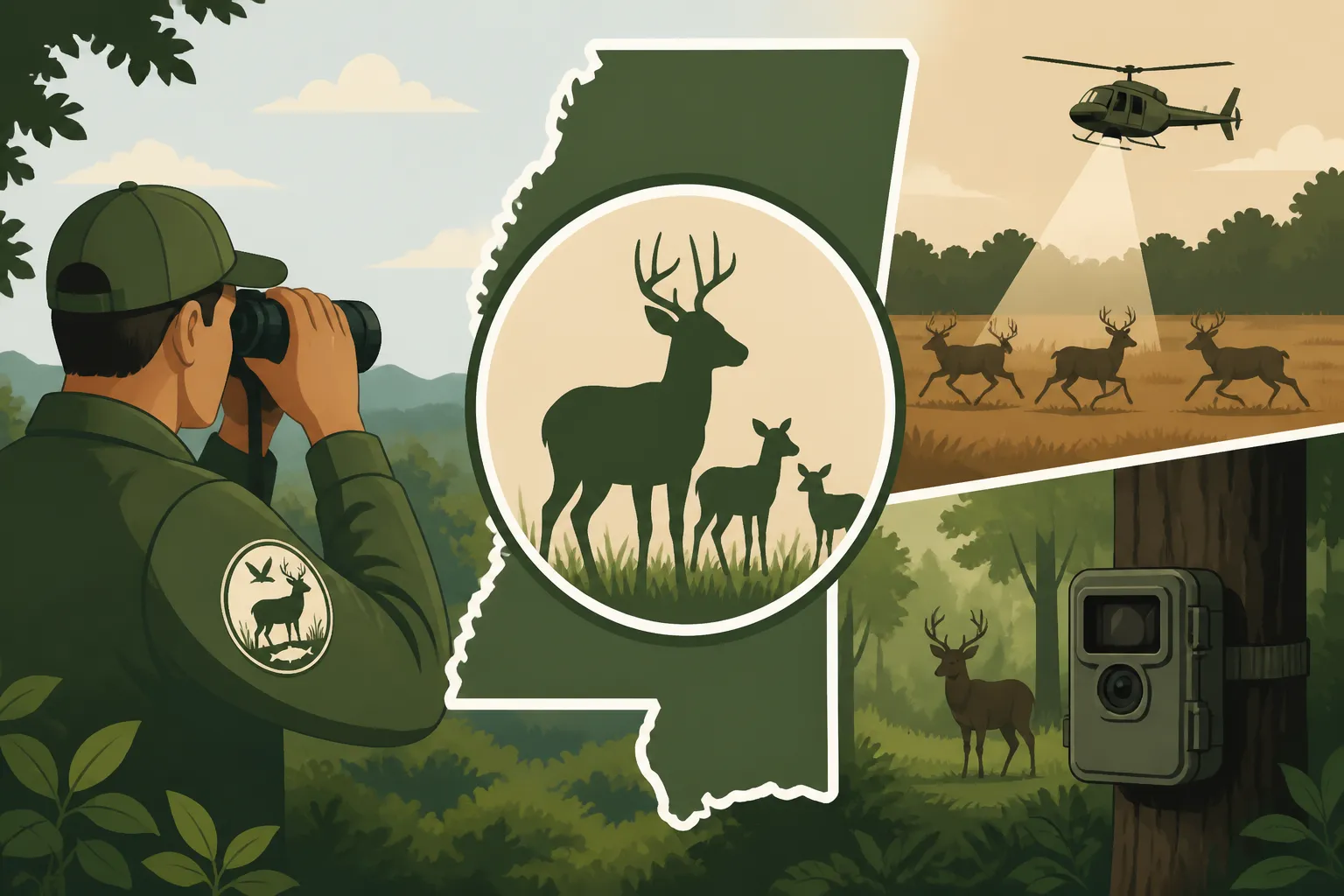
How MDWFP Counts the Mississippi Deer Herd
Trying to get a definitive, real-time headcount of every single white-tailed deer roaming the woods and fields of Mississippi can feel like an impossible task for the average hunter. We all want to know exactly how many deer are out there, where they are, and if the herd is truly growing or shrinking, but the reality of wildlife management is far more nuanced than a simple tally. This guide will pull back the curtain on how the Mississippi Department of Wildlife, Fisheries, and Parks (MDWFP) approaches the complex challenge of assessing our deer herd, detailing the methods they use, the data they collect, and how all of that translates into the hunting seasons and regulations we follow.
The Challenge of Counting Deer in Mississippi
Imagine trying to count every squirrel in your neighborhood. Now, scale that up to millions of acres, throw in dense forests, swamps, and agricultural fields, and make the animals incredibly adept at hiding. That's essentially the monumental task the MDWFP faces when trying to "count" deer. It’s not just about a raw number; it’s about understanding trends, health, and population dynamics.
Why a Precise Headcount is Nearly Impossible
Let's be honest, we'd all love a definitive, GPS-tracked number for every single deer in Mississippi. It would make hunting decisions so much easier, wouldn't it? But the truth is, getting an exact, real-time headcount of every deer is simply not feasible. Mississippi's landscape is incredibly diverse, from the vast, sprawling bottomland hardwoods and cypress breaks of the Delta to the rolling piney woods and rugged hills further east and south. Deer are masters of camouflage, and they're highly mobile, especially during different times of the year, like the breeding season or when foraging for food.
Trying to perform a "census" of deer is akin to counting individual grains of sand on a beach – impossible, expensive, and by the time you're done, the numbers have already changed. They move, they breed, they get harvested, they succumb to natural mortality. A true statewide head-count is a logistical nightmare that wouldn't yield accurate, actionable data even if it were possible to undertake. So, wildlife biologists rely on a different approach: estimating population trends and indices rather than exact figures.
The Dynamic Nature of Deer Populations
Deer populations are not static; they are constantly shifting, influenced by a multitude of factors that are always at play in the natural world. Think of it like a living, breathing ledger where entries are made and erased daily. Birth rates fluctuate depending on habitat quality, acorn crops, and weather patterns. A good spring and summer with abundant forage means healthier does and higher fawn survival rates, which directly impacts the herd's growth potential.
On the flip side, various forms of mortality constantly chip away at the numbers. Predation from coyotes is a common factor, especially for fawns, and while it rarely controls a healthy deer population, it's definitely a consideration. Then there are disease outbreaks, like EHD (Epizootic Hemorrhagic Disease), which can decimate local populations in dry years, or the ever-present concern of Chronic Wasting Disease (CWD). And, of course, the hunter harvest is a significant annual removal from the population, a removal that wildlife managers aim to keep in balance with the herd's ability to reproduce and thrive. All these variables mean that any "count" is merely a snapshot, and the MDWFP's job is to understand the bigger picture and the trends within it.
MDWFP's Primary Deer Herd Assessment Methods
Since an exact headcount isn't feasible, the MDWFP employs a range of scientific methods to estimate population trends, health, and age structures. These methods provide indices and insights that, when combined, paint a comprehensive picture of the statewide deer herd.
Utilizing Hunter Harvest Data
One of the most significant pieces of the MDWFP's deer puzzle comes directly from us, the hunters. Mississippi has a mandatory deer reporting system, where every harvested deer must be reported through the MDWFP app or online portal. This isn't just bureaucratic red tape; it's invaluable data. When all those individual reports are compiled, they create a massive dataset that tells biologists not only the minimum number of deer removed from the population but also provides critical information on sex ratios, harvest locations, and general hunter success.
This annual harvest data is crucial for understanding population trends. If the harvest numbers are consistently increasing in a certain area, it suggests a growing or stable population. Conversely, a declining harvest might indicate a need for more conservative management. The MDWFP analyzes this data, often comparing it to previous years, to track the health and stability of the herd. It allows them to see patterns, such as Mississippi Annual Deer Harvest numbers over time and how they correlate with various management strategies. Understanding these figures is far more practical than trying to count every living deer.
Spotlight Surveys and Transect Counts
Beyond hunter data, the MDWFP conducts more direct observational surveys, primarily through spotlighting. This involves driving designated routes, known as transects, at night, using powerful spotlights to illuminate and count deer. These surveys are often conducted in specific areas, particularly on Wildlife Management Areas (WMAs) or large tracts of national forest, to gather localized data on deer density.
During these surveys, biologists don't just count; they classify the deer they see by sex (buck or doe) and approximate age (fawn, yearling, adult). This provides valuable insights into the herd's composition, fawn recruitment rates, and buck-to-doe ratios in those specific locations. While these aren't statewide counts, they provide a consistent index over time. By running the same routes year after year, the MDWFP can track whether deer numbers are increasing, decreasing, or remaining stable in that particular area. It's a snapshot, but when you compare those snapshots over a decade, a clear trend emerges. These types of localized surveys are vital given the How Many Acres of Public Land Mississippi Has across the state.
Biological Data Collection and Age Structures
When a deer is harvested, it provides a wealth of biological information. MDWFP biologists, and often cooperating taxidermists, collect data points like jawbones for aging deer, antler measurements (spread, points, mass), and body condition assessments. This biological data is incredibly important for understanding the overall health and age structure of the herd.
By aging deer, biologists can determine the Mississippi Buck Age Structure and overall age distribution within the population. A healthy herd typically has a good mix of age classes, not just young deer. Antler measurements provide insights into nutrition and genetics. Furthermore, observations of fawn-to-doe ratios, often estimated during spotlight surveys or through hunter input, help assess fawn survival, a critical component of population growth. If fawn recruitment is low, it's a red flag for future herd numbers. This detailed biological analysis moves beyond simply counting and delves into the quality and vitality of the deer herd.
Public Input and Citizen Science
While scientific surveys and harvest data form the backbone of herd assessment, the MDWFP also understands the immense value of "boots on the ground" observations from Mississippi's hunting community and landowners. After all, who spends more time observing deer patterns than those of us out in the woods?
Hunters often have a keen sense of localized deer populations. They notice changes in deer movement, perceive higher or lower Deer Density by Mississippi Unit, or observe specific buck activity during the rut. Landowners, too, provide invaluable anecdotal evidence about deer presence on their properties, crop damage, and fawn sightings. While not scientifically controlled, this public input can act as an early warning system or corroborate scientific findings, helping biologists identify areas that might need closer examination or specific management actions. It creates a collaborative approach where local knowledge supplements broader scientific data, providing a more complete picture for Scouting Mississippi Public Land Before Season and developing local hunting strategies.
Translating Herd Data to Hunting Management
All this data collection isn't just for academic interest; it directly informs the rules and regulations that govern deer hunting in Mississippi. The MDWFP uses these assessments to craft seasons and bag limits that aim to maintain a healthy, balanced, and sustainable deer population while providing ample recreational opportunities for hunters.
Informing Season Dates and Bag Limits
The MDWFP's diligent work in assessing the deer herd has a direct, tangible impact on how we hunt. The data collected from harvest reports, spotlight surveys, and biological samples guides the decisions made about Mississippi Deer Season Structure Explained including opening and closing dates, and crucially, the bag limits in different parts of the state.
For example, if long-term trends show a robust, growing deer population in a specific management unit, the MDWFP might implement more liberal antlerless deer harvest opportunities to help manage the overall numbers and keep the herd in balance with its habitat. Conversely, if data indicates a decline or a herd facing stress, they might implement more conservative measures, such as reduced antlerless days or shorter seasons, to allow the population to rebound. These decisions are not arbitrary; they are carefully considered attempts to balance hunter opportunity with the ecological needs of the deer herd. Understanding these decisions can even help inform your strategy, whether you're Hunting the Rut in the Delta Unit or elsewhere.
Managing for Herd Health and Quality
Beyond simply managing numbers, the MDWFP strives to manage for herd health and quality. This means fostering a deer population that is resilient, well-fed, and has a balanced age structure, particularly among bucks. Allowing bucks to reach older age classes contributes to healthier breeding, better genetics, and, let's be honest, bigger antlers for those who are looking for them.
This management philosophy often leads to specific regulations, such as antler restrictions, which vary by unit. For instance, the Delta Unit Antler Restriction Rules mandate a 12-inch main beam spread or a 15-inch outside spread to be considered a legal buck. These rules are designed not to punish hunters, but to protect younger bucks and allow them to mature, thereby improving the overall age structure and genetic potential of the buck population. While these rules sometimes spark the Mississippi Deer Antler Restrictions Debate, they are a direct result of data indicating the benefits of allowing bucks to age. Hunters often use tools like GoHunt to visualize unit boundaries and ensure they are adhering to these specific regulations while planning their hunts.
Addressing Specific Challenges Like CWD
One of the most pressing modern challenges in deer management is Chronic Wasting Disease (CWD). The MDWFP's ability to monitor, assess, and manage the deer herd is absolutely critical in addressing this insidious disease. Knowing deer densities and understanding movement patterns allows biologists to establish Mississippi's Chronic Wasting Disease Zones, implement mandatory testing protocols, and enforce carcass movement restrictions.
The goal here isn't just to count infected deer, but to understand the prevalence and spread of the disease. By continuously monitoring harvest numbers, conducting CWD testing at sampling stations, and analyzing deer movements, the MDWFP attempts to slow the spread of CWD and minimize its long-term impact on the herd. It's a stark reminder that herd management isn't just about hunter opportunity, but also about protecting the long-term viability and health of Mississippi's cherished white-tailed deer population. This data helps hunters understand why certain areas may have different regulations or require specific actions, such as mandatory testing of harvested deer.
| MDWFP Deer Assessment Method | Primary Purpose | Key Data Collected | Impact on Hunters |
|---|---|---|---|
| Hunter Harvest Data | Tracks annual harvest, population trends. | Number of deer harvested, sex ratio, location, success rates. | Informs bag limits, season length adjustments, and unit-specific regulations. Mandatory reporting is required. |
| Spotlight Surveys | Estimates localized deer density and composition. | Deer observed, buck/doe/fawn ratios, spatial distribution. | Helps MDWFP understand localized population health and pressure; influences WMA specific rules. |
| Biological Data | Assesses herd health, age structure, nutrition. | Jawbones (aging), antler measurements, body condition, fawn recruitment rates. | Dictates antler restriction rules (e.g., Delta Unit spread rules) to promote older age classes and better genetics. |
| Public Input/Citizen Science | Supplements scientific data, identifies localized issues. | Hunter observations, landowner reports, anecdotal evidence. | Provides valuable localized context, can highlight emerging issues or validate trends observed through scientific methods. |
| CWD Surveillance | Monitors disease prevalence and spread. | CWD test results from harvested deer, localized infection rates. | Establishes CWD Management Zones, mandatory testing, carcass transport restrictions in affected areas. Protects long-term herd health. |
Disclaimer
This article is for general informational purposes only and does not constitute professional advice. Laws, prices and regulations vary by location and change over time. Consult a qualified professional for guidance on your specific situation.