DeSoto National Forest Hunting
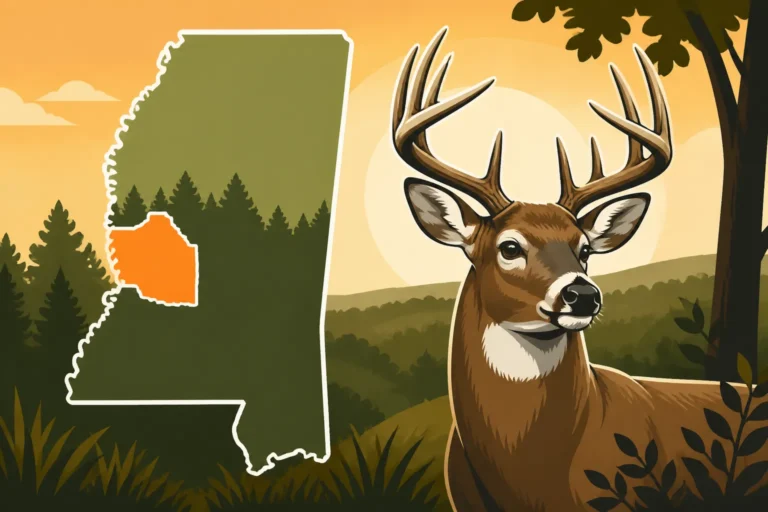
For many Mississippi hunters, the sheer vastness and unique terrain of the DeSoto National Forest can feel like both an opportunity and a puzzle. Spanning massive tracts across the southern part of our state, it offers incredible public land access, but it's not the same kind of hunting you'd find in a Delta bottomland or even the rolling Hills Unit. Hunters often struggle to adapt their tactics to its distinct pine forests and open savannas, leading to frustration when familiar methods don't quite pan out. This guide aims to demystify hunting in DeSoto National Forest, providing strategies and insights to help you unlock its potential, from chasing whitetails and gobblers to managing feral hogs, and making sure you're prepared for this one-of-a-kind outdoor experience.
Understanding DeSoto National Forest as a Hunting Destination
DeSoto National Forest isn't just another patch of woods; it's a unique ecological treasure that demands a different approach from hunters. Spanning hundreds of thousands of acres across southeastern Mississippi, it’s characterized by vast stretches of longleaf pine, wiregrass, and savannahs, interspersed with hardwoods along creek bottoms. This landscape is a stark contrast to the thick, fertile bottomlands of the Delta or the dense mixed hardwoods of the northern hills. Understanding this fundamental difference is the first step to hunting it successfully.
The Unique Landscape of DeSoto
When you first step into DeSoto, especially in a managed longleaf pine stand, you might be struck by how open it feels compared to other forests in Mississippi. The mature longleaf pines stand tall, often widely spaced, with a relatively clear understory dominated by wiregrass and various forbs. This openness is a result of historical forest management, including prescribed burning, which mimics the natural fire regimes that shaped this ecosystem for centuries. These fires prevent dense brush from taking over, promoting the growth of native grasses and wildflowers that are crucial for many wildlife species.
However, it's not all open pine. Within the broader forest, you'll find significant variations. There are pockets of denser pine plantations, where trees were planted more closely, creating thick cover. More importantly, along the numerous creeks and drainages that crisscross DeSoto, you'll discover transitional zones and bottomland hardwood stringers. These areas, often protected from frequent burning due to their moisture, offer a completely different habitat – denser canopy, more varied mast production, and thicker undergrowth. Game animals will utilize these different habitats for food, bedding, and travel, and understanding how they connect is key to your success.
Navigating Hunting Regulations and Seasons
Hunting in DeSoto National Forest generally falls under statewide Mississippi Department of Wildlife, Fisheries, and Parks (MDWFP) regulations, but with some crucial overlays specific to National Forests and potentially individual Wildlife Management Areas (WMAs) located within or adjacent to the forest boundaries. It’s absolutely vital to consult the current MDWFP Outdoor Digest each season, paying close attention to the “Special Regulations for National Forests” section. This isn't just about general season dates for Mississippi Deer Season Structure Explained or Mississippi Spring Turkey Season Rules; it’s about specific rules regarding hunting methods, vehicle access, camping, and even antler restrictions that might apply to portions of the forest.
For instance, while a general statewide deer season might allow certain firearms, a specific WMA within DeSoto could have archery-only or primitive weapon-only restrictions for certain periods. Some areas might have specific rules about when you can scout or hang stands. Blaze orange requirements are non-negotiable during gun seasons, but it's always wise to wear some form of high-visibility clothing, even during archery season, especially on public land that sees a lot of activity. Before you even think about setting foot in the woods, make sure you've thoroughly reviewed the most up-to-date regulations for DeSoto National Forest itself and any specific areas you plan to hunt within its expansive boundaries.
Accessing and Understanding the Forest's Layout
DeSoto National Forest is immense, a sprawling patchwork of federal land interwoven with private tracts, county roads, and forest service roads. Just looking at a static map can be daunting. The network of roads, some paved, many gravel or dirt, is extensive but can be confusing, especially if you're not familiar with the area. It's easy to get turned around, and cell service can be spotty to non-existent in many of the deeper sections. This is where modern mapping technology becomes not just a convenience, but a necessity.
Investing in a good digital mapping application, like onX Hunt or GoHunt, is highly recommended. These platforms allow you to download maps for offline use, showing property lines, forest service roads, topographic contours, and even aerial imagery. You can mark waypoints for your vehicle, stand locations, and game sign, ensuring you can navigate confidently and find your way back out, even in the dark. Without such a tool, you might find yourself limited to hunting areas right off the main roads, which often receive the heaviest pressure. Understanding the layout also means identifying potential access points that might require a bit of a walk, but could lead you to less disturbed areas where game feels more secure.
Hunting White-Tailed Deer in DeSoto National Forest
Deer hunting in DeSoto National Forest is a different ballgame compared to the rich agricultural lands of the Delta or the oak-filled ridges of the Hills. Here, success hinges on understanding how deer utilize the unique pine forest environment, adapting your scouting, and employing tactics that leverage the open nature of the woods while capitalizing on the pockets of dense cover. It's often about covering ground and being patient, rather than sitting over a single, obvious food plot.
Key Deer Habitat and Movement Patterns
In DeSoto's vast pine forests, deer aren't necessarily congregating in massive numbers around sprawling food plots like on private land. Instead, they are more dispersed, making a living off the natural browse, forbs, and acorns when available. The longleaf pine savannas, maintained by prescribed fire, offer diverse undergrowth that provides forage throughout the year, but deer tend to browse selectively. Look for areas where fire has recently passed, as the new growth that emerges is highly palatable. Creek bottoms and transitional areas that hold more hardwoods will be crucial for acorn production during fall, and deer will key in on these mast crops when they're dropping.
Bedding areas are often found in thicker pine plantations or dense brush pockets that have escaped recent burns, providing thermal cover and security. Deer will typically move between these bedding areas and preferred feeding zones along subtle travel corridors, often defined by changes in elevation, natural funnels formed by creek bends, or even slightly denser strips of cover within the more open pines. Learning to identify these subtle transitions and pinch points will be far more productive than simply walking aimlessly through the woods. Understanding Hunting the Piney Woods Region is paramount.
Strategies for Success in Pine Savannas
Given the often-open nature of the pine savannas, still-hunting can be a highly effective strategy in DeSoto. This involves moving slowly and deliberately through the woods, stopping frequently to glass ahead, listen, and scrutinize every shadow for the tell-tale horizontal line of a deer. The quiet, sandy soil underfoot in many areas can make silent movement easier than in leaf-littered hardwoods. Focus on moving into the wind, constantly scanning the terrain, and being ready to stop and set up if you spot movement or fresh sign. This active approach allows you to cover more ground and increase your chances of encountering a deer that might be browsing or moving through.
When it comes to stationary hunting, traditional treestand setups still have their place, but they might need to be adapted. Instead of focusing solely on trails, look for strategic vantage points overlooking larger areas of good browse, or a funnel leading to a creek bottom where deer might water or cross. Setting up on the edge of a thick pine bedding area, where it transitions into a more open feeding zone, can be productive. Since deer are often more dispersed, patience is crucial. Don't expect to see dozens of deer; instead, focus on making the most of the opportunities that present themselves. Scouting ahead of time, using mapping tools to identify potential travel corridors, and looking for subtle sign like rubs and scrapes will help you narrow down your stand locations.
Equipment and Tactics for the Terrain
Hunting DeSoto means thinking about gear that suits its unique environment. Lighter gear is often preferable, especially if you plan to cover significant ground with still-hunting or scouting. Good, comfortable boots are a must for navigating the varied terrain, from sandy flats to creek crossings. Since the woods can be quite open, quality optics – binoculars and perhaps even a spotting scope if you're glassing clear-cuts or distant savannas – will give you an edge in spotting deer before they spot you. The ability to see movement at a distance, particularly in the longer lines of sight offered by managed pine stands, is invaluable.
Scent control remains paramount, even in the open woods. While wind currents might carry your scent farther, the open nature can also mean deer might be downwind of you without much visual obstruction. Playing the wind correctly and diligently managing your scent is always a good practice. Given Mississippi's often warm early seasons, hydration is critical; always carry more water than you think you'll need. Don't forget bug spray, especially for ticks, which are abundant in the piney woods. Finally, having a reliable compass or a fully charged GPS/mapping device (like onX Hunt with offline maps) is non-negotiable for navigating large blocks of public land where distinguishing one pine stand from another can be a real challenge, particularly when Finding Mississippi Property Lines.
Pursuing Wild Turkeys in DeSoto's Forests
Turkey hunting in DeSoto National Forest offers a truly classic experience, with gobblers echoing through the open pine savannas. It’s a pursuit that tests your woodsmanship, patience, and calling skills, often requiring you to cover ground and adapt to the behavior of birds that are very much wild and can be pressured. The rewards, however, are immense, as a tom strutting across a wiregrass flat with the scent of pine in the air is an unforgettable sight.
Locating Gobblers in the Longleaf Pines
Finding turkeys in DeSoto's expansive longleaf pine ecosystem often starts with listening. Gobblers love to sound off from their roosts in the mornings, especially on calm, clear days, and the open nature of the pine stands allows that sound to travel. Focus your early morning efforts on listening for those initial tree yelps and gobbling from prominent roost trees, which are often taller pines or hardwoods along creek drainages that provide good visibility. Once a bird is located, you'll want to move quickly and strategically to get into a good setup position.
Beyond roost locations, identify potential strutting zones. These are typically open areas with good visibility, often wiregrass flats, logging roads, or small clearings within the pine savannas where gobblers feel safe displaying for hens. Food sources, like insects, seeds, and acorns (when available in hardwood pockets), will also draw birds. Pay attention to fresh scratching in the leaf litter or pine needles. A good strategy is to combine listening for gobblers with scouting for fresh sign – droppings, tracks, and dusting bowls – which will give you clues about where the birds are spending their days. Understanding Roost Hunting Mississippi Gobblers can definitely boost your success.
Run-and-Gun Tactics and Decoy Use
The open and expansive nature of DeSoto makes it an ideal environment for run-and-gun turkey hunting. This aggressive tactic involves moving through the woods, stopping frequently to call, and then quickly relocating if you don't get a response or if a bird sounds off from a distance. You're covering ground, listening for those subtle gobbler responses, and trying to intercept birds as they move through their daily routine. The relatively clear understory allows for quieter movement and faster repositioning once a bird is located.
Decoy use can be highly effective in DeSoto, especially in those open strutting zones. A single hen decoy or a jake/hen combination can draw a curious gobbler across a significant distance in the open pine. Place your decoy in a spot that offers good visibility from where you expect the bird to approach, and make sure your setup provides good cover for yourself. Be mindful of setting up against a tree that's wider than your shoulders to protect your back. While the run-and-gun is effective, don't be afraid to hunker down in a promising area and make frequent, subtle calls if you know birds are in the vicinity but aren't actively gobbling.
Challenges and Rewards of DeSoto Turkey Hunting
Hunting turkeys in DeSoto National Forest comes with its own set of challenges. Public land turkeys are often more pressured and can be notoriously call-shy. They've heard it all, and they've been hunted before. This means you need to be patient, subtle in your calling, and willing to put in the legwork to find birds that haven't been constantly harassed. Early in the season, before the birds are heavily pressured, can be a great time, but as the season progresses, you'll need to work harder and be more adaptable.
The sheer size of DeSoto can also be a challenge, requiring extensive scouting and a willingness to explore new areas. Don't get discouraged if you don't hear gobblers on your first few attempts. Keep moving, keep listening, and keep exploring. The rewards, however, are unparalleled. The thrill of a DeSoto gobbler sounding off, working its way through the pines, and strutting into view is a truly wild and authentic experience. Success here isn't just about bagging a bird; it's about the satisfaction of outsmarting a wary tom in a beautiful, natural setting.
Feral Hogs, Small Game, and Other Opportunities
While deer and turkey often get top billing, DeSoto National Forest offers a wealth of other hunting opportunities. From the ever-present challenge of feral hogs to the simple pleasures of small game hunting, there’s always something to pursue, making it a year-round destination for dedicated outdoors enthusiasts.
Managing the Feral Hog Population
Feral hogs are a significant presence throughout DeSoto National Forest, as they are across much of Mississippi. They cause extensive damage to the natural ecosystem, rooting up sensitive habitats and competing with native wildlife for food. Because of this, Mississippi's Year-Round Hog Rule on Private Land generally extends to public lands as well, often allowing year-round hunting without bag limits during daylight hours. This provides a continuous opportunity for hunters to help manage this invasive species.
Still-hunting hogs, much like still-hunting deer, can be effective in DeSoto. Look for signs of rooting, wallows, and fresh tracks, especially along creek bottoms and in areas with soft, sandy soil. Hogs often travel and feed in groups, or "sounders," so if you find recent sign, you're likely in a productive area. Night hunting with lights is often permitted on private land, but check specific WMA rules for DeSoto, as restrictions may apply to certain methods on public property. Baiting is also a common tactic for hogs on private land; again, always verify the specific regulations for DeSoto National Forest regarding baiting before deploying any. Hunting hogs offers both a thrilling experience and a valuable service to the forest's ecology.
Squirrel and Rabbit Hunting in Diverse Habitats
DeSoto National Forest is a fantastic place for traditional small game hunting, particularly squirrels and rabbits. While the vast pine stands might seem less ideal at first glance, the hardwoods found along creek bottoms and in mixed forest sections are prime squirrel habitat. Look for mature oak, hickory, and sweetgum trees, especially in draws and ravines that retain more moisture. Early season squirrel hunting, before the leaves fall, requires sharp eyes and patience, but as the canopy thins, spotting them becomes easier. Moving slowly and listening for their chatter or the rustle of leaves as they forage will lead you to success. Squirrel and Small Game Hunting in Mississippi is a timeless tradition here.
For rabbits, focus on the denser pockets of brush, brambles, and clear-cut regrowth that provide both food and escape cover. The edges where pine stands meet a thicker understory, or fencerows (if hunting near private land boundaries, with permission), can be hot spots. A good dog can dramatically increase your success for rabbits, as they excel at pushing cottontails from dense cover. Even without a dog, systematically working through brushy areas can yield opportunities. Rabbit and Upland Hunting in Mississippi in DeSoto offers a chance to experience the forest at a different pace, providing engaging hunts and delicious table fare.
Predator Hunting and Other Game
For those interested in predator hunting, DeSoto National Forest offers opportunities for coyotes and bobcats. Coyotes are prevalent throughout the forest, always on the lookout for food. Calling tactics, especially during the colder months when food sources might be scarcer, can be effective. Setting up near clearings, logging roads, or areas with good sightlines and broadcasting distress calls can bring in curious predators. Bobcat hunting is also possible, though these elusive felines are far more challenging to locate and call in. Their presence is a good indicator of a healthy ecosystem, and pursuing them offers a unique hunting challenge. Be sure to check all regulations for predator hunting, including seasons and legal methods. Predator Hunting in Mississippi can be a great way to extend your time in the woods after deer and turkey seasons close.
Essential Preparation and Safety for DeSoto Hunts
Hunting in DeSoto National Forest is an adventure, but like any outdoor endeavor, it demands thorough preparation and a strong emphasis on safety. Its expansive nature and often remote sections mean you need to be self-reliant and ready for anything. Don't underestimate the forest; respect its size and its challenges.
Mapping, Navigation, and Staying Found
The number one rule for hunting DeSoto National Forest is to know where you are and how to get back. The forest can be disorienting, with similar-looking pine stands stretching for miles. Relying solely on your memory or faint trails is a recipe for trouble. As mentioned, digital mapping tools like onX Hunt or GoHunt are indispensable. Download your maps for offline use before you leave home, as cell service can be nonexistent deep in the woods. Mark your truck, your stand, and any key landmarks. Use the tracking feature to record your path, which can be a lifesaver if you get turned around.
Beyond digital tools, always carry a physical map and a compass, and know how to use them. Electronics can fail, batteries die, and satellite signals can be blocked. Having a backup is critical. Before you head into a new area, study the topography, identify major drainages, roads, and any distinctive features that can serve as natural waypoints. Tell someone where you're going and when you expect to return. Being prepared to navigate confidently, even in adverse conditions or the dark, is a fundamental aspect of safe public land hunting in DeSoto. Scouting with Reading Aerial Photos for Hills Unit Deer principles can also apply to DeSoto to help you understand the landscape.
Understanding Forest Rules and Regulations
Just because it's public land doesn't mean it's a free-for-all. DeSoto National Forest has specific rules that apply beyond general MDWFP hunting regulations. These might include rules on vehicle use (some roads may be closed seasonally or permanently), camping restrictions, and the use of trail cameras. For instance, while trail cameras are generally allowed, there might be regulations about how they are affixed to trees or how long they can be left. Trail Camera Rules on Mississippi Public Land are important to review.
Ethical hunting practices are always paramount. This includes proper game retrieval, respectful interaction with other users of the forest (hikers, campers, other hunters), and leaving no trace. Never litter, and always pack out everything you pack in. Familiarize yourself with Mississippi Hunter Education Requirements even if you are exempt due to age, as it promotes responsible hunting practices. Being a good steward of the land ensures that these valuable public resources remain open and accessible for future generations.
Dealing with Wildlife Encounters and Environmental Challenges
DeSoto National Forest is home to a diverse array of wildlife, and not all of it is game. Be prepared for potential encounters with venomous snakes (like rattlesnakes and cottonmouths), especially during warmer months. Wear appropriate footwear, watch where you step, and avoid reaching into dense brush or under logs without checking first. Ticks are also abundant, so use repellents, wear long pants tucked into your boots, and check yourself thoroughly after every hunt.
The weather in Mississippi, particularly in the southern part of the state, can be unpredictable and intense. Early season hunts can be very hot and humid, increasing the risk of heat exhaustion. Carry plenty of water, wear lightweight clothing, and recognize the signs of heat stress. Thunderstorms can roll in quickly, bringing heavy rain and lightning, so keep an eye on the forecast and know where to seek shelter. Hunting in remote areas means you might be a long way from immediate help, so always carry a basic first-aid kit, a fully charged phone (even if service is spotty), and signaling devices like a whistle. Preparation for these environmental challenges is just as important as knowing your game and your regulations.
Choosing Your DeSoto National Forest Hunting Experience
DeSoto National Forest isn't a monolith; it offers a diverse range of hunting experiences depending on the specific areas you choose to explore. From the deeply wild, remote tracts to areas with more developed access, understanding these differences can help you tailor your hunt to your preferences and skill level.
North Zone vs. South Zone Differences
While DeSoto is one continuous national forest, it does span across multiple counties in south Mississippi, and subtle regional differences can exist. The northern sections might see slightly different hunting pressure patterns, or variations in timber management practices that create different habitat mosaics. For example, some areas might have a higher density of younger pine plantations, offering thicker cover, while others might feature older, more mature longleaf stands with open understories. The MDWFP often divides the state into different units for deer management, and depending on which county your chosen section of DeSoto falls into, you might be subject to slightly different season dates or bag limits. Always consult the specific regulations for the county you plan to hunt within the forest.
These regional distinctions can also influence game behavior. Deer in more heavily pressured areas might be more nocturnal or stick to the densest cover, requiring a more stealthy and patient approach. Turkeys might be more responsive to calling in less-traveled areas. Doing your homework on the specific section of DeSoto you plan to visit, including talking to local forest service personnel or MDWFP biologists, can provide invaluable insights into these localized nuances.
Popular Access Points and Remote Hunting Opportunities
DeSoto National Forest has numerous named access points, including recreation areas, campgrounds, and boat launches that also serve as entry points for hunters. Areas near these more developed sites tend to see higher hunting pressure, especially on opening weekends. These might be convenient, but they often mean competing with more hunters for the same game. If you're looking for a more solitary experience, or for less pressured animals, you'll need to be willing to walk further from designated parking areas.
This is where your mapping tools and physical fitness come into play. Many hunters avoid walking more than a mile or two from their vehicle. By pushing deeper into the forest, even just a half-mile further than the average hunter, you can often find vastly different hunting conditions. Look for sections of the forest that are landlocked by private property with limited public access points, forcing hunters to walk significant distances. These remote pockets within DeSoto can hold older, less disturbed animals. Using the satellite imagery on onX Hunt or GoHunt to identify deep woods tracts with minimal road access is a great strategy for uncovering these hidden gems.
Understanding WMA Overlays and Special Hunts
It's important to remember that certain Wildlife Management Areas (WMAs) are either contained within or border DeSoto National Forest. These WMAs, such as Leaf River WMA or Black Creek WMA, have their own specific regulations and sometimes separate hunt dates, bag limits, or even quota hunts. You might need a WMA permit in addition to your regular hunting license if you plan to hunt within one of these designated areas. Mississippi WMA Permit Requirement is crucial here.
Quota hunts, which require an application and draw, are sometimes implemented on WMAs to manage pressure and populations, offering a unique opportunity for a less crowded experience if you are drawn. Always double-check if your intended hunting grounds are part of a WMA and familiarize yourself with those specific rules. Ignoring these overlays can lead to unintentional violations. Being aware of the boundaries and specific regulations for any WMA within DeSoto is just as important as understanding the broader national forest rules themselves.
| Feature / Aspect | DeSoto National Forest (Piney Woods) | Mississippi Delta Bottomlands (Example: Delta National Forest) |
|---|---|---|
| Primary Habitat | Longleaf pine savannas, wiregrass, some mixed pine/hardwood, creek bottoms | Dense bottomland hardwoods, cypress/tupelo swamps, oxbow lakes, sloughs |
| Dominant Tree Types | Longleaf pine, loblolly pine, various oaks along waterways | Water oaks, willow oaks, overcup oaks, sweetgum, cypress, tupelo |
| Understory | Often open with wiregrass, palmetto, low shrubs (due to fire) | Dense cane, privet, greenbrier, thick brush |
| Deer Density | Moderate, often dispersed, good browse in managed areas | High, often concentrated around specific food sources |
| Deer Antler Rules | Follows statewide Hills/Southeast Unit rules (e.g., 10" spread or 3 pts) | Delta Unit specific (e.g., 12" spread or 4 pts on one side) |
| Turkey Habitat | Open pine stands for strutting, creek bottoms for roosting | Hardwood ridges, field edges, timber breaks |
| Feral Hog Presence | Widespread and common | Widespread and common, often in swamps and field edges |
| Navigation | Extensive network of forest service roads, can be disorienting | Grid of logging roads, sloughs, and water bodies can be challenging |
| Physical Demands | Often requires extensive walking, quiet movement on sandy soil | Can involve wading, dense brush, dealing with mud and water |
| Scouting Focus | Recent burns, creek bottoms, natural funnels, transition zones | Mast crops, bedding thickets, pinch points between water/cover |
| Primary Game | Deer, Turkey, Hogs, Squirrel, Rabbit, Predators | Deer, Turkey, Hogs, Waterfowl, Squirrel, Rabbit, Predators |
Disclaimer
This article is for general informational purposes only and does not constitute professional advice. Laws, prices and regulations vary by location and change over time. Consult a qualified professional for guidance on your specific situation.