Early Goose Season Tactics in Mississippi
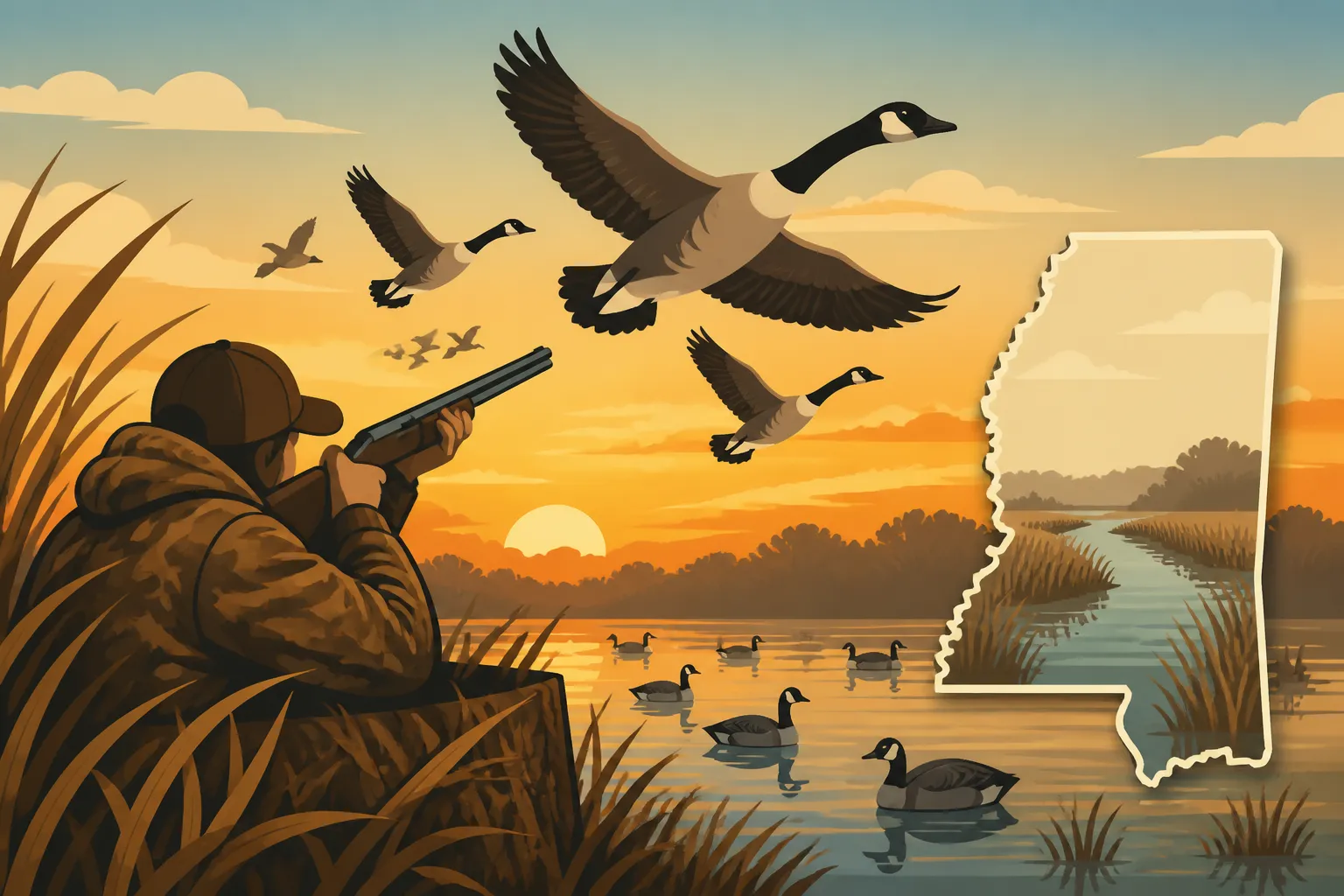
Early goose season in Mississippi offers a unique challenge and a fantastic opportunity to kick off your waterfowl hunting without the biting cold of deep winter. But let's be real, those early birds aren't always easy to fool. They haven't been shot at much, which can make them a little less wary, but they're also scattered, often tucked away in fields you'd never expect. This guide is going to walk you through exactly how to pinpoint those early season honkers, set up effectively, and fill your strap before the main duck season even begins.
Understanding Early Goose Season Dynamics in Mississippi
The early goose season in Mississippi is a beast of its own, distinct from the late fall and winter migrations. It's usually a short window, often in September, designed primarily to harvest local resident Canada geese before the big push of migratory birds floods into the state. This timing means you're dealing with different bird behaviors, different food sources, and often, much warmer weather.
Key Dates and Regulations for Early Season
It's absolutely crucial to check the current Mississippi Department of Wildlife, Fisheries, and Parks (MDWFP) regulations every single year, as dates can shift slightly. Generally, the early goose season for Canada geese kicks off in early September and runs for a couple of weeks. This is usually before the main duck and goose seasons, which often have their own Mississippi Duck Zone Split Rules.
For instance, across most of Mississippi, you're looking at a specific set of dates where you can pursue Canada geese. The bag limits are typically generous during this early period, often higher than the regular season, precisely because the goal is to manage the resident population. You'll need your basic Mississippi hunting license, a Mississippi Migratory Bird Stamp, and your Federal Duck Stamp. Don't forget your HIP certification, either. Without these in order, you're just driving around looking at geese, not hunting them. Understanding the specific Mississippi Goose Season Dates is your first step to success.
Identifying Target Species and Their Early Behaviors
During the early season, your primary target in Mississippi will be resident Canada geese. These are birds that have spent their entire lives here, or at least the past nesting season. They haven't experienced the intense hunting pressure that their northern cousins will have faced by the time winter rolls around. This can make them a little more forgiving, but it doesn't mean they're dumb.
These local Canada Geese on Mississippi Farmland are creatures of habit. They'll establish consistent flight patterns between roosting lakes, ponds, or large rivers, and their preferred feeding fields. Unlike later in the year when large migratory flocks might use major waterways like the Mississippi River as travel corridors, early season birds are often found in smaller, more intimate groups. You might see families still grouped together, or smaller bachelor flocks. Their feeding preferences will also reflect what's available and ripe in late summer: recently cut wheat fields, short-cut pastures, and even early-season cornfields before or during harvest.
Why Early Season Tactics Differ From Peak Season
The differences in early season goose hunting compared to the traditional peak season are significant and ignoring them will lead to frustration. First, the weather is often still warm, sometimes uncomfortably so. This affects both the hunter (you'll need lighter clothing, plenty of water) and the birds (they might feed at different times of the day, perhaps early morning and late evening, and loaf around water during the heat).
Second, the habitat utilization is different. In November and December, geese might be hitting flooded timber or massive agricultural fields in the Delta, but in September, they're often concentrated on smaller, drier fields closer to their summer breeding grounds. Their diet is also transitioning from summer greens to early grains. Finally, the lack of widespread hunting pressure means these birds are generally less "call-shy" and "decoy-shy." You might not need massive spreads or intricate calling sequences, but rather a more subtle, realistic approach to fool them.
Scouting for Success: Finding Those Early Birds
You can't shoot geese where they ain't, and this old saying holds especially true for early goose season. These birds are spread out, and their patterns are based on local food and water, not continental migration routes. This means scouting isn't just helpful; it's absolutely non-negotiable for consistent success. You need to put in the windshield time, often before the season even opens.
Pre-Season Reconnaissance and Identifying Key Areas
Long before opening day, dedicate time to driving county roads and observing geese. This isn't just about finding birds; it's about understanding their habits. Look for fields where geese are actively feeding, especially during the morning and late afternoon. Pay attention to the types of fields: newly mown hayfields, cut wheat or oat stubble, or even patches of green grass coming up after a rain in a harvested field.
Using digital tools like GoHunt can be invaluable here. Before you even hit the road, you can pull up satellite imagery and mark potential feeding fields, large ponds, or stretches of river that might serve as roosts. Then, confirm these spots in person. Remember, finding geese on the ground is good, but finding where they want to be when you're set up is even better. Don't be afraid to put some miles on your truck a week or two out. This pre-season work will save you countless hours and frustrations once the short season actually begins. This is an extension of effective Scouting Mississippi Public Land Before Season, even if you're hunting private land.
Locating Roosts, Flight Paths, and Food Sources
Geese are creatures of habit, and during the early season, these habits are often more predictable. Their daily routine typically involves flying from a safe roosting area (a large body of water like a lake, wide river, or even a big farm pond) to a feeding field, then returning to the roost, sometimes with a midday loafing period on water.
To identify roosts, look for large, undisturbed water bodies where geese congregate in the late evening or early morning. Once you've found a roost, observe their flight paths. Are they flying low over a particular tree line? Following a creek? This "X-factor" — the exact spot where they want to land in a field — is what you're trying to find. Using a GoHunt app on your phone, you can drop pins on feeding locations, mark potential flight corridors, and even note the time of day you observe geese in a certain area. This data will be gold when it comes time to choose your setup spot. It's not just about the field; it's about where in that field they want to be, and how they get there.
Reading the Landscape: What Geese are Eating Early On
Unlike the winter months when corn and soybeans dominate the diet of migratory waterfowl, early season geese in Mississippi are often more opportunistic. Pay close attention to agricultural practices in your area. Recently harvested wheat fields, where geese can glean leftover grains, are prime targets. Also, look for fields of newly planted winter wheat or rye grass, as the fresh green shoots are highly attractive to geese.
Pastures and hayfields that have been recently cut, allowing tender new growth to emerge, can also be goose magnets. Sometimes, geese will even target soybeans that are still green but beginning to harden, or they might frequent cut silage fields. The key is to notice which fields the geese in your area are using. Every region, even within Mississippi, can have slightly different agricultural cycles. A good rule of thumb is to look for fields with low-lying vegetation where geese can easily graze and have an unobstructed view for security.
Decoy Spreads and Calling Strategies for Early Geese
Once you've done your homework and found the geese, the next step is to convince them that your spread is where they want to be. Early season tactics for decoys and calling are often simpler and more subtle than what you might employ during the peak of migration.
Tailoring Decoy Spreads for Less Pressured Birds
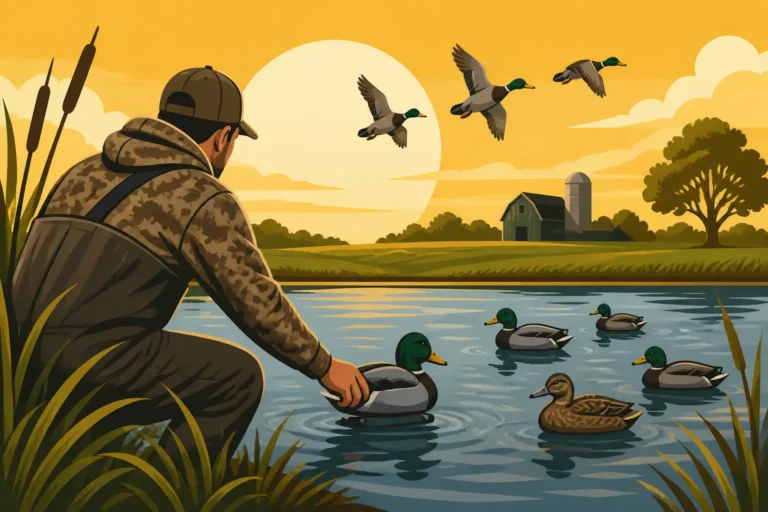
For early season Canada geese, "less is more" can often be the mantra for your decoy spread. You don't necessarily need hundreds of decoys. A smaller, realistic spread of a dozen to two dozen full-body or shell decoys can be incredibly effective. The goal is to mimic a small, contented flock.
Focus on realism in your spread. Include a mix of feeding, sentry, and resting postures. Spreading them out a bit more than you might in later season can make the flock look natural and unpressured. If you have a few specialized decoys, like a pair of "looker" or "caller" decoys set slightly apart, they can add to the illusion. You might even consider throwing out a few dark-colored rags or silhouettes if you're on a budget, but full-bodies really sell the scene. Since geese are often in family groups or smaller clusters, a tighter, more intimate spread can be more convincing than a massive, sprawling one.
Here’s a simple table to illustrate common early season decoy setups:
| Decoy Type/Posture | Quantity (Dozens) | Placement Strategy | Notes |
|---|---|---|---|
| Full-Body Feeders | 1-2 | Scattered in small clusters, facing varied directions | Mimics a natural feeding flock, primary draw |
| Full-Body Sentries | 2-4 individual | On the downwind side or edges of the spread | Alert birds providing security, facing outward |
| Full-Body Resters | 1-2 individual | Near the center or slightly off to the side | Adds realism, indicates contentment |
| Shell/Silhouettes | 1-2 (optional) | Outer edges to expand perceived size, or filler | Economical way to add bulk, less realistic up close |
Effective Calling for Less Wary Geese
With less pressured birds, over-calling is often worse than under-calling. These geese haven't been bombarded by aggressive calling, so a natural, confident approach is best. Start with soft greeting calls – a few deep honks to get their attention if they're distant. Once they turn, switch to softer clucks and murmurs, mimicking contented feeding birds.
Don't be afraid to let them work. If they're locked up and coming in, often the best call is no call at all. Let your decoys do the work. If they start to waver or seem like they're going to sail past, a soft comeback call or a series of clucks can sometimes pull them back into range. Experiment with various calls, but always err on the side of subtlety during the early season. Many seasoned hunters will tell you that the softest calls often bring in the most wary birds.
Concealment and Hiding Strategies in Early Season Fields
Geese have incredible eyesight, and during the early season, natural cover in agricultural fields might not be as dense as it is later in the year. This makes concealment paramount. Layout blinds are your best friend here, especially when you're hunting a cut field or open pasture. Ensure your blind is well-brushed in with local vegetation – cut stubble, grass, or whatever is growing around your setup. The goal is to make it disappear into the field. If you’re hunting a standing crop field, consider natural vegetation breaks, ditches, or fencerows.
When selecting your spot, always consider the sun's position. Try to set up with the sun at your back, blinding incoming geese and allowing you to see them clearly. Also, think about the wind direction. Geese, like most waterfowl, prefer to land into the wind. Set your decoys so that incoming birds will face the wind and land comfortably within shotgun range, ideally right in your sweet spot in front of your blind. You can read more about Layout Blind Hunting a Cut Cornfield to perfect your concealment.
Essential Gear and Practical Considerations
Being prepared for the unique conditions of early goose season in Mississippi is key. From what you carry to how you carry it, a little forethought goes a long way.
Must-Have Gear for Early Season Success
Your gear list for early goose season might look a little different than your mid-winter setup. Here’s a rundown of the essentials:
- Shotgun: A reliable 12-gauge shotgun is the standard. Make sure it's clean and patterned well with your chosen load.
- Ammunition: Steel shot is mandatory for waterfowl. For Canada geese, 3-inch or 3.5-inch shells with BB or 1-shot are popular choices. Always check the Mississippi Duck and Goose Bag Limits for any specific shot size restrictions, although these are rare.
- Decoys: As discussed, a dozen to two dozen realistic full-body or shell decoys will do the trick.
- Blind: A layout blind is ideal for open fields. If hunting edges, a simple camo net or natural brush blind can work.
- Clothing: Think layers, but breathable and lightweight. Early mornings can be cool, but midday temperatures can soar. Moisture-wicking base layers are a lifesaver. Camouflage patterns that match early fall agriculture (tans, greens, browns) are best.
- Water: Seriously, bring more water than you think you'll need. Dehydration is a real concern in early September.
- Bug Spray: Mosquitoes, gnats, and flies can be brutal. A good repellent is non-negotiable.
- Binoculars/Spotting Scope: For effective scouting and identifying distant birds.
- GPS/Mapping App: Tools like GoHunt or other mapping apps are fantastic for marking locations, property lines, and navigation.
- Game Vest/Strap: To carry your harvested geese out of the field.
- Sunscreen and Hat: Protect yourself from the sun during long hours in the field.
Managing Warm Weather and Field Conditions
Early September in Mississippi can often feel like an extension of summer. This means planning for heat is crucial. Hydration is paramount, so carry plenty of water and electrolyte drinks. Dress in breathable, lightweight layers that you can shed as the day warms up. A wide-brimmed hat and sunscreen will protect you from the sun.
The warm weather can also impact when geese feed. They might be most active right at first light and then again in the late afternoon, often retreating to water during the hottest parts of the day. This might mean adjusting your hunting times or being prepared for longer midday lulls. Field conditions will likely be dry, which means noise can carry further. Be mindful of crunching dry stubble or rustling in your blind as geese approach.
Safety First: Rules, Regulations, and Common Sense
No matter what time of year you're hunting, safety should always be your top priority. Always know your target and what's beyond it. Ensure your firearm is unloaded when moving between locations and that it's pointed in a safe direction. Always wear appropriate blaze orange when walking to and from your hunting spot on public lands, especially if other hunters might be around, even if it's not strictly required during the hunt itself.
Be aware of your surroundings, especially if you're hunting near roads or inhabited areas. Know the local regulations regarding firearms discharge setbacks. If you're hunting with a group, establish clear zones of fire and communicate constantly. And remember, ethical hunting includes proper game retrieval and respecting the land. Adhering to Mississippi's Four Deer Management Units rules and other localized guidelines is critical, even when targeting geese, as these often include general public land safety protocols.
Disclaimer
Please note that hunting regulations, season dates, and license requirements can change. Always consult the official Mississippi Department of Wildlife, Fisheries, and Parks (MDWFP) website or their current hunting guide before planning any hunting trip to ensure you have the most up-to-date and accurate information. This guide is for informational purposes only and should not replace official sources.