Hunting a Standing Cornfield in Farm Country
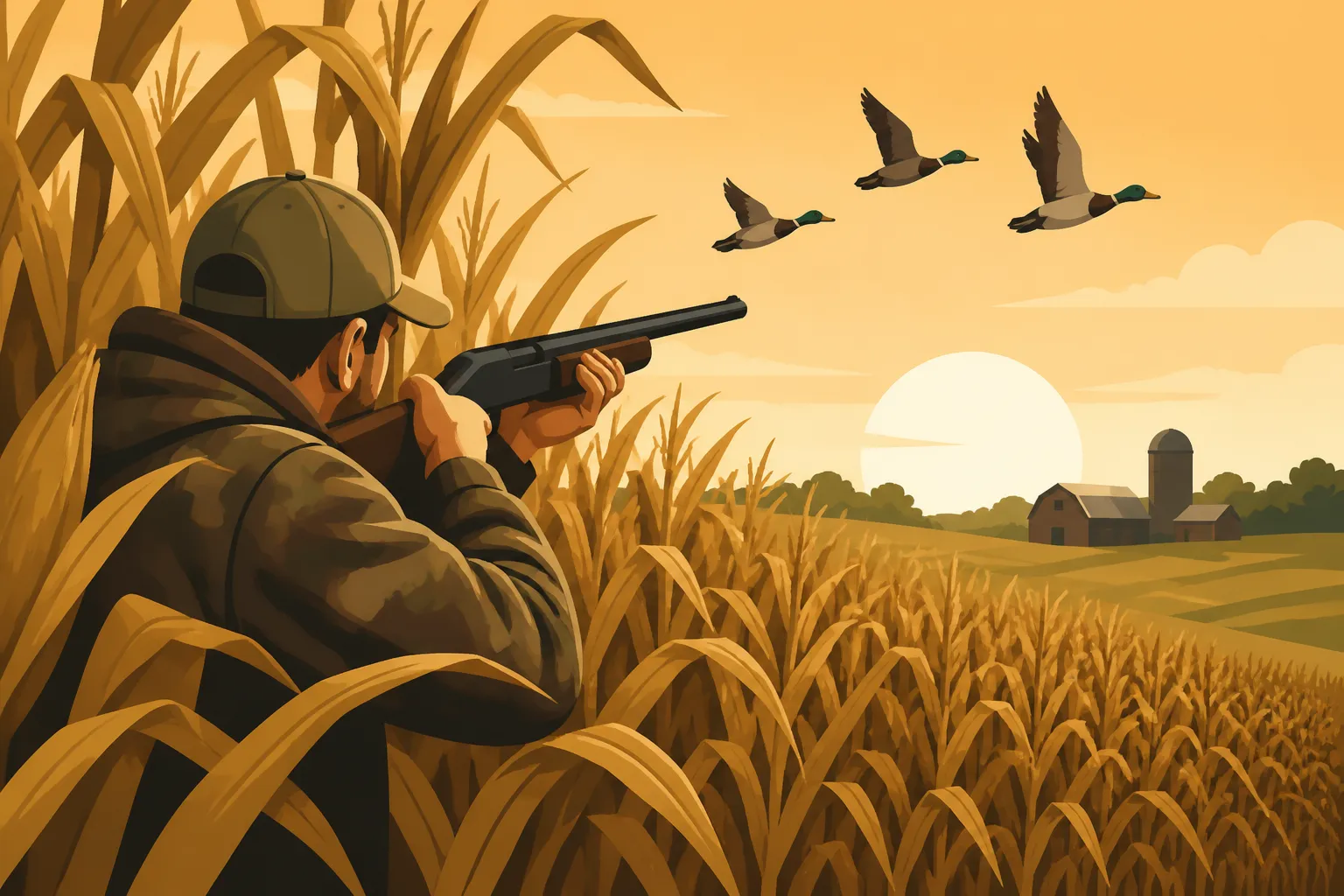
Hunting a standing cornfield in Mississippi farm country can feel like trying to find a needle in a haystack, especially when you know those big deer are in there, but you just can't seem to get on them. It's frustrating to watch a prime food source turn into an impenetrable fortress for whitetails. This comprehensive guide will walk you through the nuances of scouting, setting up, and effectively hunting these dense agricultural havens to improve your success rate dramatically.
The Allure and Challenge of Standing Corn
There's something uniquely compelling about a standing cornfield when you're hunting deer in Mississippi. On one hand, you know it's a magnet, a buffet, and a sanctuary all rolled into one. On the other, it presents a daunting challenge, often leaving hunters scratching their heads about how to even begin.
Why Deer Love Standing Corn
Deer absolutely thrive in standing cornfields. Think about it from a whitetail's perspective: it's a massive, endless food plot that offers both high-energy sustenance and incredible cover. The tall stalks provide a visual and scent barrier from predators, allowing deer to bed down, feed, and travel with a sense of security they rarely find elsewhere. In the heat of Mississippi's early archery season, the dense canopy also offers shade, making it a comfortable place to hang out even when temperatures soar. Bucks, especially, will often spend entire days holed up in these fields, moving very little, feeling completely safe from prying eyes. It's not just a daytime hideout; it's a nighttime buffet too. The constant availability of nutritious corn means they don't have to venture far, minimizing their exposure. This makes a standing cornfield an absolute hotspot for deer activity, attracting animals from surrounding timber and thickets.
The Hunter's Dilemma
For hunters, however, this very appeal translates into a significant dilemma. How do you hunt something that's so thick you can barely see five yards in, let alone navigate quietly? The sheer density of standing corn makes traditional still-hunting almost impossible without spooking every deer in the county. Elevated stands on the perimeter seem like the obvious answer, but if the deer are feeding and bedding deep within the field, they might only show themselves at the very edges during twilight hours, if at all. Furthermore, the noise of the wind rustling through the stalks can mask approaching deer, but it can also mask your own movements or the sounds of your grunt tube. It’s a double-edged sword. You're constantly battling limited visibility, swirling thermals that can betray your scent, and the challenge of figuring out exactly where the deer are entering and exiting such a vast, uniform landscape. Trying to decipher deer patterns in a cornfield without proper scouting is like trying to find a needle in a hay bale blindfolded; you just won't get anywhere.
Scouting Strategies for Standing Corn
Before you even think about setting up a stand or planning a hunt, diligent and strategic scouting is absolutely paramount when dealing with standing cornfields. This isn't just about walking the edges; it's about intelligent recon, utilizing tools and techniques to pierce through the mystery of those tall stalks.
Perimeter and Access Point Recon
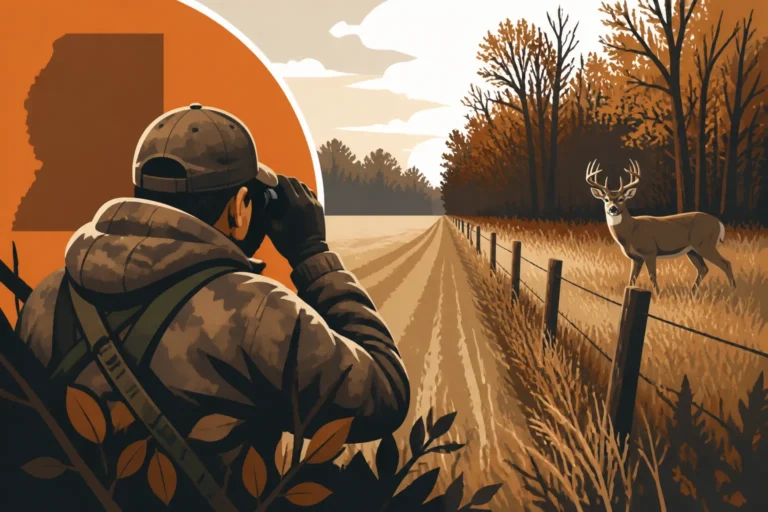
Your initial scouting efforts should focus heavily on the perimeter of the cornfield. Walk the entire outer edge, looking for tell-tale signs of deer activity. What you're specifically looking for are entry and exit points – worn trails where deer consistently move in and out of the field. These trails will often lead to bedding areas in nearby timber, water sources, or other food plots. Pay close attention to corners, natural funnels created by adjacent woodlots, and ditches or creek beds running alongside or through the field, as these often serve as preferred travel corridors. Look for fresh tracks, droppings, and rubbed saplings or scraped earth just inside the tree line or along the field edge. These signs will tell you not only where deer are entering but also if bucks are actively working the area. Don't be afraid to put some miles on your boots during this phase. The more thorough your perimeter check, the better understanding you'll have of the deer's highway system. Remember that deer are creatures of habit, and these established trails are their daily commutes.
Reading the Edges and Corners
While perimeter trails are important, understanding the specific dynamics of the edges and corners within the cornfield itself is crucial. Deer rarely just burst out into the open from the middle of a field. Instead, they often use the cover of the corn to stage, nibble on kernels along the edge, and only step out when they feel secure. Look for areas where the corn meets another type of cover, like a fencerow, a ditch, or a small patch of woods. These transition zones are often hotspots. Check for trails running just inside the corn, parallel to the edge, where deer can move under cover before exiting. In corners, where the field lines meet, you might find concentrations of sign, as deer often use these as natural gathering or turning points. Pay attention to how close the deer are feeding to the edge. If you find fresh droppings and nibbled ears of corn deep within the first few rows, it tells you they're comfortable enough to linger. Conversely, if all the sign is right at the very edge, they might be more cautious. This detailed examination helps you pinpoint specific ambush locations.
Thermal and Aerial Mapping with Tools like GoHunt
In today's hunting world, traditional boot-on-the-ground scouting is incredibly effective, but it's even better when paired with modern technology. Before you even set foot on the ground, fire up your GoHunt app or other aerial mapping tools. This allows you to get a bird's-eye view of the cornfield and its surroundings, identifying potential pinch points, bedding areas, and travel corridors that might not be obvious from the ground. Look for subtle changes in elevation, ditches, or even different crop rotations in adjacent fields that might influence deer movement. GoHunt's detailed topographical maps and property lines are invaluable for understanding the lay of the land, especially if the cornfield is part of a larger agricultural landscape. You can mark potential stand locations, observe historical satellite imagery for changes in tree lines or water sources, and plan your entry and exit routes to minimize disturbance. This pre-scouting with technology saves you time and often reveals crucial details. When you're scouting Mississippi public land before season, or even a private tract, these tools can highlight areas of interest, like how a standing cornfield relates to nearby timber, offering a huge advantage.
Effective Hunting Tactics in and Around Standing Corn
Once your scouting has painted a clear picture of deer movement patterns in and around the cornfield, it's time to translate that knowledge into effective hunting tactics. This requires patience, precision, and sometimes, a little creativity.
Setting Up for Success
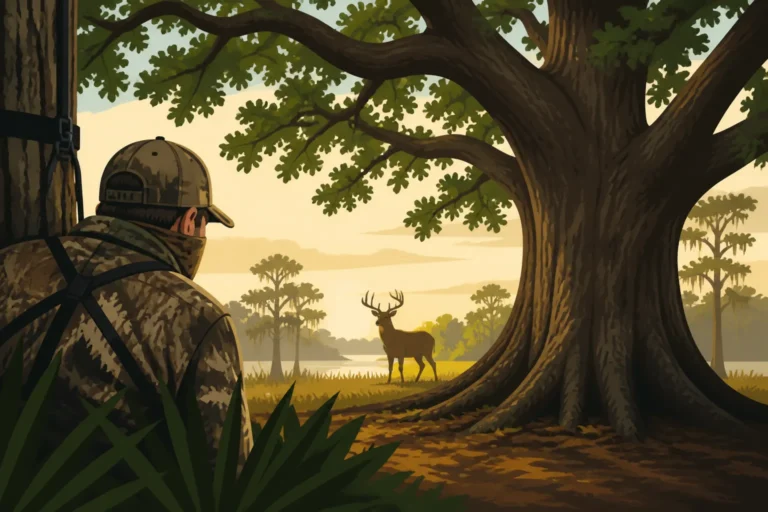
Your stand placement is absolutely critical when hunting a standing cornfield. You want to be positioned to intercept deer as they enter or exit, or perhaps even catch them moving along interior edges. Elevated stands, whether a climber, ladder, or hang-on, are usually preferred as they offer a better vantage point over the tall corn and help keep your scent dispersed above the deer's primary travel lanes. Set your stand up downwind of known entry/exit points or trails, aiming for locations that offer shooting lanes into the corn rows themselves, or along the adjacent timber line. Consider prevailing winds for your hunt times. If deer are primarily moving in the evenings, set up on the side of the field where the wind will carry your scent away from their approach. Conversely, for morning hunts, position yourself where your scent blows away from their retreat into bedding cover. Don't forget ground blinds. Using a ground blind on Mississippi public land, especially if brushed in effectively, can offer excellent concealment along field edges without the need for a tall tree, providing great cover and minimizing your profile.
Still-Hunting the Rows
While still-hunting through a standing cornfield is generally discouraged due to visibility and noise issues, there are specific scenarios where it can be effective, particularly with a partner. If you’re determined to try, focus on the earliest parts of the season when the corn is still green and slightly less brittle, or on days with light rain which can dampen noise. The key is to move incredibly slowly, pausing frequently, and utilizing every bit of cover. You're looking for subtle movements, a flick of an ear, a patch of hide, or the vertical lines of a deer's leg among the stalks. Focus on moving parallel to the rows, or slowly crossing them, paying keen attention to the wind. This is a tactic that requires immense patience and keen eyesight. However, a more productive approach might be to still-hunt the edges of the cornfield, especially where it borders dense timber, using the corn for concealment as you slowly move towards known deer activity. This strategy allows you to use the corn's natural screen without fully immersing yourself in its impenetrable depths, similar to how you might approach still-hunting hills unit ridges.
Drive Hunting Considerations
When the corn is standing, or even partially harvested, organized deer drives can be a highly effective way to push deer out of the seemingly endless cover. This tactic is particularly useful on larger tracts or private land where you can coordinate with several hunters. The idea is to have "pushers" slowly and strategically walk through the corn, moving towards "standers" positioned along the edges or at known escape routes. Communication is absolutely vital here to ensure safety and effectiveness. The pushers should move slowly and methodically, making noise, but not rushing, allowing deer to move naturally before being pushed out. Standers need to be acutely aware of their surroundings and safe shooting lanes. Deer drives with three or four hunters can be incredibly successful, especially if you've already identified key exit points during your scouting phase. This method works well when deer are holding tight deep inside the field and refuse to come out, offering a way to dislodge them from their sanctuary. Just ensure everyone involved is clear on the plan and safety protocols.
Overcoming Common Standing Corn Challenges
Hunting standing corn isn't without its unique set of challenges, from unpredictable wind patterns to the sudden changes brought by harvest season. Being prepared for these obstacles is key to consistent success.
Wind and Noise Management
The tall stalks of standing corn can create a complex wind tunnel effect, causing thermals and wind currents to swirl unpredictably, especially on calm days. This makes scent control an even bigger priority than usual. Always check the wind direction using a powder bottle or milkweed seeds from multiple points around your stand location before and during your hunt. If the wind shifts unfavorably, be prepared to move, or at least understand that your scent cone might be carrying further than anticipated. The constant rustling of the corn stalks can also be a blessing and a curse. While it can mask your movements or the sound of your bowstring, it can also make it incredibly difficult to hear deer approaching. Focus your hearing, using the lulls in the wind to listen intently. Consider how rattling volume in thick cover might be affected; you might need to call louder or more aggressively to cut through the natural noise. Always prioritize setting up for the most consistent wind pattern you can find, even if it means sacrificing a perfect view.
Dealing with Harvest Changes
One of the biggest variables when hunting cornfields is the harvest. Farmers operate on their own timelines, and a field that was a deer magnet one day can become a barren wasteland the next. This rapid change can completely alter deer patterns overnight. Stay in communication with landowners if possible, or keep a close eye on the fields yourself. Once the corn starts coming down, the hunting strategy shifts dramatically. Deer will initially flock to the freshly harvested fields to glean any dropped kernels, offering excellent opportunities for evening hunts over the stubble. However, this feast won't last long, and deer will quickly revert to other late-season food sources for Mississippi whitetails, like acorns, green fields, or browse. As the corn comes down, it also opens up travel corridors that were previously hidden, so re-scout immediately to find new trails and pinch points. The timing of the harvest might also coincide with phases of the rut in the Delta Unit or Hills Unit, adding another layer of complexity or opportunity. Being adaptable and responsive to these changes is critical for continued success.
Disclaimer
The information provided in this guide is for educational and entertainment purposes only. Hunting regulations and conditions can change rapidly. Always consult the latest Mississippi Department of Wildlife, Fisheries, and Parks (MDWFP) regulations and obtain all necessary licenses and permits before heading afield. Safety should always be your top priority when hunting.