Hunting the Loess Bluff Hills
Oh, the Loess Bluff Hills! If you've ever tried to hunt this truly unique part of Mississippi, you know it's a completely different beast than the flat Delta farmlands or the rolling Piney Woods. Many hunters come here, expecting the same old tactics to work, only to find themselves gasping for air on a steep climb or utterly lost in a maze of ravines. This guide is all about demystifying the challenging, yet incredibly rewarding, experience of hunting Mississippi's Loess Bluff Hills, offering insights and strategies to help you navigate its dramatic landscape and find success.
Understanding the Unique Character of the Loess Bluff Hills
Let's start by getting to know this incredible landscape. The Loess Bluff Hills aren't just another part of Mississippi; they're a geological marvel, and understanding their formation and features is the first step to unlocking their hunting potential. This isn't flat ground, and it's certainly not a typical forest. It's an ancient, wind-blown phenomenon that creates a habitat unlike anything else in the state.
Geological Formation and Topography
The Loess Bluffs are a truly distinct geological feature running north-south along the eastern edge of the Mississippi River floodplain. These aren't your typical hills; they're formed from wind-deposited silt, or "loess," that accumulated over thousands of years, primarily during glacial periods. Imagine fine dust, picked up by winds blowing off the Mississippi River valley, settling layer upon layer to form these dramatic, steep-sided ridges and deep, winding ravines. When you're standing on top, looking down into a deep cut, you can almost feel the ancient forces that shaped it.
The topography is incredibly rugged. You'll encounter sharp, V-shaped hollows known locally as "gullies" or "trenches" that can drop dozens of feet in a short distance. The ridges themselves are often narrow and winding, making for challenging traverses, especially when you're trying to move quietly. This extreme undulation creates a microclimate in many areas, with shaded, cooler north-facing slopes contrasting sharply with sun-baked south-facing slopes. This variety directly influences where deer, turkeys, and other game spend their time, depending on the weather and time of year. Knowing this difference is key to understanding animal movement.
Vegetation and Habitat Diversity
Because of this unique topography and soil composition, the Loess Bluff Hills boast an incredible diversity of vegetation and habitat types. Unlike the uniform pine plantations you might find further east, here you'll find a patchwork of hardwoods, cedars, cane thickets, and even some unique plant species that thrive in the loess soil. The deep ravines often hold dense stands of hardwoods like oak, hickory, and sweetgum, providing crucial mast crops for deer and turkeys. These sheltered pockets offer excellent cover and food sources, especially as the season progresses and other areas thin out.
Moving up the slopes, you'll encounter areas dominated by dense cedar thickets. These evergreens provide invaluable thermal cover in colder weather and security cover year-round. They can be incredibly difficult to penetrate, offering deer and hogs a safe haven from hunting pressure. Along the ridge tops, you might find more open stands of mixed hardwoods, or even some old fields that have reverted to briars and saplings, creating perfect bedding areas. This mosaic of habitat means that game animals can find everything they need – food, water, cover, and bedding – within a relatively small area, making scouting and understanding their travel patterns paramount. It's not uncommon to find areas of thick, impenetrable cane on one side of a ridge and relatively open hardwood timber on the other, each offering different opportunities and challenges for the hunter.
Prime Game Species of the Loess Bluffs
The diverse and rugged environment of the Loess Bluff Hills supports a thriving population of several key game species, each with their own unique behaviors influenced by this distinctive terrain. If you're planning a trip here, knowing what to expect from deer, turkeys, and hogs will significantly boost your chances of success.
White-Tailed Deer Behavior in Bluff Country
Deer in the Loess Bluffs are truly creatures of their environment. They are incredibly adept at navigating the steep, broken terrain, using the deep ravines and narrow ridges to their advantage. Unlike deer in flatter agricultural areas, bluff deer often move vertically more than horizontally, using the contours of the land for cover and travel. You'll find them bedding on benches just below a ridgetop, where they can watch their backtrail and catch thermals, or tucked away in dense cedar thickets that offer both thermal and security cover.
Their food sources are varied, ranging from acorns in the hardwood bottoms and slopes to honeysuckle and other browse plants found throughout the bluffs. During the rut, bucks will often cruise the ridgetops, scent-checking for does, but they'll quickly drop into the ravines to escape pressure or pursue a hot doe. Understanding these vertical movements is critical. You might think you're clear on a ridgetop, only to have a buck magically appear from a deep gully. Learning to read the terrain for subtle deer trails that wind along contours or cut across steep faces will be far more effective than trying to find wide-open game trails. It's common to find rubs and scrapes along these less obvious trails, sometimes on what feels like an impossible incline. Hunting the Rut in the Hills Unit is a great resource to understand when these patterns peak.
Wild Turkey Habits and Roosting Locations
Mississippi's Loess Bluffs are also a fantastic place to chase wild turkeys, particularly the Eastern subspecies. The steep terrain, coupled with excellent roosting timber and diverse foraging opportunities, makes it ideal turkey habitat. Turkeys in the bluffs often roost in tall hardwoods – particularly oaks or sycamores – that overhang the deep ravines, providing them with a secure vantage point. Listening for gobblers as they fly down into the bottoms from these roosts at first light is a classic bluff country tactic.
Once on the ground, turkeys will often work their way up and down the ridges and ravines, feeding on acorns, insects, and tender green shoots. They use the terrain for security, too, often staying just out of sight in the dips and folds of the land. Setting up on a ridgetop where you can call across a ravine to birds on an opposing slope can be incredibly effective, but be prepared for them to come in from unexpected angles as they navigate the steep landscape. Trying to chase a gobbler up and down these hills will wear you out faster than you can imagine, so patience and strategic positioning are absolutely essential. Mississippi Spring Turkey Season Rules provides vital information on seasons and limits for these birds.
Feral Hogs and Other Opportunistic Game
Feral hogs are unfortunately prevalent throughout much of Mississippi, and the Loess Bluffs are no exception. The dense cover, abundant food sources, and challenging terrain make it an ideal sanctuary for them. You'll find hogs rooting up the forest floor, creating significant disturbance, especially in the damper bottoms of the ravines. They often travel in sounders and can be quite destructive to the delicate bluff ecosystem.
Hogs in the bluffs are typically nocturnal or crepuscular, though you might encounter them during the day, especially in remote, low-pressure areas. They'll use the same dense cedar thickets and cane breaks as deer for cover, making them tough to spot until you're right on top of them. While often considered a nuisance species, they provide an exciting hunting opportunity year-round. Besides deer, turkeys, and hogs, you'll also find a good population of squirrels and rabbits, particularly in the more accessible timber stands and field edges. Their presence provides additional small game opportunities for those looking to round out their hunting experience.
Navigating and Hunting the Challenging Terrain
The dramatic landscape of the Loess Bluff Hills is undoubtedly its defining characteristic, and it demands specific skills and strategies from any hunter. Don't underestimate the physical demands or the navigational challenges; preparation and smart tactics are your best friends here.
Steep Inclines, Deep Ravines, and Drainage Systems
When I talk about "steep," I mean steep. These aren't gentle slopes; you'll encounter inclines that feel more like climbing a ladder than walking a trail. The deep, V-shaped ravines, carved by millennia of water erosion, can be dozens of feet deep and incredibly difficult to traverse, especially if you're trying to do so quietly. These drainage systems act as natural funnels and travel corridors for game, but they can also be treacherous to navigate, often filled with fallen timber, slick mud, and dense undergrowth.
Learning to move efficiently and quietly through this terrain is a skill developed over time. Often, the easiest path isn't the most effective for hunting. You might need to make a long, circuitous route to approach a specific area from a favorable wind direction, or to avoid busting deer in a bedding thicket. Crossing a deep gully can be a full-body workout, especially if you're carrying a pack and a firearm. Take your time, test your footing, and remember that safety always comes first. A slip on a muddy, leaf-covered slope with a loaded rifle is no joke. Always consider the impact your movement will have on the game – every crunch of leaves or slide on mud can give you away.
Utilizing Natural Funnels and Terrain Features
Despite its intimidating nature, the Loess Bluff terrain offers incredible advantages to the savvy hunter. The very features that make it challenging also create natural funnels and pinch points that concentrate game movement. Ridge tops are often travel corridors, especially during the rut when bucks are cruising for does. However, deer will frequently drop off the main ridge into a "bench" or flat spot just below the crest, using it as a protected travel route that offers cover from above and below.
The countless ravines and draws also serve as primary travel routes, especially when leading to water sources or feeding areas. Look for places where multiple ravines converge, creating a bottleneck, or where a deep gully narrows, forcing game through a specific spot. Saddles – dips in a ridge line – are also prime crossing points for deer and turkeys moving from one side of a hill to another. Reading a Ridge for Hills Unit Deer is a must-read if you're serious about this type of hunting. Using mapping apps like onX Hunt or GoHunt to study the topography before you ever step foot in the woods can highlight these features, allowing you to identify potential stand locations or ambush points well in advance. These apps literally put a topographic map in your hand, showing you every contour, every drainage, and every potential bottleneck.
Movement Strategies and Silence in the Bluffs
Moving silently in the Loess Bluffs is an art form. The steep slopes are often covered in dry leaves or slick mud, making quiet foot placement incredibly difficult. When still-hunting, take one step at a time, testing the ground with your foot before committing your weight. Use the wind and thermals to your advantage; thermals typically rise in the morning and fall in the evening, moving air up or down the slopes. Understanding this will dictate your approach routes.
Consider making very slow, deliberate movements for short distances, then pausing for extended periods (10-15 minutes or longer) to scan, listen, and let the woods settle. Many times, you'll hear or see game that was alerted by your initial movement only after you've been still for a while. Don't be afraid to sit down for a quick break and just observe. The bluffs are also notorious for their thick undergrowth in certain areas, particularly around cedar breaks or regeneration cuts. Sometimes, the only way to get through these spots is to push through slowly and deliberately, accepting that you might make some noise, but aiming to minimize it. Always be ready to stop and evaluate if you bump a deer, as they often won't run far in such thick cover.
Public Hunting Opportunities Within the Loess Bluffs
While finding private land access in Mississippi can be a challenge, the Loess Bluff Hills offer some fantastic public hunting opportunities that are often overlooked by hunters who prefer flatter, more accessible terrain. These areas demand effort, but the rewards can be significant.
National Forest Access and Regulations
The Loess Bluff region is fortunate to host portions of Mississippi's national forests, which provide extensive public access for hunting. Specifically, the Homochitto National Forest is a prime example of a public hunting ground within these bluffs. These national forest lands offer thousands of acres of diverse habitat, from mature hardwoods in deep ravines to mixed pine and hardwood stands on the ridges. The sheer size of these areas means that hunters willing to put in the miles can often find pockets of undisturbed game.
Hunting regulations on National Forests generally follow statewide rules, but it's crucial to check for any local or specific forest rules that might apply. For instance, vehicle access might be restricted to certain roads, and camping regulations will vary. Always consult the latest MDWFP regulations and any specific forest service guidelines before heading out. While hunting pressure can still be a factor, particularly near main access points, venturing deeper into the forest often leads to less competition and higher chances of encountering mature animals. Remember, these forests are multi-use lands, so you might encounter hikers, campers, or timber operations, especially during the week. Understanding Mississippi Public Land Hunting Hours is essential for planning your trip.
Mississippi Wildlife Management Areas in the Region
Beyond the National Forests, several Wildlife Management Areas (WMAs) are either directly within or adjacent to the Loess Bluff Hills, offering additional public hunting options. These WMAs are managed by the Mississippi Department of Wildlife, Fisheries, and Parks (MDWFP) specifically for wildlife conservation and public recreation, including hunting. Examples might include areas like the Copiah County Wildlife Management Area or Caston Creek Wildlife Management Area, depending on the exact delineation of the bluff region.
WMAs often have more specific regulations than national forests, including special season dates, bag limits, and hunter quotas. Many require a WMA permit in addition to your state hunting license. Quota hunts, which require a successful application, can offer incredible hunting experiences with limited pressure, though they can be harder to draw. It's absolutely critical to check the individual WMA's regulations pamphlet or website before planning your hunt. These rules can change annually, and ignorance is never an excuse. Always have your Mississippi WMA Permit Requirement handled before you hit the field. The MDWFP website is an invaluable resource for finding these WMAs and their specific rules.
Understanding Public vs. Private Land Boundaries
Perhaps one of the most critical aspects of hunting the Loess Bluffs, especially on public land, is understanding and respecting property boundaries. The public lands are often interspersed with private tracts, and these lines can be incredibly difficult to discern on the ground, particularly in thick cover or steep terrain. Trespassing, even accidentally, can lead to serious legal consequences and gives all hunters a bad name.
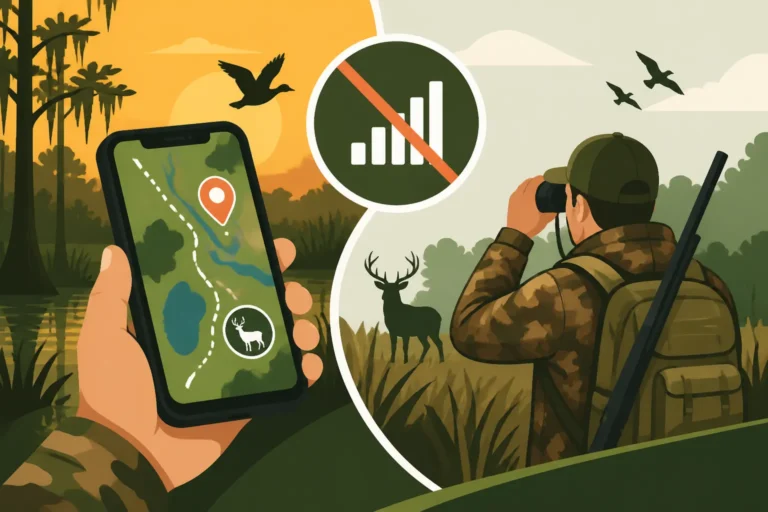
This is where digital mapping tools become absolutely indispensable. Apps like onX Hunt and GoHunt provide detailed property boundary overlays, showing you exactly where public land ends and private land begins, even indicating landowner names in many cases. Downloading offline maps for these areas is crucial, as cell service can be spotty or non-existent in many bluff locations. Before you go, study your intended hunting area thoroughly, identify key boundary lines, and mark them on your digital map. On the ground, pay close attention to posted signs, fences, or changes in timber management that might indicate a property line. While hunting, constantly refer to your GPS to ensure you stay on legal ground. This attention to detail isn't just about legality; it's about being a responsible and ethical hunter. Remember, Mississippi Trespass and Permission Law is clear on what constitutes legal access.
Essential Gear and Physical Preparation for Bluff Hunting
Hunting the Loess Bluff Hills is not a casual stroll in the park. It's physically demanding, and the right gear can make the difference between a miserable, unproductive day and a successful, enjoyable one. You need to be prepared for rugged conditions and unpredictable weather.
Footwear, Clothing, and Backpack Essentials
Your footwear is paramount in the bluffs. You need sturdy, waterproof boots with excellent ankle support and aggressive tread for traction on steep, often slick, slopes. Think hiking boots designed for serious terrain, not just lightweight hunting boots. Breaking them in before your hunt is non-negotiable; blisters on these hills will quickly ruin your day. For clothing, layers are your friend. You'll be exerting a lot of energy climbing, so you'll want to shed layers to avoid sweating, which can quickly lead to a chill once you stop. Moisture-wicking base layers, insulating mid-layers, and a quiet, waterproof/windproof outer shell are ideal. Blaze orange is often a requirement on public lands during gun seasons, so make sure you have enough to meet How Much Blaze Orange Mississippi Requires.
Your backpack should be comfortable and sized to carry essentials. Beyond your hunting gear (weapon, ammo, calls), you'll need plenty of water – more than you think, especially on warm days. High-energy snacks, a first-aid kit (including blister treatment!), a headlamp with extra batteries, a knife, and a small saw or pruners for clearing shooting lanes (if using a stand) are all critical. A game bag for meat recovery is also wise, as dragging a deer out of a deep ravine can be an epic undertaking.
Navigation Tools and Emergency Preparedness
Getting lost in the maze of ravines and ridges in the Loess Bluffs is a real possibility, even for experienced woodsmen. A reliable GPS unit or a smartphone with a dedicated hunting app like onX Hunt or GoHunt (with offline maps downloaded!) is an absolute must-have. Don't rely solely on your phone; a compass and a physical map of the area should always be carried as a backup. Know how to use them. Mark your truck, your stand locations, and any key terrain features or property lines.
Beyond navigation, emergency preparedness is crucial. Carry a fully charged power bank for your phone, a whistle, a fire starter, and some cordage. Tell someone exactly where you're going and when you expect to be back. The broken terrain can make communication difficult, and help can be a long way off. If you're going deep, a personal locator beacon (PLB) could be a wise investment. The more remote you plan to hunt, the more critical these preparations become.
Physical Fitness for Demanding Terrain
This might sound like a broken record, but it bears repeating: hunting the Loess Bluffs demands a significant level of physical fitness. You'll be climbing steep hills, descending into deep ravines, and potentially dragging a harvested animal up and out of a very challenging landscape. If you're not accustomed to this kind of exertion, you'll tire quickly, make more noise, and be less effective as a hunter.
Before the season, incorporate cardio exercises like hiking, running, or stair climbing into your routine. Focus on leg strength and endurance. If possible, hike some local hills with your hunting pack to simulate the experience. Being in good physical shape means you can hunt longer, move more quietly, and recover game more safely. It also enhances your mental focus, which is just as important when navigating complex terrain and making critical decisions in the field. Don't let your physical limitations prevent you from enjoying and succeeding in this unique hunting environment.
Effective Hunting Strategies Tailored for the Loess Bluffs
Successful hunting in the Loess Bluff Hills requires a deliberate departure from conventional strategies. The unique topography dictates a different approach, one that leverages the terrain to your advantage and acknowledges the specific behaviors of the game here.
Deer Hunting Tactics: Still-Hunting, Stand Placement, and Drives
Still-hunting is incredibly effective in the Loess Bluffs, as it allows you to cover ground slowly and methodically, using the terrain for concealment. Move at a snail's pace, pausing frequently to scan the slopes, listen for faint sounds, and watch for subtle movement. Focus on walking just below a ridgetop or along a bench, where deer are likely to travel, and try to keep the wind in your favor, ideally blowing across the ridge. Remember that deer here use vertical escape routes, often dropping down into a ravine and circling around to get behind you, so be constantly aware of your surroundings. Still-Hunting Hills Unit Ridges goes into excellent detail on this method.
When it comes to stand placement, forget wide-open fields. Instead, look for bottlenecks where ravines converge, saddles in ridges, or benches that act as natural travel corridors between bedding and feeding areas. Dense cover, like cedar thickets along a steep slope, can also be a fantastic place for a stand, especially if it's near a food source. Hanging stands on steep inclines or across deep ravines can be tricky, so always prioritize safety and use appropriate climbing equipment. Consider using a ground blind if you can brush it in effectively on a key travel route or feeding area, especially in areas with very limited suitable trees.
Deer drives can also be highly productive in the bluffs, especially if you have a group of three or four hunters. Instead of pushing across a wide open area, focus on driving a specific finger ridge or a deep, narrow ravine. Place standers at pinch points, such as where a ridge abruptly ends or where multiple draws merge, forcing deer into a specific escape route. The drivers should move slowly and strategically, pushing deer towards the standers while also being ready for a shot themselves. Effective communication among the group is paramount to ensure safety and success. Deer Drives With Three or Four Hunters offers a tactical overview of how to execute this effectively.
Turkey Hunting Approaches: Locating, Calling, and Setup
Turkey hunting in the bluffs is an exhilarating challenge. Locating birds often starts before dawn by listening for gobblers on the roost. Position yourself on a ridgetop where sound carries well, and listen for those tell-tale morning calls echoing up from the ravines. Once you pinpoint a bird, your approach needs to be strategic. Trying to charge straight at a gobbler across steep, noisy terrain is usually a recipe for disaster. Instead, use the topography to your advantage. Try to get on the same contour line or a parallel ridge, positioning yourself where the bird might want to come to you, rather than chasing it.
Calling should be adapted to the environment. Soft, subtle calls often work best, allowing the gobbler to pinpoint your location without feeling pressured. However, if you're trying to get a bird's attention across a deep ravine, a louder series of yelps might be necessary. Once you get a response, find a good setup. A large oak or a cluster of pines that breaks up your outline on a ridgetop is ideal. Make sure you have a clear view down the likely approach routes. Turkeys can sometimes come up those steep slopes surprisingly fast. Be prepared for them to hang up just out of sight in the dips and folds of the terrain, forcing you to adjust your setup or try to coax them closer. It’s a chess match, and the bluffs add extra dimensions to the board. Calling a Mississippi Gobbler Off the Roost details the exciting first moments of a bluff turkey hunt.
Dealing with Hunting Pressure on Public Land
Public lands in Mississippi, including those in the Loess Bluffs, can see significant hunting pressure, especially on opening weekends. However, the rugged nature of the bluffs offers a distinct advantage: many hunters simply won't venture far from the easy access points. This means that if you're willing to walk further, climb steeper, and push deeper into the public land, you significantly increase your chances of finding less pressured game.
To deal with pressure, scout areas that are difficult to access. Look for areas on your onX Hunt map that are a mile or more from any roads or obvious trails. These "honey holes" often hold older, wiser animals. Also, consider hunting during weekdays or later in the season when crowds thin out. Deer and turkeys learn quickly to avoid areas with heavy human activity. They'll shift their patterns, becoming more nocturnal or seeking out the densest, most inaccessible cover during daylight hours. By adapting your hunting times and your willingness to put in the effort, you can turn heavily pressured areas into productive hunting grounds.
Advanced Scouting Techniques for Loess Bluff Success
Scouting is crucial for any hunting endeavor, but in the complex and often unforgiving terrain of the Loess Bluff Hills, it becomes absolutely indispensable. You can't just show up on opening day and expect to quickly decipher the movements of game. The more time you put in before the season, the higher your chances of success.
Pre-Season On-Foot Scouting
Nothing beats boots on the ground when it comes to understanding the nuances of the Loess Bluffs. Pre-season scouting, ideally in the late winter or early spring when foliage is minimal, allows you to see the terrain in its raw form. This is the time to identify hidden benches, subtle saddle crossings, deep-cut ravines that serve as travel corridors, and dense thickets that provide bedding cover. Look for old rub lines, scrape areas from the previous season, and faint deer trails that wind along contours. These signs often persist year after year.
Walk potential entry and exit routes, paying attention to noise levels and wind direction. Identify potential stand locations and assess shooting lanes. Pay close attention to water sources—seeps, small streams in ravine bottoms, or even ephemeral puddles after a rain—as these are magnets for game, especially during drier periods. Don't be afraid to take notes or drop pins on your GPS for anything that looks promising. This groundwork will save you countless hours of wandering aimlessly during the actual hunting season. Scouting Mississippi Public Land Before Season is a great general guide to pre-season work.
Leveraging Mapping Applications and Digital Tools
Modern mapping applications have revolutionized scouting, especially in complex terrain like the Loess Bluffs. Tools like onX Hunt and GoHunt provide incredibly detailed topographic maps, satellite imagery, and crucial property line overlays. Before you even set foot in the woods, spend hours studying the digital landscape. Identify the highest points, the deepest ravines, the narrowest ridges, and potential funnels. Look for areas where different habitat types converge.
Use the layering features to switch between topo and satellite views, helping you visualize the terrain and vegetation density. Drop pins on potential bedding areas, feeding zones, water sources, and key travel corridors. Plan multiple approach and exit routes from potential stand sites, taking into account prevailing winds. Download offline maps to your device, as cell service will likely be non-existent in many of the remote bluff areas. This digital reconnaissance allows you to quickly narrow down areas of interest, making your limited time on the ground much more efficient.
Interpreting Sign and Understanding Seasonal Changes
The bluffs leave plenty of clues for the observant hunter, but you need to know what you're looking for and how it changes with the seasons. Fresh deer tracks in muddy bottoms, droppings, and fresh rubs or scrapes are obvious signs of recent activity. However, also look for less obvious indicators like browsed vegetation, disturbed leaf litter, or game trails that appear to be heavily used. In the spring, note areas with good mast production potential, like stands of oak or hickory. Come fall, these will be prime feeding zones.
Understanding seasonal changes is also key. Early season might see deer in more open areas, browsing on lush growth. As acorns drop in the fall, deer will shift their focus to the hardwood bottoms. Later in the season, when temperatures drop, those dense cedar thickets on south-facing slopes become critical thermal cover. Turkey patterns also shift from roosting and feeding in bottoms in spring to more dispersed summer ranges. Hogs are almost always where the best rooting is. Continually adapt your strategies based on food availability, weather patterns, and the phase of the season.
Conservation and Responsible Hunting Practices
Hunting in the Loess Bluff Hills offers a truly immersive experience in a wild and unique landscape. With that privilege comes a profound responsibility to uphold ethical hunting practices and contribute to the conservation of this special environment.
Respecting the Unique Ecosystem
The Loess Bluff ecosystem is fragile in some areas, particularly the steep, easily eroded slopes. As hunters, it's our duty to minimize our impact. Stick to existing trails when possible, and avoid creating new ones that could lead to erosion. Pack out everything you pack in – and then some. Leave no trace of your presence behind. Be mindful of sensitive plant communities and avoid unnecessary disturbance. The deep ravines and ancient geological formations deserve our respect and protection.
Beyond minimizing physical impact, respecting the ecosystem means understanding your role in wildlife management. Adhere to all bag limits and season dates, which are established to ensure sustainable populations for future generations. Supporting organizations dedicated to conservation in Mississippi helps preserve these unique habitats for all to enjoy, hunters and non-hunters alike.
Ethical Harvest and Game Recovery
Making an ethical shot and ensuring swift, humane dispatch of game is a cornerstone of responsible hunting. In the rugged terrain of the Loess Bluffs, this is even more critical. A poorly placed shot might mean a long, difficult, or even impossible recovery of an animal, especially if it runs into one of the many impenetrable ravines or thickets. Take only clear, ethical shots at appropriate distances. Pass on questionable shots.
After the shot, take immediate steps to recover your animal. Mark the location of the shot, pay attention to the direction of travel, and look for blood or hair. If you have any doubt about the shot placement, give the animal time to lie down and stiffen up before beginning your track. Bringing a good tracking light, even for daytime hunts, is invaluable when following a blood trail into a dark, thick gully. Recovering your game quickly and efficiently honors the animal and ensures that your harvest is utilized. If you're hunting in a CWD zone, be sure to follow all Mississippi CWD Testing for Hunters protocols.
Adhering to Mississippi Regulations
Finally, and perhaps most importantly, always adhere strictly to all Mississippi hunting regulations. These laws are put in place by the MDWFP to manage wildlife populations, ensure public safety, and maintain fair chase principles. This includes purchasing the correct licenses and permits, understanding unit-specific regulations (the Loess Bluffs fall within specific Deer Management Units, often the Hills Unit), and reporting your harvest as required. Mississippi's Four Deer Management Units provides essential detail on this.
Ignorance of the law is not an excuse. Before every season, take the time to read the current year's hunting regulations pamphlet thoroughly. Check for any updates or changes, especially regarding specific WMAs or new CWD management zones. Carrying your hunting license and relevant permits with you while afield is mandatory. By being a law-abiding hunter, you not only protect yourself but also contribute to the positive image of hunting in Mississippi and ensure that the privilege of hunting the incredible Loess Bluff Hills remains for generations to come.
Here's a quick comparison of key game animals and some basic considerations for hunting them in the bluffs:
| Game Species | Primary Food Sources | Preferred Habitat in Bluffs | Key Hunting Considerations |
|---|---|---|---|
| White-Tailed Deer | Acorns, various browse, honeysuckle | Ravines, benches, cedar thickets | Vertical movement, using thermals, quiet still-hunting, strategic stand placement |
| Wild Turkey | Acorns, insects, green shoots | Roost in tall timber over ravines | Early morning roost location, calling across ravines, patient setup |
| Feral Hog | Roots, acorns, agricultural crops | Dense cane breaks, creek bottoms | Year-round opportunity, often nocturnal, can be found in thickest cover, destructive |
| Squirrel | Acorns, hickory nuts, berries | Hardwood bottoms, oak ridges | Early season focus on feeding trees, quiet approach, good for young hunters |
| Rabbit | Tender green shoots, clover | Thickets, fencerows, briar patches | Best with dogs, focus on dense cover, often found on edges of clearings/fields |
Disclaimer
This article is for general informational purposes only and does not constitute professional advice. Laws, prices and regulations vary by location and change over time. Consult a qualified professional for guidance on your specific situation.