Recovering a Deer From a Delta Slough
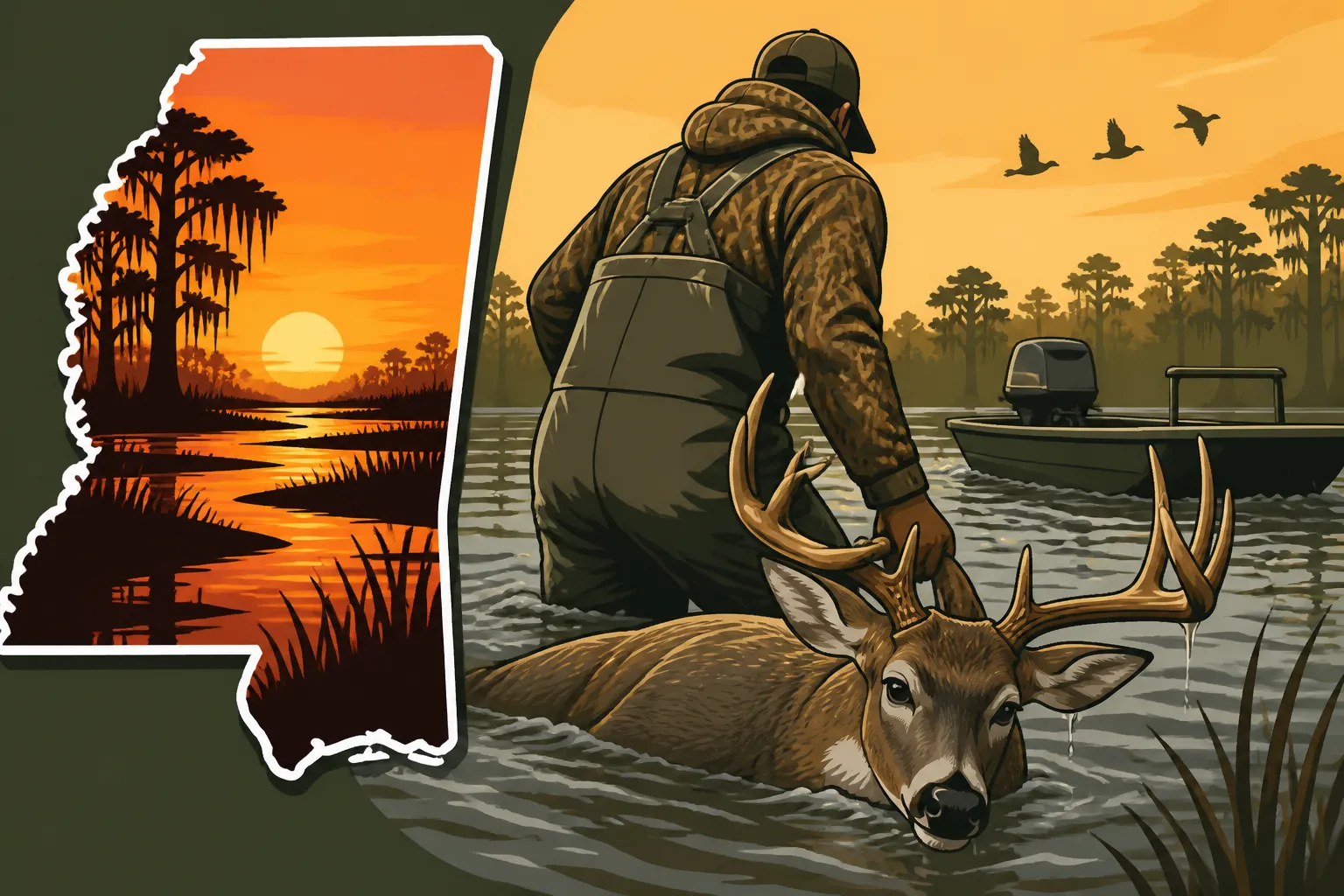
The absolute worst feeling as a deer hunter, especially here in the Mississippi Delta, is making what feels like a great shot, only to watch that buck take its last few bounds and then vanish into the murky, tangled depths of a slough. Your heart sinks. It’s not like tracking through dry woods where a blood trail is usually clear; a slough presents a whole different beast of a challenge. This guide will walk you through everything you need to know, from prevention to actual extraction, to successfully recover a deer that has gone into one of our infamous Delta sloughs.
Understanding the Unique Challenges of Delta Slough Recoveries
Let's be real, the Mississippi Delta is a beast of its own, and so are its sloughs. These aren't just puddles; they are often ancient oxbows, stagnant channels, or low-lying areas that collect water, mud, and some seriously thick vegetation. What might look like a shallow ditch on a map can quickly become a chest-deep, mucky nightmare that swallows both deer and hunters alike. The sheer difficulty of recovering an animal from one of these water-logged trenches can be incredibly frustrating and even dangerous if you're not prepared.
The Treacherous Terrain Underfoot
The most immediate challenge you'll face is the ground itself. Delta bottomland is notorious for its soft, silty soil, and that's magnified tenfold in a slough. You're not just dealing with water; you're dealing with deep, thick, clinging mud that can suck the boots right off your feet. Imagine trying to drag a 150-pound deer through something that feels like quicksand. The depth of these sloughs can vary wildly, from ankle-deep at the edges to well over your head in the middle, often without any warning. This uneven, unstable bottom is frequently littered with submerged logs, branches, and root systems from the surrounding hardwoods, creating hidden obstacles that can trip you up or trap your gear. Water levels fluctuate throughout the season, too, so what was a trickling stream during early archery can be a swollen, impassable channel during late gun season.
Environmental Hazards Beyond the Mud
Beyond the mud and water, Delta sloughs are teeming with other less-than-friendly inhabitants and conditions. Water moccasins are plentiful and active, especially when the weather is still warm, and stepping on one in murky water is a terrifying prospect. Alligators, while generally shy, also call these waters home, and encountering a big one while you're focused on a deer recovery is a serious safety concern. Then there are the insects – mosquitoes, biting flies, and gnats – that can make an already arduous task unbearable, especially if you're working against the clock. The humidity, even in cooler months, combined with strenuous activity in waders, can quickly lead to exhaustion and dehydration. These aren't just minor inconveniences; they are genuine threats that demand respect and careful planning.
Proactive Strategies to Minimize Slough Recovery Risks
The best way to recover a deer from a slough is to ensure it never goes in one in the first place. While you can't control everything, proactive planning and strategic hunting can drastically reduce your chances of a watery recovery. This really starts long before opening day, with careful scouting and understanding your hunting area.
Strategic Stand Placement Away from Water
When you're hanging a stand, or setting up a ground blind, always think about the path a deer might take after the shot. In the Delta, deer often travel parallel to sloughs or use narrow crossings. If your primary shooting lanes are positioned directly towards a significant body of water, and especially if you’re hunting a funnel between two sloughs, you might be setting yourself up for a nightmare recovery. Instead, try to position your stand so that a deer, even with a quartering-away shot, would likely expire in solid timber or an open field rather than deep water. Consider areas where deer might naturally bed, like where Delta National Forest bucks bed, and position yourself to intercept them moving away from water sources.
Always factor in the wind and thermals in Delta bottomland. A deer often tries to get downwind of danger, and if your stand location pushes them into the slough, it's a double whammy. Pay attention to how the air currents move, especially during different times of the day, to predict how deer will react to pressure. Sometimes, moving your stand just 50 yards can make all the difference, orienting a mortally wounded deer's escape route into more favorable terrain.
Leveraging Mapping Tools for Pre-Season Intelligence
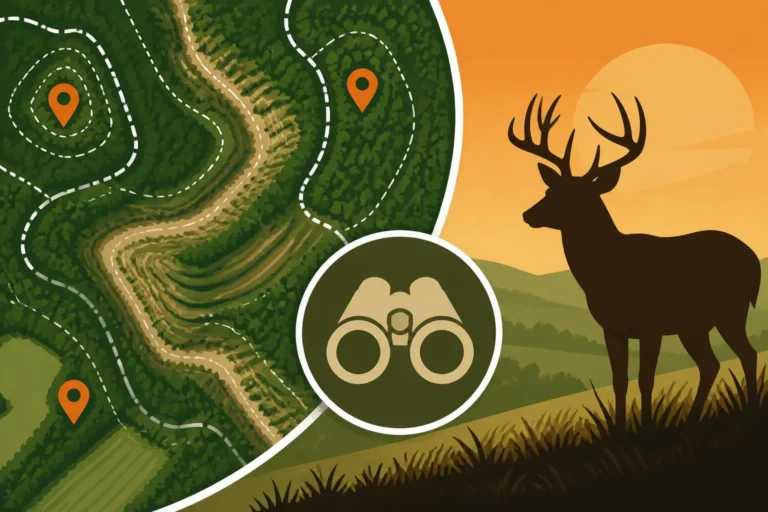
Before you even step foot in the woods, spend some serious time with a good mapping app. Platforms like GoHunt are invaluable for understanding the landscape from an overhead perspective. You can zoom in and identify every slough, ditch, and low-lying area. Look for narrow points where sloughs might be easily crossed or pinched, as these are often major travel corridors for deer, but also potential death traps for a wounded animal. GoHunt can show you topo lines, satellite imagery, and even property boundaries, giving you a crucial edge in predicting deer travel and potential escape routes toward water.
Identifying these water features during your off-season scouting trips is paramount. Walk the edges of the sloughs, note the depth variations, and look for any natural bridges or log crossings. Pay attention to which parts look accessible and which are absolute no-go zones. This isn't just about finding deer; it's about anticipating every possible scenario after the shot. Knowing the terrain intimately will help you choose better stand locations and, if a deer does go into the water, you'll have a much better idea of the challenges ahead.
The Immediate Aftermath: Assessing and Tracking
Okay, the shot is off, and the deer is gone. Maybe you saw it drop, maybe you just heard a splash. This is where patience becomes your most powerful tool. Rushing in too soon is a common mistake that can turn a recoverable deer into a lost one, especially near water.
The Critical Waiting Period
It's agonizing, I know. Every fiber of your being wants to go check, to confirm. But pushing a wounded deer, particularly one that's made it to water, is almost always the wrong move. If you heard a splash and didn't see it drop, assume it's still alive and capable of moving. A deer that's hit well but still has some adrenaline can cover surprising distances, even through tough terrain or water.
The general rule of thumb is at least 30 minutes for a gut shot, and usually an hour or more for a questionable hit, but when water is involved, I tend to lean towards giving it even more time. For a suspected liver or paunch hit, you're looking at 4-6 hours, or even waiting until morning if the shot was late in the day and conditions allow. This waiting period allows the deer to stiffen up and bleed out. If you push it, you might bump it out of its bed in the slough, sending it deeper into impassable areas, or even out of the slough entirely and off your property.
Marking the Last Known Location
As difficult as it is, force yourself to stay put for a few minutes and replay the shot in your mind. Focus on the exact spot where the deer was standing when you shot, and the precise point where you last saw or heard it. Use a landmark – a distinctive tree, a specific bend in the slough, a downed log. Mark this spot mentally, and then physically if possible without disturbing the area. If you're hunting with a buddy, have them watch the deer's exit path, noting everything.
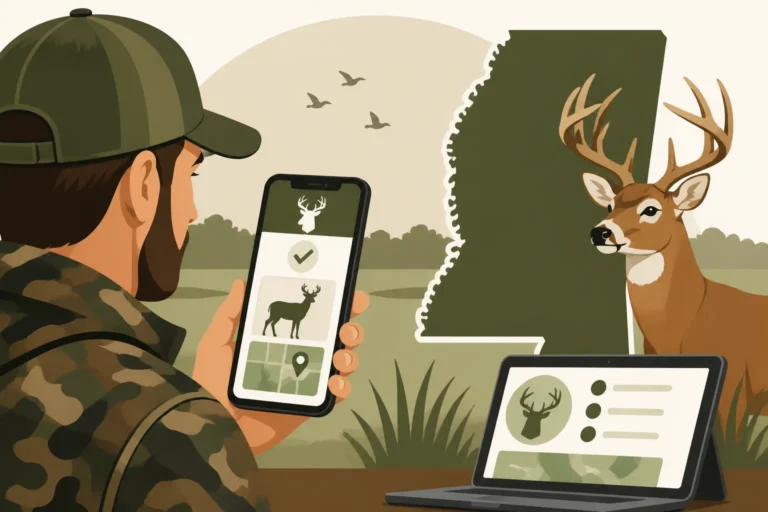
Once you leave your stand, walk directly to where the deer was standing when you shot. Look for immediate sign: blood, hair, disturbed leaves, or a spent arrow. Mark this "point of impact" with a piece of flagging tape, toilet paper, or a bright reflective tack. Then, slowly and carefully, begin to follow the track in the direction you last saw the deer. Marking waypoints on your GoHunt app at the shot site and last visual can be a lifesaver, especially in dense Delta cover, allowing you to retrace your steps or guide others to the scene. Don't push too hard; just find enough sign to confirm the direction and severity of the hit. If you find good blood, but it's clearly heading into the slough, back out and give it more time. Only when you have a reason to believe the deer is dead, or if you can see it in the water, should you move to the next phase. Sometimes, blood trailing after dark in Mississippi becomes necessary, but this requires even more caution and a well-lit team.
Executing the Slough Recovery Mission
This is where the real work begins. Recovering a deer from a slough is not a solo endeavor, nor is it something to be taken lightly. Safety is paramount, and having the right gear and a solid plan makes all the difference.
Assembling Your Recovery Team and Essential Gear
You absolutely need help. A minimum of two people is ideal, but three or four is even better. Dragging a dead deer, especially a wet, muddy one, is back-breaking work, and adding the resistance of deep mud or water makes it nearly impossible alone. Call up your hunting buddies, neighbors, or anyone willing to lend a hand. Make sure everyone understands the risks involved.
Here’s a table of essential gear you'll need for a slough recovery:
| Item | Purpose | Notes |
|---|---|---|
| Chest Waders/Hip Boots | Staying dry and warm in the water | Quality, puncture-resistant waders are a must. Avoid cheap options that might rip easily. |
| Long Ropes (50-100 ft) | Pulling the deer, securing team members, creating drag lines | At least two sturdy ropes. Paracord for small tasks, heavier rope for dragging. |
| Headlamps/Flashlights | Essential for visibility, especially if working after dark | Waterproof and bright. Bring spare batteries. |
| First-Aid Kit | Treating minor cuts, scrapes, insect bites, or sprains | Crucial for any outdoor activity, doubly so for dangerous recovery. |
| Long Pole/Stick | Probing water depth, testing mud consistency, pushing vegetation out of the way | A sturdy walking stick or even a fishing rod can work. |
| Heavy-Duty Gloves | Protecting hands from cuts, thorns, and rough rope | Essential for handling the deer and pulling ropes. |
| Dry Bag/Pack | Protecting phones, keys, and other valuables from water | Keeps essential items safe and dry. |
| Hydration (Water/Sports Drink) | Preventing dehydration from strenuous activity | Even on cool days, the exertion can lead to significant fluid loss. |
| Small Boat/Canoe (Optional) | For very wide or deep sloughs, or to transport gear | If the slough is wide enough, a small, stable boat can be a game-changer for moving equipment or the deer itself, but can be cumbersome to launch. |
| Game Carrier/Sled | Easier dragging once out of the slough | While not directly for the water, having one ready when you get it to solid ground will save immense effort. |
Safely Navigating and Extracting the Deer
Once you've located the deer, proceed with extreme caution. The first rule is safety. Never go into a slough alone. A buddy system is vital. One person should always remain on stable ground, ready to assist if someone gets stuck or runs into trouble.
- Assess the Situation: From a safe vantage point, look at the deer's exact location, the water depth, and the mud consistency around it. Are there submerged logs? Is there a current? If it's a small deer or close to the bank, it might be an easier pull. If it’s a big mature buck like those measuring a twelve-inch Delta spread by eye and it's in the middle of a wide, deep section, you're in for a serious challenge.
- Probe the Path: Before stepping into unknown depths, use your long pole or stick to probe the bottom ahead of you. Feel for deep holes, soft mud, or submerged obstacles. Move slowly and deliberately.
- Approach with Caution: If the deer is in accessible water (wader-deep or less), two people should carefully make their way to it. One person can maintain a safety line from the bank if the slough is particularly treacherous. Keep an eye out for snakes or other wildlife that might be startled.
- Secure the Deer: Once at the deer, attach a rope securely around its antlers or neck. If you have two ropes, tie one to the front and one to the back leg to help steer and distribute the pulling effort.
- The Pull: This is the hardest part. The person(s) in the water should be pulling while the people on the bank also pull with ropes, focusing on getting the deer to the shallowest, firmest bank possible. If you have several people, you can create a "train" where one person in front of the deer pulls, and others behind push, or just have everyone on ropes on the bank. Use trees or other anchors for leverage if available. Sometimes, getting it to a log and rolling it over can help. In really deep, soft mud, a game sled or even a tarp can sometimes be used to reduce drag if it can be maneuvered under the deer. While a public land map is crucial, don't forget to use advanced layers on platforms like GoHunt that can show you historical water levels or potential deeper channels. This might identify a hidden shallower path for extraction.
- Out of the Slough: Once you get the deer to solid ground, take a breather. The worst is over, but the work isn't done.
Post-Recovery Care and Ethical Considerations
You've done it! The deer is out of the slough. Now, you've got to ensure the meat is handled properly and that you meet all legal requirements.
Field Dressing and Transport Challenges
A deer recovered from a slough is going to be wet and muddy. This requires immediate attention to preserve the meat.
- Clean it Up (as best you can): Before field dressing, try to wipe off as much mud and debris as possible from the exterior of the deer. A bucket of water and a rag can help, but don't obsess over it. Just get the worst off.
- Field Dressing: Field dressing a deer in warm weather is always important, but after a slough recovery, it's even more critical. Get the entrails out as quickly as possible to begin cooling the carcass. The water and mud can insulate the body, preventing it from cooling down, which can lead to rapid meat spoilage. Cut around the anus and remove the lower intestine carefully. Open the chest cavity and sever the windpipe and esophagus as high as possible. Roll the deer onto its side to help the guts fall out.
- Washing (Optional but Recommended): If you have access to clean water, a quick rinse of the body cavity after field dressing can remove any remaining mud, leaves, or stomach contents. Just be sure to dry the cavity as much as possible afterward with paper towels or a clean cloth to prevent bacterial growth.
- Transport: Dragging a deer out of a slough and then for a significant distance to your vehicle is exhausting. If you have a game sled, use it. If not, a strong drag rope will be essential. If you're on public land, remember the rules about vehicle access – you might have a long walk ahead.
Legalities and Reporting Your Harvest
Once your deer is out and field dressed, don't forget your legal obligations. In Mississippi, it’s mandatory to check your deer harvest online or through the MDWFP app. This needs to be done within 72 hours of harvest, or before processing or placing the deer in the possession of another person. Make sure you have your license and tag information handy. Pay close attention to rules like the Delta Unit antler restriction rules, ensuring your buck meets the minimum spread requirements if you're in that unit.
The MDWFP relies on this data for population management and making informed decisions about future hunting seasons. It’s our responsibility as ethical hunters to comply. If you harvested a deer in one of Mississippi's Chronic Wasting Disease zones, you might also have mandatory or voluntary Mississippi CWD testing for hunters to consider. Be aware of the carcass movement restrictions if you're transporting the deer out of a CWD zone.
Successfully recovering a deer from a Delta slough is a testament to perseverance, proper planning, and teamwork. It's tough, but incredibly rewarding when you finally get that animal out and honor the harvest.
Disclaimer
Hunting is an inherently dangerous activity. This guide provides information for educational purposes only and is not a substitute for professional training, common sense, or adherence to all local, state, and federal laws and regulations. Always prioritize safety and exercise extreme caution when hunting, especially near water or in challenging terrain. The author and publisher are not responsible for any accidents, injuries, or legal issues that may arise from using this information.