Mississippi Diamondback Rattlesnake Encounters Afield
There’s a unique thrill that comes with hunting in Mississippi, whether you're tracking a Delta buck or calling a gobbler in the Piney Woods. But let's be honest, for many of us, the thrill sometimes comes with a little shiver down the spine when we think about what else might be lurking in the undergrowth – specifically, snakes. The thought of encountering a diamondback rattlesnake afield can be unsettling, even for the most seasoned hunter. This guide is here to cut through the fear and arm you with the knowledge you need to understand these incredible creatures, minimize your chances of an unpleasant encounter, and know exactly what to do if you come face-to-face with one of Mississippi's apex reptilian predators.
Getting to Know the Eastern Diamondback Rattlesnake in Mississippi
Before we can effectively avoid or react to an Eastern Diamondback Rattlesnake (often just called a "diamondback" around here), we need to understand a bit about them. These aren't just some generic "snake in the woods"; they are a specific, powerful, and truly magnificent part of our state's ecosystem. Their very presence speaks to the health of the land, even if it does make us a bit jumpy.
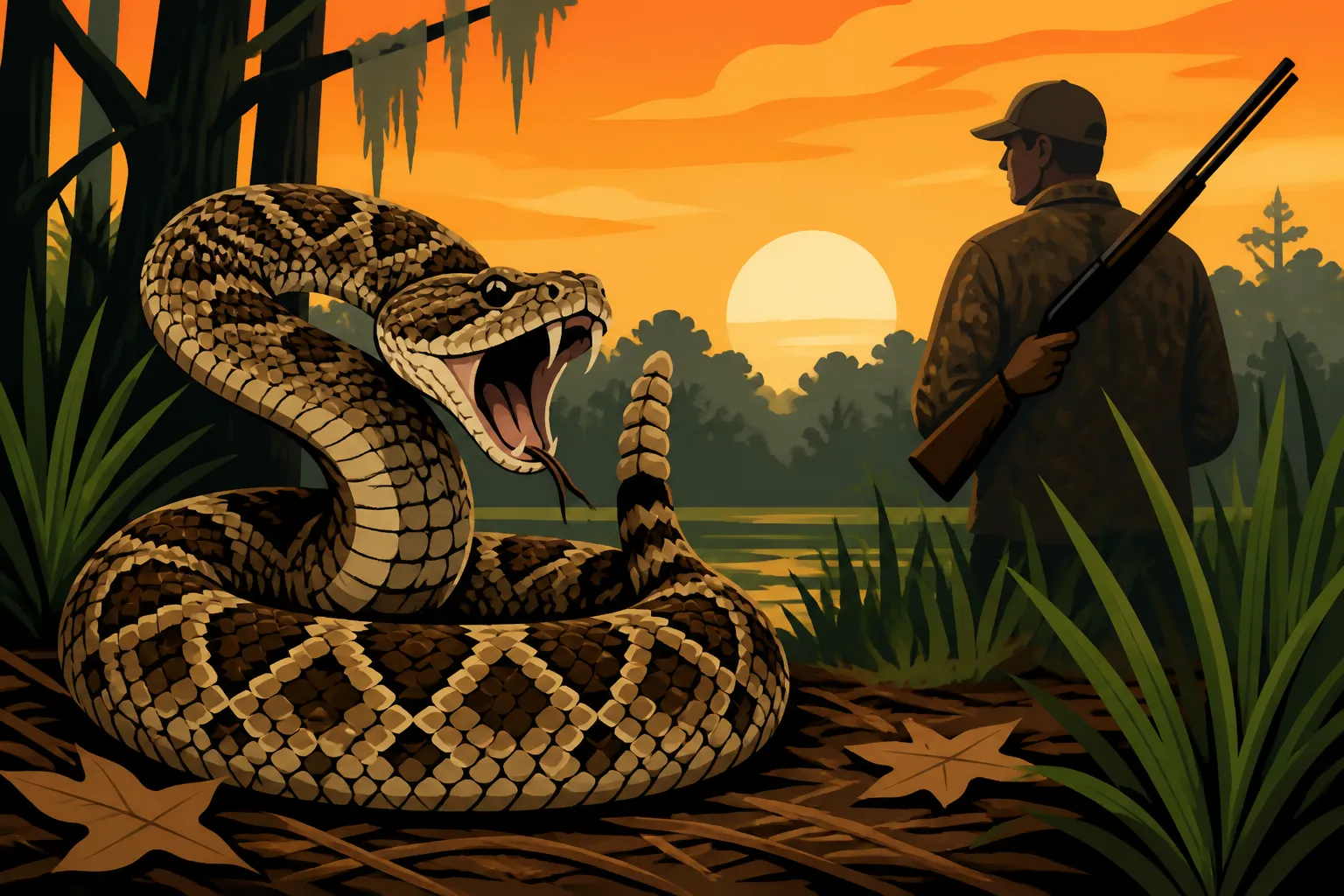
Mississippi is fortunate to host these impressive reptiles, primarily in the southern and eastern parts of the state, particularly in regions dominated by longleaf pine forests and sandy soils. Think of areas like the Piney Woods region, where their camouflaged scales blend seamlessly with pine needles and fallen leaves. They are masters of ambush, preferring to lie still and wait for prey like rabbits, squirrels, or even small birds to come within striking distance, rather than actively hunting them down. This ambush strategy is key to understanding why you might stumble upon one – they are not out looking for a fight, but they will defend themselves if they feel threatened.
Identifying a diamondback is pretty straightforward once you know what to look for. They are our largest venomous snake, often reaching four to five feet in length, and some even longer. Their distinctive diamond-shaped patterns, usually dark brown or black, outlined by cream or yellow scales, run down their entire body. They have a large, triangular head, and of course, the iconic rattle on the end of their tail. However, a crucial point for hunters is this: do not rely solely on the rattle as a warning. A snake may be coiled and ready, but choose not to rattle, or you might not hear it over rustling leaves, wind, or your own footsteps. It's their cryptic camouflage and stillness that makes them so hard to spot until you're right on top of them. Understanding their preferred habitat helps, especially when you’re out Hunting the Piney Woods Region.
Smart Strategies to Minimize Rattlesnake Encounters
No one wants to surprise a diamondback, and thankfully, there are plenty of practical steps you can take to greatly reduce your chances of doing so while afield. It’s all about being mindful of your surroundings and taking a few common-sense precautions.
One of the absolute first lines of defense is what you wear on your lower half. Investing in good quality snake boots or sturdy snake gaiters is not just a suggestion; it's practically a requirement in prime diamondback country. Pair these with thick, durable hunting pants, and you’ll have a significant barrier between you and a potential strike. Remember, most snakebites occur on the lower leg or ankle.
Next, and perhaps most importantly, is where you actually put your feet. Never, ever step over a log, rock, or brush pile blindly. Always step on it first, allowing you to see what’s on the other side. This simple habit can prevent you from placing your foot directly next to, or even on, a coiled snake. The same goes for reaching into brush or under low-hanging branches without looking first. If you're busting through thick cover while Hunting Mississippi's Year-Round Feral Hogs, for instance, be extra vigilant. I always carry a walking stick in thick areas to probe ahead of me. It's like having an extra-long, sensitive feeler that can rustle leaves and uncover hidden dangers before you're in striking distance.
Awareness is your biggest ally. Keep your eyes peeled, not just for deer tracks or turkey scratches, but for potential snake habitat. Listen for that distinctive rattle, but don't count on it. On a warm, sunny day, especially in spring or fall, they might be out sunning themselves on trails, logging roads, or rocky outcrops. If you're using a mapping app like GoHunt to scout new areas or navigate unfamiliar public lands, pay attention to terrain features that might indicate prime snake country, such as rocky slopes, abandoned structures, or dense palmetto thickets near water sources. Scouting during the off-season, perhaps while Shed Hunting on Mississippi Public Land, can help you identify these hotspots when snakes are less active, giving you a mental map of areas to approach with caution during hunting season.
What to Do When You Spot a Diamondback Rattlesnake
So, despite all your precautions, you're out there, enjoying the peace of the woods, and then you see it: a diamondback rattlesnake, coiled or stretched out, maybe even rattling its tail. This is the moment when all that preparation really counts.
First and foremost, stay calm. I know, easier said than done, but panic can lead to mistakes. Your immediate reaction should be to freeze. Stop moving completely. The snake likely knows you're there, but by freezing, you communicate that you're not a threat, nor are you prey. Observe its posture. Is it coiled with its head raised in a defensive strike position? Or is it simply moving away or lying still?
Once you've assessed the situation, begin to back away slowly. Give the snake a wide berth – remember their strike range can be up to two-thirds of their body length. The goal is to increase the distance between you and the snake without making any sudden, jerky movements that might provoke it. Don't turn your back and run; maintain visual contact while moving away. This is not the time to be a hero, or a photographer for that matter.
What you absolutely, positively should not do is try to harass the snake, poke it with a stick, throw things at it, or attempt to move it. This is how most bites occur. A snake wants to be left alone, and if you press the issue, it will defend itself. If it's across a trail you need to cross, and you can't go around it with plenty of space, you might have to wait for it to move on its own. Patience is key. Sometimes a quiet, slow retreat and a detour is all it takes to keep both you and the snake safe.
Remember, these animals are not inherently aggressive towards humans. They view us as large, potential threats. By respecting their space and understanding their defensive nature, you can avoid a dangerous situation and leave them to their vital role in the Mississippi ecosystem.
| Diamondback Rattlesnake Facts for Hunters |
|---|
| Average Size |
| Primary Habitat |
| Behavior |
| Warning Sign |
| Venom Type |
| Key ID Mark |
| Conservation Status |
Essential First Aid and Emergency Preparedness for Snakebite
The absolute best defense against snakebite is prevention, but accidents can happen. Being prepared for a snakebite in the field is just as important as knowing Mississippi Deer Season Structure Explained or your Mississippi Hunting Licenses and What They Cost. If you or someone in your hunting party is bitten, quick and correct action can make a significant difference.
First, call for help immediately. This means 911 or your local emergency number. Try to stay as calm as possible; panicking will only increase your heart rate, which can unfortunately accelerate the spread of venom. If you have cell service, use it. If you're in a remote area, having a satellite messenger or GPS device with emergency contact capabilities is invaluable. When you use an app like GoHunt, remember it often has offline map capabilities, which can be critical for giving emergency responders your precise location.
The most important first aid steps are:
- Stay calm and still.
- Remove any constrictive clothing or jewelry from the affected limb before swelling begins.
- Keep the bitten limb immobilized and positioned at or below heart level to slow the spread of venom.
- Transport the victim to the nearest medical facility as quickly and safely as possible.
Now, let's talk about what not to do, because there are a lot of myths out there:
- Do NOT cut the wound. This can introduce infection and cause more damage.
- Do NOT try to suck out the venom. It doesn't work and can introduce bacteria into the wound.
- Do NOT apply a tourniquet. This can concentrate the venom and lead to severe tissue damage or even amputation.
- Do NOT apply ice or cold packs. This can restrict blood flow and worsen tissue damage.
- Do NOT try to capture or kill the snake. This is dangerous and unnecessary for treatment; medical staff treat the symptoms, not the snake species.
While some hunters carry "snakebite kits" with suction devices, most medical professionals advise against their use. The most effective treatment for venomous snakebite is antivenom, which can only be administered in a medical setting. Your absolute top priority is getting to medical care. When planning any hunt, especially on Public Hunting Land in Mississippi where help might be further away, always let someone know exactly where you’re going and when you expect to return. Knowing Mississippi Hunter Education Requirements also covers some basic first aid for emergencies like this.
Being prepared for the unexpected is part of being a responsible hunter. While the chances of a diamondback rattlesnake encounter resulting in a bite are thankfully low, having the knowledge and a plan will allow you to enjoy Mississippi's beautiful hunting grounds with greater confidence.
Disclaimer
This article is for general informational purposes only and does not constitute professional advice. Laws, prices and regulations vary by location and change over time. Consult a qualified professional for guidance on your specific situation.