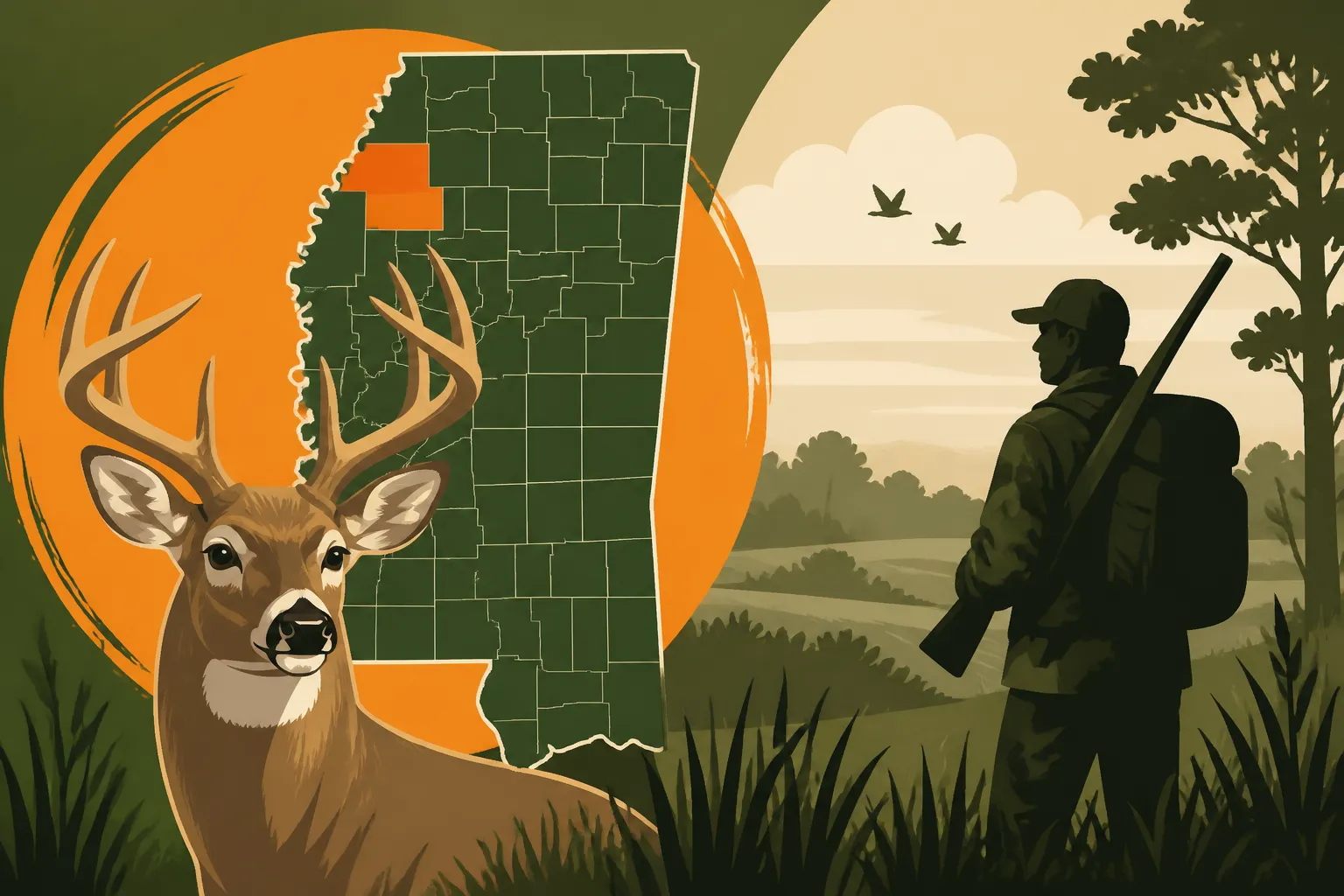
Panola County CWD Zone Public Ground
If you're a hunter eyeing the public lands of Panola County, you're likely juggling a few thoughts: where can I go, what are the season dates, and importantly, how does the presence of Chronic Wasting Disease (CWD) affect my hunt? It's a real concern for many of us who love to chase whitetails in Mississippi, and navigating those extra layers of regulation can feel a bit overwhelming. This guide is here to walk you through everything you need to know about hunting public ground in Panola County's CWD zone, from understanding the rules to finding the best spots.
Understanding Panola County's CWD Zone Designation
The diagnosis of Chronic Wasting Disease (CWD) in Mississippi has understandably brought a new set of considerations for hunters, especially those operating in designated CWD zones like Panola County. It's not just about finding deer anymore; it's about being a responsible steward of the herd and understanding the protocols that help manage this serious neurological disease.
What CWD Means for Hunters in Panola County
Chronic Wasting Disease is a fatal, transmissible neurological disease that affects cervids, including white-tailed deer. It's caused by abnormal proteins called prions, which accumulate in the brain and other tissues, leading to progressive degeneration and eventually death. For hunters, the presence of CWD isn't just a scientific curiosity; it changes the landscape of how we approach our sport. When a county, like Panola, is designated as a CWD zone, it means that the disease has been confirmed within its borders, leading to specific regulations aimed at containing its spread and monitoring its prevalence.
This designation is not meant to deter hunting, but rather to enlist hunters as active participants in wildlife management. The Mississippi Department of Wildlife, Fisheries, and Parks (MDWFP) views hunters as crucial partners in collecting data and preventing further transmission. While the idea of CWD in your hunting grounds can be disheartening, it's vital to remember that ethical hunting, combined with adherence to CWD-specific rules, is one of the most effective tools we have to combat this disease. The goal isn't to eliminate deer, but to manage the herd responsibly and gather critical information through mandatory testing. This proactive approach helps ensure the long-term health of our deer population and the continuation of our hunting heritage. You can learn more about the statewide situation in Mississippi's Chronic Wasting Disease Zones.
Key Regulations within the CWD Zone
Hunting in a CWD zone comes with a distinct set of rules designed to protect the broader deer population and public health. These aren't suggestions; they are mandatory protocols that every hunter in Panola County must follow. The most significant regulations revolve around mandatory CWD testing for harvested deer and strict carcass movement restrictions.
Firstly, if you harvest a deer within Panola County, mandatory CWD testing is required. This means that after a successful hunt, your deer must be sampled for CWD. The MDWFP typically sets up sampling stations, often at specific drop-off points, taxidermists, or even self-serve kiosks, where you can submit a sample (usually lymph nodes or brainstem tissue) from your deer. It's imperative to check the MDWFP website or their app for the most current sampling locations and procedures before you head out. Failing to get your deer tested is not only a violation but also hinders the state's ability to track the disease.
Secondly, carcass movement restrictions are a critical component of CWD management. The primary goal is to prevent the transport of high-risk parts (like the brain, spinal cord, and lymph nodes, which are where prions concentrate) out of the CWD zone. This means you generally cannot transport an intact deer carcass from Panola County into a non-CWD county. However, you can typically transport:
- Deboned meat
- Cleaned skull plates (antlers still attached, no brain material)
- Cleaned antlers
- Hides without the head attached
- Finished taxidermy products
These restrictions are in place to prevent an infected carcass from spreading prions to new areas. It's also worth noting that specific rules regarding baiting or feeding might be in effect within CWD zones, as concentrating deer at a single spot can increase disease transmission risks. Always double-check the latest regulations from the MDWFP before your hunt to ensure full compliance. It can feel like a lot of extra steps, but it's genuinely about protecting the resource we all cherish.
Navigating Public Hunting Opportunities in Panola County
Panola County offers a mix of public and private lands, and while the CWD designation adds a layer of responsibility, it doesn't diminish the opportunities for a great hunt. Understanding where you can hunt and what to expect from these lands is key to a successful outing.
Identifying Public Hunting Lands
When it comes to public hunting in Panola County, the primary destination for many is the Panola Wildlife Management Area (WMA). This WMA is a gem for public land hunters, offering diverse habitat that can hold deer, turkey, and small game. It’s managed by the MDWFP, meaning it adheres to specific rules and regulations that might differ slightly from statewide laws, in addition to the CWD protocols. Before heading out, it's absolutely crucial to consult the MDWFP WMA regulations specific to Panola WMA. These regulations cover everything from permit requirements (a WMA permit is often needed in addition to your regular hunting license) to specific open dates for various game species and even restrictions on vehicle use.
Beyond the WMA, there might be other state or federal lands, such as portions of National Forests or Corps of Engineers lands around Sardis Lake, that offer public access. However, these specific areas would need to be thoroughly researched to confirm their status and current hunting regulations. Using a reliable mapping tool like onX Hunt is incredibly valuable here. You can use its public land layers to clearly identify WMA boundaries, national forest acreage, and other publicly accessible parcels. This prevents accidental trespassing and helps you understand the layout of the land before you even step foot in the woods. These tools are far superior to guessing or relying on old paper maps, especially when dealing with nuanced boundaries.
Season Dates and Bag Limits in a CWD Zone
While Panola County is a CWD zone, the general season dates and bag limits for deer typically follow the established statewide or specific Deer Management Unit rules. Panola County generally falls within the North Central Unit's regulations, which dictate opening and closing dates for archery, primitive weapon, and gun seasons. However, the CWD designation does bring additional requirements that hunters must be aware of, especially concerning reporting and testing.
For white-tailed deer, Mississippi has a tiered system for antlered bucks and antlerless deer, with varying bag limits. In Panola County, you'll need to pay close attention to the unit-specific antler restrictions that apply. It's not just about the number of deer, but often the size of the antlers. For example, some units require bucks to have a certain number of points or an outside spread minimum. These rules are detailed in the MDWFP hunting guide.
The critical difference for CWD zones is the mandatory reporting and testing of harvested deer. Even if your deer meets the bag limit and antler criteria, it still needs to go through the CWD sampling process. This ensures that the state collects enough data to monitor the disease's prevalence and distribution. Think of it as an extra step in your harvest reporting process, a vital contribution to herd health. Always consult the official MDWFP website or the latest hunting guide for the most accurate and up-to-date information on Mississippi Deer Season Structure Explained and Mississippi Gun Season Dates by Unit. Regulations can change, and staying informed is part of being a responsible hunter.
Tactics for Hunting Panola County Public Ground
Hunting public land in Panola County, especially within a WMA like Panola WMA, demands a slightly different approach than hunting private land. Public areas often experience higher pressure, so smart scouting and adaptable tactics are crucial.
First, pre-season scouting is non-negotiable. Don't just show up on opening day. Use satellite imagery on apps like onX Hunt to identify potential bedding areas, food sources (like acorn flats or persimmon trees), and natural funnels, like creek bottoms or pinch points between thickets. Look for areas with limited access that might deter other hunters, such as places requiring a longer walk or crossing difficult terrain. An onX Hunt subscription can show you logging roads, clear cuts, and topography, giving you a distinct advantage. Understanding Scouting Mississippi Public Land Before Season is paramount.
The terrain in Panola County often features rolling hills, mixed pine and hardwood timber, and numerous creek drainages. Deer will use these features for cover and travel. Focus on saddles in ridges, benches along hillsides, and the edges of thick cover. During the rut, these natural travel corridors become hotspots for cruising bucks. Utilize tactics like still-hunting slowly through promising areas, or setting up treestands or ground blinds in strategic locations overlooking trails or natural clearings.
Since public land can be pressured, being adaptable is key. If your primary spot is already occupied, have a backup plan. Consider moving deeper into the woods than most hunters are willing to go. Also, pay attention to the wind, as deer on pressured public land are often extra wary. Using scent control and hunting from an elevated position can significantly increase your odds. Remember, consistency and persistence, combined with intelligent scouting, will often lead to success on Panola County's public grounds.
Essential CWD Precautions for Hunters in Panola County
Hunting in a CWD zone means taking extra steps to ensure you're not contributing to the spread of the disease. These precautions are for the good of the deer herd and to protect our hunting traditions in Mississippi.
Mandatory Testing and Carcass Handling
As we've discussed, if you harvest a deer in Panola County, mandatory CWD testing is not just a recommendation; it's a requirement. This process involves submitting specific tissue samples from your deer to the MDWFP for analysis. Typically, this is the retropharyngeal lymph nodes or a portion of the brainstem. The MDWFP provides clear instructions on how to collect these samples, or often has staffed drop-off points where a professional can do it for you. It’s absolutely critical to familiarize yourself with the current sampling locations and procedures well before your hunt begins. The MDWFP website and app are your best friends here. Mississippi CWD Testing for Hunters provides detailed guidance.
When handling any harvested deer within the CWD zone, it's wise to practice good hygiene. Always wear latex or rubber gloves when field dressing. Minimize direct contact with the brain, spinal cord, and lymph nodes, as these are the tissues where CWD prions are most concentrated. If you're butchering the deer yourself, keep your tools clean and separate from those used for other game.
As for transport, remember the carcass movement restrictions. The general rule of thumb is that only deboned meat, cleaned skull plates (with antlers still attached if desired, but completely free of brain matter), cleaned antlers, and hides (without the head) can leave the CWD zone. Whole carcasses, spinal columns, and brain tissue should not be transported out of Panola County. This rule is paramount in preventing the unintentional spread of CWD to new areas. Think of it as a small sacrifice of convenience for the greater good of the herd.
Disposal of Carcasses and Waste
Proper disposal of carcass remains is another vital component of CWD management in Panola County. Since CWD prions can persist in the environment for extended periods, simply tossing infected parts where other deer can access them is a recipe for spreading the disease. The goal is to keep high-risk materials within the CWD zone to prevent geographical expansion.
The MDWFP typically advises one of two primary disposal methods for inedible carcass parts (bones, entrails, head, spinal column):
- Leave at the kill site: If feasible and legal (i.e., not near a public road or in a way that attracts scavengers to undesirable locations), leaving the remains at the point of kill allows natural decomposition to occur without moving potential prions to a new area.
- Bury deep: If leaving remains at the kill site isn't practical, burying them deeply on private land (with landowner permission) is another effective method. Ensure the burial site is at least 6 feet deep to prevent scavenging animals from unearthing the remains.
- Designated disposal sites: In some CWD zones, the MDWFP might provide specific collection bins or disposal sites. Always check for these options, as they are often the most convenient and environmentally responsible method.
Absolutely do not dispose of intact carcasses or high-risk parts in public landfills outside the CWD zone, in surface waters, or in areas where they could be easily accessed by other wildlife or domestic animals. After processing your deer, thoroughly clean all knives, tools, and surfaces with a bleach solution or other recommended disinfectant. Pay special attention to your vehicle's cargo area or truck bed if you transported a deer. This vigilance, while perhaps a nuisance, is a direct contribution to managing CWD. Review Mississippi Carcass Movement Restrictions for full details.
Understanding Risk and Hunter Responsibility
Hunting in a CWD zone can raise questions about the safety of consuming venison. While CWD is a serious disease, it's important to rely on scientific guidance. The Centers for Disease Control and Prevention (CDC) and other public health organizations recommend that hunters in CWD zones get their harvested deer tested and await negative results before consuming the meat. If a deer tests positive for CWD, it is recommended not to consume the meat. This isn't just about personal health; it's about minimizing any potential risk to others.
Hunter responsibility extends beyond mere compliance with regulations. It encompasses a commitment to the long-term health of Mississippi's deer herd. By actively participating in testing, adhering to carcass movement restrictions, and properly disposing of waste, you become a frontline defender against CWD. It's a testament to the hunter's conservation ethic – protecting the resource for future generations. Don't let the presence of CWD deter you from hunting. Instead, let it empower you to be an even more informed and responsible hunter. Your actions make a difference in managing this challenge.
Here's a quick comparison of CWD zone rules versus typical non-CWD zone guidelines:
| Feature | Typical Non-CWD Zone | Panola County (CWD Zone) |
|---|---|---|
| Deer Testing | Voluntary; encouraged for surveillance | Mandatory for harvested deer |
| Carcass Movement | Whole carcass transport generally allowed | Restricted: Only deboned meat, cleaned skull plates, antlers, hides (without head) may leave the zone. |
| Carcass Disposal | Field dress remains left at site, general disposal methods | Field dress remains left at site, buried deep, or utilize designated CWD disposal sites. Avoid landfills outside zone. |
| Consumption Advice | Generally no specific precautions | Wait for negative test results before consuming meat. Do not consume meat from CWD-positive deer. |
| Baiting/Feeding | Unit-specific rules apply | Check current regulations; often prohibited or highly restricted. |
| Hunter Reporting | Harvest reporting required | Harvest reporting required, plus mandatory CWD sample submission. |
Resources and Tools for Panola County Public Land Hunters
Having the right information and tools can make all the difference in successfully hunting Panola County's public lands, especially with the added layer of CWD regulations.
Digital Mapping and Planning Tools
In today's hunting world, digital mapping applications are indispensable, and nowhere are they more useful than on public land within a CWD zone. Tools like onX Hunt are game-changers. With onX Hunt, you can overlay public and private land boundaries directly onto detailed satellite imagery, ensuring you know exactly where you stand and avoiding accidental trespassing. This is crucial when public and private parcels are intertwined, which is common in many areas. You can also identify topographical features like elevation changes, creek beds, and thickets that deer will use, helping you pinpoint potential stand locations or travel corridors before you even step foot in the woods.
Furthermore, onX Hunt allows you to drop pins, track your routes, and mark sign like rubs, scrapes, or bedding areas. This data can be invaluable for patterning deer movement over time. Another excellent tool to consider is GoHunt, which often provides detailed state-specific hunting information, draw odds for quota hunts (though not always relevant for general access WMAs), and regulatory updates that can supplement your knowledge base. While GoHunt might lean more towards western states' draw systems, its comprehensive approach to information gathering can still be beneficial for staying informed on game populations and regulations across different regions. Using these apps effectively can significantly reduce your scouting time and increase your confidence when navigating unfamiliar public territory. Check out Scouting With the MDWFP App for more digital tools.
MDWFP Website and Local Offices
When it comes to the official rules and the most up-to-date information, the Mississippi Department of Wildlife, Fisheries, and Parks (MDWFP) website (www.mdwfp.com) should be your first and most frequent stop. This is where you'll find the definitive guide to statewide hunting regulations, specific WMA rules for Panola WMA, and, critically, the latest information and updates on Chronic Wasting Disease. The MDWFP maintains a dedicated CWD section on their site, which details current CWD zones, mandatory testing locations, carcass disposal guidelines, and any emergency regulations that might be in effect.
Don't hesitate to contact your local MDWFP office or a conservation officer directly if you have specific questions about Panola County. Sometimes, an online guide, no matter how thorough, can't answer every nuance of a particular situation or piece of public land. A quick call can clarify permit requirements, specific access points, or the location of the nearest CWD sampling station. These professionals are there to help hunters understand and comply with the rules, ensuring a safe and legal hunting experience for everyone.
Community and Local Knowledge
While digital tools and official websites provide the foundational information, connecting with the local hunting community can offer invaluable insights that aren't found in any rulebook. Local hunting clubs, online forums dedicated to Mississippi hunting, and even sporting goods stores in Panola County often hold a wealth of knowledge about specific public land nuances. They might know about historical deer movement patterns, less-pressured areas, or the best access points that aren't immediately obvious on a map.
Speaking with seasoned local hunters can provide real-time updates on conditions, like mast crop availability or recent deer sightings, which can influence your hunting strategy. Just remember to be respectful and offer to share your own experiences. This kind of grassroots knowledge exchange is a hallmark of the hunting community. While you should always verify regulatory information with the MDWFP, local insights can give you that crucial edge when planning your public land hunt in Panola County. It’s about combining all available resources – digital, official, and communal – for the most comprehensive and successful approach.
Disclaimer
This article is for general informational purposes only and does not constitute professional advice. Laws, prices and regulations vary by location and change over time. Consult a qualified professional for guidance on your specific situation.