Mississippi Carcass Movement Restrictions
Hunting in Mississippi offers some incredible opportunities, but let's be honest, navigating all the rules and regulations can sometimes feel like trying to track a mature buck through a briar patch in the dark. One area that causes a lot of head-scratching and understandable frustration for hunters, especially with increasing concerns about wildlife health, is the complex world of carcass movement restrictions. It’s not as simple as it used to be, and those rules are in place for some serious reasons. This guide is here to untangle the specifics of Mississippi's carcass movement regulations, ensuring you're fully informed and compliant, whether you've just dropped a deer in the Delta or are planning a hunt in the Hills.
Understanding the "Why": The Threat of CWD in Mississippi
It’s easy to feel like these regulations are just another hoop to jump through, but trust me, there’s a critical reason behind every single one. The biggest driver for carcass movement restrictions isn’t to make your life harder, it’s to protect Mississippi’s deer herd from Chronic Wasting Disease (CWD). This disease is a real game-changer, and understanding it is the first step to understanding why these rules exist.
What is Chronic Wasting Disease?
Chronic Wasting Disease (CWD) is a neurological disease that affects deer, elk, and moose. It's caused by abnormal proteins called prions, which slowly degenerate the brain and central nervous system of infected animals. Think of it like a zombie disease for deer – animals become emaciated, disoriented, drool excessively, and eventually die. The really scary part? It's always fatal, and there's currently no vaccine or cure. The prions are incredibly hardy and can persist in the environment for years, even after an infected animal has decomposed. This is why it’s not just about the living deer, but what they leave behind.
Once an animal is infected, it can take months or even years for symptoms to appear. This "incubation period" is particularly dangerous because an apparently healthy deer can still be shedding infectious prions into the environment through its saliva, urine, and feces. It's a silent threat that can spread before anyone even knows it's there. The long-term impact on deer populations and hunting traditions could be devastating if not controlled.
How CWD Spreads and the Role of Carcasses
CWD primarily spreads through direct contact between animals, but those tough prions also contaminate the environment. When an infected deer dies and its carcass is left in the woods, or parts of it are moved to a new location, those prions can be released into the soil, plants, and water. Other deer can then pick them up by ingesting contaminated soil, plants, or water, or through direct contact with infected carcass remains. This environmental contamination is why carcass movement is such a huge concern.
Imagine harvesting a deer in an area where CWD is present, even if that deer shows no symptoms. If you then transport the entire carcass, including the brain, spinal cord, and bones, to an uninfected area, you risk depositing those prions there. It’s like carrying a suitcase full of invisible seeds from a noxious weed to a pristine garden. The goal of carcass movement restrictions is to contain those prions to known infected areas as much as possible, preventing their introduction into new, healthy habitats. This is a critical point in preventing the spread of CWD across new territories.
Mississippi's CWD History and Current Status
Mississippi discovered its first case of CWD in January 2018 in a deer harvested in Issaquena County. Since then, the Mississippi Department of Wildlife, Fisheries, and Parks (MDWFP) has been diligently monitoring and managing the disease, which has unfortunately spread to other parts of the state. The situation is constantly evolving, with new positive cases sometimes identified each season. You can find up-to-date information on the MDWFP website or through platforms like GoHunt, which often compile state-specific regulations.
The vast majority of CWD positive cases have been found in the northern part of the state, particularly within what's designated as the North CWD Zone. While the numbers aren't as high as some other states, every new case is a reminder of the persistent threat. Hunters are an essential part of the surveillance effort, and understanding Mississippi CWD Testing for Hunters and how to report harvested deer is vital. These efforts are all geared towards containing the spread and minimizing the impact on our cherished deer herds and the future of White-Tailed Deer Across Mississippi.
Navigating Mississippi's CWD Management Zones
The moment you pull the trigger or release an arrow on a deer in Mississippi, you need to know which CWD Management Zone you're in. This isn't just a suggestion; it directly dictates what you can and cannot do with that deer's carcass. Ignoring these zones can lead to serious penalties and, more importantly, contribute to the further spread of CWD.
Identifying the Current CWD Zones
The MDWFP regularly updates its maps and lists of counties designated as CWD Management Zones. As of my last check, Mississippi has a North CWD Zone, a Warren-Claiborne CWD Zone, and a Hancock County CWD Zone. These zones encompass specific counties where CWD has been detected or where there's a heightened risk due to proximity to positive cases. For example, the North CWD Zone includes counties like Benton, Marshall, Lafayette, and Pontotoc, and you can find a comprehensive list of Which Eleven Counties Sit in the North CWD Zone on the MDWFP website. It’s not static, though; new cases can lead to new counties being added to these zones, so always check the very latest information before you head out.
The best way to stay current is to regularly consult the MDWFP's official CWD map. Many hunting apps and resources, including those found on GoHunt, also integrate this information, making it easier to see if your hunting grounds fall within a restricted area. Don't rely on last year's knowledge; rules can change, and ignorance isn't an excuse when it comes to disease management.
Specific Restrictions Within a CWD Zone
If you harvest a deer within any of Mississippi's CWD Management Zones, there are mandatory rules you absolutely must follow. First and foremost, all deer harvested within a CWD Zone, regardless of whether you suspect CWD or not, are subject to Mandatory Testing Inside a Mississippi CWD Zone. Hunters are required to submit the deer's head for CWD testing at an approved sampling station. This is a critical step for surveillance, allowing the MDWFP to monitor the prevalence and spread of the disease.
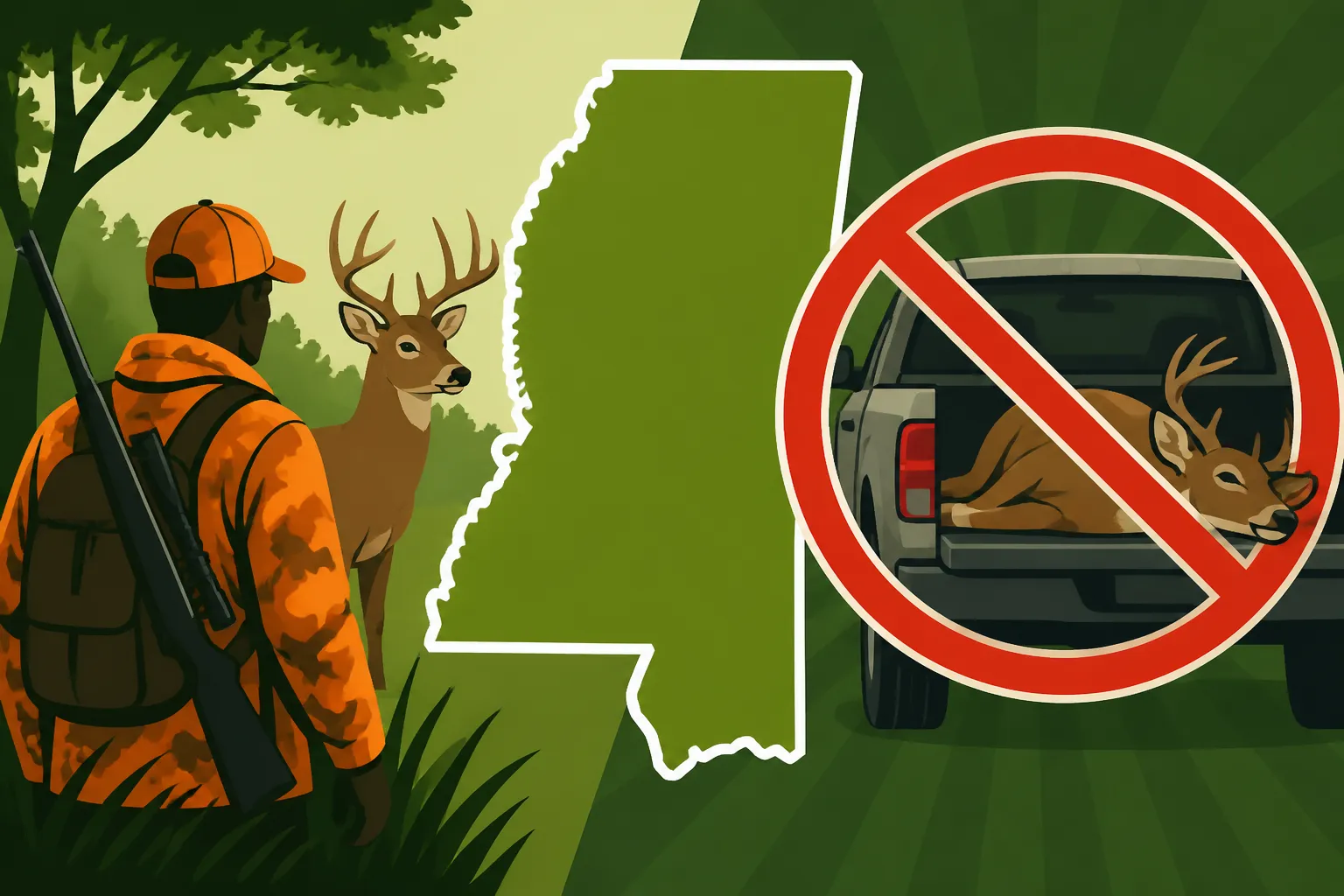
Beyond testing, there are strict carcass movement restrictions even if you plan to keep the deer within that same CWD Zone. You cannot transport an entire carcass out of the zone unless it has been processed to specific standards. This means no whole deer loaded in the truck bed and driven across county lines if those lines happen to be CWD zone boundaries. The goal is to minimize the potential for prions to leave the infected area, even if it's just to another part of the CWD zone.
Restrictions When Transporting Out of a CWD Zone
This is where it gets tricky and often causes the most confusion. If you harvest a deer within a CWD Management Zone and intend to transport it out of that zone, you are severely limited in what parts of the carcass you can move. The general rule is this: only specific, low-risk parts of the deer can leave a CWD Management Zone. This rule applies whether you're taking it to another county in Mississippi or trying to cross state lines.
You are expressly prohibited from transporting the entire carcass, brain, spinal cord, eyes, spleen, lymph nodes, or any other nervous system tissue out of a CWD Management Zone. These are the parts that are most likely to harbor and spread the CWD prions. It means you can't just throw a whole deer in the truck and drive it home if "home" is outside a CWD Zone. This is one of the most important aspects of Mississippi Carcass Movement Restrictions. Hunters need to be prepared to process their deer appropriately before leaving the designated zone.
Allowable Carcass Parts and Preparations for Movement
So, what can you take with you if you've harvested a deer in a CWD Zone and want to transport it elsewhere? The rules are designed to allow hunters to take home their venison and antlers while minimizing the risk of CWD transmission. It boils down to leaving the high-risk parts behind.
What You Can Move: Approved Carcass Components
The MDWFP specifically outlines which parts of a deer carcass are considered "low-risk" and can be transported out of a CWD Management Zone. These include:
- Deboned meat: This is the most common and safest way to transport venison. All meat should be removed from the bone.
- Antlers: If the skull plate is attached, it must be cleaned of all brain tissue and other nervous system tissue. This means boiling or pressure washing the skull plate until it's bone-dry and clean.
- Clean skull plates: As mentioned for antlers, these must be completely free of brain and nervous tissue.
- Hides: The hide itself is generally considered low-risk, but it should be free of any meat or nervous system tissue.
- Finished taxidermy products: Once a taxidermist has fully processed and mounted a deer, it is considered safe for transport.
- Teeth: Individual teeth are also allowed.
It's important to understand that "deboned meat" means exactly that – no bones attached. This isn't just about convenience; it's about removing the parts where prions are most concentrated. If you're planning to hunt in a CWD Zone, you need to go into it knowing you'll be doing some serious field processing if you intend to take your meat home.
Field Dressing and Quartering for Compliance
For hunters pursuing deer within a CWD Management Zone, proper field dressing and quartering are not just good practice, they're a legal necessity if you plan to move any part of that deer out of the zone. The moment that deer is on the ground, your thought process shifts from celebration to compliant processing.
First, standard field dressing to remove the viscera should happen immediately. Then, if you plan to transport the meat out of the zone, you'll need to go a step further and quarter the animal. This means separating the deer into its four main quarters, removing the backstraps, and ideally, completely deboning the meat right there in the field or at a local drop-off point within the CWD zone. The goal is to leave the spinal column and other high-risk parts, like the head and internal organs, within the CWD zone. This might sound like a lot of work, and it is, but it's crucial for compliance and disease mitigation. Always be prepared with a good knife, game bags, and a plan for disposal of the unwanted parts.
Processing Your Deer Before Transport
Many hunters prefer to use local meat processors or taxidermists, and this is an excellent strategy when dealing with CWD zones. If you harvest a deer in a CWD Management Zone, identifying a reputable processor within that zone is highly recommended. These processors are already set up to handle deer from CWD areas, understand the regulations, and can ensure your meat is deboned and ready for transport out of the zone. They can also ensure that the high-risk parts are properly disposed of according to MDWFP guidelines.
Similarly, if you're lucky enough to harvest a trophy buck and want a shoulder mount, work with a taxidermist who is either located in the CWD zone or is well-versed in the requirements for handling CWD-positive animals or those taken from CWD zones. They will know how to properly clean the skull plate of all brain and nervous tissue to make it compliant for transport. This takes the guesswork out of it for you and ensures you're not inadvertently contributing to the spread of CWD. Using certified professionals can make Handling Venison From a CWD Management Zone much simpler.
Practical Tips for Hunters: Planning Your Hunt and Transport
Dealing with CWD restrictions requires a shift in how many of us plan our hunts. It's no longer just about scouting for deer sign or figuring out stand placement. Now, logistics around carcass handling are just as important as knowing When Mississippi's Archery Season Opens.
Scouting and Planning Around CWD Zones
Before you even load up your gear, you need to know exactly where you’re hunting in relation to the CWD Management Zones. This proactive step can save you a lot of headache and potential legal trouble. The MDWFP provides interactive maps online that clearly show the boundaries of all CWD Zones. Use these resources, and consider apps like GoHunt, which often overlay these boundaries on topo maps, giving you real-time information right in the field.
If your hunting land straddles a CWD zone boundary, or if you plan to hunt in a CWD zone and then travel through non-CWD counties, you need a plan for carcass handling. Will you field-debone the animal? Is there a local processor in the area you can use? What's your disposal plan for the high-risk parts? Thinking through these details before the hunt is crucial. For example, if you're hunting in the Delta Unit near a CWD zone, understanding Hunting the Rut in the Delta Unit is important, but so is understanding how to legally get your trophy home.
Essential Gear for Compliant Carcass Handling
To be prepared for field processing in a CWD zone, you'll need more than just your usual hunting knife. Consider bringing:
- Multiple sharp knives: Deboning a deer takes time and can dull a blade quickly.
- Game bags: To keep your deboned meat clean and protected.
- Bone saw: For quartering the animal efficiently.
- Rubber gloves: For hygiene and protection.
- Coolers with ice: To properly chill deboned meat quickly, especially in warmer Mississippi weather.
- Plastic sheeting or a tarp: For a clean surface to work on.
- Large garbage bags: For easy containment and disposal of unwanted parts.
- A designated "carcass disposal" plan: Know where local CWD disposal sites are, if available, or how you will legally dispose of the carcass remains.
Having this gear on hand means you won't be caught off guard when you harvest a deer. It allows you to quickly and efficiently process the animal to comply with the regulations, making the most of your hunting experience while being a responsible conservationist.
Utilizing Local Processors and Taxidermists
I cannot stress enough how much easier your life will be if you plan to use local services when hunting in CWD zones. Before your hunt, identify meat processors and taxidermists within or very close to the CWD Management Zone you'll be hunting. Give them a call to confirm their services, hours, and if they have any specific protocols for CWD zone deer.
Using a local processor ensures that the high-risk parts (head, spinal column, etc.) remain within the CWD zone, which is the primary goal of the restrictions. They have the facilities and the knowledge to handle the carcass properly and dispose of the waste responsibly. If you're after a trophy, talk to a taxidermist about skull plate cleaning or European mount options that comply with the movement rules. This partnership with local businesses is key to managing CWD effectively and keeps you out of hot water. Plus, it supports local economies, which is always a good thing!
| Carcass Part | Can Be Transported Out of CWD Zone? | Required Preparation |
|---|---|---|
| Deboned Meat | Yes | Must be completely removed from bone. |
| Antlers | Yes | If skull plate attached, must be cleaned of all brain/nervous tissue. |
| Clean Skull Plates | Yes | All brain/nervous tissue removed (boiled/power washed clean). |
| Hides | Yes | Must be free of all meat and nervous tissue. |
| Finished Taxidermy Products | Yes | Completely processed and mounted. |
| Teeth | Yes | Individual teeth only. |
| Whole Carcass | No | Not allowed. |
| Brain/Spinal Cord | No | Not allowed. |
| Eyes, Spleen, Lymph Nodes | No | Not allowed. |
Common Hunter Scenarios and Solutions
The rules around CWD can present some real-world dilemmas. Let's walk through a few common scenarios hunters face and how to navigate them effectively and compliantly.
Hunting Near a Zone Boundary
Imagine your favorite deer stand is just a stone's throw from a CWD Management Zone line. You scouted well, knew the wind was right, and a beautiful buck steps out. You make a perfect shot. Now what? The most critical step here is to know exactly where you are. Even if you think you're outside the zone, double-check your location using a GPS-enabled hunting app that shows CWD boundaries. Many hunters use apps that integrate data from sources like GoHunt for precise location information relative to these zones.
If you harvest the deer and confirm you are inside a CWD Zone, then you must adhere to all CWD Zone regulations, including mandatory testing and carcass movement restrictions. This means field dressing, deboning, and leaving high-risk parts within the zone. If you are outside the zone, you are not subject to these specific CWD Zone restrictions for that deer, but you should still be mindful of general deer reporting requirements and ethical carcass disposal. The uncertainty near boundaries is why it's so important to have your mapping tools ready. You don't want to inadvertently break a regulation because you were 50 yards over an invisible line.
Taking Your Trophy to an Out-of-State Taxidermist
For nonresident hunters, or even residents who prefer a specific taxidermist in another state, transporting a trophy buck from a Mississippi CWD Zone across state lines adds another layer of complexity. The rule remains consistent: only approved, low-risk parts can leave the CWD Zone. This means a whole head with the brain still inside cannot cross state lines from a CWD area.
Your best bet is to cape out your buck and remove the skull plate with the antlers attached. Crucially, the skull plate must be thoroughly cleaned of all brain and nervous tissue. This often involves boiling, scraping, and power washing until it's bone-dry and spotless. The cape itself can be taken with you as long as it's free of any meat or nervous tissue. For the meat, it needs to be completely deboned. Some hunters might even arrange to have the skull plate cleaned by a local taxidermist in Mississippi before taking it out of state. Always check the regulations of your destination state as well, as they may have their own import restrictions for deer from CWD-positive states.
What to Do with the Carcass Remains
Proper disposal of carcass remains is often overlooked but is a vital part of CWD management. If you've field-deboned your deer within a CWD Management Zone, you'll be left with bones, the spinal column, internal organs, and the head. These parts are considered high-risk for CWD prions and must not be moved out of the zone.
The MDWFP often provides designated CWD carcass disposal sites within or near CWD Zones, typically large dumpsters specifically for this purpose. Check the MDWFP website or their app for locations of these sites. If a designated site isn't available, the recommendation is to double-bag the remains and dispose of them in a permitted landfill. Never, ever, dump carcass remains in ditches, on roadsides, or in areas where other deer might have access. This simply defeats the purpose of the movement restrictions and actively contributes to potential CWD spread. Being responsible with carcass remains is a non-negotiable part of ethical hunting in a CWD-affected landscape.
Staying Informed: Resources and Responsibilities
Let’s face it, these regulations are dynamic. What’s true today might have a slight tweak next season, especially with an evolving disease like CWD. As hunters, it’s our responsibility to stay current and proactive.
Official MDWFP Resources
The Mississippi Department of Wildlife, Fisheries, and Parks (MDWFP) is your ultimate, authoritative source for all CWD regulations, zone maps, and updates. Their website (www.mdwfp.com) is regularly updated and contains specific sections dedicated to CWD, including:
- Interactive CWD Maps: These are invaluable tools that show current CWD Management Zones down to specific county lines and even within certain areas.
- CWD Sampling Locations: A list of where you can take your deer head for mandatory testing if harvested in a CWD Zone. These locations are often at local meat processors, taxidermists, or dedicated MDWFP drop-off points.
- Latest News and Updates: Any changes to regulations, new confirmed cases, or expanded zones are usually announced here first.
- FAQs: A wealth of information addressing common hunter questions about CWD and regulations.
Don't just glance at these resources once a year. Make it a habit to check them before each season, and even before a specific hunt if you’re heading into a new area or a known CWD zone. The MDWFP also offers an app that can provide much of this information right on your phone in the field. This resource is also key for things like Mississippi Deer Reporting Requirements.
The Hunter's Role in CWD Management
As hunters, we are on the front lines of wildlife conservation. Our actions directly impact the health of the deer herd and the future of hunting. When it comes to CWD, your role is absolutely critical. This isn't just about following rules to avoid a fine; it's about being an active participant in protecting a vital natural resource.
Your responsibilities include:
- Staying Informed: As discussed, regularly checking official MDWFP resources.
- Following Regulations: Adhering to all carcass movement restrictions and mandatory testing requirements.
- Reporting: If you see a deer exhibiting CWD-like symptoms (extreme emaciation, drooling, neurological issues), contact the MDWFP immediately. Do not attempt to harvest or handle the animal yourself without guidance from wildlife officials. This contributes to vital Mississippi Wildlife Disease Monitoring.
- Ethical Disposal: Properly disposing of all carcass waste in designated areas or approved landfills.
- Advocacy: Educating fellow hunters and landowners about CWD and the importance of these management efforts.
By taking these responsibilities seriously, you become an indispensable partner in the fight against CWD. It's not just about bagging a deer; it's about safeguarding the health of the entire herd for generations of Mississippi hunters to come.
Disclaimer
The information provided in this article is intended for general guidance and informational purposes only. Hunting regulations, especially those pertaining to disease management like CWD, are subject to change by the Mississippi Department of Wildlife, Fisheries, and Parks (MDWFP). It is the sole responsibility of each hunter to consult the most current official MDWFP regulations and local ordinances before engaging in any hunting activities. This guide should not be considered a substitute for legal advice or official government publications.