Still-Hunting Hills Unit Ridges
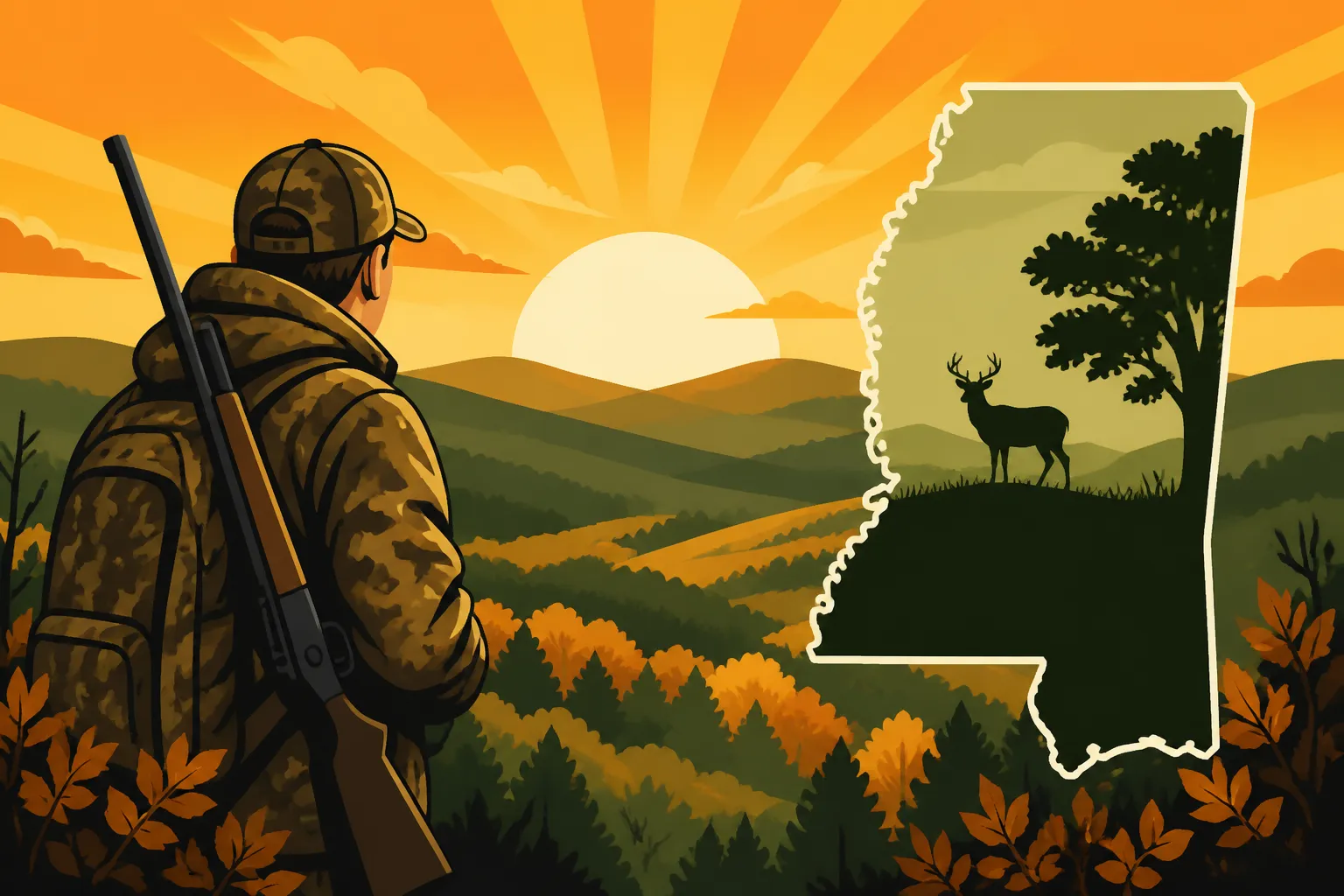
The rolling hills and dense timber of Mississippi’s Hills Unit can make deer hunting feel like an endless game of hide-and-seek. You’ve probably spent countless hours meticulously scouting, pouring over maps, and moving through the woods as quietly as possible, only to have deer bust out unseen or simply never materialize. This comprehensive guide aims to demystify the art of still-hunting these challenging ridges, providing you with practical strategies to consistently find and harvest deer in this unique Mississippi landscape.
Understanding the Hills Unit Terrain for Still-Hunting
Still-hunting in Mississippi's Hills Unit isn't just a casual stroll; it's a strategic dance with the landscape. This region, characterized by its rolling hills, steep draws, and mixed hardwood and pine forests, presents a unique set of challenges and opportunities. Unlike the flat, agricultural expanse of the Delta, deer here often rely on elevation changes and dense cover for security. Knowing how to read this terrain is your first step toward success, transforming seemingly random movements into deliberate, effective hunting patterns.
Ridge and Valley Dynamics
The core of Hills Unit hunting lies in understanding how deer use the ridges and the valleys that cut between them. Deer aren't going to spend all their time on the steepest, most exposed ridge tops, but they won't ignore them either. Often, they travel just below the crest of a ridge, using the slight elevation for cover while still having a vantage point down into the draws. These "benches" or "secondary ridges" can be goldmines for fresh sign. Bucks, particularly during the rut, love to cruise these subtle high points.
Valleys, or draws, serve as natural highways, especially those with creek bottoms or thicker cover. Bucks, especially, will cruise these draws, scent-checking for does moving between feeding and bedding areas. It's not uncommon to find areas where several draws converge, creating a natural funnel that forces deer movement into predictable patterns. Over time, as you gain experience, you'll start to see these patterns emerge almost instinctively. Think about elevation and sun exposure too. During colder weather, south-facing slopes, catching more sun, can be preferred bedding areas. In warmer conditions, deer might gravitate towards the cooler, shadier north slopes or dense creek bottoms. Understanding these micro-habitat preferences within the broader ridge and valley system is critical for placing yourself where deer are most likely to be.
Identifying Key Funnels and Pinch Points
Deer, like all animals, are creatures of efficiency. They'll take the path of least resistance or the path that offers the most security. This is where funnels and pinch points become vital for the still-hunter. A funnel might be a narrow saddle between two ridge tops, forcing deer to cross at that specific point. It could be a strip of thick timber connecting two larger woodlots, or even a line of mature oaks running between a clear-cut and a bedding area. These are places where multiple deer trails converge, making your odds of encountering a deer significantly higher.
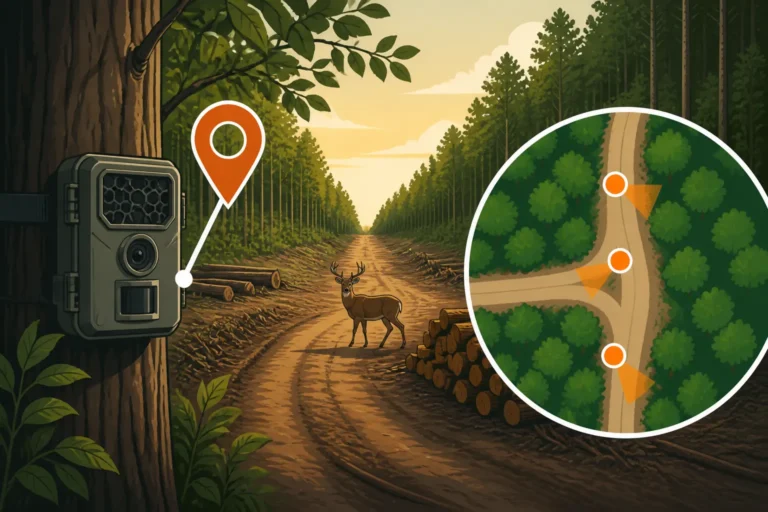
Pinch points are often created by natural barriers—a steep, uncrossable bluff, a wide creek, or even a dense, impenetrable thicket. Deer will be "pinched" into a narrower travel corridor to get around these obstacles. Imagine a point where a large ridge narrows down before dropping into a valley; deer will likely follow that narrow path. Or consider a spot where a deep ravine comes close to a logging road, leaving only a small strip of huntable ground between them. These are prime locations for an ambush or for slowing down your still-hunt to scan intensely. Using tools like the GoHunt app on your phone can really help you identify these features on an aerial map before you even step foot in the woods, allowing you to plan your still-hunting route with precision. Knowing how to apply Reading Aerial Photos for Hills Unit Deer can drastically improve your chances here.
Impact of Timber Type on Deer Movement
The composition of the forest itself plays a huge role in how deer move through the Hills Unit. Mississippi's Hills Unit boasts a mix of mature hardwoods, younger pine plantations, and transitional zones. Mature hardwood stands, especially those with oak species, are prime feeding areas during the fall when acorns drop. Deer will often frequent these areas, moving through them slowly, browsing for nuts. Still-hunting through these open hardwoods can be productive, but stealth is paramount.
Conversely, dense pine plantations, especially those in the 5-15 year growth stage, provide excellent thermal and security cover. Deer will bed in these thickets and use the dense understory for sanctuary. While still-hunting through these can be incredibly challenging due to visibility and noise, the edges of these pine blocks, where they transition to hardwoods or open fields, are often high-traffic zones. Deer will stage in the pines before moving out to feed or breed, or retreat into them when pressured. Pay close attention to these transition lines; they act as natural travel corridors and staging areas. When considering Hunting the Southeast Unit Pine Flats, many of the same principles apply to the pine areas within the Hills Unit, albeit with different topography.
Reading Deer Sign on Hills Unit Ridges
Still-hunting is as much about reading the invisible story of the woods as it is about moving quietly. Every scrape, rub, track, and dropping tells you something about the deer that live there and how they use the terrain. Learning to interpret these signs, especially on the often-rugged Hills Unit ridges, is crucial for predicting deer movement and putting yourself in the right place at the right time. Don't just look at the sign; try to understand why it's there, and what the deer was doing.
Fresh Scrapes and Rub Lines
Ah, scrapes and rub lines – the billboards of the whitetail world. Finding fresh sign like this on a Hills Unit ridge can feel like hitting the jackpot. Scrapes, those cleared patches of ground with an overhanging branch, are primarily communication tools. Bucks will paw the ground, deposit urine, and work the licking branch, announcing their presence and readiness to breed. You'll typically find scrapes along travel corridors, particularly on ridge tops, saddles, or the edges of thicker cover. When you find a fresh scrape, especially during the pre-rut and rut, slow down significantly. A buck is likely checking this scrape regularly, making it a prime spot to still-hunt past or even sit for a short period. Look for clusters of scrapes, or "scrape lines," which indicate a heavily traveled route.
Rub lines are another fantastic indicator, especially for mature bucks. These are trees where bucks have rubbed their antlers, removing bark. Rubs tell you a few things: the direction a buck is moving (the side of the tree rubbed more heavily often faces the direction of travel), and the size of the buck (larger rubs usually mean larger antlers, though not always). On Hills Unit ridges, you'll often find rub lines paralleling the ridge top, just off the crest, or leading into bedding areas. A fresh rub, with splintered wood and sap still visible, means a buck has been there very recently. Follow these rub lines slowly, moving in the direction the buck was traveling, and be ready. This is where Rattling and Grunting in Mississippi can come in handy; a well-placed call near a fresh rub line can sometimes lure in a curious buck, thinking it's another buck intruding.
Tracking and Interpreting Tracks
Tracking deer on the leaf-littered forest floor of the Hills Unit can be an art form in itself. It's not always about following a clear trail like you might in snow or mud, but rather picking up subtle clues. You're looking for disturbed leaves, small indentations, or displaced debris. When you do find clear tracks, examine them closely. Size matters, of course, but also look at the stride length, the depth of the track (indicating weight), and whether the deer was walking, trotting, or running. A wide-splayed track might indicate a heavy-bodied buck. A drag mark from a dew claw often signals a heavier, mature animal.
More importantly, interpret the direction and purpose of the tracks. Are they leading from a suspected bedding area towards a feeding area? Are they paralleling a ridge, or dropping into a draw? Fresh tracks are your best friend. A track with sharp, undisturbed edges, especially if it's recently rained or dewed, is gold. If you find a series of fresh tracks heading in a specific direction, consider that your still-hunting path. The GoHunt app can help you mark these discoveries on your map, creating a detailed picture of deer movement over time. Understanding the intricacies of Tracking a Deer Through Mississippi Leaf Litter will immensely improve your still-hunting success, making you a more observant hunter.
Locating Bedding Areas
Finding where deer bed down is paramount for still-hunting success. On Hills Unit ridges, bedding areas are usually chosen for security, warmth (in colder months), coolness (in warmer months), and an advantageous vantage point. They're often on the downwind side of a ridge crest, allowing deer to smell anything approaching from behind, while also being able to see downslope. Thick cover is almost always a component – a dense stand of pines, a thick briar patch, or a tangle of fallen timber.
When still-hunting, you're not trying to walk into a bedding area unless you're very confident in your stealth and the wind is absolutely perfect. Instead, you're trying to identify the edges and approaches to bedding areas. Look for dense cover on south-facing slopes in winter, or north-facing slopes/creek bottoms in summer. You might find beds themselves – depressions in the leaves, often with deer hair. Fresh droppings in these areas also confirm recent use. Once you identify potential bedding zones, you can then plan your still-hunt to skirt these areas, aiming to intercept deer as they move from their beds to feeding areas, or vice versa. This precise knowledge of deer behavior makes your still-hunt far more productive and less likely to blow deer out.
Still-Hunting Strategies and Tactics
Still-hunting is often misunderstood. It’s not simply walking slowly; it’s a deliberate, methodical approach that combines stealth, observation, and patience. In the Hills Unit, where terrain is varied and visibility can be limited, mastering these strategies will make the difference between seeing deer and simply walking through their living room unnoticed. It's about being part of the environment, not just passing through it, and letting the woods reveal themselves to you.
Pacing and Movement Speed
This is perhaps the most crucial aspect of successful still-hunting. Your pace should be agonizingly slow – almost ridiculously so. Think of it as taking one or two steps, then stopping for 30 seconds to several minutes to scan. A good rule of thumb is to take no more than 10-20 steps per minute. It feels unnatural at first, like you’re not covering enough ground, but remember, you’re not covering ground; you’re hunting ground. This slow pace allows you to thoroughly scan your surroundings, pick apart cover, and most importantly, detect deer before they detect you. Deer rarely hold still for long; they browse, they fidget, they flick ears. Your slow pace increases your chances of catching that subtle movement or hearing a rustle of leaves that gives them away.
Consider the terrain and visibility. In open hardwoods on a ridge, you might slightly increase your pace between stops, but never to the point of rushing. When entering thicker cover or approaching a known pinch point, your pace should slow to a crawl, even five steps a minute. On particularly steep or noisy sections, you might even pause for several minutes, letting the woods settle around you, listening intently for sounds that don't belong. This isn't a race; it's a quiet, deliberate hunt. The slower you move, the more you see, and the less likely you are to spook game.
Using Cover and Concealment
In the Hills Unit, natural cover is abundant, and learning to use it to your advantage is paramount. Don't walk in the open unless you absolutely have to. Instead, pick routes that keep you in the shadows, behind large trees, or along the edges of thicker brush. Imagine you are a predator, always trying to blend in and break up your outline. When you stop to scan, position yourself behind a tree trunk or in dense foliage. This not only conceals you but also provides a stable rest if you need to take a shot, which is vital when a deer suddenly appears.
Pay attention to your silhouette against the skyline when on ridges. Never walk directly on the crest of a ridge if you can avoid it, as you'll be silhouetted against the sky. Instead, try to stay just below the crest, using the natural break in elevation to hide your form. This "military crest" provides concealment while still giving you a good view downslope. Using a natural screen of saplings or a rise in the ground can keep you hidden from eyes that are constantly scanning. Remember, deer are far more attuned to movement and solid shapes than color, so breaking up your outline and remaining still are key elements of concealment.
Stop-and-Go Scanning Techniques
Still-hunting is essentially a series of controlled movements followed by intense periods of observation. When you stop, don't just glance around. Systematically scan your surroundings. Start close, looking for details like a deer's leg, an ear twitch, or a patch of hair that looks out of place. Then, slowly expand your scan outwards, working from foreground to background, and from side to side. Use your binoculars or monocular, especially in thicker cover or at longer distances. Don't just look for an entire deer; look for parts of a deer. That horizontal line of a back, the vertical line of a leg, the shine of an eye.
After your initial wide scan, focus on high-probability areas: dense thickets, brush piles, the bases of large trees, and any shadows or depressions where a deer might be bedded. Spend extra time scanning funnels and pinch points. Repeat this process every time you stop. It’s a painstaking method, but it’s how you uncover deer that are standing perfectly still, trying to avoid detection. This methodical approach is far more effective than simply walking and hoping to spot a deer, greatly increasing your chances, especially when hunting during Mississippi's Gun Deer Season by Unit.
Navigating Wind and Thermals in Hilly Country
In the flatlands, wind is often a straightforward concern. In the Hills Unit, however, things get complicated. The rolling topography creates its own mini-weather systems, especially when it comes to thermals – the rising and falling air currents influenced by temperature changes. Ignoring wind and thermals on a still-hunt in this terrain is a surefire way to have deer smell you long before you ever see them. Mastering this aspect is non-negotiable for success.
Understanding Uphill and Downhill Thermals
Thermals are essentially invisible air currents that move due to heating and cooling. As the sun rises and warms the earth, air in the valleys begins to warm and rise, carrying your scent uphill. This is called an uphill thermal. It usually starts an hour or two after sunrise and can persist through midday, especially on sunny slopes. So, if you're still-hunting uphill in the morning, your scent will likely be carried ahead of you, right into where deer might be bedded.
Conversely, as the sun sets and the air cools, particularly in the evening, cooler, denser air begins to sink into the valleys, carrying your scent downhill. This is a downhill thermal. It typically starts a couple of hours before sunset and lasts through the night. The implications for still-hunting are huge:
- Morning (Uphill Thermal): Hunt down a ridge or parallel to a ridge, moving across the contour, letting your scent blow away from the deer's likely approach. Avoid hunting up a draw or a ridge, as your scent will rise directly ahead of you.
- Evening (Downhill Thermal): Hunt up a ridge or a draw, letting your scent sink behind you. Avoid hunting down a ridge or draw, as your scent will fall ahead of you into potential deer paths.
This might seem overly complex, but with practice, you'll start to feel these shifts. A small amount of smoke from a milkweed pod or a commercial wind checker is invaluable to confirm wind direction and thermal movement. It’s a critical piece of the puzzle, and often overlooked by hunters accustomed to flatter ground.
Planning Your Approach Based on Wind Direction
Beyond thermals, the prevailing wind still matters, and it interacts with the thermals. Your primary goal is always to keep the wind, and therefore your scent, out of the deer's nose. This means planning your entire still-hunting route to keep the wind in your face or quartering to you. On a Hills Unit ridge, this often means traversing the side of the ridge that keeps the wind blowing away from where you expect deer to be.
If the wind is from the west, for example, and you expect deer to be on the east side of a ridge (perhaps feeding on acorns), you would still-hunt along the west side of that ridge, staying just below the crest, letting your scent blow harmlessly into the opposite valley. Then, as you approach a saddle or funnel, you might carefully cross the ridge top, always mindful of the wind. This kind of nuanced approach can be challenging, but it’s what sets successful still-hunters apart. Using an app like GoHunt, which can often integrate real-time wind data, helps you plan routes on the fly, showing you precisely how your scent cone might be carrying. While Wind and Thermals in Delta Bottomland discusses a different region, the core principles of using wind to your advantage remain the same regardless of terrain.
Adapting to Shifting Winds
One of the biggest frustrations in the Hills Unit can be the swirling, unpredictable winds. A steady 10 mph breeze on flat ground can become a maddening carousel of gusts and eddies in hilly terrain. Valleys and draws can channel wind differently than exposed ridge tops. Sometimes, you'll feel the wind hit you from one direction, only to have it swirl moments later. This is where constant vigilance with a wind checker is vital.
If the wind shifts drastically in the middle of your still-hunt, you have to adapt. Sometimes this means changing your planned route, moving to a different side of a ridge, or even temporarily pausing your hunt in a secure location until the wind settles. Other times, it means accepting a less-than-perfect wind but compensating with even slower movement and hyper-vigilance. There are days when the wind simply won't cooperate, and those might be the days to try a different tactic, like a stand hunt, or focus on areas where the topography is less likely to create swirling currents. Never rely on your sense of smell; deer are far superior. Trust your wind checker and adjust your movements accordingly.
Essential Gear for Still-Hunting Hills Unit Ridges
Still-hunting in the rugged terrain of the Hills Unit demands more than just a rifle and good intentions. The right gear can significantly enhance your comfort, safety, and ultimately, your success. It's not about having the most expensive stuff, but about having practical, reliable equipment that suits the unique demands of this hunting style and environment. Don't overlook the details – they make a difference when you're miles from the truck and relying on yourself.
Optics for Hills Unit Still-Hunting
Your eyes are your primary tool when still-hunting, but a good pair of optics dramatically extends their reach and capability. Forget about a huge, heavy spotting scope; for still-hunting, you need something compact and easy to deploy. A good pair of 8×42 or 10×42 binoculars is ideal. They strike a balance between magnification, field of view, and light-gathering capability. These will allow you to pick apart thickets, identify movement at a distance, and confirm small details like an ear twitch or the tine of an antler that you might otherwise miss with the naked eye.
When you stop to scan, raise your binoculars slowly and deliberately, taking care not to make jerky movements that might alarm a nearby deer. Scan methodically, just as you would with your naked eye, but with the added power of magnification. On a Hills Unit ridge, you might be looking across a deep draw or scanning a distant slope for movement. A quality binocular from a reputable brand will be clear, durable, and perform well in low-light conditions, which is crucial during those dawn and dusk hours when deer are most active. This is an area where investing in good quality pays off for decades.
Footwear and Layering for Uneven Terrain
Comfort and stealth start from the ground up, and that means your footwear is incredibly important. You'll be doing a lot of walking, often on uneven, rocky, or leaf-covered ground, and potentially up and down steep inclines. Therefore, sturdy, comfortable, and waterproof boots with good ankle support are non-negotiable. Look for boots that are flexible enough to allow for quiet movement but rigid enough to protect your feet and ankles. Breaking in your boots before season is critical to avoid blisters and discomfort that will distract you from the hunt.
Layering your clothing is equally important for the variable Mississippi weather. You might start a morning hunt in the Hills Unit needing a heavy jacket, only to find yourself shedding layers by midday as you exert yourself climbing hills. A good layering system consists of a moisture-wicking base layer, an insulating mid-layer (fleece or down), and a waterproof/windproof outer shell. This allows you to adjust your clothing throughout the day to match your activity level and the changing conditions, preventing overheating and chilling – both of which can compromise your hunt. Remember to choose quiet fabrics that won't rustle loudly against brush, giving away your position.
Navigation Tools and Apps
Getting lost in the sprawling timber of the Hills Unit is a real concern, and a significant safety hazard. A reliable navigation system is essential. While a physical compass and map are always good backups, modern GPS units and smartphone apps have revolutionized backcountry navigation. An app like GoHunt or onX Hunt, loaded with satellite imagery and topographic maps, allows you to pinpoint your exact location, mark deer sign, track your route, and identify property boundaries. These tools are indispensable for planning your still-hunt, knowing where you are in relation to key terrain features, and safely returning to your vehicle.
Before you head out, download offline maps for your hunting area, as cell service can be spotty or nonexistent in many parts of the Hills Unit. Carry a portable power bank to keep your phone or GPS charged. Understanding Scouting Mississippi Public Land Before Season with these tools can give you a massive advantage in preparation. Don't rely solely on technology; always have a basic understanding of map and compass, and be aware of natural landmarks. Your safety is paramount, and being able to navigate effectively allows you to focus on the hunt itself, rather than worrying about getting turned around.
Common Challenges and How to Overcome Them
Still-hunting Hills Unit ridges is rewarding, but it’s rarely easy. There are specific challenges inherent to this terrain and hunting style that can frustrate even seasoned hunters. Acknowledging these hurdles and having a plan to overcome them is part of becoming a more effective and resilient hunter. Don't let these common issues derail your hunt; instead, learn to anticipate and manage them, turning potential setbacks into opportunities.
Dealing with Hunting Pressure
Mississippi's Hills Unit, particularly on public lands or popular hunting clubs, can experience significant hunting pressure. This pressure makes deer more nocturnal, skittish, and prone to relocating. Still-hunting might seem counter-intuitive in pressured areas, as you're moving, but it can actually be an advantage if done correctly. The key is to hunt areas other hunters avoid. Look for the thickest, nastiest, steepest, or most remote pockets of cover that most people won't bother with. This is where pressured deer will often retreat to find sanctuary.
You might need to adjust your timing. Instead of hunting prime morning and evening hours, consider a mid-day still-hunt, especially on weekdays when pressure is lower. Deer might be bedded deep in cover during these times, but they're also less likely to be bumped by other hunters. Use your GoHunt app to identify isolated pockets of habitat that require extra effort to reach. Remember that Finding Ground Others Walk Past is often the secret to finding undisturbed deer that have been pushed out of easier-to-access areas. If you encounter other hunters, quietly change your direction, or if necessary, end your hunt in that area to avoid disturbing both their hunt and yours. Patience and adaptability are your best tools against pressure.
Thick Undergrowth and Visibility Issues
Many parts of the Hills Unit, especially in younger pine stands, creek bottoms, or areas recovering from timber harvest, can be incredibly thick. This dense undergrowth presents a double challenge for still-hunters: it's noisy to move through, and it severely limits visibility. You might only be able to see 20-30 yards, making it hard to spot deer before they spot you, which is frustrating.
To counter this, pick your path carefully. Look for subtle deer trails or openings that allow for quieter movement. When you encounter truly impenetrable thickets, consider circling them on the downwind side rather than plowing through. If you must enter them, slow your pace to an absolute crawl, lifting your feet high to clear debris, and taking extreme care with every step. Use your binoculars to scan every tiny opening, looking for horizontal lines or patches of brown that signal a deer. Focus on the edges of these thickets, as deer will often stage there before entering or exiting. Sometimes, the frustration of thick cover is exactly why deer choose to hide there; it's a sanctuary that challenges hunters, and you might be the only one willing to pursue them.
Stamina and Physical Demands
Still-hunting Hills Unit ridges is physically demanding. You’ll be walking up and down steep slopes, traversing uneven ground, and doing it all with heightened senses for hours on end. This requires a good level of physical fitness and mental stamina. Many hunters underestimate the exertion involved, leading to fatigue, noise, and ultimately, a less effective hunt. It’s hard to be quiet when your legs are burning.
Before the season, incorporate hiking, stair climbing, or incline walking into your fitness routine. Carry a light pack with water, snacks, and essential gear to simulate your actual hunting conditions. During the hunt, manage your energy. Take strategic breaks to rest, rehydrate, and recalibrate your focus. Don't push yourself to exhaustion, as that's when mistakes happen. The more fit you are, the quieter and more attentive you can be, and the longer you can stay in the woods. Remember, this isn't a casual walk in the park; it's a marathon of stealth and observation. For an overview of the region's deer, you can read more about Deer Density by Mississippi Unit.
Optimizing Your Still-Hunt with Strategic Timing and Positioning
Beyond just moving slowly and reading sign, true still-hunting mastery in the Hills Unit involves a deeper understanding of when and where deer are most likely to be vulnerable. This means thinking about the time of day, how deer use the terrain during different parts of the season, and how you position yourself relative to their likely travel patterns. It’s about leveraging every possible advantage to intersect a deer’s path.
Best Times of Day for Ridge Hunting
While deer can be encountered at any time, certain periods offer higher odds for still-hunting Hills Unit ridges. Dawn and dusk are universally recognized as prime times. In the morning, deer are typically moving from feeding areas back to bedding cover. Still-hunting along ridge tops or just below the crest, with a favorable wind, can intercept deer making these movements. Position yourself to catch them before they get tucked into their daytime beds, where they feel most secure.
Midday is often overlooked, but it can be incredibly productive for still-hunting, especially on pressured land or during the rut. Deer might be bedded but can be nudged by hunters or simply get up to stretch, browse, or move to a different bed. A slow, methodical still-hunt through bedding cover with an impeccable wind can catch a deer off guard. During the rut, bucks are often on their feet cruising for does throughout the day, making midday opportunities more common. As evening approaches, deer begin their movement from bedding to feeding areas. Still-hunting up into valleys or along benches adjacent to food sources can be very effective as deer emerge. Understanding the local Hunting the Rut in the Hills Unit timing can really help you focus your efforts during these peak activity periods, maximizing your chances.
Hunting Ridge Top Saddles and Benches
We touched on these earlier, but it bears repeating: ridge top saddles and benches are absolute magnets for deer in the Hills Unit. A saddle is a low point on a ridge line, serving as a natural crossing point between two higher peaks. Deer will often utilize these saddles for easy passage from one side of a ridge to another, or to access different draws. Still-hunting slowly through a series of saddles, especially if they connect good bedding cover to feeding areas, can put you right in the path of traveling deer.
Benches, those flatter strips of ground just below the ridge crest, are also crucial. Deer love to travel these contours, as they offer easier walking than the steepest slopes and provide concealment while still allowing them to observe below. A well-worn trail on a bench can indicate a primary travel route. When still-hunting, prioritize these features. Approach them with extreme caution, pausing frequently to scan. If you locate a nice Hunting a Ridge-Top Saddle for Rutting Bucks, you’ve found a high-odds spot. These areas concentrate deer movement, making your still-hunt far more efficient than simply wandering aimlessly through less productive habitat.
Utilizing Weather Patterns to Your Advantage
Weather isn't just something to tolerate; it's a tool you can use to your advantage when still-hunting the Hills Unit. A strong cold front, especially after a period of warm weather, can really get deer on their feet. They'll be more active, needing to feed to maintain energy. This is a prime time for an aggressive still-hunt. The crisp, cool air can also make your scent dissipate faster and travel more predictably.
Rain can be a blessing in disguise for still-hunters. A light, steady rain or drizzle can significantly dampen leaf litter, making it much quieter to move through the woods. Deer also tend to move during light rain, often with their heads down, browsing. Their senses might be slightly dulled by the rain, giving you an edge in stealth. Avoid still-hunting during heavy downpours, as deer will often hunker down, and your visibility will be severely limited. Similarly, very windy days, while challenging for scent control, can also mask your movement noise. The key is to understand how deer react to different weather and adjust your tactics accordingly. Knowing Hunting Deer After a Cold Front can help you plan your most effective hunts, aligning your efforts with natural deer behavior.
Post-Shot Procedures and Ethical Considerations
Successfully still-hunting a Hills Unit ridge is only half the battle. What you do after the shot is just as important, ensuring a swift and ethical recovery of your animal. Beyond the practical steps, there are fundamental ethical considerations that underscore responsible hunting, particularly when pursuing game on public or shared lands. These responsibilities define us as hunters.
Tracking and Recovery in Hilly Terrain
Once you’ve taken a shot, the first rule is patience. Unless you saw the deer drop, give it time – at least 30 minutes for a good shot, and several hours (or even until morning) for a questionable shot, especially if you think it might be a gut shot. This allows the deer to bed down and expire, rather than being pushed further by your immediate pursuit. Mark your shooting location and the last spot you saw the deer.
When you begin tracking, move slowly and deliberately. Look for blood, broken branches, disturbed leaves, and hair. In the Hills Unit, deer will often run downhill when shot, but they can also scale a ridge surprisingly fast. Pay attention to the angle of the blood trail – a consistent heavy trail is good, sparse or inconsistent means you'll need to be extra vigilant. If the blood trail peters out, expand your search in circles, looking for any clue. Using the GoHunt app to mark blood spots can help you visualize the deer's path. If night falls, or if you lose the trail, back out and return with more light and potentially more help. Knowing how to perform Blood Trailing After Dark in Mississippi is a skill every hunter should possess, but it’s always better to recover in daylight if possible. Don't give up quickly; ethical recovery is a core responsibility.
Field Dressing and Transport
Once you've recovered your deer, prompt field dressing is essential, especially in Mississippi's often warm weather. Get the guts out quickly to allow the carcass to cool down. This preserves the meat quality and prevents spoilage. Even on a cool day, getting the internal organs out helps to start the cooling process. If you're deep in the woods, consider quartering the animal or using game bags to make the pack-out easier. Hauling a whole deer up and down Hills Unit ridges is incredibly strenuous and can lead to dangerous situations if you're not prepared.
Plan your extraction route beforehand. Is there a logging road nearby? Can you use a game cart? If you're by yourself, a sturdy deer drag can make a big difference. For larger bucks, or if you're far from the truck, calling for help from a hunting buddy is a wise move. Ensure you have the necessary tools for field dressing: a sharp knife, gloves, and perhaps a small saw. Once back at the vehicle, get the deer to a cooler or processor as quickly as possible. Rapid cooling is crucial for venison quality. More tips on Field Dressing a Deer in Warm Weather can be found in our comprehensive guides.
Ethical Hunting and Respect for the Resource
Still-hunting in the Hills Unit, like all hunting, comes with a deep responsibility. This includes respecting wildlife, fellow hunters, and the land itself. Only take ethical shots within your effective range. If you're unsure of the shot, don't take it. Follow all Mississippi hunting regulations, including bag limits and reporting requirements. For example, understanding Hills Unit Ten-Inch Spread Rule Explained is critical for legal harvest and avoiding fines.
Beyond the rules, think about your impact. Leave no trace. Pack out everything you pack in, including spent shell casings. Be courteous to other hunters you encounter; a nod and a polite greeting are usually all that's needed. Share information if appropriate, but respect their space. The Hills Unit is a shared resource, and ensuring its health and the quality of hunting for future generations is a collective duty. This also means supporting conservation efforts and organizations that work to maintain healthy deer populations and pristine habitats in Mississippi. Consider purchasing a Mississippi WMA Permit Requirement even if you typically hunt private land, as these funds directly support public land management across the state.
| Still-Hunting Scenario | Recommended Approach | Key Considerations |
|---|---|---|
| Early Morning (Uphill Thermal) | Hunt down a ridge or parallel to it, staying on the downwind side. | Scent rises. Focus on deer moving from feeding areas to bedding. |
| Late Evening (Downhill Thermal) | Hunt up a ridge or draw, keeping scent behind you. | Scent sinks. Focus on deer moving from bedding areas to feeding. |
| Midday (Pressured Area) | Target thickest cover, moving extra slow through perceived bedding areas. | Deer likely bedded deep. Very slow pace, impeccable wind crucial. |
| Light Rain/Drizzle | Aggressively still-hunt; noise is masked, deer move with heads down. | Enhances stealth, but visibility might be slightly reduced. |
| Strong Prevailing Wind | Position yourself to keep wind in your face or quartering. Use wind to mask noise. | Watch for swirling winds in draws. Use wind checker constantly. |
| Thick Undergrowth | Utilize game trails, circle truly impenetrable areas. Use binoculars constantly. | Extremely slow pace. Look for small openings and parts of deer. |
| Approaching a Saddle/Funnel | Reduce pace to a crawl. Use cover extensively. Scan repeatedly. | High-traffic areas. Deer are likely moving through. Be ready. |
Disclaimer
This guide is intended for informational purposes only and does not supersede or replace official regulations from the Mississippi Department of Wildlife, Fisheries, and Parks (MDWFP). Always consult the latest MDWFP hunting guides and regulations before heading into the field. Hunting involves inherent risks, and safety should always be your top priority. Ensure you have the proper licenses and permits before hunting.