Treestand Setups in Delta National Forest
Hunting deer in Delta National Forest can feel like trying to find a needle in a haystack, especially when you're trying to figure out where to hang a treestand. The dense bottomland hardwoods, the ever-changing sloughs, and the sheer vastness of the place can leave you scratching your head, wondering if your efforts will ever pay off. This guide is here to walk you through the nuances of successful treestand setups in this unique and challenging Mississippi hunting paradise.
Understanding the Unique Delta National Forest Environment
Before you even think about hoisting a stand into a tree, you've got to wrap your head around what makes Delta National Forest tick. This isn't your typical pine plantation or rolling hills; it's a world unto itself, dictated by water, ancient hardwoods, and an incredible amount of dense cover. Ignoring these environmental realities is a surefire way to come home empty-handed and frustrated.
The Domination of Bottomland Hardwoods
The Delta National Forest is famously the only bottomland hardwood national forest in the country, and that distinction profoundly impacts how deer move and where they spend their time. We're talking about massive oaks, sweetgums, pecans, and cypress that thrive in rich, fertile soils. These towering trees create a canopy that can be incredibly dense, making visibility a real challenge, even in late season. The understory often consists of cane thickets, greenbrier, and palmetto patches that offer incredible bedding and sanctuary for deer, but equally frustrating impenetrable walls for hunters. You're not just looking for a tree; you're looking for a lane in a veritable jungle.
Because these woods are so old and established, the deer movement isn't always as predictable as it might be in agricultural areas. They might browse on various mast crops throughout the fall, from acorns to persimmons, which can be scattered across vast areas. Understanding the mast crop cycles and identifying the key species that are dropping at any given time is crucial. Often, these deer live their entire lives within relatively small, secure pockets of these thick woods, making finding those pockets paramount. This is a primary difference when considering something like a "Hills Unit" deer.
Furthermore, the age of the timber means you'll often find excellent, sturdy trees for climbing or hanging stands, but the sheer size of some of these giants can make finding a suitable tree with proper cover and shooting lanes a bit of a jigsaw puzzle. You might find a perfect oak, but if it's surrounded by a wall of impenetrable cane, it's not going to do you much good. You really need to scout for those natural openings and subtle transitions.
The Influence of Water Features
Water is life in the Delta, and it plays an enormous role in deer movement within Delta National Forest. You'll encounter countless sloughs, oxbows, ditches, and seasonal wetlands that crisscross the landscape. These aren't just pretty features; they are natural funnels, barriers, and sometimes, even travel corridors for deer. Knowing how deer interact with these water features is key to successful stand placement.
During periods of high water, deer movement can become incredibly concentrated on higher ground, often along the edges of these sloughs or on subtle rises in elevation. These "high spots" might only be a few inches above the surrounding terrain, but to a deer navigating flooded timber, they're highways. Conversely, during dry spells, some sloughs might dry up, becoming easy crossing points or even offering a fresh source of browse in the exposed mud. Understanding the ever-changing nature of these water levels and how they dictate deer movement is a year-round scouting endeavor.
Access can also be severely limited by water. What might be an easy walk in September could be hip-deep water in December, rendering a previously ideal stand location inaccessible or requiring a boat to reach. Always have a contingency plan and be prepared for changing conditions, as the water levels can fluctuate dramatically depending on rainfall in the Delta and even upstream along the Mississippi River. This directly impacts how hunters approach spots like those often targeted when hunting a funnel between two sloughs.
Navigating the Flat, Featureless Terrain
Compared to the dramatic topography of the Hills Unit, Delta National Forest is, for the most part, incredibly flat. This lack of elevation changes means you can't rely on classic ridge lines, saddles, or steep draws to funnel deer in the same way. Instead, you're looking for much more subtle features that dictate movement. These could be slight changes in vegetation, faint elevation changes, old logging roads, or even areas where the cover is just a little bit thinner.
The challenge of this flat terrain is that deer can seemingly appear and disappear anywhere, making their travel patterns harder to predict without diligent scouting. They might not follow obvious terrain features but rather utilize the densest cover as security, only emerging into more open areas under the cover of darkness. This means you need to be exceptionally mindful of your entry and exit routes, as any disturbance on this flat landscape will carry far.
Instead of looking for elevation changes, focus on linear features. These might be the subtle edges of a slough, the slight rise of an old railroad grade, or even a line of slightly different tree species. These minute variations can create invisible funnels that deer use consistently. Pay close attention to these subtle transitions; they are the "highways" in this flat, dense environment.
Strategic Scouting for Treestand Success
You can't just wander into Delta National Forest and throw a stand up on the first decent-looking tree. That's a recipe for disappointment. Strategic scouting, both remotely and on the ground, is absolutely critical to identifying those high-percentage spots where a treestand will actually pay off.
Pre-Season Aerial Reconnaissance
Before your boots ever touch the ground, you should be spending significant time studying aerial maps. Tools like GoHunt or other mapping applications with satellite imagery are invaluable for this. Look for anything that breaks up the monotony of the dense timber. Focus on identifying potential funnels, pinch points, subtle elevation changes (even just a foot can matter!), edges of sloughs, dry creek beds, old logging roads, and areas where the timber type or density changes.
Pay close attention to "islands" of higher ground during flood events or areas adjacent to permanent water sources that could concentrate deer. You're trying to get a macro-view of the terrain and identify potential travel corridors that might not be obvious from the ground. Look for clusters of clearings or openings within the otherwise dense canopy, as these can indicate areas of different vegetation or subtle landscape features. Identifying these features remotely can save you countless hours of busting brush on the ground.
Don't just look at one year's satellite image. If your mapping tool offers historical imagery, scroll through it. You can often see how water levels fluctuate, how logging operations have changed the landscape over time, and even identify old trails or stand locations from past seasons. This historical perspective can reveal patterns that are otherwise invisible and help you predict how deer might react to various environmental conditions.
Boots-on-the-Ground Sign Reading
Once you have a few promising spots identified on your map, it's time to hit the woods. This is where you confirm your aerial suspicions and start looking for the real "smoking gun" evidence of deer activity. What kind of sign should you be looking for? Fresh tracks, especially those leading to and from bedding or feeding areas, are paramount. Scrapes and rubs, particularly those that are well-used or repeatedly freshened, indicate buck activity.
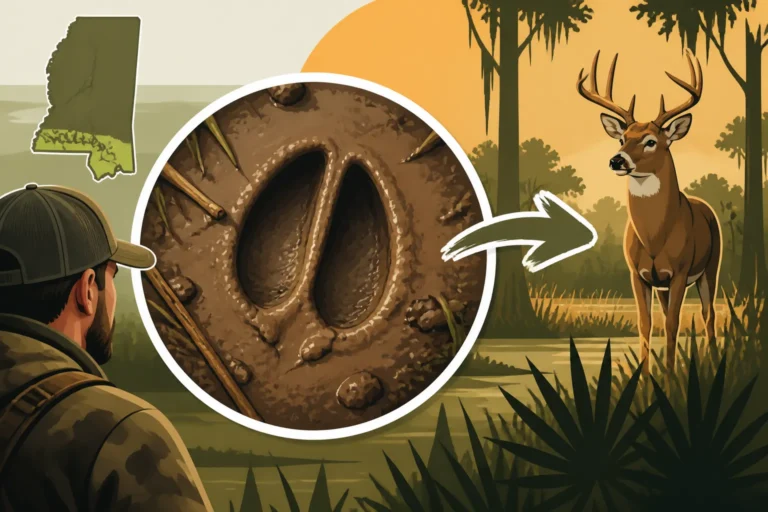
Beyond the obvious, look for less conspicuous signs. Are there trails worn into the leaf litter or through thick cane? Are there browse lines on certain plants indicating heavy feeding pressure? Are acorns being hammered in a particular area? Focus on the freshest sign, as older sign might indicate past activity that has shifted. When you find good sign, try to determine the direction of travel and what the deer are doing. Are they just passing through, or are they lingering to feed or bed? For those looking to really understand the movement, knowing how to interpret Reading Delta Mud for Fresh Deer Movement can be a game-changer.
Don't be afraid to walk for miles, even if it feels like you're just wandering through an endless sea of trees. Sometimes the best spots are the ones that require the most effort to reach, the ones that other hunters walk past. This is where you might find a honey hole that sees less pressure, increasing your odds significantly.
Utilizing Technology on the Ground
Beyond aerial maps, modern technology can be a huge asset in Delta National Forest. GPS units or smartphone apps with mapping capabilities are essential for navigation. It's easy to get disoriented in the dense, flat timber, so always know exactly where you are and how to get out. Mark potential stand locations, rub lines, scrapes, bedding areas, and water sources as waypoints.
Trail cameras are another invaluable tool. Deploy them in areas where you've found good sign, particularly on primary travel corridors or near rub lines and scrapes. They can confirm deer activity, tell you what kind of deer are in the area (bucks, does, age class), and, most importantly, tell you when they are moving. This time-specific data is critical for knowing when to be in your stand. Remember to check local regulations on trail camera use on public land.
When using a mapping app like GoHunt, utilize layers that show property boundaries, flood plains, or even vegetation types. These layers can provide an even deeper understanding of the landscape and help you pinpoint those subtle transitions that deer use. The ability to drop pins and track your movements in real-time ensures you don't get lost and can efficiently return to promising spots.
Choosing the Right Treestand and Setup Technique
The type of treestand you choose and how you set it up can make or break your hunt in Delta National Forest. Given the unique challenges of the environment, not all stands are created equal, and some setup techniques are far more effective than others.
Climber Stands: Mobility and Versatility
Climber stands are often a fantastic choice for Delta National Forest due to their mobility. The ability to quickly move and set up on a new tree is a huge advantage when deer patterns change, or when you need to adjust to different mast crop drops. In a forest dominated by straight, large-diameter hardwoods, finding a suitable tree for a climber is often quite easy. You can be incredibly agile, moving from one area to another based on fresh sign or changing conditions. This makes them ideal for the more nomadic hunting style that often pays off in the Delta.
However, climbers have their limitations. They require a relatively straight, limb-free tree, which, while common, might not always be available in the exact spot you want to hunt. They can also be noisy to set up, especially if you're trying to get in before daylight. If you plan to use a climber, practice setting it up quietly and efficiently long before the season starts. Always ensure the tree is solid and free of loose bark that could create noise or instability.
The beauty of a climber is that you can often carry it in, scout on the fly, find fresh sign, and be hunting that very same day. This immediate adaptability is a major benefit in the dynamic environment of the Delta. For hunters who prioritize flexibility and don't want to commit to a fixed stand location for extended periods, a well-practiced climber setup is hard to beat.
Hang-On Stands: Stealth and Specificity
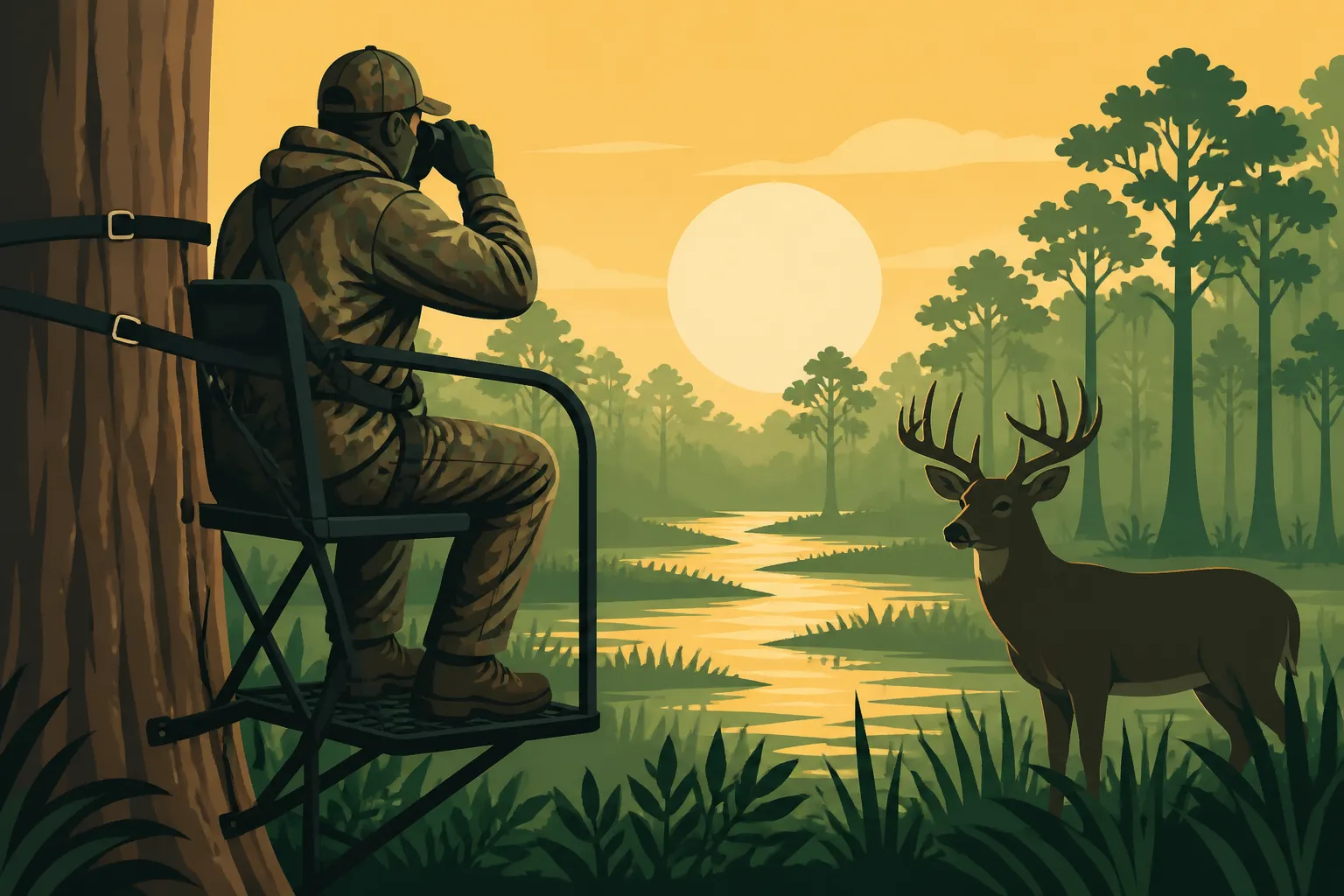
Hang-on stands, used with climbing sticks or screw-in steps, offer superior stealth and the ability to hunt trees that aren't perfectly straight or limb-free. This is invaluable when you've identified a very specific pinch point or funnel where only a particular tree offers the best shot angle or cover. You can often get higher and hide better with a hang-on, especially if you're willing to put in the effort to pre-set stands or hang them well in advance of your hunt. They're also much more forgiving when it comes to tree shape compared to climbers.
The downside is the labor involved. Hauling climbing sticks and a hang-on stand through dense Delta cover can be a workout, and setting them up quietly in the dark is a skill that takes practice. If you're planning to use hang-ons, consider pre-setting a few in key locations before the season, perhaps even months in advance. This allows you to trim shooting lanes, clear your entry/exit path, and ensure the stand is perfectly positioned without spooking deer during your hunt. Just remember to adhere to all Treestand Rules on Mississippi Public Land if you leave them up.
When choosing a hang-on, look for lightweight, durable models. Stealth is paramount, so consider stands with quiet attachments and platforms. Some hunters prefer to use tree saddles with climbing sticks for maximum stealth and minimal weight, offering an incredibly versatile and quiet system for hanging in difficult-to-access areas. This method is particularly effective when trying to get into tight spots or high up in thick canopy.
Tripods and Ground Blinds: Alternatives for Specific Scenarios
While not traditional treestands, tripods and ground blinds have their place in Delta National Forest, especially in specific scenarios. A tripod stand can be useful in areas with limited suitable trees, such as the edge of a large field, a power line right-of-way, or a small food plot. They offer elevation and a good vantage point without relying on a specific tree. However, they are bulky to transport and require relatively open ground for setup.
Ground blinds, on the other hand, offer excellent concealment and are perfect for hunting in dense cover where getting a treestand up is nearly impossible. If you find a heavily used trail running through a cane thicket or a particularly brushy area, a well-brushed-in ground blind can be incredibly effective. They are also excellent for introducing new or youth hunters to the sport, as they provide comfort and forgiveness for movement. For a stealthy setup in the Delta's thick areas, learning to effectively utilize Using a Ground Blind on Mississippi Public Land can make all the difference.
The key to successful ground blind hunting is proper placement and meticulous brushing-in. A blind that sticks out like a sore thumb will quickly be avoided by wary deer. Take the time to naturalize it with local vegetation, making it blend seamlessly into the environment. Consider placing it weeks in advance to allow deer to get used to its presence, reducing their wariness.
| Stand Type | Pros | Cons | Ideal Delta Scenario |
|---|---|---|---|
| Climber Stand | Highly mobile, quick setup on right trees | Requires straight, limb-free trees; can be noisy to set up | Scouting and moving based on fresh sign; large, straight hardwoods available. |
| Hang-On Stand | Very versatile, can use on most trees; stealthy once set | More effort to hang; requires climbing sticks/steps | Specific pinch points, subtle funnels, long-term spots in varied timber. |
| Tripod Stand | Good elevation where trees are sparse; easy access | Bulky to transport; requires open ground for setup | Field edges, power lines, clearings, areas with no suitable trees. |
| Ground Blind | Excellent concealment; good for thick cover; comfort for new hunters | Limited visibility; needs careful brushing-in; deer can detect human scent more easily | Dense cane thickets, brushy slough edges, areas with impenetrable overhead cover. |
Optimal Stand Placement for Different Scenarios
Finding the perfect treestand location is an art form that blends scouting, understanding deer behavior, and anticipating movement. In Delta National Forest, this means recognizing how deer utilize the landscape differently based on the time of year and their immediate needs.
Funnels and Pinch Points
In the flat, dense Delta, funnels and pinch points are arguably the most crucial features to identify. These are areas where the landscape naturally constricts deer movement into a narrower corridor. This could be the strip of high ground between two sloughs, a bottleneck created by an old oxbow lake, the convergence of multiple game trails, or a break in a dense cane thicket that forces deer through a specific opening. Deer, like humans, will generally take the path of least resistance, especially when traveling between bedding and feeding areas.
Setting up a stand on a funnel ensures that any deer moving through the area is likely to pass within range. When scouting, look for multiple deer trails converging, heavy track concentrations, or rub lines that indicate a defined travel route. Remember that these funnels might not be obvious to the human eye but are clearly defined to a deer. Learning to identify these spots is essential for Hunting the Rut in the Delta Unit when bucks are actively cruising for does.
Consider the prevailing wind direction when setting up on a funnel. Your stand should be positioned so that your scent blows away from the anticipated deer travel route. Also, think about your entry and exit. Can you get to and from your stand without blowing deer out of the funnel? Often, this means approaching from downwind and using natural cover to obscure your movement.
Seasonal Food Sources
Deer in Delta National Forest are highly attuned to seasonal food sources, and knowing what's dropping when is critical. In early fall, soft mast like persimmons or muscadines can be hot tickets. As the season progresses, hard mast—especially acorns from various oak species (red oaks dropping later than white oaks)—becomes the primary draw. Identifying active feeding areas is a high-percentage strategy.
However, hunting food sources in the Delta requires adaptability. Acorn crops can vary wildly from year to year and even from tree to tree within the same area. A spot that was hot last year might be barren this year, or a different species of oak might be dropping heavily. You need to scout frequently to find where the deer are currently feeding. Look for fresh droppings, chewed-up acorns, and heavy tracks under specific trees. When you find a good feeding area, set your stand up on the downwind side, observing how deer enter and exit the area.
Beyond natural mast, sometimes you'll find small clearings or openings where a variety of browse grows, attracting deer. While food plots are more common on private land, sometimes subtle natural "openings" within the timber can act similarly. These spots can be particularly good during the late season when other food sources have been depleted. Keep in mind that a good strategy for Hunting After a Poor Acorn Year might involve seeking out less obvious food sources.
Proximity to Bedding Areas
While it's risky to hunt directly over a bedding area, setting your stand up on the travel routes leading to and from bedding areas can be incredibly effective. Deer will spend most of their day bedded in thick, secure cover, typically in dense cane thickets, palmetto patches, or other impenetrable areas. They will emerge in the late afternoon to feed and return to bed shortly after daylight.
Your goal is to intercept them during these transition periods. Set your stand up about 50-150 yards from the edge of a known bedding area, on a primary travel trail that leads towards a feeding spot or a funnel. This allows you to catch deer moving before they reach the main feeding grounds or as they are returning to bed. This is especially true when thinking about Where Delta National Forest Bucks Bed.
Entry and exit are absolutely paramount when hunting near bedding. Any disturbance will educate the deer and push them out of the area. Approach quietly, well before daylight for a morning hunt, and leave stealthily after dark. Use the wind to your advantage, always keeping it in your face as you approach and making sure it blows your scent away from the bedding area itself. If you blow deer out of a bedding area even once, it might be days or even weeks before they return to that specific spot, or they might abandon it entirely.
Safety Considerations and Best Practices
Hunting from a treestand inherently carries risks, and in the challenging environment of Delta National Forest, those risks can be amplified. Prioritizing safety isn't just a recommendation; it's a non-negotiable part of a responsible hunting experience.
Always Use a Full-Body Harness
This is the most critical safety rule for treestand hunting. Every year, hunters are injured or killed from falls. A full-body harness, properly worn and tethered to the tree from the moment your feet leave the ground until they return, is your lifeline. Don't think for a second that it "won't happen to you." Even experienced hunters can slip, have a stand component fail, or lose their balance.
Ensure your harness fits correctly and is not tangled. Always use a safety rope or lifeline that stays connected to the tree, allowing you to remain tethered even while climbing. This means investing in a high-quality harness system and inspecting it thoroughly before each season for any signs of wear or damage. This includes the straps, buckles, and tethers. If any component shows signs of fraying or degradation, replace it immediately.
Practice using your harness and ascending/descending your stand at ground level before season opens. Know how to properly attach your tether and how to recover if a fall occurs. It might seem like an extra step, but that extra minute could save your life or prevent a life-altering injury.
Regular Stand Maintenance and Inspection
Whether you're using a climber or a hang-on, your treestand is a piece of equipment that endures harsh weather, constant use, and the stresses of climbing. Regular maintenance and inspection are non-negotiable. Before each season, and ideally before each hunt, thoroughly inspect every component of your stand. Check all welds, cables, bolts, straps, and chains for any signs of rust, cracks, wear, or damage.
For hang-on stands, specifically check the integrity of your climbing sticks or screw-in steps. Are they securely attached? Are they showing any signs of bending or stress? Wood steps can rot, and metal steps can rust and weaken. Replace any worn or damaged parts immediately. If you leave stands in the woods for extended periods, they are particularly susceptible to weather damage and pest infestation (like wasps or rodents chewing on straps).
Never assume a stand is safe just because it was fine last year. Nature takes its toll, and components can fail without warning. If you have any doubt about the safety or integrity of a stand, do not use it. It's simply not worth the risk.
Planned Entry and Exit Routes
Beyond safety from falls, planning your entry and exit routes is crucial for both personal safety and hunting success in Delta National Forest. The flat, dense timber can be disorienting, especially in the dark. Always carry a reliable GPS or mapping app (like GoHunt) and mark your stand location as a waypoint. Use reflective tape or trail markers (checking local regulations on their use) to mark your path, especially if you're venturing deep into the woods.
Your entry and exit routes should also be designed to minimize disturbance. This means walking quietly, avoiding dense thickets that create noise, and always approaching and departing with the wind in your favor. If you're hunting a morning stand, get in well before daylight, giving the woods time to settle before legal shooting light. For evening hunts, stay in your stand until well after dark, allowing deer to clear the area before you climb down.
Consider where your vehicle is parked. Can you access your hunting area without walking through bedding or feeding areas that you plan to hunt? Sometimes, this might mean taking a longer, roundabout route, but the payoff in undisturbed deer movement is well worth the extra effort. A well-planned entry and exit are just as important as the stand placement itself.
Common Pitfalls and How to Avoid Them
Even with the best intentions and diligent scouting, hunters in Delta National Forest can fall victim to common mistakes. Recognizing these pitfalls and actively working to avoid them will significantly increase your chances of success.
Hunting Stale or Old Sign
One of the biggest mistakes hunters make, especially in dense timber, is hunting old or stale sign. You find a big rub or an old scrape line from weeks or months ago, assume it's still hot, and set up your stand, only to see nothing. Deer patterns are dynamic, especially in the Delta where food sources, water levels, and even hunting pressure can change rapidly. A big buck might have been in an area a month ago, but that doesn't mean he's still there today.
Always prioritize fresh sign. Fresh tracks with sharp edges, wet droppings, actively worked scrapes, or newly scarred rubs are indicators of current deer activity. If you're not seeing fresh sign on your walk-in or around your stand, be prepared to move. This is where the mobility of a climber stand or the ability to quickly relocate a tree saddle comes into play. Don't be afraid to pull stakes and try a new spot if the deer aren't telling you they're there.
Make scouting an ongoing process, not just a pre-season ritual. During your hunts, observe what the deer are doing. Are they passing through a certain area more frequently? Have new food sources become available? Adapt your strategy based on current observations, rather than relying solely on past information.
Ignoring Wind Direction and Thermals
The wind is arguably the single most critical factor in successful whitetail hunting, and it's often the most ignored. Deer rely heavily on their sense of smell, and if your scent is blowing into their travel path or bedding area, they will bust you nine times out of ten. This is even more crucial in the flat, dense Delta where air currents can be subtle and tricky. Never hunt a stand if the wind is wrong for that particular location, no matter how good you think the spot is. You're better off staying home or finding an alternative stand that accommodates the current wind direction.
In flat bottomland, thermals can be less pronounced than in hilly terrain, but they still exist, especially around dawn and dusk. In the mornings, air typically flows downhill or settles into low spots, while in the evenings, it tends to rise. While the Delta is flat, subtle elevation changes around sloughs or old logging roads can create these thermal shifts. Always be aware of how the air is moving and adjust your stand placement or hunt times accordingly. Understanding Wind and Thermals in Delta Bottomland is a skill honed over many hunts.
Use a wind checker constantly. Small puffer bottles with scentless powder are excellent for visualizing air movement. Don't just check at ground level; check at your stand height, as wind currents can be different higher up. Consider using scent control sprays, scent-absorbing clothing, and storing your hunting clothes in airtight containers to minimize human odor, but remember that nothing beats proper wind management.
Over-Hunting a Productive Spot
We all have that one "honey hole" – a stand that consistently produces action. It's tempting to hunt it every chance you get, but over-hunting a productive spot is a classic mistake that will quickly turn it cold. Deer are incredibly intelligent and will quickly learn to avoid areas with consistent human presence. If you're constantly in and out of a stand, particularly if your entry and exit routes are intrusive, you're educating the deer and forcing them to alter their patterns.
Once you find a good spot, use it sparingly. Hunt it only when the conditions (especially wind) are absolutely perfect. Plan to hunt it for a day or two, then give it a break for several days or even a week before returning. This allows the deer to resume their natural movements without feeling pressured. Having multiple stand locations, strategically placed for different wind directions and scenarios, is crucial for avoiding over-pressuring any single spot.
If you find that a once-productive stand is no longer yielding results, or you're seeing less activity, consider taking a break from it entirely. Go back to scouting, find new sign, and let the deer in that area relax. Sometimes, the best thing you can do for a good spot is to leave it alone for a while. This patience often pays dividends in the long run.
Disclaimer
Hunting involves inherent risks, including but not limited to injuries from falls, wildlife encounters, and improper equipment use. The information provided in this guide is for informational purposes only and should not be considered a substitute for professional instruction, safety training, or compliance with all local, state, and federal hunting regulations. Always prioritize safety, use appropriate gear, and consult official sources like the Mississippi Department of Wildlife, Fisheries, and Parks (MDWFP) for the most current rules and guidelines.