Hunting a Ridge-Top Saddle for Rutting Bucks
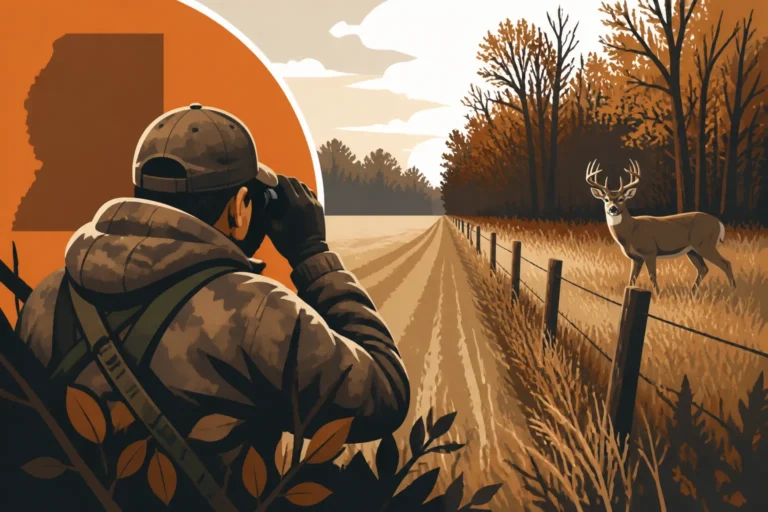
For deer hunters in Mississippi's ridge country, the challenge of consistently finding mature bucks during the rut can be incredibly frustrating. They seem to vanish one day and reappear somewhere else entirely the next. This guide is all about honing in on a specific, often overlooked terrain feature – the ridge-top saddle – and unlocking its potential as a prime ambush point for rutting bucks.
Understanding Ridge-Top Saddles: A Prime Rutting Buck Hotspot
Ridge-top saddles are natural magnets for deer movement, especially when bucks are cruising for does during the breeding season. If you've spent frustrating hours hunting vast timber blocks with little success, it might be time to narrow your focus and truly understand these unique topographical features. They're not just random dips in the landscape; they're strategic choke points that can dictate deer travel patterns for miles around.
What Defines a Ridge-Top Saddle?
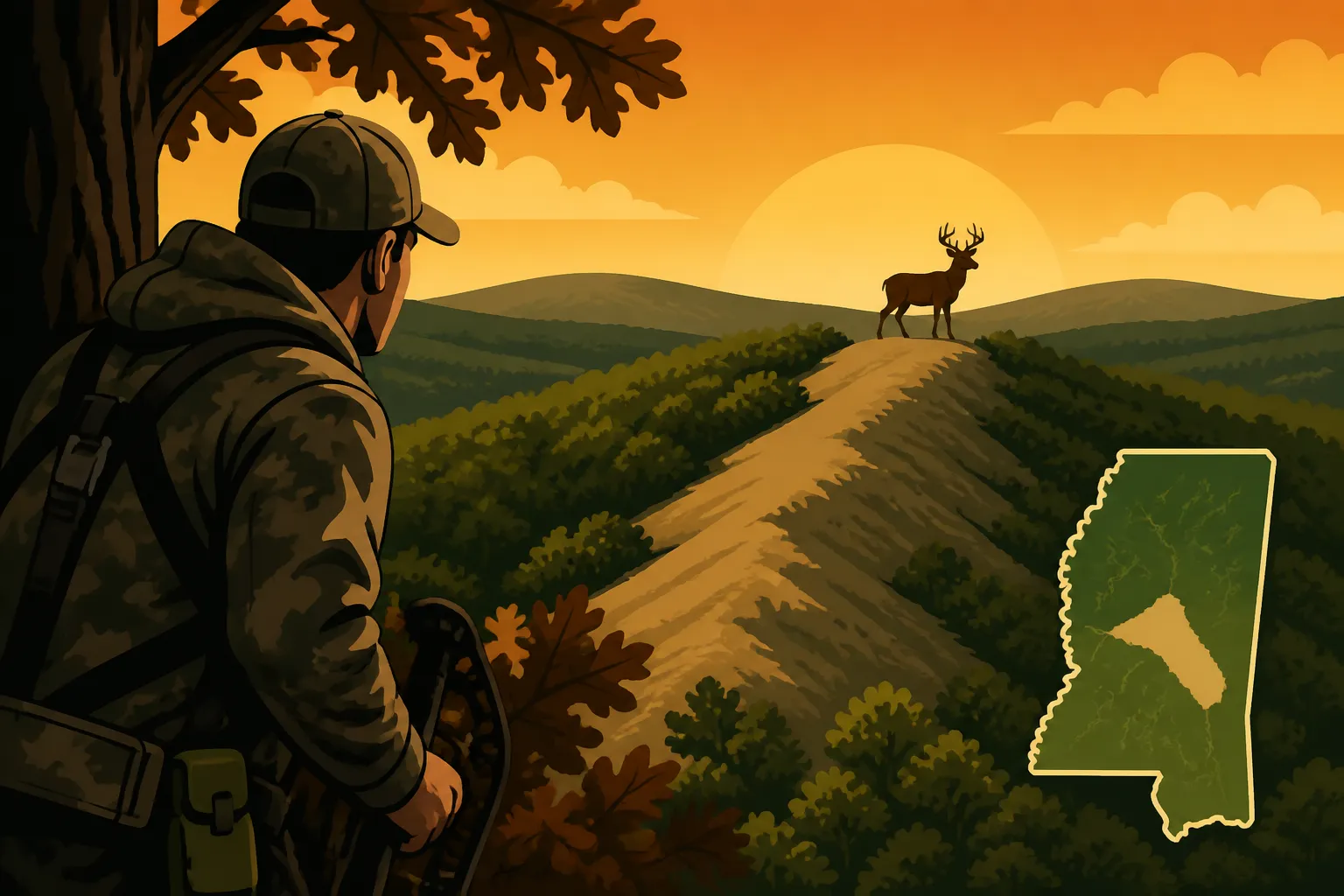
Let's break down what a ridge-top saddle actually is. Imagine a long, continuous ridge line, like a spine running through the terrain. A saddle is a low point or a dip along that ridge, connecting two higher points or peaks. Think of it like a gentle "U" or "V" shape in the ridge itself. Geologically, these are often formed by erosion, creating the path of least resistance for both water and, more importantly for us, wildlife. They're distinct from a major pass between two separate mountains, existing within a continuous ridge. In Mississippi's Hills Unit, where you find a lot of rolling hills and defined ridges, these saddles can be incredibly pronounced and act as superhighways for deer. These aren't always grand, sweeping features; sometimes a subtle depression barely noticeable on foot can be a significant saddle to a deer.
Why the Rut Drives Bucks to Saddles
During the peak of the rut, bucks become relentless in their pursuit of does, often covering vast amounts of ground. They're thinking about one thing: finding receptive does. This is where saddles shine as a hunting location. First and foremost, they act as natural funnels. Instead of navigating steep, energy-draining climbs over higher points of a ridge, deer will instinctively take the path of least resistance, which is almost always through a saddle. A buck cruising a ridge line, scent-checking for does, will naturally drop into and climb out of these depressions. Similarly, does moving from one feeding or bedding area to another, especially when pressured, will often utilize these same corridors. When bucks are actively seeking, these funnels become critical intersections.
Furthermore, saddles are excellent for scent-checking. As a buck travels through a saddle, the topography can create swirling air currents, allowing him to pick up scent from multiple directions. He can effectively check for does that might be moving on either side of the ridge or that have recently passed through the saddle itself. For a mature buck, this efficiency is key during the high-energy demands of the rut. They provide a relatively secure, efficient travel route that offers opportunities to both find does and avoid detection from predators – including us. If you're looking for prime travel corridors during the breeding season, understanding Hunting the Rut in the Hills Unit is absolutely vital.
Visualizing Saddle Features on Maps
Before you ever step foot in the woods, your best friend for finding saddles is a good topographic map or, even better, a modern hunting app with detailed aerial imagery. When you look at a topo map, you're searching for contour lines that form a "hourglass" or "bow-tie" shape where they dip down between two higher elevations. The tighter the contour lines, the steeper the terrain leading into and out of the saddle. A broad saddle might have more spread-out lines, indicating a gentler slope.
Using a digital mapping tool like GoHunt can elevate this process significantly. You can toggle between topo and aerial views, sometimes even combining them, to get a comprehensive understanding of the landscape. Look for areas where ridges converge or where a distinct low point occurs along a ridge. On the aerial view, you might see subtle changes in vegetation density or tree type that correspond to these topographical features. Often, a saddle will connect two different types of habitat – perhaps a thick bedding area on one side and a feeding area on the other. Mark potential saddle locations on your map, noting prevailing wind directions and possible entry/exit routes. This pre-scouting with technology can save you countless hours of unproductive walking. Learning to really leverage these tools is a crucial part of Reading a Ridge for Hills Unit Deer.
In-Depth Scouting: Unlocking the Secrets of Active Saddles
Finding a saddle on a map is one thing; confirming it's an active rutting buck hotspot is another entirely. This requires dedicated boots-on-the-ground scouting, focusing on fresh sign and understanding deer behavior. The rut is a dynamic time, and deer patterns can shift, so your scouting needs to be both thorough and timely.
Interpreting Sign: Scrapes, Rubs, and Tracks
When you hit the woods, your eyes should be peeled for specific indicators of rutting activity. Scrapes are perhaps the most exciting sign. These are patches of bare earth where a buck has pawed away the leaves, often under an overhanging branch (a "licking branch") that he's nuzzled and possibly urinated on. Fresh scrapes, especially those that appear "worked" recently with damp earth and strong scent, are huge indicators of buck activity. Multiple fresh scrapes in and around a saddle suggest it's a regular stop on a buck's travel route.
Rubs, where a buck has scraped his antlers against small trees or saplings, also tell a story. Look for clusters of rubs, or a "rub line" leading into or out of a saddle. The size of the rubs can often give you an idea of the buck's body size, and fresh sap on the rub indicates recent activity. Tracks are another critical piece of the puzzle. Look for larger tracks, often deeper, suggesting a heavier buck. Pay attention to track direction and frequency within the saddle, as well as those leading to and from it. Are they consistently moving through, or just visiting? Remember, scouting isn't just about finding any sign; it's about finding fresh sign and interpreting what it means for current deer movement. This is a critical skill for Scouting Mississippi Public Land Before Season.
Leveraging Trail Cameras for Patterning
Trail cameras are invaluable for confirming and refining your saddle hunting strategy. Once you've identified a promising saddle through map work and initial ground scouting, hang a few cameras. Place them strategically: one directly in the saddle, perhaps facing a noticeable game trail, and another on a rub line or scrape within 50-100 yards of the saddle. If the terrain allows, sometimes a third camera on a secondary trail leading to the saddle can provide even more data.
The goal isn't just to get pictures of deer, but to understand their patterns. When are bucks moving through the saddle? Is it primarily at dawn and dusk, or are there midday cruising periods during the peak rut? Are they solo, or are they pushing does? Pay attention to the age class of the bucks you're seeing – are they yearlings, or mature deer? This information will help you decide when to hunt and where to place your stand for the best opportunity. Reviewing this data over several days or weeks will give you a clear picture of how bucks are utilizing that specific saddle.
Scouting Entry and Exit Routes
This is perhaps one of the most overlooked aspects of saddle hunting. You can find the hottest saddle in Mississippi, but if you can't get to and from your stand without spooking deer, your chances of success plummet. When scouting, pay close attention to the wind direction you'll be hunting in. Your entry and exit paths should ideally keep the wind in your face or crosswind, never blowing your scent into the saddle.
Look for natural terrain features or thick cover that can conceal your movement. Can you follow a creek bed, a logging road, or a dense thicket that minimizes your visual and auditory impact? Consider using a path that takes you around the saddle's immediate vicinity, approaching from downwind and perpendicular to the expected deer movement. For instance, if bucks are moving east-west through the saddle, and the wind is from the north, you might approach from the south, swinging wide to get into position. This level of meticulous planning is what separates a successful hunt from a busted one.
Advanced Stand Placement and Rut-Specific Hunting Strategies
Once you've done your homework on the ground and confirmed an active saddle, it's time to think about stand placement and the actual hunting tactics that will bring a rutting buck into range. This isn't just about throwing a stand up; it's about making calculated decisions based on deer behavior, wind, and cover.
Mastering Wind and Thermals for Saddle Hunts
The wind is your ultimate adversary and your greatest ally. In ridge country, and especially in saddles, air currents can be notoriously tricky. During the morning, cold air sinks into the valleys and draws, creating an updraft as the sun warms the slopes. In the evening, the opposite occurs; warm air rises, and cool air flows down. This means a saddle that had an updraft in the morning might have a downdraft in the afternoon.
Your stand placement must account for these shifting thermals, in addition to the prevailing wind. It’s often best to set up on the side of the saddle, slightly above where you expect the deer to travel, rather than directly in the lowest point. This gives you a better vantage point and keeps your scent slightly above the main travel corridor. Consider two stand setups for the same saddle: one for a morning hunt with an updraft and one for an evening hunt with a downdraft, accounting for typical wind directions. Being able to adapt to these subtle changes in air movement is crucial. Sometimes using a ground blind is a good option, but you'll need to brush it in effectively, as discussed in Brushing In a Blind on a Field Edge.
Effective Calling and Decoy Techniques
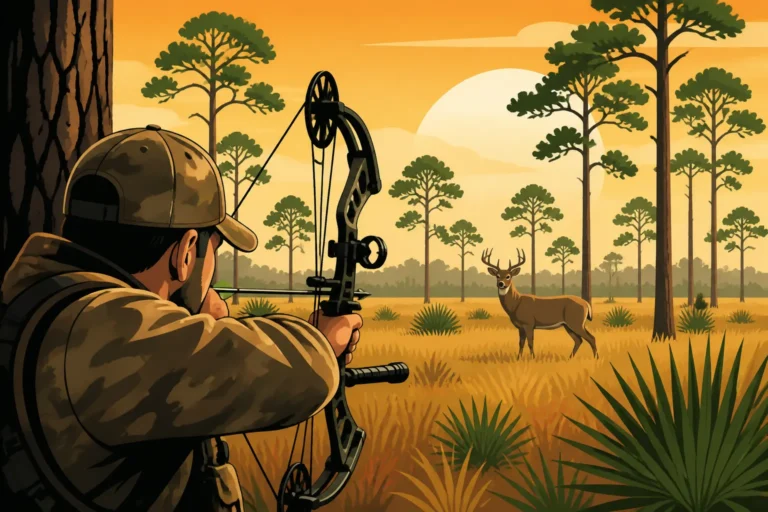
During the rut, bucks are often more responsive to calls and decoys than at any other time of year. In a saddle, where bucks are actively cruising and searching, a well-timed call can be the trigger. Grunt calls can mimic a buck trailing a doe or a lone buck cruising. Start with soft, inquisitive grunts, especially if you're not seeing immediate activity. If you spot a buck at a distance or he seems hesitant, you can increase the intensity. Rattling antlers can simulate two bucks fighting, a sound that often triggers an aggressive response from rutting bucks looking to assert dominance or steal a doe. For more detailed advice, check out Rattling and Grunting in Mississippi.
Decoys can also be highly effective. A doe decoy can lure in a cruising buck, while a buck decoy can challenge another buck to come closer. When using a decoy in a saddle, position it so that it's visible to approaching deer, but also offers a clear shot opportunity. Always set up your decoy downwind from your stand, forcing an approaching buck to pass by you before he reaches the decoy, giving you a shot. However, be aware that decoys require careful scent control and can sometimes deter older, wiser bucks if not used perfectly.
Timing Your Attack: Rut Phase, Weather, and Moon
Timing is everything in rut hunting. While saddles are generally good throughout the rut, certain periods offer peak opportunities. The seeking phase, just before the full-on chasing begins, often sees bucks covering the most ground and being most receptive to calls. The actual chasing phase can be trickier, as bucks are often locked onto a specific doe.
Weather plays a massive role. A sudden cold front after a period of warm weather can dramatically increase deer movement, pushing bucks to actively cruise. High-pressure systems following a cold front are often ideal for all-day deer movement. Overcast skies with light drizzle can also be great, as deer tend to move more freely without the intense sun or heavy downpours. Don't discount the impact of a good cold snap; understanding Hunting Deer After a Cold Front can drastically improve your odds.
While there's ongoing debate about the moon's exact impact, many experienced hunters observe increased nocturnal activity during a full moon, which can lead to a dip in daylight movement. Conversely, the days leading up to and after a new moon can sometimes see increased daytime movement. Keep a hunting journal to track your own observations; what works best in one part of Mississippi might differ slightly in another.
Navigating Challenges and Maximizing Success in Mississippi's Ridge Country
Hunting ridge-top saddles in Mississippi, especially on public land, comes with its own set of challenges. From unpredictable winds to navigating hunting pressure, successful hunters are those who can adapt and stay persistent.
Minimizing Human Pressure and Scent
One of the biggest hurdles, particularly on popular public land areas, is hunting pressure. When Why Mississippi's Gun Opener Draws the Biggest Crowds, deer become warier, often shifting their movements to nocturnal hours or thicker cover. To combat this, look for saddles that require a bit more effort to reach. A saddle that's a mile or two back in, away from easy road access, often sees less pressure. Utilize digital maps to find these hidden gems.
Scent control is paramount. Even with the best wind strategy, a mature buck's nose is unmatched. Use scent-free detergents for your hunting clothes, shower with scent-eliminating soaps, and spray down with field-friendly scent neutralizers. More importantly, minimize human scent on your entry and exit routes. Avoid touching vegetation unnecessarily, and if possible, use an entry route that deer are less likely to frequent, such as a creek bed or an overgrown logging road. The goal is to be a ghost in the woods.
Adapting to Changing Conditions
Mississippi weather can be notoriously fickle. A beautiful, crisp morning can quickly turn into a warm, windy afternoon, completely altering deer movement and thermal patterns. Don't be afraid to adjust your plans on the fly. If the wind shifts unexpectedly and starts blowing your scent directly into the saddle, it might be time to move to an alternative stand, or even call it a morning/evening and come back another day.
Deer movement patterns can also change rapidly during the rut. A saddle that was hot with activity yesterday might be quiet today if a particular doe comes into estrus elsewhere, drawing bucks away. Stay flexible, be observant, and be willing to move if the situation demands it. This might mean having a secondary stand setup in a different type of terrain feature, such as a thick bedding area edge or a known feeding funnel, as a backup. The more spots you have scouted and ready, the better your chances of adapting to whatever the deer and the weather throw at you.
Patience and Persistence: The Saddle Hunter's Virtues
Hunting the rut, especially for a mature buck, is rarely a quick affair. It requires long hours in the stand, often battling cold, boredom, and doubt. But it's in those extended sits that opportunities often arise. A rutting buck can appear out of nowhere at any time of day, particularly during the peak chasing phases. Don't give up on a saddle just because the first few hours are slow. Many times, that mature buck is just waiting for the perfect moment to slip through, or he's been pushed through by another hunter or a nearby doe.
Persistence in scouting also pays off. Keep revisiting those saddles, even outside of hunting season, to monitor changes in sign, habitat, and overall deer activity. The more time you invest in understanding these crucial travel corridors, the better your chances will be when that trophy buck finally decides to cruise through your Mississippi ridge-top saddle. Consider the broader Mississippi Deer Season Structure Explained and plan your hunting windows accordingly.
| Saddle Characteristic | Why Bucks Use It During Rut | Ideal Stand Placement | Hunting Tactic Recommendation |
|---|---|---|---|
| Natural Funnel/Choke Point | Easiest travel route between ridge tops | Slightly above the lowest point, downwind | Long sits, patience, passive calling |
| Scent Checking Area | Swirling winds allow detection of does | Upwind of expected travel, elevated | Grunt calls, subtle rattling, scent control |
| Connecting Habitat Types | Links bedding to feeding/watering areas | Edge of thick cover or transition zones | Decoy use, aggressive rattling |
| Heavy Rub & Scrape Lines | Indicates frequent buck travel/activity | Overlooking fresh sign, 20-30 yds away | Trail cameras for patterning, morning hunts |
| Subtle Contour Dip | Often overlooked by other hunters | Away from obvious trails, deep in timber | Silent entry/exit, extended sits |
Disclaimer
Hunting is an inherently dangerous activity. Always prioritize safety, follow all Mississippi Department of Wildlife, Fisheries, and Parks regulations, and obtain proper licenses and permits before heading into the field. This information is for educational purposes only and does not guarantee hunting success. Be respectful of private property and other hunters.