Verifying Land Access Before You Book
One of the biggest anxieties we face as hunters, especially when planning a trip or booking a new experience, is the nagging worry about land access. You send off that deposit, you pack your gear, and in the back of your mind, there's always that tiny doubt: is this really legitimate? Do they truly have the access they claim? This guide is all about giving you peace of mind by walking you through exactly how to verify land access before you ever step foot in a Mississippi hunting camp.
Why Confirming Land Access is Your First Priority
Before you even start dreaming of that trophy buck or a limit of greenheads, understanding and confirming the hunting property's access is paramount. It’s not just about avoiding a scam, though that’s certainly a major concern; it’s about ensuring a safe, legal, and ultimately successful hunting experience. Imagine driving hundreds of miles, only to find out the "private lease" is actually state-owned land with different regulations, or worse, that your outfitter never actually secured the rights. The frustration, the wasted time, and the lost money can turn a dream hunt into a nightmare. In Mississippi, where public and private land boundaries can sometimes feel like a patchwork quilt, clarity on access is your best defense against disappointment.
Avoiding Scams and Misunderstandings
Unfortunately, the hunting world, like any other industry, has its share of less-than-reputable operators. Some might exaggerate their land holdings, others might mislead you about the type of access (exclusive vs. shared), and some might even attempt to sell access to land they don't legally control. These aren't just minor inconveniences; they can be outright fraudulent. A diligent hunter takes the time to scrutinize these claims because ultimately, you're responsible for your own actions afield.
It’s easy to get caught up in the excitement of a great deal or a fantastic-sounding opportunity, especially when photos of giant bucks or limits of ducks are flashing across your screen. But that excitement can blind you to potential red flags. Always remember: if it sounds too good to be true, it very often is. A little skepticism upfront can save you a lot of heartache (and cash) down the road. This also applies to understanding what permits or Mississippi Hunting Licenses and What They Cost might be required for specific areas, as that often ties directly into legitimate access.
Ensuring Legal and Ethical Hunting
Hunting without proper land access is trespassing, plain and simple, and it comes with serious legal consequences. Ignorance of the law is rarely an acceptable defense. You could face fines, lose your hunting privileges, or even have your gear confiscated. Beyond the legalities, there's the ethical side. Respecting private property rights is a cornerstone of responsible hunting. When you're sure your access is legitimate, you're upholding these ethics and contributing to a positive image of hunting.
Furthermore, some land access agreements might come with specific rules you need to be aware of. For example, some private landowners might allow hunting but prohibit ATVs, or require certain gates to be locked at all times. Knowing these nuances beforehand, directly from the source of the land access, ensures you're not inadvertently violating rules or damaging landowner relationships. This due diligence protects you, the landowner, and the future of hunting access.
Key Questions to Ask About Land Access
When you're talking to an outfitter, a hunting club manager, or a private landowner about a potential hunt, don't be shy about asking direct, pointed questions about their land access. Think of yourself as an investigative journalist looking for concrete facts. A reputable outfitter or landowner will be transparent and happy to provide the information you need. If they get cagey or deflect, consider that a major red flag.
Understanding Lease Agreements and Ownership
For any private land hunt, whether it's with a guide, a hunting club, or a direct lease, you need to understand the underlying agreement. Ask directly: "Who owns the land, and what is the nature of your access agreement with them?"
If it's an outfitter, they should be able to tell you if they own the land, lease it, or have a guiding concession. If it's leased, ask to see a copy of the lease agreement (with sensitive financial details redacted, of course). You're looking for proof that they have legal, current permission to operate hunting trips on that specific property. Don't be afraid to ask for the exact property boundaries or a map outlining the hunting area. This is also where you can look for details on specific rules, like if dogs are allowed for certain game or if there are any restrictions on Mississippi Legal Firearms for Deer Hunting.
Clarifying Exclusive vs. Shared Access
This is a critical point that can drastically impact your hunting experience. Some outfits or clubs might have exclusive rights to a large tract of land, meaning you won't encounter other hunters outside your group. Others might operate on properties where multiple groups or even the general public have access at different times or in different areas.
Ask: "Will our group have exclusive access to the hunting area, or will other hunters be present?" If it's shared, clarify who else will be hunting, when, and where. Will it be other guided parties, or members of a larger hunting club? Understanding the hunting pressure and potential for encounters is crucial for managing your expectations and planning your strategy. For example, knowing if you'll be sharing a vast tract with multiple groups might influence your decision to book, especially if you're targeting pressured deer on public land, which is a very different experience than a private, managed hunt.
Confirming Public Land Permits and Regulations
If you're planning a hunt on public land, such as a national forest or a Mississippi Wildlife Management Area (WMA), the "access" takes a different form. Here, it's about confirming you have the correct permits and understanding the specific WMA regulations, as these can vary wildly from statewide rules.
You'll want to ask about any specific WMA permits required beyond your general Mississippi Resident Sportsman's License or nonresident equivalent. Are there quota hunts, or daily sign-in requirements? Are there specific zones for different game species? Mississippi WMA Permit Requirement is a very real thing that can catch an unprepared hunter off guard. Public land hunting is a fantastic option in Mississippi, offering vast tracts like those in Delta National Forest Hunting or Homochitto National Forest Hunting, but it comes with its own set of rules you absolutely must follow. Don't assume your general hunting license covers every public land scenario.
Here's a quick table to help organize your thinking on land access verification questions:
| Aspect of Access | Key Questions to Ask | Why it Matters |
|---|---|---|
| Ownership/Lease | Who owns the land? What is your agreement (lease, ownership, concession)? Can I see a redacted copy of the lease? | Confirms legal right to hunt and operate. Avoids fraud. |
| Boundaries | Can you provide a map of the hunting property? What are the exact boundaries? | Ensures you stay on legal hunting ground. Understands the scope of the hunt. |
| Exclusivity | Will my group have exclusive access, or will others be hunting? If shared, who and when? | Manages expectations for hunting pressure and encounters. Affects strategy. |
| Regulations | Are there specific rules beyond statewide regulations (e.g., ATV use, specific gates)? | Prevents unintentional rule violations. Maintains good landowner relations. |
| Permits | What licenses or specific WMA/public land permits are required for this hunt? | Ensures legal compliance. Avoids fines or loss of hunting privileges. |
| Location | What are the nearest physical addresses or GPS coordinates for the primary hunting area? | Helps you verify location independently and plan logistics. |
Tools and Methods for Independent Verification
While asking direct questions is crucial, you shouldn't stop there. Take proactive steps to independently verify the information you receive. Modern technology has made this process much easier than it used to be, putting powerful tools right at your fingertips.
Leveraging Online Mapping Tools and Apps
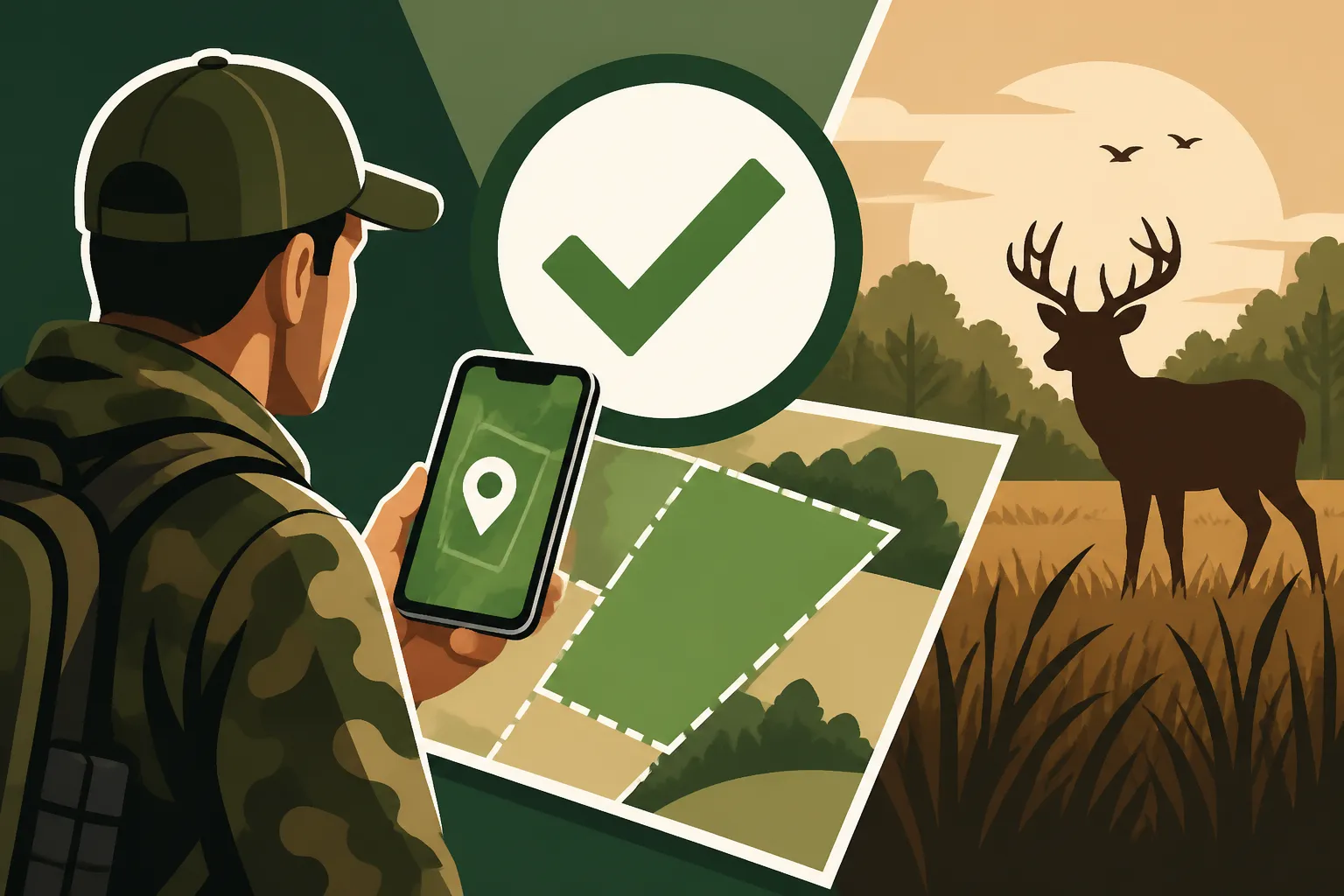
Tools like GoHunt or onX Hunt are game-changers for land verification. These platforms allow you to view public and private land boundaries, often with landowner names, over detailed satellite imagery. If an outfitter tells you they have a 500-acre lease in a particular area, you can pull up that location on one of these apps and visually confirm the boundaries and ownership information.
If you're looking at a guided hunt on specific land, ask for a general address or GPS coordinates, then map it. See if the parcel sizes and ownership line up with what you've been told. This is especially useful for scouting on public land, where you can identify access points and potential hunting spots, but it's equally powerful for validating private land claims. Just remember that these apps are a tool, and while highly accurate, always cross-reference with other sources if anything seems off. Sometimes property ownership information can be slightly delayed in updating, but generally, they provide an excellent baseline.
Contacting Local Authorities and References
Don't underestimate the power of making a few phone calls. If you're dealing with an outfitter, ask for references from past clients, but also consider contacting the local county sheriff's office or the Mississippi Department of Wildlife, Fisheries, and Parks (MDWFP) office in the relevant county. While they might not share private landowner information, they can often confirm if an outfitter operates legally or if there have been any past issues or complaints related to trespass or illegal hunting activities on specific tracts of land.
Reputable outfitters will be proud of their track record and shouldn't hesitate to provide references. When you call those references, ask specific questions about the land access: "Did you have any issues with property lines? Was the hunting area as described? Did you feel confident in the outfitter's legal right to be there?" These direct insights from fellow hunters can be invaluable. This vetting process is similar to what you'd do when considering Vetting a Mississippi Outfitter Before You Book for any type of hunt.
Reviewing Outfitter Credentials and Registrations
Some states have specific licensing or registration requirements for hunting outfitters or guides. While Mississippi doesn't have a specific state-level outfitter licensing board in the same way some western states do, it's still worth asking about their business registration and insurance. A legitimate business will be registered and insured, and this reflects a level of professionalism and accountability.
Platforms like BookYourHunt often do a level of pre-vetting for the outfitters listed on their site, which can add a layer of confidence. However, even with such platforms, it's always wise to do your own due diligence. Ask the outfitter directly about their business structure and if they carry liability insurance. This isn't just about land access, but about the overall professional conduct of the operation you're entrusting your hunt to.
Common Pitfalls and How to Avoid Them
Even with the best intentions, hunters can sometimes fall into traps when trying to verify land access. Knowing what these common pitfalls are can help you navigate around them and secure a hunt with full confidence.
Vague Descriptions and Generic Photos
A common tactic of less-than-reputable operators is to use vague language and generic, stock photos that don't actually depict the hunting property. If an outfitter's website or social media shows beautiful images of deer or ducks, but they can't provide specific photos or videos of their actual hunting camp, food plots, or blinds on their land, be wary.
Always push for specifics. Ask for photos of the actual stands, lodging, and landscapes on the property you'll be hunting. Request drone footage or a video tour. If an outfitter only has wide-angle shots that could be anywhere in Mississippi, it's a sign they might be hiding something. A truly professional outfit will have no problem showcasing their specific operation. This is also important when you're Reading Outfitter Success Claims; do the success photos match the described location and conditions?
Over-Reliance on Word-of-Mouth Without Proof
Word-of-mouth recommendations are powerful in the hunting community, and they should definitely be a part of your research. However, don't let a friend's glowing review completely replace your own due diligence. What worked for one hunter, or what was true a few years ago, might not be the case for your specific booking or for the current season.
Always follow up on recommendations with direct questions and independent verification. A friend might have had a great hunt, but they might not have specifically vetted the land access details. Things change: leases expire, property gets sold, management changes. It’s important to confirm current arrangements, not just rely on past experiences. This is particularly true when considering something like Joining a Mississippi Hunting Club, where the club's lease agreement might change year to year.
Not Getting Agreements in Writing
This is perhaps the biggest mistake you can make. Verbal agreements are notoriously hard to enforce and can lead to serious disputes. Any agreement for a guided hunt, a lease, or even simple private land permission should always be put in writing. This includes the dates, the specific hunting area, the cost, what's included, and, crucially, a clear statement about land access.
A formal contract or a written permission slip (for a direct landowner agreement) protects both parties. It clarifies expectations and provides a legal framework if something goes wrong. If an outfitter or landowner balks at putting things in writing, consider it a serious red flag. Even for something as simple as retrieving game from adjacent private land, having a written understanding can prevent serious issues, as outlined in Retrieving Game From Private Land in Mississippi. Always secure a written agreement that explicitly states the land where hunting will occur and the terms of that access.
By being proactive, asking the right questions, and utilizing available tools, you can ensure that your Mississippi hunting adventure is built on a solid foundation of confirmed, legal land access.
Disclaimer
This article is for general informational purposes only and does not constitute professional advice. Laws, prices and regulations vary by location and change over time. Consult a qualified professional for guidance on your specific situation.