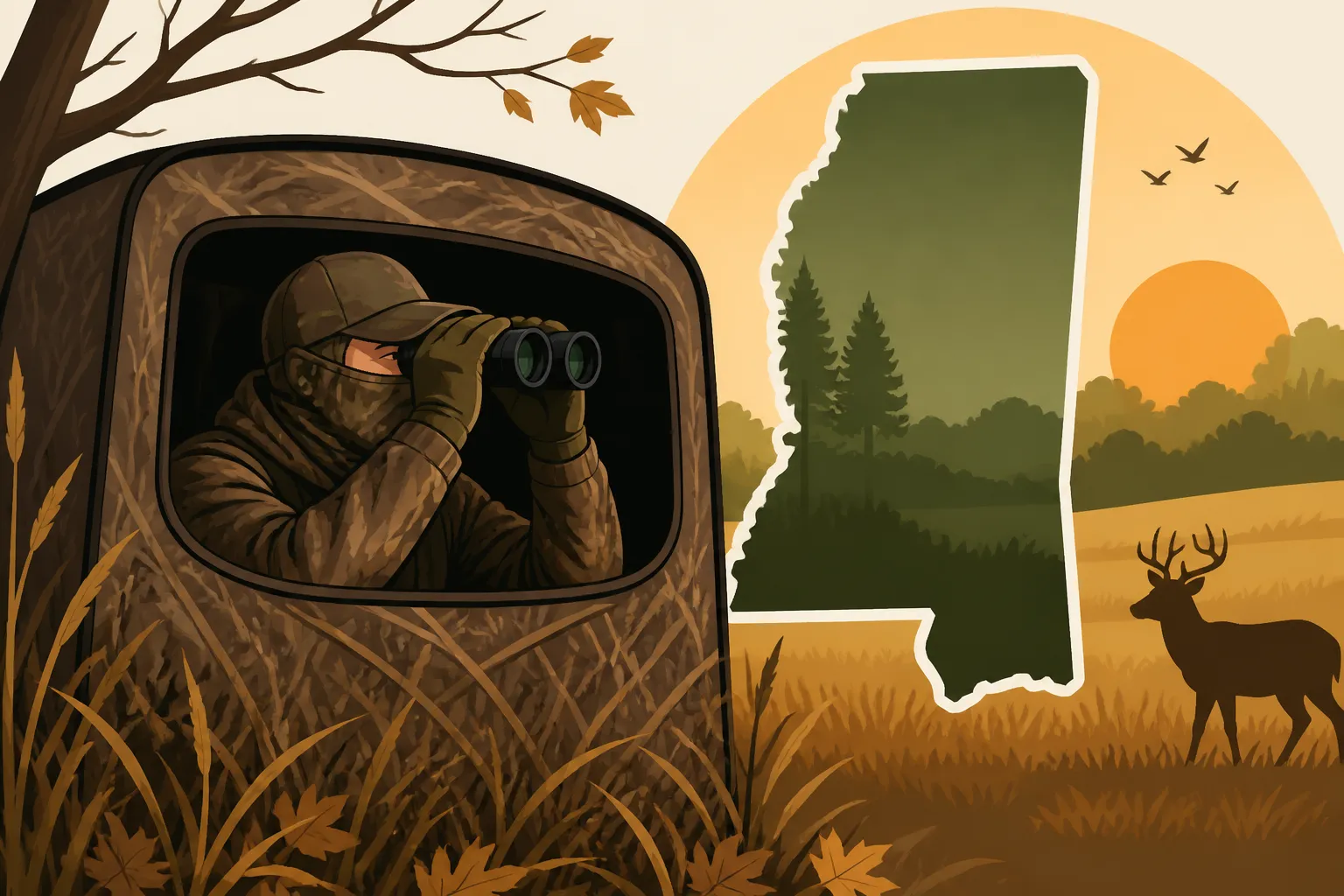
Using a Ground Blind on Mississippi Public Land
Many hunters struggle to find effective concealment on heavily pressured public lands in Mississippi, especially when traditional treestand options are limited or impractical. This comprehensive guide will walk you through everything you need to know about successfully deploying and hunting from a ground blind on Mississippi public land, helping you stay hidden and increase your chances of a successful hunt.
Why Ground Blinds Make Sense on Mississippi Public Land
Dealing with Pressure and Limited Cover
Public lands in Mississippi, while abundant, can often see significant hunting pressure, especially during peak seasons like the gun opener. This pressure pushes deer into thicker, nastier cover that's hard to hunt from a treestand. Imagine trying to hang a stand in a dense, regenerating clear-cut or a tangle of cane along a slough – it's often impossible, or the available trees are too small or isolated. Ground blinds offer an incredible advantage here. They allow you to set up directly in these thickets, breaking up your outline and providing full concealment where a treestand would be exposed or simply couldn't be deployed. It's about getting into the deer's comfort zone, where they feel safe from human intrusion, and a ground blind lets you do just that.
Furthermore, many public land parcels, particularly in the Delta Unit, feature vast bottomland hardwoods where mature trees might be few and far between, or they might not be in the precise location you need for a shot opportunity. When you're trying to achieve success by Hunting Delta Unit Bottomland Deer, finding that perfect tree near a subtle deer trail or a bedding area can be a real challenge. A ground blind gives you the flexibility to place your concealment exactly where you need it, rather than being dictated by the trees available. This becomes even more critical when you're targeting specific travel corridors or pinch points that might not have suitable trees for a conventional setup. It's about taking control of your hide, not being limited by what nature provides.
Versatility Across Different Terrains
Mississippi's hunting landscape is incredibly diverse, from the dense bottomland swamps of the Delta to the rolling piney woods and hardwood draws of the Hills Unit, and even coastal marshes. Each terrain presents unique challenges and opportunities. A ground blind's versatility shines brightly across this spectrum. In the Delta, you can brush one into a levee edge, a standing bean field, or even a small island of high ground in a flooded timber tract (if legal and safe). Imagine setting up along a hidden ditch or a slight elevation change where deer are naturally funneled. You're low to the ground, almost part of the landscape, and completely obscured.
Moving to the Hills Unit, where you might be Still-Hunting Hills Unit Ridgelines, a ground blind can be strategically placed in a saddle, a logging road intersection, or on the downwind side of a thick cedar patch. It's an excellent option when you're scouting with an app like GoHunt, identifying key topographical features or bedding areas that don't lend themselves to treestand hunting. You can adapt to the terrain, whether it's setting up at the base of a steep bluff or tucking into a dense kudzu patch. This adaptability means you're not restricted by the type or size of trees, making it a viable option for almost any public land scenario you might encounter in Mississippi.
Strategic Placement for Optimal Success
Scouting for Prime Locations
The success of any ground blind hunt hinges on intelligent placement, and that starts with thorough scouting. Don't just plop your blind down willy-nilly. Before the season, or even a few days before your hunt, you need to hit the woods. Look for fresh deer sign: rubs, scrapes, fresh tracks, and especially consistent travel corridors. Think about funnels – those natural pinch points that concentrate deer movement. This could be a narrow strip of woods between two clear-cuts, a subtle ridge leading to a food source, or a dry ditch running through a swampy area. Using aerial maps from resources like GoHunt can help you identify these features from afar, but boots on the ground are irreplaceable for confirming recent activity. You want to place your blind where you can intercept deer moving naturally, not force them into an uncomfortable situation.
Consider what the deer are doing at that particular time of year. During early archery season, they might be frequenting soft mast trees or traveling between bedding and early-season food sources. Later in the year, during the rut, they'll be on the move constantly, often checking traditional scrape lines or traveling through cover looking for does. For instance, if you're Hunting After a Poor Acorn Year, deer patterns will shift dramatically towards alternative food sources, making those areas prime spots for a blind. Think about wind direction, too; always try to set up downwind of where you expect deer to approach. Setting up a week or two early, if possible, allows deer to get used to the blind's presence before you hunt it.
Blending into the Natural Environment
Once you've identified a prime spot, the next critical step is making your blind disappear. A big, dark square sitting out in the open screams "hunter!" You need to integrate it into the natural surroundings. Look for existing cover – a dense clump of bushes, the edge of a thicket, a fallen log, or even a deep shadow line. Place your blind tightly against this cover, so its silhouette is broken up. Then, go a step further: brush it in. This means piling natural vegetation around the blind. Use branches, deadfall, palmetto fronds, or anything else from the immediate area to break up its shape. Don't just cover the sides; pay attention to the top and the edges, making it look like another natural part of the landscape.
Think about the sun's position throughout the day. You don't want the sun hitting the back of your blind, illuminating you inside and creating a clear outline. Position it so the sun is either to your front (but not directly in your eyes when looking out your shooting windows) or to the side. This helps keep you in shadow. For the best results when Using a Ground Blind on Mississippi Public Land, you'll find that even the smallest details matter. A few strategically placed branches can make all the difference between a deer spotting you and walking right by. Remember, deer are constantly scanning their environment for anything out of place. The more effort you put into blending in, the higher your chances of success.
Practical Considerations and Setup Tips
Choosing the Right Blind for Mississippi Conditions
Selecting the right ground blind is more than just picking a cool-looking camo pattern. Mississippi weather can be unpredictable, from scorching early-season heat to damp, chilly late-season days, sometimes all in the same week. You need a blind that can stand up to these conditions and provide genuine comfort and concealment. Look for blinds made from durable, weather-resistant fabrics. While most come with a standard camouflage pattern, consider one that blends well with the typical Mississippi vegetation you'll be hunting in – whether that's dark hardwoods, pine thickets, or marshy edges. Reputable brands like Primos and Barronett make excellent blinds known for their durability and ease of setup.
Size matters, too. If you're hunting solo or with a youth hunter, a compact blind might be sufficient. But if you plan to bring a buddy, a lot of gear, or need extra room for bow drawing, a larger blind is a wise investment. Think about the height as well; some blinds offer more vertical space, which can be crucial for standing shots with a bow or simply stretching your legs during a long sit. Also, consider the window configuration. You want ample shooting windows that can be adjusted quietly. Some blinds feature a 360-degree view, while others have specific shooting ports. Test the window mechanisms before you hunt to ensure they operate silently – a noisy zipper can ruin a hunt faster than anything.
Here's a quick comparison of common ground blind features:
| Feature | Budget-Friendly Blinds | Mid-Range Blinds | Premium Blinds |
|---|---|---|---|
| Material | Thinner polyester, prone to fading | Durable polyester, some weatherproofing | Heavy-duty, UV-resistant fabric, often waterproof |
| Frame | Fiberglass poles, less robust | Stronger fiberglass or aluminum poles | Aluminum or carbon fiber, quick-deploy hubs |
| Window Type | Zippered mesh/fabric openings | Silent mesh, magnetic or silent slider closures | Silent, adjustable windows with shooting ports |
| Camo Pattern | Basic, generalized patterns | More detailed, region-specific patterns | Advanced, high-definition patterns, 3D elements |
| Noise Level | Can be noisy with zippers, fabric rustling | Quieter fabrics, some silent features | Nearly silent operation, deadening fabrics |
| Portability | Lighter, but can be cumbersome to pack | Balanced weight, often comes with backpack | Lightweight, compact, easy to carry |
| Price Range | $75 – $150 | $150 – $300 | $300 – $600+ |
Maximizing Comfort and Concealment
Once you've got your blind in place and brushed in, it's time to think about the inside. Comfort is key, especially during long sits. A comfortable chair is non-negotiable. Forget those tiny fold-up stools; invest in a blind chair with a backrest and, ideally, armrests. Swivel chairs are fantastic for maintaining a full range of motion without having to awkwardly shift your body. Bring a small cushion or pad for extra comfort if your chair doesn't have much padding. Also, think about what else you need to bring inside. A small backpack or gear hanger can keep your essentials off the floor and within easy reach.
For ultimate concealment, wear dark clothing inside your blind, even if your camo pattern is light. The goal is to make yourself disappear into the shadows. Many blinds have a black interior coating specifically for this purpose. Keep your face and hands covered with a mask and gloves; bare skin reflects light and can be easily spotted. When you're actively hunting, keep your shooting windows minimized to only what you need to see and shoot through. A common mistake is to open all the windows, turning your blind into a giant peephole that deer can look into. Only crack them enough to have a clear line of sight. This small detail can significantly improve your chances of remaining undetected by wary Mississippi whitetails, helping you become one with your surroundings, much like when you're Brushing In a Blind on a Field Edge.
Overcoming Challenges and Adapting Your Approach
Managing Scent and Noise
Hunting from a ground blind doesn't make you immune to a deer's keen senses. Scent and noise are still your biggest enemies. Even though you're enclosed, your scent can easily swirl out of the blind's openings or permeate the fabric over time. Always approach your blind from a downwind direction, or at least a crosswind, trying not to walk through the area you expect deer to travel. Use scent-eliminating sprays on your clothes and gear, and store your hunting clothes in scent-free bags. Consider using an ozone generator if you're serious about scent control, running it in your blind before a hunt and on your clothing.
Noise inside the blind is another major concern. The enclosed space can amplify even small sounds. Before you settle in, organize all your gear so it's easily accessible without fumbling. Things like rattling antlers, grunt calls, or even your water bottle can make surprising amounts of noise. Wrap noisy items in soft cloth or keep them in quiet pouches. Make sure your chair doesn't squeak. When you need to move, do so slowly and deliberately. If you're going to use calls, like when you're considering Rattling Volume in Thick Cover or using grunt calls, practice making them quietly and subtly inside the blind so you don't spook any nearby game. The goal is to be a silent, invisible predator, completely integrated into the natural soundscape, not an artificial disturbance.
Legalities and Public Land Regulations
Navigating public land regulations for ground blinds in Mississippi is crucial. Rules can vary significantly between different types of public land, such as National Forests, Wildlife Management Areas (WMAs), and National Wildlife Refuges. While many areas permit ground blinds, there are often specific stipulations you need to be aware of. For instance, some WMAs might require you to remove your blind at the end of each day's hunt, or they might have restrictions on how long a blind can be left unattended. Leaving a blind up for an extended period could be considered littering or abandonment, leading to fines or confiscation. Always check the specific regulations for the WMA or National Forest you plan to hunt on the Mississippi Department of Wildlife, Fisheries, and Parks (MDWFP) website or through their mobile app, which is a great tool for Scouting With the MDWFP App.
Another important consideration is property lines and access. Even on public land, you need to be acutely aware of where private property begins, especially if you're hunting along a boundary. Using an app like GoHunt can display public and private land boundaries right on your phone, preventing accidental trespassing. Be mindful of others using the public land as well. Avoid setting your blind up too close to established trails, roads, or other hunters' setups. Respecting fellow outdoorsmen and adhering to all local, state, and federal regulations for Ground Blind Rules on Mississippi WMAs ensures a positive experience for everyone and keeps you on the right side of the law. A little bit of homework before you head out can save you a lot of headache down the road.
Disclaimer
The information provided in this guide is for general informational purposes only and does not constitute legal advice. Hunting regulations in Mississippi can change, and it is the hunter's responsibility to consult the most current Mississippi Department of Wildlife, Fisheries, and Parks (MDWFP) regulations before engaging in any hunting activities. Always prioritize safety and ethical hunting practices.