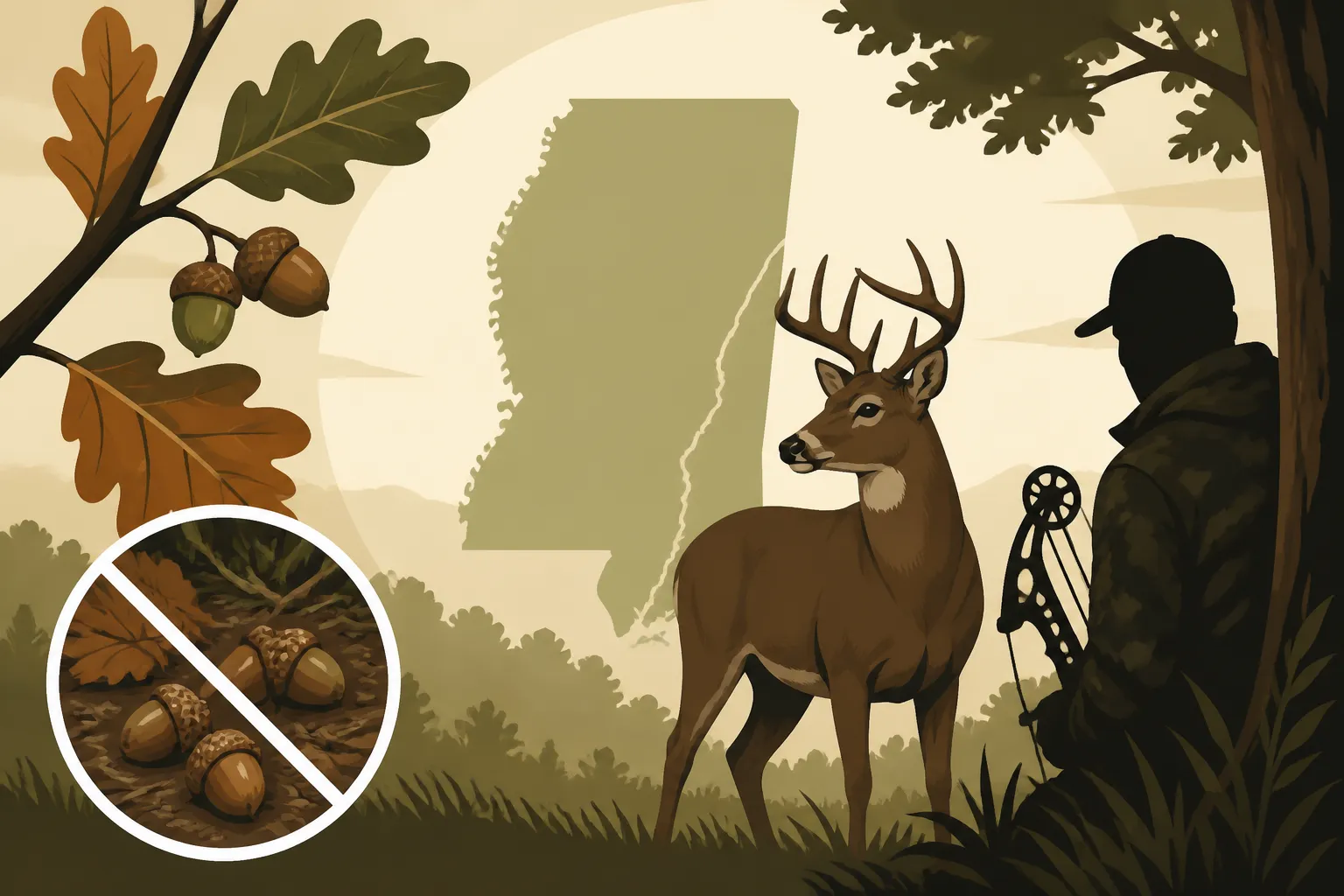
Hunting After a Poor Acorn Year
It can be incredibly frustrating when you’ve spent months patterning deer around a prime oak flat, only for autumn to arrive and find the ground completely barren of acorns. A poor acorn crop throws a major wrench into your hunting plans, forcing both you and the wildlife to adapt quickly. This guide will help you understand the significant impact of a lean mast year and provide practical, on-the-ground strategies to keep you successful, whether you're after deer, turkey, or even those wily feral hogs.
Understanding the Impact of a Poor Acorn Crop
When the acorns aren't falling, it's not just a minor inconvenience; it's a seismic shift in the natural world that sends ripple effects through the entire ecosystem. For many hunters in Mississippi, our seasons are often defined by the availability of this crucial food source.
The Role of Acorns in Mississippi's Ecosystem
Acorns, particularly from red and white oak species, are truly the lifeblood of many ecosystems across Mississippi. They represent a primary hard mast crop, packed with carbohydrates and fats, providing essential energy for wildlife to build fat reserves for the rigors of the breeding season (the rut) and the colder months of winter. Think of them as nature's energy bar, a high-octane fuel for growth and survival.
Deer, for instance, rely heavily on this bounty. When acorns are plentiful, deer will often concentrate their feeding efforts in oak bottoms and ridges, creating predictable patterns that hunters can exploit. Turkeys scratch through the leaf litter for them, and squirrels practically live on them. Even feral hogs, the ultimate opportunists, will root up every last one they can find. The annual cycle of feast or famine with acorns profoundly dictates animal movements, distribution, and overall health.
A poor acorn year, often due to late frosts, excessive rain during pollination, or insect infestations, means this vital food source is largely absent. This absence forces animals to fundamentally alter their daily routines and feeding habits. It's not just a preference; it's a necessity for survival, which means as hunters, we have to change our game plan too.
Immediate Behavioral Shifts in Game Animals
When the acorn crop fails, the creatures of the Mississippi woods don't just sit around lamenting the loss; they quickly shift their focus to alternative food sources. This change can be quite dramatic and widespread.
For deer, this often means abandoning their traditional oak flats. Instead of seeing concentrated activity under a grove of white oaks, they'll disperse more widely, searching for whatever browse and forbs they can find, or moving into agricultural fields. Their travel patterns become less about moving between bedding and a specific oak stand, and more about navigating longer distances between secure cover and whatever alternative food source is available. This can make them harder to pattern, as their movements are less predictable over large areas. You might find yourself having to hunt different types of terrain entirely, perhaps focusing on areas you’d usually ignore if acorns were abundant.
Turkeys, equally dependent on acorns, will also spread out. Instead of gathering in large flocks to scratch for mast, they'll spend more time in open fields foraging for insects, seeds, and green vegetation. This can make calling them in more challenging, as their focus is less on congregating and more on finding sustenance wherever it might be. Similarly, squirrels, facing a lean larder, will often disperse from their usual haunts in search of hickory nuts, pecans, or whatever other secondary mast might be available, leading to increased competition and more widespread, less concentrated activity.
Even feral hogs, known for their adaptability, feel the pinch. While they'll always find something to eat, a poor acorn year means they’ll intensify their search in other areas. This often translates to increased rooting damage in agricultural fields or a more aggressive pursuit of underground tubers and grubs. Understanding these immediate shifts is the first step in formulating a successful hunting strategy when the woods are quiet and the oaks are bare.
Scouting for Alternative Food Sources
With the preferred acorn buffet closed, game animals are forced to find other dining options. Your success as a hunter in a poor acorn year hinges almost entirely on your ability to find these alternative food sources before the animals do, or at least at the same time. This requires diligent scouting, both pre-season and during the hunt.
Identifying Hard Mast Alternatives
While acorns are king, they aren't the only hard mast game in town. Mississippi's diverse forests offer other nut-bearing trees that can become critical food sources when oaks fail. You need to broaden your search beyond just the oak ridges and bottoms.
Look for areas with a good concentration of hickory trees, which produce nuts that deer, squirrels, and even turkeys will readily consume. Pecan trees, especially in the Delta region or along river bottoms, can also be a significant draw. While not as widespread or consistently productive as acorns, black gum and even sweet gum balls (though less nutritious) will be consumed, especially when other options are scarce. Persimmon trees are another often-overlooked gem; their sweet fruit is a magnet for deer and hogs alike in late summer and fall. These "secondary" mast crops become primary in a lean acorn year. Focus your scouting on identifying these trees and looking for fresh sign around them—droppings, chewed nuts, or disturbed leaf litter. Don't be afraid to Scouting Mississippi Public Land Before Season specifically for these alternative mast trees.
It's also worth noting that some tree species produce more consistently year-to-year than oaks, which tend to have boom-and-bust cycles. Learning to identify these more reliable producers can give you an edge. A few scattered persimmon trees or a small hickory flat might not seem like much in a bumper acorn year, but they become invaluable hotspots when the oaks are silent.
Locating Soft Mast and Browse
Beyond hard mast, soft mast (fruits and berries) and plentiful browse become absolutely critical when acorns are scarce. Deer will dramatically increase their intake of various plants, and knowing what they prefer can guide your efforts.
Throughout Mississippi, look for areas with wild grapes and muscadines, which ripen in late summer and early fall and can hold deer and turkeys. Honeysuckle is a year-round deer favorite, providing a green, nutritious snack even into the colder months. Greenbrier, with its thorny vines and persistent leaves, also provides excellent browse. In areas where it's present, kudzu can be a deer magnet, offering abundant forage. Clear-cuts and regenerating timber stands are often overlooked but are prime areas for new growth of tender saplings, shrubs, and forbs that deer will heavily browse. These young, growing plants offer a high-protein diet that helps compensate for the lack of fatty acorns.
When scouting, don't just look for the food itself; look for the evidence of feeding. Freshly clipped stems, rubbed bark, deer droppings, or even trails leading into these areas are key indicators. Areas with dense thickets and cover adjacent to these food sources are even better, as deer prefer to feed close to security. This shift to browse and soft mast often means deer are spread out over larger areas, making patience and thorough scouting even more vital. You might find yourself still-hunting slowly through these browse-rich areas, rather than waiting on a single oak tree.
Agricultural Field Reconnaissance
In a poor acorn year, agricultural fields transform from occasional food sources into absolute magnets for deer and especially feral hogs. If you have access to land with crop fields, this is where you should dedicate a significant portion of your scouting efforts.
Soybeans, corn, peanuts, and winter wheat plantings become prime destinations. Deer will often hit bean fields heavily in late summer and early fall, and corn fields provide high-energy forage and cover well into the hunting season, even after harvest. Winter wheat and clover plots, planted for deer, become even more critical when natural food is scarce. These planted food sources are predictable and concentrated, making them ideal spots to intercept animals. Hunting a Standing Cornfield in Farm Country becomes a much more fruitful endeavor in a year without acorns.
Hogs, being incredibly adaptable and prolific, will quickly shift their attention to these cultivated fields. Look for extensive rooting damage in and around fields, especially along field edges or where cover meets the crops. This is often where you'll find the most concentrated activity. Pay close attention to travel corridors—the subtle paths, ditches, and fencerows that deer and hogs use to enter and exit these fields, moving between bedding areas and their newfound dinner plate. Setting up on these pinch points or in ground blinds on field edges can be incredibly effective.
Adapting Your Hunting Strategies
Knowing where the animals are going to eat is only half the battle. The other half is adapting your how to hunt them. A poor acorn year demands flexibility and a willingness to step outside your comfort zone, moving away from traditional tactics to embrace strategies that capitalize on these altered feeding patterns.
Adjusting Deer Hunting Tactics
When the oak flats are quiet, deer hunters in Mississippi need to change their approach. Instead of focusing solely on traditional mast-heavy areas, your attention should pivot to other food sources and the travel routes connecting them to bedding.
This means spending more time hunting the edges of food plots, especially those planted with clover or winter wheat. Focus on areas where lush browse lines meet dense cover, or on the regrowth in recent clear-cuts. Deer will often browse these areas throughout the day, so an all-day sit might be productive. Instead of waiting for deer to come to a specific oak, you're now hunting the paths they take to get to these widely dispersed food sources. Look for funnels, pinch points, and natural travel corridors that lead from thick bedding cover to these alternative food sites. This might mean setting up along a creek bottom or a subtle ridge line that deer use as a highway.
Scent control becomes even more paramount when deer are spread out and potentially covering more ground. They're on high alert, constantly searching for food, so any foreign scent could easily spook them. Consider using mock scrapes or subtle grunt calls, as deer are still communicating, but avoid aggressive rattling if the deer are already dispersed and feeling the pressure. For some units, like the Delta, where legal bucks have a Delta Unit Twelve-Inch Spread Rule Explained, understanding their movement becomes crucial for target acquisition. Remember, in these conditions, deer might be a little more frantic in their search for food, offering slight behavioral quirks that an observant hunter can exploit.
Strategies for Turkeys and Small Game
The impact of a poor acorn year extends beyond deer, necessitating adjustments for turkey and small game hunters as well. Adaptability is key for all species.
For turkeys, a lean mast year means they'll be spending less time scratching in the woods and more time in open areas. Focus your efforts on agricultural fields, pastures, and powerline cuts where they can forage for insects, seeds, and green shoots. These areas offer a more reliable food source when acorns aren't present. Instead of waiting patiently in a timber block, adopting a more aggressive "run-and-gun" approach, covering more ground to locate birds, can be highly effective. Calling them off a field edge, or setting up on a Turkey Tactics for Delta Field Edges, might prove more fruitful than trying to pull them from dense woods where food is scarce. They might be more willing to come to a call if they are actively searching for food and companionship.
Squirrel hunters will also need to adjust. Instead of targeting large oak groves, shift your focus to hickory bottomlands, pecan orchards, or even areas with a good density of persimmon trees. Squirrels will work these areas hard when acorns are absent. It might require more walking and searching to find active feeding zones. For rabbits, while they primarily rely on browse, they will often congregate in thick cover adjacent to any available green food sources or agricultural fields. Hunt fencerows, briar patches, and brush piles that offer both cover and proximity to food. During a poor mast year, all small game will be concentrating on these alternative food havens, making them prime spots for hunters.
Hog Hunting in a Poor Acorn Year
Feral hogs are perhaps the most adaptable game animal in Mississippi, but even they are heavily influenced by the availability of acorns. When the natural hard mast disappears, their destructive habits become even more focused on agricultural damage.
In a poor acorn year, hogs will absolutely hammer agricultural fields. If there's a standing cornfield, a newly planted winter wheat field, or a leftover soybean field, you can bet the hogs will be there. Look for fresh rooting, wallows, and trails leading directly into these fields. This concentrated feeding behavior makes them more predictable, which can be a huge advantage for hunters. If you have permission to hunt private land, these fields become your primary focus.
Baiting, if legal and permissible on your hunting grounds, can be incredibly effective. Corn, soured grains, or even commercial hog attractants become irresistible when natural foods are scarce. The hogs will hit bait sites much more aggressively and consistently. For those who engage in Night Hunting Hogs With Lights on Private Land, a poor acorn year offers prime opportunities. Hogs will often move into fields under the cover of darkness, and with thermal optics or green lights, you can intercept them as they feed. Remember, controlling these destructive animals is a year-round effort, and a poor acorn crop simply shifts where you need to focus those efforts.
Leveraging Technology and Community Knowledge
In an unpredictable season marked by a poor acorn crop, smart hunters leverage every tool at their disposal. This isn't just about boots on the ground; it's about using modern technology and the collective wisdom of the hunting community to put the pieces of the puzzle together.
Utilizing Mapping Tools and Scouting Apps
Modern hunting has been revolutionized by mapping tools and scouting apps, and their value skyrockets during a poor acorn year. These tools allow you to analyze habitat and identify potential alternative food sources from the comfort of your home, saving precious time and energy in the field.
Platforms like GoHunt, along with others like onX Hunt or Gaia GPS, allow you to overlay satellite imagery with public and private land boundaries, topo maps, and even timber harvest data. You can use these features to pinpoint areas that might be holding deer when acorns are scarce. Look for clear-cuts (identifiable by their distinct patterns), recent timber thinnings, or dense creek bottoms that might be growing thick greenbrier or honeysuckle. Identifying different tree species on aerial imagery can be challenging, but experienced users can often spot patterns indicative of hickory groves or persimmon clusters. You can also mark agricultural fields and plan your entry and exit routes around them. The ability to drop pins on potential food sources and then scout them effectively dramatically increases your chances of success. For those hunting public lands, don't forget that Scouting With the MDWFP App can provide invaluable WMA-specific information, including maps and regulations. These apps help you visualize the landscape and predict animal movement without having to blindly wander for miles.
Connecting with Local Hunters and Resources
While solo scouting is crucial, don't underestimate the power of community and shared knowledge, especially in a year when the woods are throwing curveballs. Talking to other hunters and checking official resources can provide critical insights.
Local hunting forums, social media groups, and even casual conversations at the gas station or local diner can yield valuable information. Someone might have spotted a productive persimmon patch or noticed heavy browsing pressure in a particular clear-cut that you weren't aware of. Sharing observations about local conditions – whether specific areas have a better-than-average crop of some secondary mast or if deer are heavily hitting certain agricultural fields – can help everyone piece together a more accurate picture of animal movement.
The Mississippi Department of Wildlife, Fisheries, and Parks (MDWFP) is another excellent resource. While they might not provide hyper-specific "acorn reports," their harvest data, regional wildlife biologists, and official communications can offer general insights into herd health and localized conditions. Understanding the broader Mississippi Deer Season Structure Explained and how it's designed to adapt to environmental factors can also be beneficial. Remember that micro-climates exist, and a poor acorn crop in one county doesn't necessarily mean it's bad everywhere. Local knowledge and broader biological understanding can paint a clearer picture and help you focus your efforts where they're most likely to pay off.
| Strategy Type | Good Acorn Year | Poor Acorn Year | Key Impact |
|---|---|---|---|
| Deer Hunting | Focus on oak flats and ridges. | Shift to food plots, clear-cuts, thick browse areas, field edges. | Deer disperse, focus on alternative carbs/protein. |
| Turkey Hunting | Scratching in timbered areas under oaks. | Foraging in open fields for insects/greens, secondary mast. | Turkeys spread out, less predictable. |
| Hog Hunting | Rooting under oaks, opportunistic. | Heavy damage in agricultural fields, intense baiting response. | Hogs concentrate on reliable, high-energy fields. |
| Scouting Focus | Locating dropping acorns, fresh rubs/scrapes near oaks. | Identifying hickory, persimmon, wild grape, browse, field activity. | Need to find diverse, often less obvious, food sources. |
| Calling Tactics | Standard deer calls, gobbling from roost. | More emphasis on scent control, subtle calls, run-and-gun turkey. | Animals are more wary and dispersed. |
| Preferred Setups | Treestands over active oak stands. | Ground blinds on field edges, stands overlooking clear-cuts/funnels. | Adapt to new travel routes and concentrated feeding areas. |
Disclaimer
The information provided in this guide is for general informational purposes only and does not constitute professional hunting or wildlife management advice. Hunting regulations, seasons, and conditions can change rapidly. Always consult the most current Mississippi Department of Wildlife, Fisheries, and Parks (MDWFP) regulations, obtain appropriate licenses and permits, and adhere to all local, state, and federal laws before engaging in any hunting activities. Safety should always be your top priority.