Scrape Lines Along a Logging Road
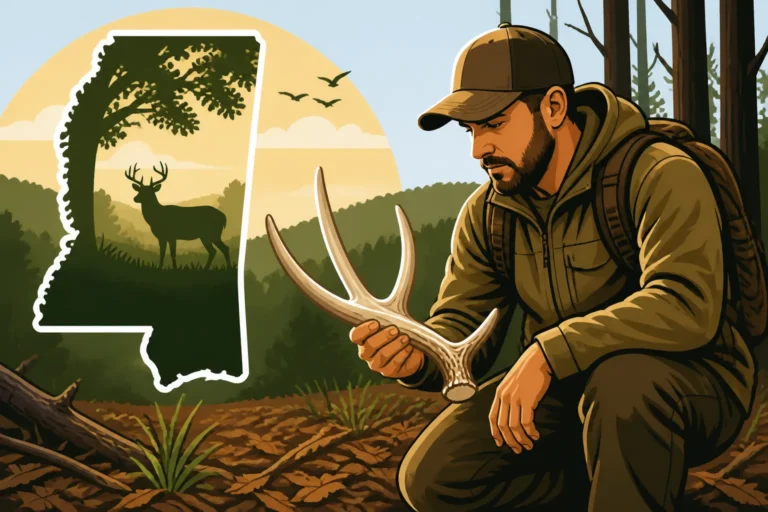
It’s a frustration many Mississippi hunters know all too well: you’ve scouted, you’ve put in the legwork, but finding consistent deer movement, especially from those elusive mature bucks, feels like a constant puzzle. You walk for miles through dense timber, wondering if you’re even in the right zip code. This guide is here to help you unlock one of the most reliable secrets to buck activity: scrape lines along logging roads. We’ll dive deep into why these overlooked areas are buck magnets and how you can effectively hunt them.
Why Logging Roads are Buck Magnets
Logging roads, whether active or long-abandoned and overgrown, are often underestimated by hunters focused solely on deep woods or food plots. But for a mature buck, these unassuming pathways are essential features of their home range, serving multiple critical functions that make them prime hunting locations.
Natural Travel Corridors
Think about it from a buck’s perspective: why fight through thick briars and tangled undergrowth when there’s a relatively clear path? Logging roads provide an efficient, low-energy route for deer to move between bedding areas, feeding grounds, and water sources. Bucks, much like humans, appreciate the path of least resistance. They’ll often use these roads, especially the older, less-traveled ones, as primary travel corridors, especially under the cover of darkness or during low-light hours at dawn and dusk. These aren't just random trails; they're superhighways for deer.
During the rut, these roads become even more critical. Bucks will cruise these corridors, scent-checking for does. If you're wondering about Hunting the Rut in the Delta Unit or Hunting the Rut in the Hills Unit, remember that these open pathways offer a clear line of sight and an easy way to cover ground while searching for receptive does. A buck can efficiently cover a lot of territory on a logging road, using its nose to detect recent doe activity without expending excessive energy crashing through dense cover. This makes placing a stand or blind along such a road particularly strategic.
Edge Habitat and Cover Transitions
Logging roads, by their very nature, create an "edge" effect. On one side, you might have mature timber, and on the other, regenerating clear-cut, thick pine plantation, or even a transition into a creek bottom. These edges are biological hotspots, offering a diverse array of forage and cover that deer naturally gravitate towards. Bucks often feel safer moving along these edges because they can quickly duck into dense cover if alarmed, yet still access the travel benefits of the open road.
Consider a situation where a logging road borders a dense pine thicket on one side and a mature hardwood bottom on the other. This setup provides bedding cover in the pines and food sources (acorns, browse) in the hardwoods, with the road serving as the perfect transition zone. Bucks will often scrape and rub along these edges as they scent-check the wind and leave their calling cards. These edge habitats are prime locations for bucks to establish their dominance and communicate with other deer. Identifying these subtle shifts in habitat, easily spotted on a mapping app like GoHunt, can dramatically improve your scouting efforts and help you predict buck movement patterns.
Decoding Scrape Line Behavior
Finding a scrape line isn’t just about spotting dirt pawed up on the ground; it’s about understanding the complex communication system bucks employ. Deciphering the messages left behind can give you a significant advantage in patterning deer.
Purpose of a Scrape
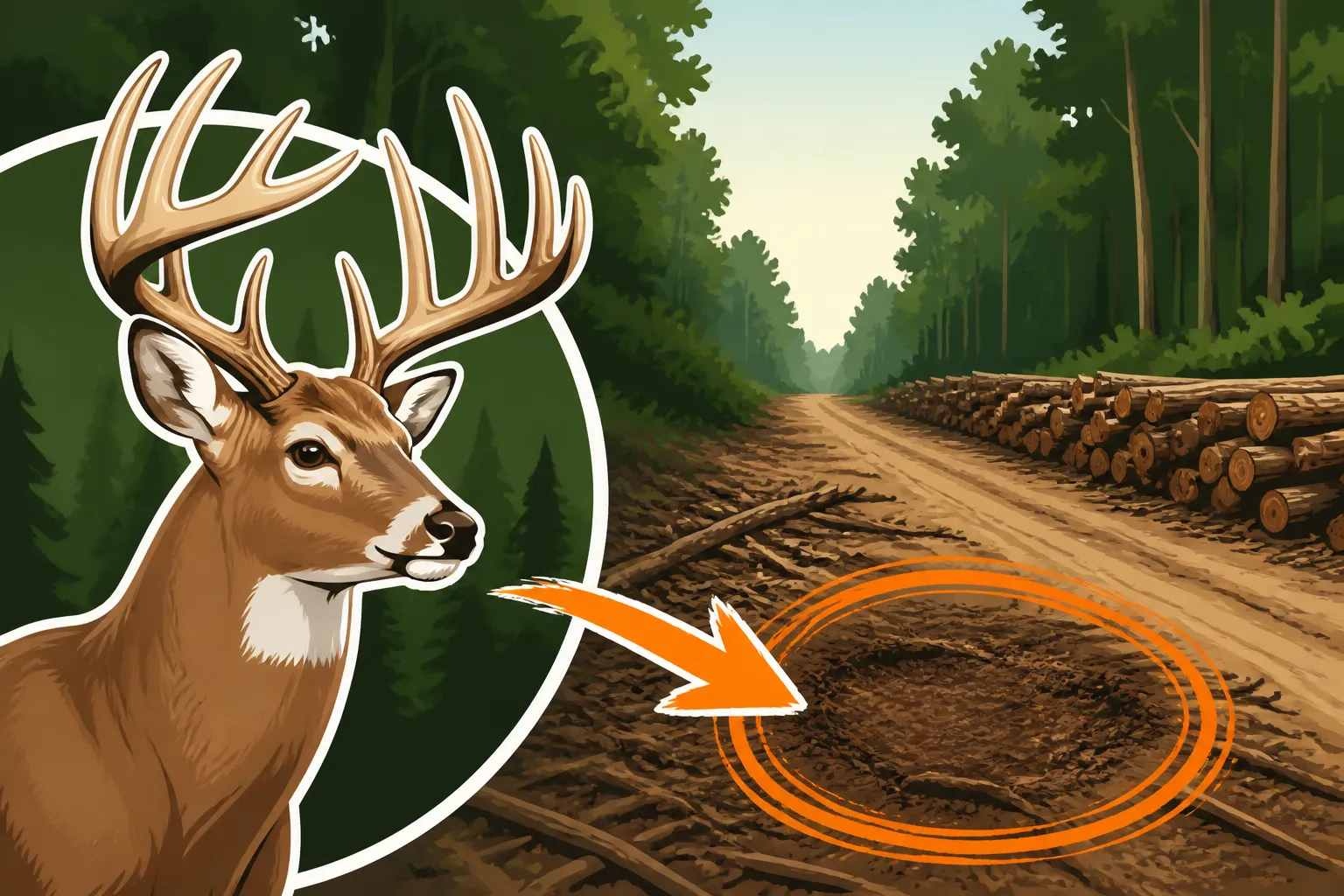
Scrapes are essentially communication hubs for deer. A buck creates a scrape by pawing away leaf litter and exposing bare earth, then typically urinates over his tarsal glands into the fresh dirt. Above the scrape, he’ll often rub his forehead and antlers on an overhanging branch (the "licking branch"), leaving behind scent from his forehead glands and pre-orbital glands. This combination of visual, olfactory, and chemical signals serves several purposes:
- Advertising Presence: It tells other bucks in the area, "I'm here, this is my territory, and I'm ready to breed."
- Assessing Competition: Other bucks will visit scrapes, smell the scent, and often add their own, essentially signing their names into the guestbook. This allows bucks to gauge the competition.
- Communicating with Does: Does also visit scrapes, especially during the pre-rut and rut, to determine if a buck is in the vicinity and ready to breed. They might even urinate in the scrape, leaving their own scent.
Understanding this dynamic is crucial. An active scrape isn't just a random spot; it's a social media feed for deer, constantly updated with new information. Focusing your efforts on areas where bucks are consistently leaving and checking these messages will put you in a higher probability area.
Timing and Location for Active Scrapes
While bucks might make scrapes year-round, the vast majority of significant, active scrape lines pop up during the pre-rut and peak rut phases, typically from late October through November in much of Mississippi, though timing varies by unit. Bucks become much more vocal and territorial during this period.
You’ll typically find primary scrape lines along major travel corridors, like those logging roads we discussed. Look for them just inside the tree line, often where a licking branch hangs conveniently low. Secondary scrapes, on the other hand, are smaller and more numerous, often found closer to bedding areas or feeding zones, indicating a buck’s casual presence. The key is to find a line of active scrapes, not just one isolated paw mark. A line suggests a buck is regularly patrolling that route.
When Scouting Mississippi Public Land Before Season, pay close attention to old logging roads that might not even be visible on standard maps. Using a detailed mapping application like GoHunt, you can often identify these forgotten paths, which might appear as faint lines or slight changes in vegetation density. These hidden gems, less traveled by other hunters, are often where the biggest bucks leave their calling cards. Remember, fresh scrapes mean fresh activity, so always look for signs of recent pawing and wet earth, indicating a buck has recently worked the scrape.
| Scrape Characteristic | Active Scrape (Fresh) | Inactive Scrape (Old) |
|---|---|---|
| Ground | Bare earth, often wet, fresh paw marks | Covered in leaves/debris, hard, no distinct marks |
| Licking Branch | Freshly broken twigs, wet/chewed tips | Dry, unbroken, no fresh scent |
| Scent | Strong musky buck odor, urine smell | Faint or no scent |
| Location | Along primary travel corridors, near cover | Can be anywhere, often isolated |
| Buck Presence | High probability of recent buck activity | Indicates past activity, less current relevance |
Hunting Strategies for Logging Road Scrapes
Finding a scrape line is just the first step. The real challenge, and the true art of hunting, lies in effectively positioning yourself to intercept the buck that made it. This requires careful consideration of wind, stand placement, and calling strategies.
Stand Placement and Wind Considerations
Hunting over a scrape isn't about sitting directly on top of it. It's about setting up downwind, or crosswind, from the scrape line in a spot that intercepts the buck as he approaches or leaves. Bucks are incredibly sensitive to scent, and one whiff of human odor will send them packing. Always, always, play the wind. This means having multiple stand locations if you're serious about hunting a particular scrape line, allowing you to adapt to changing wind directions.
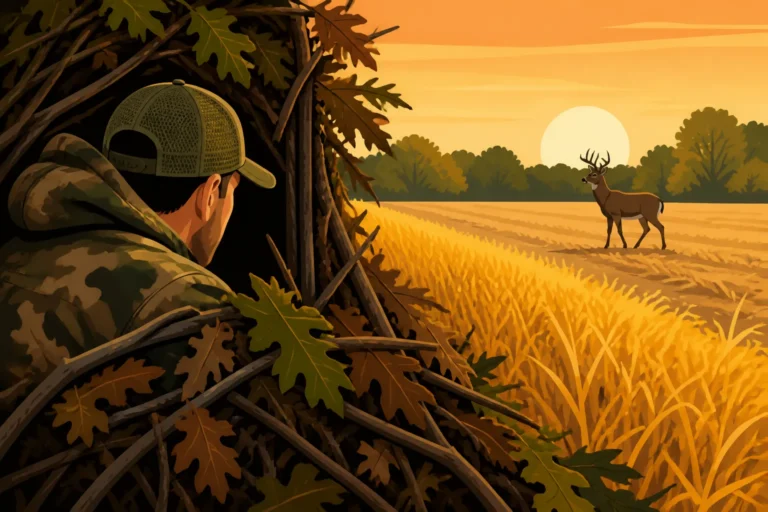
Consider placing your stand 20-30 yards downwind of the most active scrape, ideally where you have good shooting lanes along the logging road or into the adjacent cover. Look for natural funnels or pinch points where the road narrows or crosses a creek, as these areas often concentrate deer movement. For example, if you're hunting in the Delta and find a scrape line along an old road that funnels into a slough, that's a prime location. You might even consider a ground blind if the cover is suitable, particularly if you're thinking about Using a Ground Blind on Mississippi Public Land to provide more concealment. The key is to be undetected while having a clear shot at the approaching deer.
Calling and Decoy Tactics
While scrapes themselves are scent-based communication, you can enhance your setup with calling and decoy tactics, especially during the peak rut. Grunt calls can mimic a buck cruising for does or a younger buck challenging a dominant one. Consider using them sparingly at first, then increasing intensity if you hear or see movement. If you're looking for advice on Rattling Volume in Thick Cover or Grunt Calls in Mature Mississippi Timber, remember that logging roads often offer slightly more open areas, allowing sound to travel a bit further, but still adjust your volume to the actual conditions.
Decoys can also be effective, particularly a doe decoy during the pre-rut and early rut, or even a smaller buck decoy to challenge a dominant buck. Place the decoy where it's visible from the scrape line but doesn't obstruct your shooting lanes. Make sure it's facing away from your likely shot direction, so an approaching buck tries to circle downwind to scent-check it, bringing him into your shooting zone. However, be cautious with decoys on public land, especially during gun season, to avoid drawing other hunters' attention.
Patience and Persistence
Hunting scrape lines, like all deer hunting, requires a good deal of patience. Bucks don't visit every scrape every day. They patrol their routes, sometimes hitting the same scrape multiple times a week, other times skipping it for a few days. The best approach is often to hunt an active scrape line during peak movement times (first and last hours of daylight) and be prepared to sit for extended periods.
Don’t get discouraged if you don’t see a buck on your first sit. The beauty of a scrape line is that it indicates consistent, recurring buck activity. The buck will be back. You might want to consider a Warm-Weather Sitting Strategy in Mississippi if you're hunting early in the rut when temperatures can still be quite mild. The more time you put in over an active scrape line, the higher your chances of catching that buck checking his messages. Always be ready, as a mature buck might appear silently from the thick cover adjacent to the logging road, seemingly out of nowhere.
Gear and Scouting Essentials
Being prepared with the right tools and knowledge can turn a frustrating hunt into a successful one. From advanced mapping to basic scent control, every detail contributes to your overall success.
Optics and Mapping Tools
Good optics are non-negotiable when hunting scrape lines. Binoculars, even a basic 8×42 pair, allow you to scan the logging road and surrounding cover without unnecessary movement, helping you spot deer before they spot you. A rangefinder is also invaluable for quickly determining distances to potential shooting lanes or landmarks around your chosen scrape.
Mapping tools, like those found on platforms such as GoHunt, are perhaps one of the most significant advancements for modern hunters. They allow you to:
- Identify potential logging roads, even overgrown ones, from aerial imagery.
- Pinpoint funnels, pinch points, and cover transitions.
- Mark active scrapes, rubs, and other sign.
- Plan silent entry and exit routes, minimizing disturbance.
Before you ever set foot in the woods, use these apps to analyze the terrain. Look for areas where old logging roads intersect creek bottoms, dense bedding cover, or connect two distinct habitat types. If you're doing some Reading Aerial Photos for Hills Unit Deer, these roads will often jump out as clear lines of reduced canopy or slightly different vegetation. The more information you gather from your map, the better equipped you'll be to find and hunt those productive scrape lines. Remember to always bring a physical map or ensure your phone is fully charged, especially if you're venturing into areas with spotty cell service.
Scent Control and Quiet Movement
Scent control isn't just a buzzword; it's a critical component of successful deer hunting, especially when targeting mature bucks that are hyper-aware of human presence. Before heading to your scrape line, take a scent-free shower, wash your hunting clothes in scent-eliminating detergent, and store them in airtight containers. Use scent-eliminating sprays on your boots and gear before walking in. Even the slightest hint of human odor can alert a buck and send him off in the opposite direction.
Equally important is quiet movement. Logging roads, by their nature, can be noisy with crunching leaves or gravel. Plan your approach carefully, avoiding any unnecessary noise. Walk slowly, paying attention to every step. If possible, approach your stand from a direction that keeps the wind in your favor, and avoid walking directly over active scrapes on your way in. This also ties into minimizing Hunting Pressure on Mississippi Public Land – the less you disturb an area, the more likely deer are to use it naturally. If you're setting up a trail camera to monitor a scrape, consider the best practices for Where to Hang a Camera on a Logging Road to capture activity without spooking deer. The less you disturb the environment, the more natural the deer behavior you'll observe, leading to more insights for your hunt.
Disclaimer
Hunting involves inherent risks, and conditions can change rapidly. Always consult the latest Mississippi Department of Wildlife, Fisheries, and Parks (MDWFP) regulations before any hunting activity. This guide is for informational purposes only and does not substitute for official regulations or professional guidance. Stay safe and respect wildlife and property.