Night Hunting Rules for Mississippi Coyotes
Coyote populations have exploded across Mississippi, creating a real headache for landowners and often leaving deer hunters frustrated by their impact on fawn recruitment and overall deer health. Trying to thin them out during daylight hours can feel like a losing battle; these animals are incredibly wary. That's why many hunters turn their attention to the cover of darkness, but navigating the specific rules for night hunting coyotes in our state can be a confusing maze. This guide is here to untangle those regulations, offering a clear path to effectively and legally managing coyotes after sundown.
Understanding Mississippi's Legal Framework for Night Hunting Coyotes
When you're dealing with nuisance wildlife like coyotes, the rules often differ significantly from those for game animals. Mississippi has specific provisions that allow for more flexibility in controlling these predators, especially when they pose a threat to livestock or native wildlife populations. However, this flexibility doesn't mean it's a free-for-all; there are still important distinctions to be aware of, particularly concerning where you're hunting and the methods you employ.
General Rules for Nuisance Wildlife Management
In Mississippi, coyotes are largely classified as nuisance animals. This designation is critical because it means they are not subject to the same strict season dates or bag limits that apply to deer or turkeys. The Mississippi Department of Wildlife, Fisheries, and Parks (MDWFP) recognizes the need for continuous population control due to the significant impact coyotes can have on livestock, poultry, and even other game species like turkeys and fawns. This allows landowners, and those with permission, to pursue coyotes year-round. This continuous open season is a huge advantage for serious predator hunters looking to make a difference. The goal isn't just sport; it's often about active wildlife management and protecting valuable resources, which is why the state grants more latitude for their control.
Private Land Versus Public Land Regulations
This is where things get really specific and where most hunters encounter confusion. The most significant difference in night hunting coyotes in Mississippi hinges entirely on whether you're on private or public land.
Private Land: On private property, the rules are considerably more permissive. If you have the landowner's permission, you are generally allowed to hunt coyotes at night with artificial lights, including weapon-mounted lights. This is a game-changer for night hunting, as it allows for positive target identification and precise shot placement. Many farmers and ranchers welcome hunters who are willing to come onto their land and help reduce predator pressure. Before you head out, make sure you have explicit, ideally written, permission to hunt at night and understand any specific concerns the landowner might have about lights, noise, or areas to avoid. Remember, even with liberal regulations, being a good steward of the land and a respectful hunter is paramount. For detailed guidance on securing access, check out our piece on Getting Private Land Permission in Mississippi.
Public Land: This is where the landscape changes dramatically. Generally, night hunting, including the use of artificial lights, is prohibited on most public lands in Mississippi, such as National Forests and Wildlife Management Areas (WMAs). The reasons for this are primarily safety and preventing harassment of other wildlife. Public lands are often multi-use, and allowing widespread night hunting with lights could pose risks to other users or lead to unintentional take of non-target species. There may be very rare, specific exceptions or special permits issued for certain areas or circumstances by the MDWFP, but these are few and far between and require direct inquiry and approval. As a rule of thumb, assume night hunting is off-limits on public land unless you have verified otherwise directly with the specific land management agency. Always be sure to check the specific WMA or National Forest regulations before planning any hunt; these can be found on the MDWFP website or through tools like GoHunt, which often have integrated public land boundaries and specific regulations. Our article on Mississippi Public Land Hunting Hours delves into some general public land time restrictions that might indirectly affect night operations.
Seasonality and License Requirements
As mentioned, coyotes are classified as nuisance animals, meaning there's no closed season for hunting them in Mississippi. You can pursue them year-round, day or night (where permitted by land type). This means if you're experiencing a problem with coyotes on your private land, you don't have to wait for a specific hunting season to begin addressing it.
Regarding licenses, you will still need a valid Mississippi hunting license to hunt coyotes, even if they are nuisance animals. This typically means a basic hunting license for residents, or the appropriate nonresident hunting license if you're visiting from out of state. If you plan to hunt with any firearms or archery equipment, those general license requirements apply. You don't usually need a separate "coyote permit" or special "night hunting license" per se, but having your general hunting license is non-negotiable. Always carry proof of your license while afield, as conservation officers will expect to see it. For a full breakdown of what you might need, our guide on Mississippi Hunting Licenses and What They Cost is an excellent resource.
Permitted Equipment and Methods for Night Hunting Coyotes
The efficacy of night hunting often relies heavily on specialized equipment that can overcome the challenges of darkness. Mississippi's regulations reflect this, allowing specific tools that enhance safety and success, particularly on private land. Knowing what's allowed and what's not is paramount to staying legal.
Use of Artificial Lights
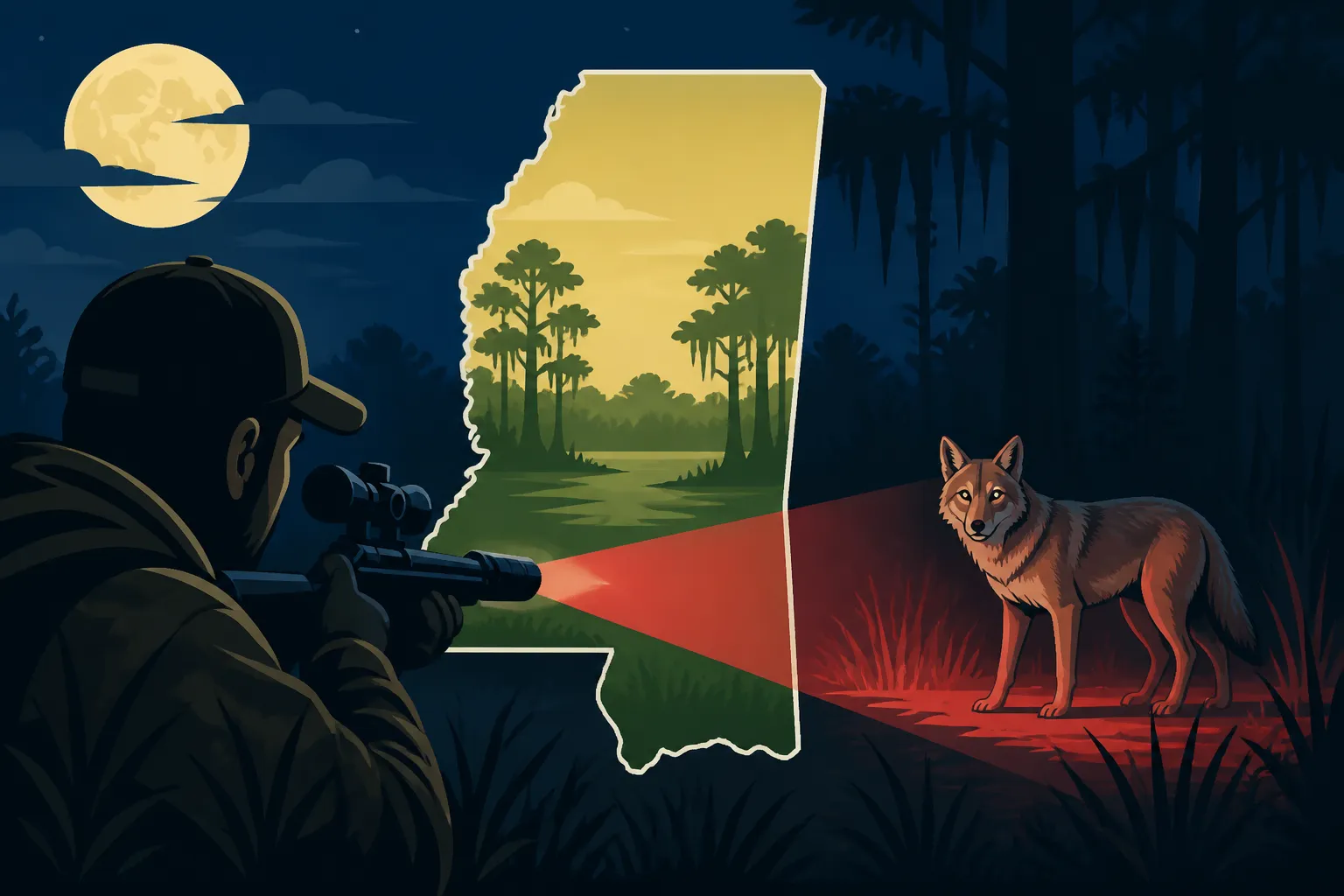
On private land, the use of artificial lights for night hunting coyotes is explicitly allowed, which is a major benefit for predator hunters. This permission includes weapon-mounted lights, which are incredibly popular for their convenience and ability to keep your hands free. Whether you prefer a powerful spotlight for scanning distant fields or a red or green light for less intrusive illumination, both are generally acceptable. The key here is private land. If you're on your own property or a friend's land with permission, you can use these tools to identify coyotes, track their movement, and aid in shot placement.
However, a crucial point of caution: even with legal lights, never "spotlight" another hunter, occupied dwelling, or vehicle. Use your lights responsibly and ethically. While the regulations are liberal for coyotes on private land, common sense and safety should always prevail. It's also important to be mindful of your neighbors; a powerful spotlight sweeping across their property late at night can understandably cause concern. A quick conversation with them beforehand can often prevent misunderstandings.
Thermal and Night Vision Devices
This is where technology really shines for night hunting. The use of thermal imaging and night vision devices for hunting coyotes at night is legal on private land in Mississippi. This is fantastic news for serious predator hunters. Thermal scopes and handheld thermal monoculars allow you to detect the heat signatures of animals in complete darkness, cutting through fog, light brush, and even some rain. Night vision, while different, amplifies ambient light to allow you to see. Both offer a distinct advantage when coyotes are most active.
Many hunters use a combination: a handheld thermal device for scanning and locating animals, then transitioning to a thermal or night vision scope mounted on their firearm for target acquisition. Products integrated with scouting tools like GoHunt can help you plan your approach and understand the terrain even in the dark. This technology dramatically increases your ability to locate and ethically harvest coyotes, leading to more successful hunts and more effective population control. Again, this privilege is largely restricted to private lands, so confirm your location before deploying such advanced optics.
Approved Firearms and Ammunition
When it comes to the type of firearms and ammunition you can use for night hunting coyotes in Mississippi, the general rules for hunting apply, and there are no specific restrictions unique to night hunting coyotes. This means you can use rifles, shotguns, or even archery equipment.
- Rifles: Common calibers for coyotes include .223 Remington, .22-250 Remington, .204 Ruger, and even larger calibers like .308 Winchester if you're looking for something with more punch for longer shots. The important thing is to use a flat-shooting, accurate round suitable for coyotes to ensure a quick and humane harvest.
- Shotguns: Shotguns loaded with buckshot (e.g., #4 buck or larger) or even heavy turkey loads can be effective in thick cover or at closer ranges, especially if you're trying to stop a charging coyote during a distress call.
- Archery Equipment: While more challenging at night, bowhunting coyotes is also legal. If you choose this route, ensuring you have excellent shot placement and recovery capabilities is vital, perhaps with illuminated nocks and a bright recovery light.
There are no minimum caliber rules specifically for coyotes, unlike deer. However, it’s always best practice to choose a firearm and ammunition combination that you are proficient with and that is appropriate for the size and resilience of a coyote. This will minimize the risk of wounding an animal and losing it in the darkness.
Safety and Ethical Considerations When Hunting Coyotes at Night
Night hunting, while effective, introduces unique challenges and responsibilities that demand heightened awareness and adherence to ethical practices. The cover of darkness can be deceiving, making target identification and situational awareness more complex. Prioritizing safety, both for yourself and others, is non-negotiable.
Identifying Your Target and Backstop
This is arguably the single most critical safety concern when hunting at night. In the dark, even with the aid of powerful lights, thermal, or night vision, accurately identifying your target and ensuring a safe backstop can be difficult. A coyote can look very different in the beam of a spotlight than it does in daylight, and the absence of ambient light can obscure crucial details of the terrain behind your target.
- Positive Identification: Always, always confirm 100% that what you are aiming at is, in fact, a coyote. Mistaking a domestic dog, another hunter, or even livestock for a coyote is a catastrophic error that can easily be avoided by being patient and thoroughly confirming your target. If there's any doubt, do not shoot.
- Backstop Awareness: Just because you can't see past your target doesn't mean there isn't anything there. Be intimately familiar with the terrain you are hunting during daylight hours. Know where hillsides, tree lines, roads, and structures are. A bullet fired at night can travel an incredible distance, and you are responsible for every projectile you send downrange. Utilize tools like GoHunt or detailed topographical maps to scout the area during the day, marking potential shooting lanes and safe backstops. For insights into understanding terrain, our article on Reading Aerial Photos for Hills Unit Deer can offer transferable knowledge.
Communication and Coordination on Group Hunts
Hunting coyotes at night is often a team effort, and group hunts introduce additional safety protocols. Clear, consistent communication and coordination among all hunters are absolutely vital to prevent accidents.
- Pre-Hunt Briefing: Before you even leave the truck, have a thorough briefing. Discuss your planned setup, shooting lanes, and assigned areas of responsibility. Establish clear hand signals or radio communication protocols.
- Designated Shooter: In many setups, especially with multiple hunters, it's wise to designate a primary shooter or a specific field of fire for each person. This avoids confusion and the potential for one hunter to inadvertently shoot toward another.
- Stay in Position: Once positions are established, stay put unless absolutely necessary. If you must move, announce your intentions clearly to the entire group and wait for confirmation before relocating.
- No Unannounced Lights: Resist the urge to turn on your light or thermal device without informing your group, especially if scanning. A sudden light could momentarily blind another hunter or cause them to mistake you for an animal. Use headlamps with a red light setting for basic movement around the setup area if needed.
Respecting Landowner Rights and Neighbors
Even with a property owner's permission to hunt coyotes at night, maintaining good relationships with them and their neighbors is crucial for continued access and positive public perception of hunting.
- Explicit Permission: Always ensure your landowner permission explicitly covers night hunting and the use of lights. Don't assume.
- Noise Management: Firearms are loud, especially at night when sound carries further. Be mindful of the time of night you're shooting. If you're near residential areas, consider using suppressors if legal and available, or adjust your hunting times to be less disruptive.
- Light Discipline: While lights are allowed, minimize unnecessary scanning of neighboring properties. Focus your light use on your immediate hunting area.
- Clean Up: Leave no trace. Pack out all your garbage, spent casings, and any other items. A clean hunting site is a sign of respect.
- Follow Up: After a successful hunt, consider sharing your success with the landowner and discussing the impact you're having. This open communication fosters trust and ensures you’ll be welcomed back. The more you communicate and show respect, the better your chances of securing continued access for activities like Coyote Calling in Mississippi Farm Country.
Practical Advice for a Successful and Compliant Night Hunt
So you've got the rules down, the gear is ready, and you're committed to safe, ethical hunting. Now, let's talk about putting it all together for a successful night out, making sure every aspect of your hunt aligns with Mississippi's regulations and best practices.
Pre-Hunt Scouting and Preparation
Success in night hunting, like any other form of hunting, starts long before you ever step foot in the field under the cloak of darkness. Thorough scouting and meticulous preparation are the cornerstones of effective and safe night operations.
- Daylight Reconnaissance: Spend time during the day scouting the area you plan to hunt at night. Identify natural funnels, travel corridors, potential bedding areas, and places where coyotes might cross open fields. Look for fresh tracks, scat, and other sign. Crucially, identify safe shooting lanes and potential backstops. What looks like an open field at night might have a hidden ditch or a property line fence you need to be aware of.
- Terrain Familiarity: Knowing the lay of the land—every dip, rise, fence line, and tree—will give you a huge advantage when navigating in low light. This familiarity also allows you to plan your entry and exit routes quietly and safely.
- Gear Check: Before leaving home, test all your equipment. Ensure your lights have fresh batteries, your thermal or night vision devices are charged, and your firearm is sighted in and functioning correctly. There’s nothing worse than getting to your stand in the dark only to find a critical piece of gear isn't working. Tools like GoHunt can help organize your scouting data and gear lists.
Calling Tactics and Setup Strategies
Coyotes are incredibly intelligent and wary, and hunting them at night requires a slightly different approach than daylight calling. The darkness often makes them bolder, but also harder to pinpoint.
- Predator Calls: Electronic callers loaded with a variety of sounds—distress calls (rabbit, fawn, bird), pup distress, and even coyote howls—are highly effective. Start with softer, more subtle sounds, especially if you suspect coyotes are close, then escalate if needed. During colder months, or if you're targeting areas with high coyote density, consider using calls that mimic the sounds of a struggling animal, as this can often pique their interest when they're actively hunting for food.
- Wind Direction is Key: Just like deer hunting, playing the wind is absolutely critical. Coyotes have an incredible sense of smell. Always set up so your scent is blowing away from where you expect the coyotes to approach. Thermal devices can sometimes give hunters a false sense of security regarding scent, but it remains a primary defense mechanism for coyotes.
- Setup Location: Position yourself on elevated ground if possible, or where you have a good view of open areas like fields, senderos, or logging roads where coyotes are likely to travel. Use natural cover to break up your silhouette. Remember, even with thermal, a coyote might visually pick up on a dark mass against a lighter background. Our article on Coyote Calling in Mississippi Farm Country provides additional tips that can be adapted for night hunts.
Post-Hunt Procedures and Reporting
The hunt isn't over when the shot is fired. Responsible hunters follow through on all post-hunt procedures, ensuring compliance and good practices.
- Safe Recovery: If you make a shot, approach the animal cautiously. Coyotes can be tenacious, and an injured animal can be dangerous. Use your light or thermal to ensure the animal is indeed expired before approaching.
- Carcass Management: On private land, you generally have flexibility regarding carcass disposal. Many hunters choose to leave them for scavengers, while others might bury them, especially if near homes or livestock. Be mindful of local ordinances and landowner preferences.
- No Reporting Requirement: Currently, there is no mandatory harvest reporting requirement for coyotes in Mississippi. Unlike deer or turkey, you do not need to check in a coyote with the MDWFP. This simplifies the process, allowing you to focus on the hunt itself.
- Documentation: Even without mandatory reporting, it's good practice to keep your own records. Note the date, location, equipment used, and any observations. This personal data can be incredibly valuable for future hunts and understanding coyote patterns on your land.
| Feature / Rule | Private Land (With Permission) | Public Land (WMAs, National Forests) |
|---|---|---|
| Night Hunting Coyotes | Generally allowed year-round | Generally prohibited (check specific area rules for rare exceptions) |
| Artificial Lights | Permitted (including weapon-mounted) | Prohibited |
| Thermal/Night Vision | Permitted | Prohibited |
| Hunting License | Required (standard Mississippi hunting license) | Required (standard Mississippi hunting license) |
| Mandatory Reporting | No | No |
| Caliber Restrictions | No specific restrictions beyond general hunting ethics | No specific restrictions beyond general hunting ethics |
| Landowner Permission | Mandatory, ideally in writing, for all activities | N/A (follow WMA/National Forest regulations) |
| Blaze Orange | Not required for night hunting, but good practice for safety | Not required for night hunting, but follow general WMA rules |
Remember, staying informed about Mississippi Wildlife Violation Penalties is essential to ensure you always hunt within the bounds of the law. While regulations for nuisance animals are more lenient, ignorance of the law is never an excuse.
Disclaimer
The information provided in this guide is for informational purposes only and is not intended as legal advice. Hunting regulations can change frequently. Always consult the most current Mississippi Department of Wildlife, Fisheries, and Parks (MDWFP) regulations, official publications, or contact the MDWFP directly to confirm any specific rules or requirements before engaging in any hunting activities.