Squirrel Hunting Delta Hickory Groves
For anyone who’s ever tried to put some delicious squirrel meat on the table, you know the frustration of busting your knuckles in thick woods only to hear tails barking from a mile away and not see a single body. It’s even tougher in Mississippi’s Delta, where the sheer scale of the bottomland hardwoods can make finding those elusive bushytails feel like searching for a needle in a haystack. But don’t despair! This guide is going to walk you through exactly how to pinpoint and effectively hunt the highly productive hickory groves that are absolute squirrel magnets in the Mississippi Delta, ensuring your efforts lead to a full game bag and a satisfied grin.
The Allure of Delta Hickory Groves for Squirrel Hunting
There’s just something special about hunting squirrels in the Mississippi Delta, particularly when you key into those rich hickory groves. It’s not just about the hunt itself; it’s about understanding a truly unique ecosystem and how these clever critters thrive within it. The Delta is known for its vast expanses of fertile land, and while much of it is agricultural, significant pockets of towering hardwoods remain, none more important for squirrels than the hickory.
Why Hickories are Squirrel Magnets in the Mississippi Delta
If you've spent any time in the Delta's woods, you know that not all trees are created equal, at least not in the eyes of a squirrel. Hickories, especially species like shagbark and pignut hickory, are prime real estate for these rodents. Why? It all boils down to sustenance. Hickory nuts are incredibly rich in fat and protein, making them a high-octane fuel source for squirrels as they prepare for and endure the colder months. Unlike acorns, which can be inconsistent year-to-year depending on oak species and weather patterns, hickories tend to produce a more reliable, if sometimes localized, crop.
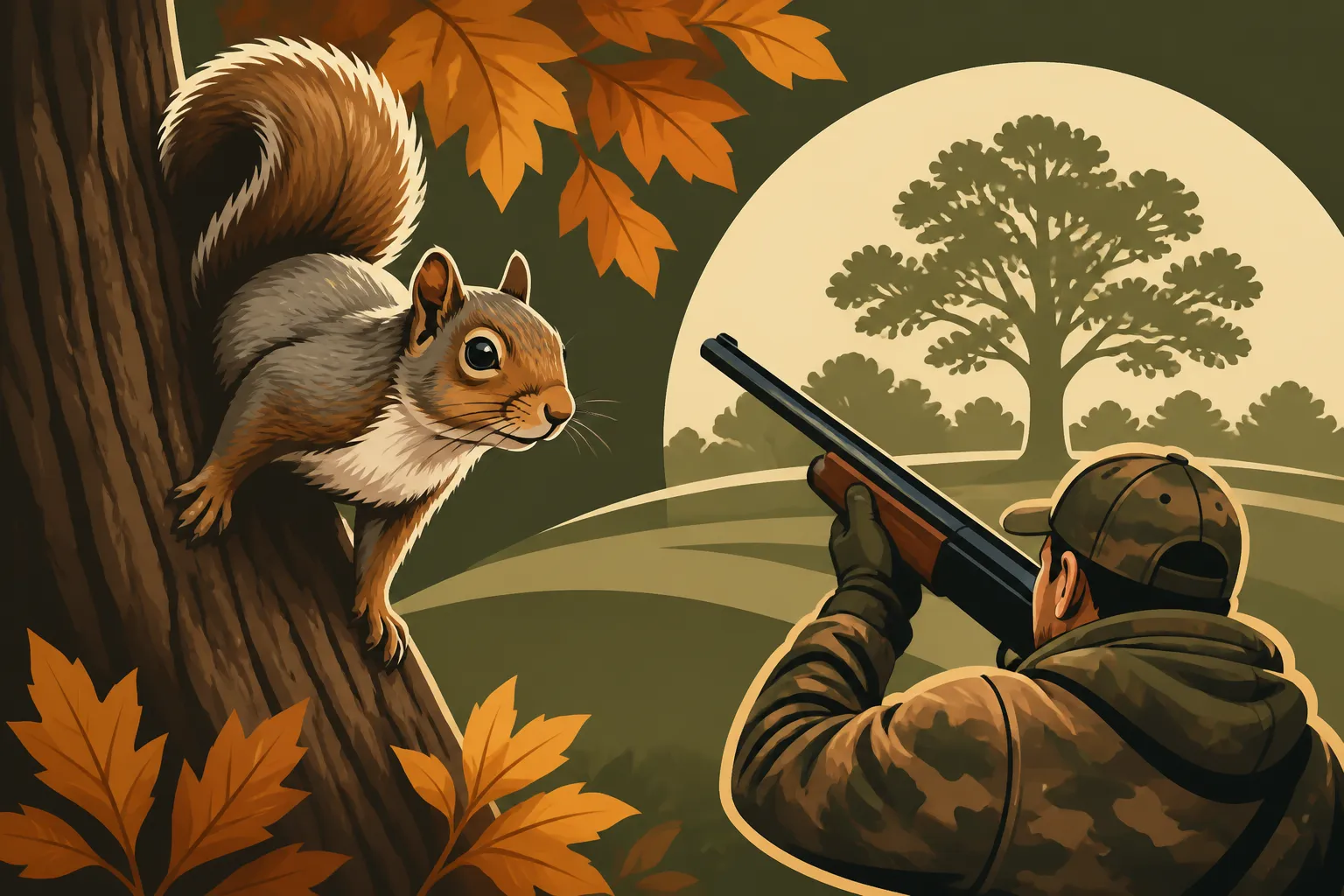
When those hickory nuts start to ripen and fall, it’s like ringing a dinner bell in the Delta. Squirrels, both the common gray squirrel and the larger fox squirrel, will converge on these groves. You'll find them actively foraging on the ground, cutting nuts in the canopy, and caching them away for later. This concentrated feeding behavior makes hickory groves incredibly predictable hotspots. You might walk through acres of seemingly good bottomland timber without seeing a thing, only to step into a patch of hickories and instantly be surrounded by activity. It's truly a sight to behold, and for a hunter, it's a golden opportunity. Knowing your Mississippi Small Game Season Rules is key here, as you want to be sure you're hunting within legal parameters for these highly sought-after areas.
Understanding Squirrel Behavior and Cycles in Bottomland Hardwoods
Hunting squirrels effectively in Delta hickory groves means having a good grasp of their seasonal behavior. In the early season, particularly during the first split of Mississippi Squirrel Season Opening Day, squirrels are often highly visible. They're still focused on gathering the bounty of falling nuts, and their urgency to cache food means they're less wary. They'll be on the ground, scurrying up and down trees, and generally exposing themselves more often. This is when you can really capitalize on their predictable patterns.
As the season progresses and the initial flush of nuts diminishes, squirrels become a bit more spread out and wary. They might still visit hickory trees, but their focus could shift to other food sources or to defending their caches. During colder periods, they’ll spend more time in their dens, only venturing out during the warmest parts of the day. A cold, rainy day will often keep them hunkered down, but a bright, sunny afternoon after a front can spur a burst of activity as they dry out and look for food. The density of squirrels in the Delta's bottomland can be impressive, and understanding these cycles is crucial to consistent success. For a broader overview of the Delta's squirrel population, our guide on Gray Versus Fox Squirrels in Mississippi can offer some helpful insights into what you might encounter.
Strategic Scouting and Locating Prime Hickory Stands
You can't just wander into the woods and expect to stumble upon the best hickory groves, especially in the vastness of the Mississippi Delta. Effective squirrel hunting, just like deer hunting, starts long before you ever step foot in the timber with your shotgun or .22. It begins with solid reconnaissance, both from your computer and on the ground.
Identifying Productive Groves Using Maps and Aerial Imagery
Before you even lace up your boots, you can do a lot of homework from home. Modern mapping applications are invaluable tools for hunters, and for identifying hickory groves, they’re a game-changer. Apps like GoHunt provide high-resolution satellite imagery that allows you to zoom in and examine tree canopy types. Look for distinct crown shapes and textures that indicate hickory species. Often, hickories will have a slightly different color or texture in their leaves compared to oaks or other bottomland species, especially as fall progresses and leaf colors change.
Another visual clue is topography. While the Delta is generally flat, subtle changes in elevation, even just a few feet, can dictate tree species. Hickories often prefer slightly higher, better-drained ground within the bottomlands, though they will also grow in vast river bottoms. Pay close attention to areas along old creek beds, forgotten levees, or slight rises in the terrain. These are often the spots where you’ll find concentrations of the mature mast-producing trees that squirrels love. Use historical aerial photos if your mapping app provides them; a stand of timber that looks good now might have been clear-cut five years ago, but if it's shown consistent growth, it's a good sign. Don't forget to check out Scouting Mississippi Public Land Before Season for more general tips on preparing for your hunt.
On-the-Ground Scouting for Fresh Sign and Activity
Once you've identified potential hickory hotspots on your map, it's time to put boots on the ground. This is where you confirm your suspicions and pinpoint exactly where the squirrels are currently active. Walk slowly and deliberately through these areas. What you’re looking for is undeniable evidence:
- Cut Nuts: This is perhaps the most obvious sign. Squirrels will gnaw through hickory nuts, leaving behind tell-tale shredded fragments of the outer husk and inner shell. Look for these "cuttings" on logs, stumps, rocks, or even just scattered on the leaf litter beneath the trees. The fresher the cuts, the more recent the activity.
- Drey Nests: These are the large, messy leaf and twig nests squirrels build high in tree branches. While they might have multiple dens, an abundance of active-looking dreys in a hickory grove is a strong indicator of a resident population.
- Tracks and Trails: In softer ground or muddy areas, you might find squirrel tracks. Also, look for faint trails leading up the trunks of hickory trees, worn smooth by countless tiny paws.
- Tree Scratches and Rubs: While not as distinct as deer rubs, you can sometimes spot scratch marks on tree bark, especially where squirrels frequently ascend and descend.
- Chatter and Movement: The best way to confirm activity is simply to sit still for a while and listen. Squirrels are noisy creatures. You’ll hear their barks, the rustling of leaves as they scamper, and the distinct thump of a cut nut hitting the ground. If you hear it, you're in the right place. Our guide on Finding Sign in Big Delta Timber can help you recognize other valuable clues in the woods.
Remember, the Delta can be deceptively tricky. Water levels can change rapidly, and what looks like dry ground on a map might be soggy or even submerged during certain times of the year. Pay attention to the ground conditions and always be prepared for wet feet. For an idea of the sheer scale of some of these hunting grounds, consider reading about How Many Acres Delta National Forest Covers, a prime example of Delta bottomland.
Effective Tactics for Harvesting Squirrels in the Delta's Hickories
Once you've done your scouting and identified a productive hickory grove, the real fun begins. There are several proven methods for hunting squirrels in the Delta, each with its own advantages. The key is often adapting to the conditions and the squirrels' behavior on any given day.
Still Hunting and Stalking Approaches
Still hunting is a classic and highly effective method for squirrels, especially in areas with moderate hunting pressure. It involves moving through the woods very slowly, pausing frequently, and observing your surroundings intently.
-
Still Hunting: This isn't about covering ground; it's about seeing the ground. Take a few steps, then stop for several minutes, scanning every tree, every limb, and the leaf litter below. Squirrels often freeze when they detect movement, so by pausing, you give them time to resume their activity or betray their position. Use your binoculars to scan dense canopies. Focus on the hickory trees, looking for the tell-tale twitch of a tail or the dark outline of a squirrel against the bark. This method works particularly well in the early morning or late afternoon when squirrels are most active.
-
Stalking: If you spot a squirrel at a distance, stalking is about closing that distance quietly and getting into a shooting position. Use terrain, large tree trunks, and undergrowth for cover. Move slowly, one step at a time, checking for twigs or dry leaves that might snap underfoot. If the squirrel sees you, it will often "tree" on the opposite side of the trunk. This is where patience comes in. Circle the tree slowly, keeping the trunk between you and the squirrel, forcing it to move around until you get a shot. Another technique is to stand still and wait; often, the squirrel will eventually peek around the trunk to see if the threat is gone. This cat-and-mouse game is a real test of skill and patience. Both gray and fox squirrels in the Delta are masters of this game. For specific details on how to handle the initial rush of the season, check out How Early Season Squirrels Give Themselves Away.
Using Calls and Decoys for Added Success
While not as common for squirrel hunting as for deer or turkey, calls and decoys can definitely add an edge, particularly if you find yourself in a dense hickory grove with squirrels being a bit shy.
-
Squirrel Calls: There are various types of squirrel calls available, mimicking barks, chatters, and distress cries. A bark call can sometimes get a curious squirrel to peek out from behind a tree or respond to confirm its presence. Distress calls, while less frequently used, can sometimes draw in a predatory squirrel or simply get them agitated and moving. The key is to use calls sparingly and realistically. Overcalling can spook them. Try a few barks, then wait. Mimic the sounds you hear naturally in the woods.
-
Decoys: Squirrel decoys are not widely used, but a realistic-looking squirrel mounted on a stick or clamped to a branch can sometimes distract a wary squirrel or encourage one to come investigate, especially if paired with a call. This is more of a niche tactic, but in a heavily pressured area or on a slow day, it might just give you the advantage you need.
Gear Considerations for Delta Squirrel Hunters
The right gear makes a big difference, especially when you're navigating the Delta's often challenging terrain.
-
Firearm: The classic choices are a .22 rifle or a shotgun.
- 22 Rifle: For precision shots and quieter hunting, a .22 is hard to beat. It's economical and effective. If you're hunting in areas where you might get longer shots, a scope is a huge advantage. Remember to be mindful of your backdrop, especially on public land.
- Shotgun: A 20-gauge or 12-gauge shotgun with a modified choke and 6-shot or 7.5-shot shells is excellent for quick, close-range shots in dense cover or at squirrels moving through the canopy. It's more forgiving than a rifle, but less precise.
- Air Rifle: High-powered air rifles (.22 or .25 caliber) are gaining popularity for squirrel hunting, offering quiet operation and excellent accuracy, often suitable for suburban archery-only zones or areas where firearm discharge might be restricted.
-
Optics: A good pair of binoculars (8×32 or 10×42) is invaluable for spotting squirrels hidden in the dense canopy or identifying movement at a distance.
-
Clothing: Dress in layers for Mississippi's unpredictable weather. Camouflage is helpful but not strictly necessary; quiet, earth-toned clothing is more important to minimize noise. A good pair of waterproof boots is absolutely essential, as the Delta can be wet, even when it hasn't rained recently. Consider wearing blaze orange, especially if hunting during overlapped deer seasons; always check Mississippi Blaze Orange Requirements for specific rules.
-
Other Essentials:
- Game Bag: A simple mesh game bag or vest pouch to carry your harvested squirrels.
- Knife: For field dressing, if you choose to do it in the field.
- Water: Stay hydrated.
- Compass/GPS: GoHunt on your phone can be a lifesaver, but always have a backup, as cell service can be spotty in the deep woods. Make sure you download offline maps of your hunting area.
- Bug Spray: Mosquitoes and other biting insects can be relentless in the Delta.
Here's a comparison of common squirrel hunting tactics:
| Tactic | Description | Ideal Conditions | Pros | Cons |
|---|---|---|---|---|
| Still Hunting | Moving slowly and deliberately, stopping frequently to scan the environment and listen for activity. | Early morning/late afternoon, active feeding, moderate pressure. | Highly effective for wary squirrels, covers ground, good for scouting. | Requires immense patience and discipline, slower pace. |
| Stalking | Spotting a squirrel from a distance and carefully approaching it, using cover to remain undetected. | When squirrels are actively moving, dense cover available. | Can lead to close-range shots, very engaging. | Requires stealth and agility, high potential to spook if not careful. |
| Sitting/Ambush | Finding a productive spot (e.g., under a heavy mast tree) and waiting patiently for squirrels to appear. | Heavy mast drop, consistent squirrel traffic, cold weather (squirrels move less). | Minimal movement required, good for less mobile hunters, can combine with calls. | Can be boring if activity is slow, limited to one area, might miss other opportunities. |
| Hunting with Dogs | Using a trained squirrel dog to locate, chase, and tree squirrels. | Any time squirrels are active, dense cover where visual hunting is difficult. | Exciting, highly efficient, covers large areas quickly. | Requires a trained dog, can be noisy, might disturb other game. |
For those looking to hunt some of the Delta's more established public lands, consider checking out guides on Panther Swamp National Wildlife Refuge Hunting or Mahannah Wildlife Management Area, both of which offer excellent bottomland hardwood habitat.
Post-Hunt Considerations and Respecting the Resource
Bringing home a limit of squirrels from a Delta hickory grove is a truly satisfying experience. But the hunt doesn’t end with the shot. Proper handling of your harvest and adherence to ethical practices are crucial for both enjoyment and ensuring the future of hunting.
Field Dressing and Care of Your Harvest
Squirrels are delicious table fare, but their quality starts with how you handle them in the field. Especially in Mississippi’s warm climate, prompt field dressing is key to preventing spoilage.
- Warm Weather: If it’s warm, or if you plan to hunt for several hours, field dressing immediately after the kill is highly recommended. This means removing the entrails to allow the carcass to cool down quickly. A quick method involves making a small incision in the abdomen, then making a larger cut from the diaphragm to the pelvis, and carefully removing all internal organs. Some hunters will even skin them right there, especially if they have a cleaning station set up.
- Cooler Weather: In cooler temperatures, you might have a bit more leeway, but it’s still best to process them as soon as is practical. Keep the squirrels in a breathable game bag, not plastic, to allow for air circulation and cooling. Never pile them in a heap where heat can build up.
- Skinning: There are many methods for skinning squirrels. A popular one involves making a cut across the back, then stepping on the tail and pulling up on the hind legs to remove the hide. This takes practice but is very efficient. Once skinned, quarter your squirrels or leave them whole, then rinse them thoroughly to remove any loose hair or debris. Store them on ice or refrigerate them promptly. Remember your Mississippi Squirrel Daily Bag Limit and to only take what you can use.
Safety and Ethical Hunting Practices
Safety should always be your top priority. When hunting with a rifle, always be aware of your target and what lies beyond it. The Delta is relatively flat, but you still need to ensure your shot has a safe backstop. When hunting with a shotgun, be mindful of other hunters, especially on public land.
- Hunter Education: If you’re a new hunter or an apprentice, make sure you’ve completed your hunter education requirements or are hunting under the direct supervision of a licensed mentor.
- Know Your Regulations: Always carry your valid Mississippi hunting license and be familiar with the current year's Mississippi Small Game Season Rules, bag limits, and any specific regulations for the area you are hunting, particularly if it's a WMA or National Forest. These can change annually, so staying informed is crucial.
- Respect Private Land: If hunting on private land, ensure you have explicit permission. Always know property boundaries, especially when using mapping apps like GoHunt.
- Leave No Trace: Pack out everything you pack in. Leave the woods cleaner than you found them.
- Ethical Shots: Always strive for quick, humane kills. Take only clean shots that you are confident in making.
By following these guidelines, you'll not only enjoy a successful and rewarding hunt in the Delta's hickory groves but also contribute to the long-term health of our wildlife and the tradition of hunting in Mississippi. Good luck out there, and happy hunting!
Disclaimer
Please note that hunting regulations, seasons, and licensing requirements are subject to change. Always consult the latest official Mississippi Department of Wildlife, Fisheries, and Parks (MDWFP) regulations before planning and embarking on any hunting trip. This guide is for informational purposes only and should not be considered a substitute for official legal documents.