Hunting Southeast Unit Pine Flats
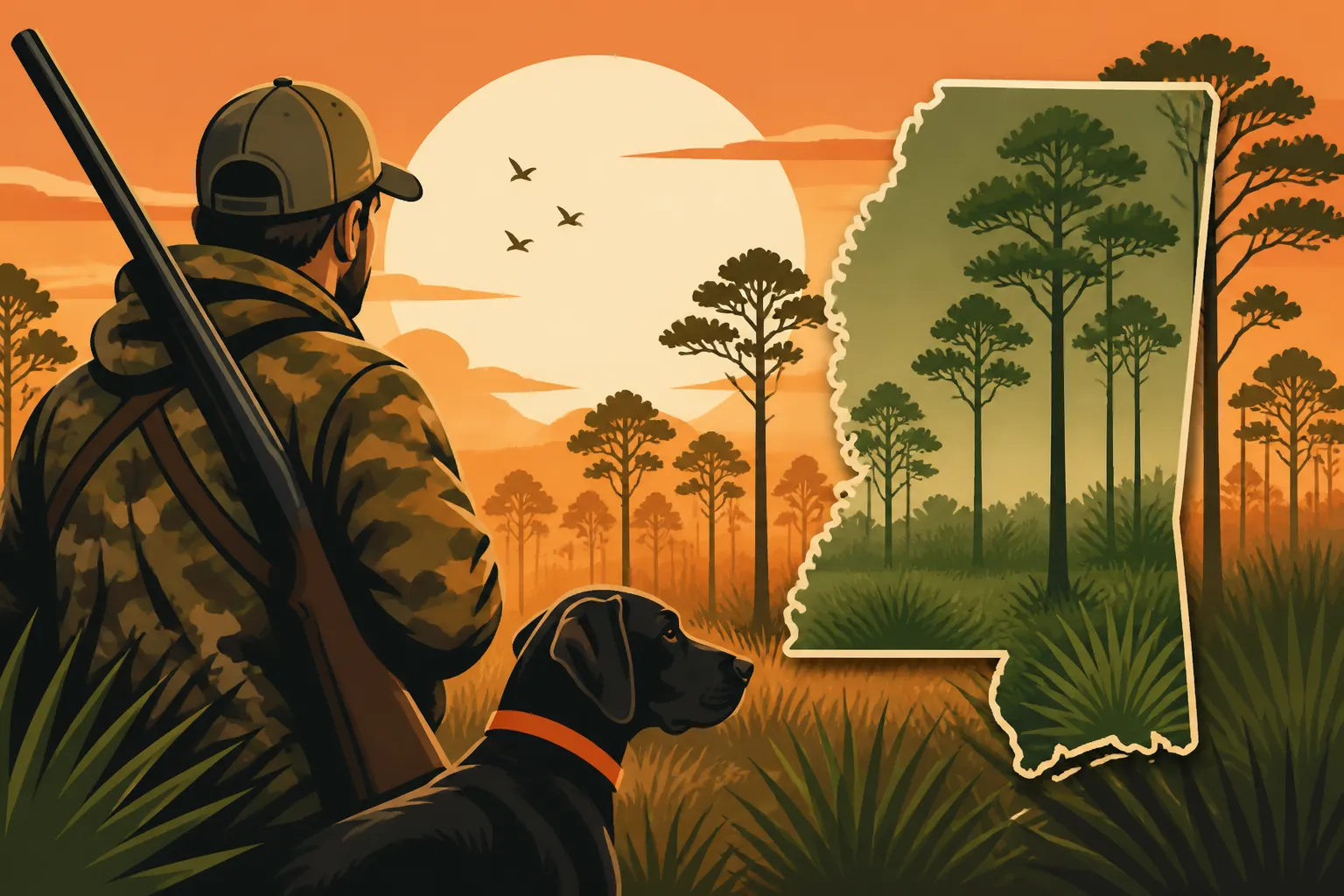
Hunting in Mississippi's vast pine flats can feel like you're searching for a needle in a haystack, especially when those familiar hardwood bottoms or creek drainages are nowhere to be found. The seemingly endless rows of timber, often thick and uniform, can leave even seasoned hunters scratching their heads, wondering where the deer could possibly be hiding or how to even navigate such a landscape. But don't despair! This guide is designed to peel back the layers of those challenging piney woods, helping you understand deer behavior in these unique habitats and equipping you with the strategies and insights to fill your tag in the Southeast Unit's often-overlooked pine flats.
Understanding the Unique Landscape of Southeast Unit Pine Flats
When you talk about the Southeast Unit in Mississippi, especially areas dominated by pine, you're looking at a completely different animal than the Delta's bottomland hardwoods or the Hills Unit's oak ridges. These aren't just patches of pines; they're often vast, managed forests or commercial timberlands, and they present their own set of challenges and opportunities. Many hunters get frustrated here because the traditional "oak flat" or "creek funnel" hunting wisdom just doesn't apply the same way.
The Ecosystem of Pine Plantations
Pine flats in the Southeast Unit are typically characterized by extensive loblolly or longleaf pine plantations. These aren't pristine, ancient forests, but rather tracts managed for timber production. This means you'll encounter areas in various stages of growth: young clear-cuts with dense regrowth, mid-rotation stands that have been thinned once or twice, and older, more open stands. The understory vegetation is also distinct, often dominated by gallberry, wax myrtle, palmetto, saw palmetto, and various grasses, rather than the dense briars or honeysuckle you might find elsewhere. This diversity in growth stages creates a mosaic that deer, turkeys, and even feral hogs learn to exploit. You'll often find that even within a single hunting property, you might have patches of young pines offering security cover right next to more mature, thinned areas that provide better visibility and foraging opportunities. This patchwork nature means you can't just generalize; each section needs to be read individually.
How Terrain and Density Impact Movement
One of the biggest frustrations in pine flats is the seemingly uniform terrain. You don't have those obvious topographical features like steep ravines or distinct ridges that often funnel deer in other units. Instead, deer movement is dictated more by cover density, subtle terrain changes like slight depressions or old logging roads, and human disturbance. A dense, unthinned pine thicket, while seemingly impenetrable to a hunter, might be a deer's perfect bedding sanctuary, offering concealment from predators and wind protection. Conversely, a recently thinned stand, with its wider spacing, can become a travel corridor, especially if it leads to a more open feeding area or a water source. It's about recognizing these subtle shifts. For example, a slight rise of just a few feet can make a big difference in how deer utilize an area, especially regarding bedding or catching a breeze on a warm afternoon. Similarly, the edge where a clear-cut meets a mature stand often acts as a natural funnel.
Seasonal Changes and Food Availability
Food availability in pine flats shifts dramatically throughout the year. Unlike hardwood forests where acorns might be the dominant draw in fall, piney woods offer a different menu. In younger clear-cuts, the abundant new growth provides excellent browse for deer. Think tender shoots, forbs, and young woody plants. As pines mature, the ground flora changes, and while they still offer some browse, their primary value might shift to bedding. However, don't overlook interspersed hardwoods. Even in a predominantly pine area, you'll often find pockets of oaks, sweetgums, or persimmons, especially along creek drains or old field edges. These pockets become high-value targets, particularly during the early and mid-season. Hunters often overlook the subtle mast crops like wild grapes or muscadines that can grow along the fringes of these pine stands. Pay close attention to these "islands" of different vegetation. Understanding these nuances is crucial for success, especially if you're trying to figure out late-season food sources for Mississippi whitetails when natural browse might be less palatable.
Deciphering Deer Movement and Behavior in Pine Country
Deer don't just wander aimlessly through pine flats; their movements are purposeful, driven by security, food, and breeding. The challenge for hunters is to "think like a deer" and identify these patterns within the seemingly monotonous pine landscape. Many hunters give up on the piney woods because they can't immediately see the "classic" deer sign they're used to, but the sign is there, you just have to know what to look for.
Bedding and Sanctuary Areas
In pine flats, bedding areas are almost always dictated by cover. Deer will seek out the thickest, most impenetrable patches of pines they can find, especially those with dense undergrowth. This could be a 5-10 year old pine plantation that hasn't been thinned yet, offering excellent visual and scent cover. It might also be a small, unlogged island of hardwoods within a clear-cut, or a dense briar thicket. These spots become their sanctuary, their safe haven. During the day, particularly during hunting season, deer will often move very little from these bedding areas unless disturbed. What might look like a nightmare to walk through for you is a five-star hotel for a deer. Learning to identify these spots on an aerial map and then confirming them on the ground is key. Look for subtle deer trails leading into and out of these dense zones. Often, the bigger bucks will bed in the thickest, nastiest stuff on the downwind side of a major travel route or food source, allowing them to scent-check anything approaching.
Travel Corridors and Transition Zones
Since deer seek thick cover for bedding and more open areas for feeding, their travel corridors naturally connect these two points. In pine flats, these aren't always distinct trails like you'd find in a creek bottom. Instead, they might be:
- Edges: The boundary between a young clear-cut and a mature pine stand is a classic example. Deer will often skirt these edges, using the dense cover for security while still being able to quickly access feeding areas.
- Logging Roads and Fire Breaks: While sometimes avoided due to human activity, these can also serve as easy travel routes, especially at night or during low-pressure times. Look for trails crossing these roads or running parallel to them just inside the tree line.
- Natural Funnels: Even in flat terrain, slight depressions, drainages, or strips of different timber types (like a narrow band of oaks within pines) can create natural funnels that concentrate deer movement. A great strategy is identifying these pinch points and hanging a stand, much like you might consider a treestand setup in Delta National Forest.
- Transition Zones: The shift from one type of habitat to another, even within the same pine forest, will draw deer. For instance, where a thinned stand opens up into a slightly more open area with better browse. These transition zones offer a blend of cover and food that deer find appealing.
These travel corridors are where you're most likely to intercept deer moving between their bedding and feeding locations. Hunters using the GoHunt app or other mapping tools can often spot these subtle changes in timber density and elevation that indicate prime travel routes.
Feeding Patterns Beyond Acorns
While acorns are king in many parts of Mississippi, their scarcity in large pine monocultures forces deer to adapt their diet. In pine flats, deer primarily browse on various plants, forbs, and young woody growth. This is particularly true in younger clear-cuts where sunlight hits the forest floor, promoting lush new growth.
- Browse: Look for areas with young pine regeneration, gallberry, greenbrier, honeysuckle (if present), and other palatable plants that show signs of heavy browsing. This is their main food source for much of the year.
- Soft Mast: Don't forget about soft mast! Wild persimmons, muscadines, and even certain wild berries can be goldmines when they're ripe. These pockets might be small, often found along the edges of clearings or in transition areas, but they can draw deer from a wide radius. If you're hunting after a poor acorn year, these alternative food sources become even more critical.
- Fungus and Lichens: In older, more mature pine stands, deer will sometimes browse on certain fungi and lichens, especially during lean times or in very wet conditions. This is a less common but sometimes overlooked food source.
- Ag Fields: If your pine flats border agricultural fields (soybeans, corn, peanuts, winter wheat), these become incredibly important feeding grounds. Deer will travel from the security of the pines to feed in these fields, especially during low-light hours. Identifying the entry routes through standing soybeans or cornfields is crucial here.
By understanding what deer are eating and where those food sources are located within the pine flats, you can dramatically increase your chances of success. This often involves more legwork on the ground to identify fresh browse sign, as the food sources aren't always as obvious as a falling oak tree.
Strategic Hunting Approaches for Mississippi Pine Flats
Hunting pine flats effectively requires a different mindset and approach than you might use in classic hardwood timber. The dense cover, often uniform appearance, and the way deer utilize these spaces demand specific tactics. Frustration often comes from trying to apply "swamp hunting" or "ridge hunting" techniques to an environment where they just don't fit.
Still-Hunting Through Dense Stands
Still-hunting is perhaps one of the most underutilized and effective strategies in pine flats, especially in those mid-rotation or older thinned stands. Because visibility is often limited, you have to move incredibly slow, taking only a few steps at a time, and then pausing for minutes to scan every shadow and listen intently.
- Patience is Paramount: This isn't about covering ground quickly. It's about meticulously dissecting the landscape. Move for 50 feet, stop for 5 minutes. Use your binoculars constantly, even in thick cover, to pick apart the shadows and look for horizontal lines (a deer's back) in a world of vertical trees.
- Wind and Thermals: Pay extreme attention to the wind. In pine flats, especially on flatter terrain, the wind can be fickle. Use a wind checker constantly. Thermals also play a role, with air typically falling in the morning and rising in the evening. Hunting with the wind in your face or slightly quartering is non-negotiable.
- Read the Ground: Look for subtle sign—fresh tracks on logging roads, overturned leaves from feeding, faint trails. Don't get discouraged if the sign isn't as prevalent as in hardwoods; every little bit of information helps build a picture.
- GoHunt Mapping for Terrain: Using a mapping application like GoHunt can be incredibly helpful here. You can identify subtle changes in elevation, old logging roads, or pockets of thicker cover from an aerial view that you might miss on the ground. These features can provide a navigation point or hint at where deer might be moving.
This method is physically demanding and requires immense discipline, but it allows you to adapt to the deer's unpredictable movements and capitalize on close-range encounters in the low-visibility environment. It’s a great tactic to employ when still-hunting Hills Unit ridges, and it works just as well in the Southeast Unit’s piney woods.
Effective Stand Placement for Visibility and Ambush
While still-hunting is effective, stand hunting from a static position can also be highly productive if you choose your locations wisely. The key is to find those subtle features that funnel deer, even in seemingly flat, uniform timber.
- Identify Funnels: Look for where deer movement is naturally restricted or concentrated. This could be a narrow strip of pines between two clear-cuts, a slight rise in elevation that deer skirt, the edge of a dense bedding thicket, or a small drainage.
- Transition Edges: As mentioned before, the transition line between different timber stages (e.g., young clear-cut meeting mature thinned pines) is often a high-traffic area. Deer will use the security of the thick stuff while moving to or from feeding.
- Logging Road Crossings: Deer will cross logging roads, especially less-used ones. Find where multiple faint trails converge and cross a road, then set up overlooking that intersection.
- Ground Blinds: Given the dense cover, using a ground blind on Mississippi public land can be extremely effective. You can brush it in really well, allowing you to get away with more movement and offering better concealment than a treestand in many pine flat scenarios. This is especially useful in areas with limited trees suitable for stands or where you need to adapt quickly to fresh sign.
- Scent Control: With often limited shot distances and dense cover, rigorous scent control is paramount. Deer will be close, and any slip-up can ruin your hunt.
Finding these spots requires extensive scouting, often before the season even begins. Don't just set up on the first tree you find; look for convergence points, natural edges, and areas of concentrated sign.
Utilizing Deer Drives and Small Group Tactics
Deer drives can be a highly effective tactic in pine flats, especially on public lands where a significant amount of ground needs to be covered to push deer out of dense bedding areas. This isn't the chaotic, large-group drive you might see in some northern states; it's often more calculated and small-scale.
- Small, Strategic Drives: For the average hunter, a small group (3-4 hunters) can be very effective. Have one or two "drivers" slowly and quietly walk through a thick block of pines, pushing deer towards "standers" positioned along known escape routes, clear-cut edges, or logging roads. Deer drives with three or four hunters can be surprisingly successful in these environments.
- Understanding Escape Routes: Deer in pine flats will instinctively seek the path of least resistance when pressured. They'll often follow the edges of thick cover, slip into an adjacent clear-cut, or utilize those subtle funnels. The standers need to be positioned precisely to cover these escape routes.
- Communication is Key: Constant, quiet communication among the group (via two-way radios or texting) is vital to coordinate movements and ensure safety. Know where everyone is at all times.
- Safety First: Blaze orange is absolutely critical during gun season, not just for standers but also for drivers. Always identify your target and what's beyond it.
- Public Land Considerations: When conducting deer drives on Mississippi public land, be mindful of other hunters and respect their space. Small, contained drives are generally better than attempting to push vast areas.
This method works well when deer are holding tight in thick cover and other methods aren't producing. It's about applying controlled pressure to get deer moving in a predictable direction.
Essential Scouting and Gear for Success
Success in Mississippi's pine flats often comes down to preparation, both in terms of understanding the landscape before you even step foot in it and having the right tools to navigate and hunt effectively. You can't just show up and expect to stumble into deer in these challenging environments.
Leveraging Aerial Maps and Ground Scouting
Scouting is the absolute cornerstone of hunting pine flats. Because the terrain lacks obvious features, you have to be extra diligent in identifying deer hot spots.
- Digital Mapping Tools: Before you ever hit the woods, pour over aerial maps using tools like GoHunt, OnX Hunt, or the MDWFP app. Look for variations in timber density – patches of younger, thicker pines indicate bedding, while more mature, thinned areas might offer better visibility for travel. Identify clear-cuts, old logging roads, and any interspersed hardwood drains or pockets. You can even identify potential travel corridors or funnels between differing cover types. Getting a Mississippi public land map is the first step.
- Identify Habitat Changes: On the map, look for where pine stands transition to hardwoods, where clear-cuts begin or end, or where drainages cut through the flats. These are often high-activity areas. Learning to read aerial photos for Hills Unit deer is a skill that translates perfectly to the Southeast Unit's piney woods.
- Boots on the Ground: Once you've identified promising areas on your map, it's time for boots-on-the-ground scouting. Walk those clear-cut edges, follow faint trails, look for rubs and scrapes (especially along logging roads or at the edge of thickets), and identify actual bedding areas by finding old beds or heavy tracks. Pay attention to how the wind and thermals interact with the subtle terrain. You'll be surprised what you find when you actually walk the lines you drew on your app.
- Trail Cameras: Place trail cameras along suspected travel corridors, especially where a game trail crosses a logging road, or at the edge of a small food plot (if hunting private land). This helps confirm deer presence, movement patterns, and gives you an idea of the caliber of bucks in the area. Learning where to hang a camera on a logging road can significantly improve your scouting efforts.
Remember, deer sign in pine flats might be more subtle than in other habitats. You might not find obvious deer highways, but instead, faint trails through the undergrowth. Consistency in scouting, both digitally and on foot, will yield results.
Key Equipment for Pine Flat Hunters
Given the unique characteristics of pine flat hunting, certain gear choices can make a significant difference in your comfort, safety, and success.
- Navigation Tools: A reliable GPS unit or a smartphone with a robust hunting app (like GoHunt) is non-negotiable. It's incredibly easy to get turned around in dense, uniform pine stands, especially if you're still-hunting. Having your position marked and being able to navigate back to your vehicle or stand safely is paramount.
- Good Optics: Binoculars are your best friend, even in thick cover. Use them constantly to pick apart shadows, identify subtle movement, or scan ahead for deer. A good quality pair (8x or 10x magnification) will significantly extend your effective observation range in low-visibility conditions.
- Durable Clothing and Boots: Expect to push through thick undergrowth, briars, and potentially muddy areas. Tough, briar-resistant pants or chaps are a smart investment. Waterproof, comfortable boots with good ankle support are also critical for long days of walking.
- Blaze Orange: For gun season, proper blaze orange is not just a legal requirement but a crucial safety measure. Make sure you're highly visible to other hunters, especially if you're planning any small-scale drives. Mississippi's blaze orange requirements are specific, so be sure you're compliant.
- Scent Control: As previously mentioned, deer will likely be close. Quality scent-control clothing, sprays, and strict attention to wind direction are essential to avoid detection.
- Thermacell or Insect Repellent: Depending on the season, mosquitoes and gnats can be brutal in Mississippi. Don't let them ruin your hunt.
- Reliable Firearm/Bow: Choose a firearm or bow that you are proficient with, capable of delivering accurate shots in potentially tight windows. For rifles, consider calibers that perform well in brushy conditions without excessive over-penetration, while still having enough knock-down power for a whitetail.
Being prepared with the right gear ensures you can focus on the hunt, rather than battling the elements or getting lost. Hunting the Southeast Unit pine flats can be incredibly rewarding once you crack the code, and a big part of that code is understanding the landscape, the deer, and yourself as a hunter in this unique environment.
Disclaimer
Hunting is an inherently dangerous activity. Always prioritize safety, adhere to all Mississippi Department of Wildlife, Fisheries, and Parks regulations, and obtain appropriate licenses and permits before heading into the field. This guide is for informational purposes only and does not substitute for proper hunter education, local knowledge, or professional guidance. Be aware of your surroundings, practice responsible firearm handling, and respect private property boundaries.