Setting Up a Dove Field Before Opening Day
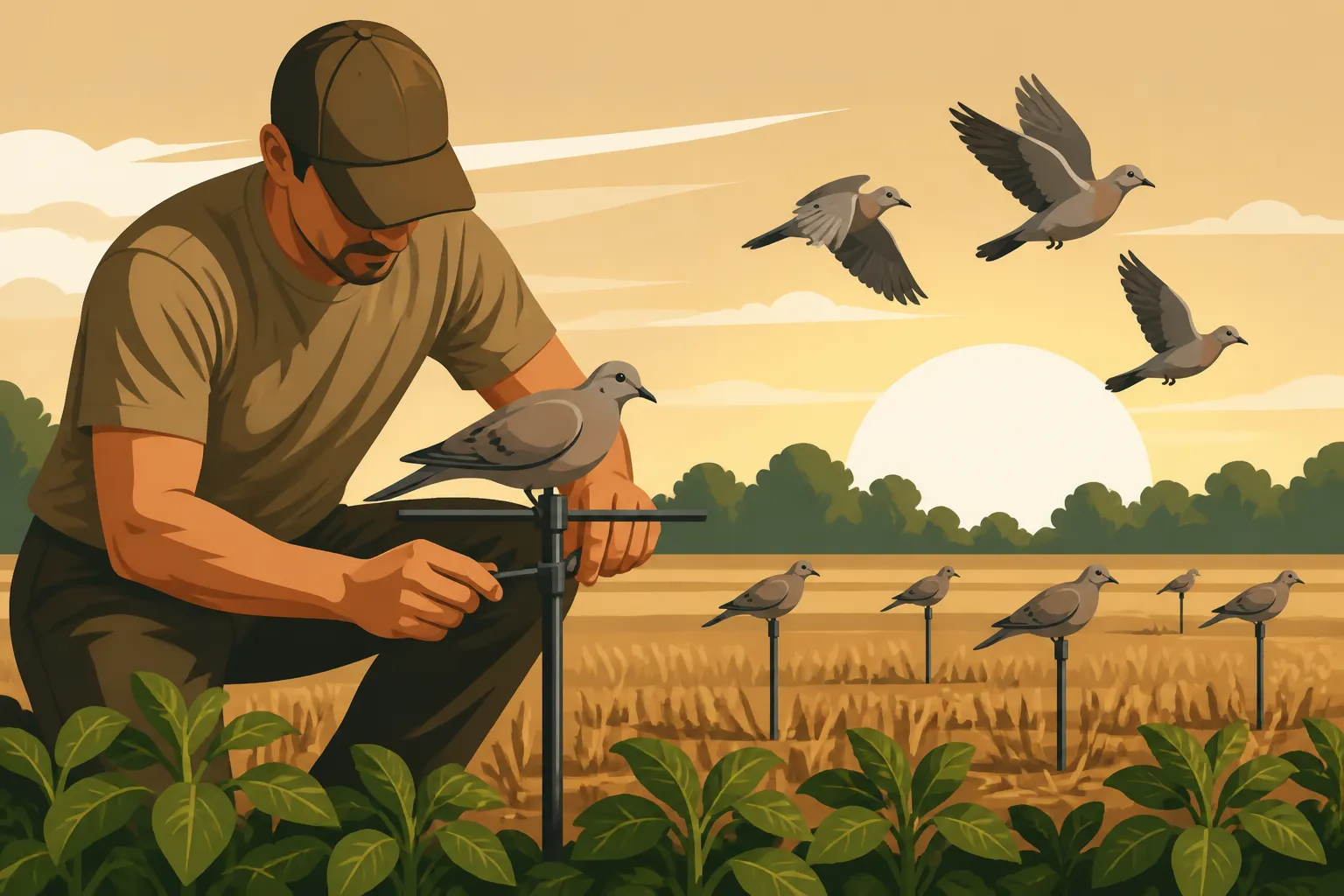
There's nothing quite like the anticipation of Mississippi's dove season opener. The promise of fast-flying action and good company is enough to get any hunter excited. But let's be honest, nothing deflates that excitement faster than showing up to a field that just isn't holding birds, or worse, finding out your meticulously planted spread isn't legal. This guide is all about helping you avoid those headaches by breaking down exactly how to set up a killer dove field long before opening day, ensuring a productive and legal hunt.
Understanding What Draws Doves and Why Field Setup Matters
You can't just throw some seeds on the ground and expect doves to flock. These birds have specific needs, and understanding them is the first step to creating an irresistible dove field. It's about more than just food; it's about creating a complete habitat that makes them feel safe and provides everything they need.
The Dove's Dinner Plate: Preferred Food Sources
Doves are primarily ground feeders, and they absolutely love small seeds. They're not going to be picking through thick foliage for their meal; they want easy access to scattered seeds on relatively bare ground. This preference dictates the type of crops you should consider and how you manage them.
Think about what doves naturally forage on: ragweed, croton, pokeberry, and various grass seeds. When you're planting a field, you're essentially trying to replicate and enhance this natural food source. Sunflowers, without a doubt, are a classic dove magnet. The seeds are high in oil and calories, making them a fantastic food source, especially as birds prepare for migration. However, sunflowers can be expensive and take a long time to mature. Milo, or grain sorghum, is another excellent choice. It’s a hardy crop, relatively drought-resistant, and doves absolutely devour it. Proso millet and brown top millet are also highly favored. They mature quickly and offer smaller seeds that doves find very appealing. The key with any of these crops is ensuring they are broadcast or dropped in a way that allows the seeds to fall to the ground, making them accessible to feeding doves. A standing crop of mature sunflowers or milo doesn't do a dove much good until it's knocked down or mowed.
Essential Habitat Elements Beyond Food
While food is the primary draw, it's not the only factor. Doves are particular creatures, and a truly productive field provides a holistic environment. They need access to fresh water, grit for digestion, and safe places to loaf and roost. Without these additional elements, your food source might only attract birds temporarily.
Doves require grit to help grind up seeds in their gizzard. If your field doesn't naturally have gravelly soil, you might consider spreading some coarse sand or small gravel in an accessible area. Think about a dusty, open patch near your field. Water is also critical, especially in the warm, dry late summer days leading up to and during dove season. A small pond, a creek, or even a depression that collects rainwater can be a major draw. If natural water isn't present, a shallow pan filled with water or a livestock watering trough can work wonders, especially if it's placed in an open, visible area near the field. Loafing areas are typically isolated dead trees, power lines, or sparse groves of trees where doves can perch, digest their food, and survey their surroundings for predators. Having these elements near your food plot creates a complete package, giving doves every reason to stick around.
Planning Your Perfect Mississippi Dove Field
A successful dove field doesn't happen by accident. It's the result of thoughtful planning, starting months before a single shot is fired. From picking the right spot to preparing the soil, every step counts.
Site Selection and Soil Preparation
The first step is picking the right piece of ground. Doves prefer open, relatively flat areas with good visibility, often near a water source or power lines. A field with gentle slopes or edges that transition into timber can also be good, providing flight corridors and roosting options. Avoid areas with dense, tall vegetation that might obscure doves' view or make it hard for them to land and feed. Consider fields that are at least 5-10 acres, though even smaller plots can be effective if managed correctly. Think about previous agricultural use; a field that has historically grown corn, soybeans, or wheat often has good soil structure and residual nutrients.
Once you have your location, soil preparation is paramount. Just like any other crop, doves prefer healthy, fertile soil. Start with a soil test, which you can usually get done through your local Mississippi State University Extension office. This will tell you your soil's pH and nutrient levels, allowing you to amend it with lime or fertilizer as needed. Doves prefer a soil pH between 6.0 and 7.0. After testing, prepare a good seedbed by disking or tilling the ground. You want a relatively fine, firm seedbed that allows for good seed-to-soil contact, but not so fine that it turns to powder. Smooth out any large clods or rough patches. Proper seedbed preparation ensures uniform germination and growth, giving you a dense, productive food plot.
Choosing the Right Plants and Planting Strategy
Selecting the right crop and timing your planting is crucial for ensuring mature, attractive food sources by opening day. In Mississippi, with our long, warm growing season, you have several excellent options.
Common Dove Field Crops for Mississippi:
| Crop Type | Planting Window (Mississippi) | Maturity (Days) | Primary Draw | Notes |
|---|---|---|---|---|
| Sunflowers | April – June | 90-120 | High-energy seeds | Classic dove magnet, can be expensive, requires full sun. Consider black oil varieties. |
| Milo (Sorghum) | May – July | 90-110 | Abundant small seeds | Drought-tolerant, good for rotation, provides excellent seed production. |
| Proso Millet | June – July | 60-75 | Small, favored seeds | Fast-growing, good for late planting, often used in mixes. |
| Brown Top Millet | May – July | 60-70 | Very small, abundant seeds | Extremely fast, great for late additions or filling gaps. Doves love the tiny seeds. |
| Wheat/Rye (Winter) | Sept – Nov (previous fall) | N/A (Spring/Summer Harvest) | Leftover grain, stubble | Planted in fall, harvested in spring/early summer, leaving waste grain and open ground. |
| Perennial Legumes | Spring/Fall | N/A | Insect attraction | Clover or lespedeza can attract insects, secondary food source, good for long-term soil health. |
For sunflowers, plant them in late April to mid-May for an early September opening. Milo can be planted a bit later, into June or early July. Proso and brown top millets are excellent choices for later plantings, even into late July, as they mature quickly. A common strategy is "strip planting" or staggering plantings. This means planting different sections of your field at different times, or with different crops that mature at various rates. This ensures a fresh food supply for a longer period, and if one crop fails, you have backups. For instance, you might plant half your field in sunflowers in May, and the other half in milo in June, with a strip of brown top millet added in July.
When considering your planting strategy, don't forget the tools available to you. Apps like GoHunt can be invaluable for mapping out your field, tracking planting dates, and even marking areas for future mowing. This kind of detailed planning ensures you're maximizing every acre. Remember, the goal is to have mature, dried seeds available on the ground when the season arrives.
Water and Grit: The Often Overlooked Magnets
It's easy to get caught up in the excitement of planting, but don't overlook the fundamental needs of doves: water and grit. These are often the missing pieces that prevent a decent field from becoming a phenomenal one.
Doves are thirsty birds, especially in the heat of late summer and early fall. They'll often make daily trips to water, usually in the early morning or late afternoon. If you have a natural pond, creek, or even a low-lying area that holds water after rain, that's a huge bonus. If not, consider creating an artificial water source. This doesn't have to be a major excavation project. A large, shallow pan, a livestock water trough, or even a kiddie pool sunk into the ground can work. The key is to keep it shallow, with exposed edges where birds can land and drink comfortably. Ensure it's in an open area, free from dense cover that could hide predators. Regularly cleaning and refilling it, especially during dry spells, will make it more appealing.
Grit, usually in the form of small pebbles or coarse sand, is essential for doves to properly digest their food. They swallow grit, which then aids in grinding seeds in their gizzard. If your field's soil is very fine or clay-like, it might lack natural grit. You can supplement this by simply spreading a few bags of coarse sand or chick grit (available at feed stores) in a small, open area within or adjacent to your field. Doves will quickly find and utilize this resource. Creating a "grit station" near your water source or a popular loafing perch will be especially effective.
Pre-Season Management and Legal Compliance
Getting your crops in the ground is just the beginning. The real art of dove field preparation lies in the management leading up to opening day, all while staying firmly on the right side of the law. Mississippi, like other states, has strict regulations concerning migratory bird hunting, and baiting is a serious offense.
The Art of Manipulation: Mowing and Disking
This is where many hunters get into trouble, so pay close attention. The goal is to make the seeds accessible to doves by scattering them on the ground. However, how you do this matters immensely regarding legality. "Normal agricultural practices" are generally allowed, but "baiting" is not.
Mowing strips or sections of your field is one of the most common and effective ways to make seeds available. As crops like sunflowers or milo mature, simply mowing a strip will cause the seeds to fall to the ground, mimicking natural shattering. Doves will quickly learn to feed on these bare, open strips. You can also disk strips after mowing, which helps scatter the seeds further and mixes some into the soil, prolonging the feeding activity. The key here is to mow or disk in a way that is consistent with local agricultural practices for that specific crop. For example, mowing a wheat field to harvest it and leaving the waste grain is fine. Mowing a standing crop of millet and leaving the seeds on the ground is also fine, as long as it's not done in an "unnatural" manner to specifically attract birds.
A smart strategy is to mow or disk strips gradually over a few weeks leading up to the season. This provides a continuous fresh food source and keeps doves coming back. You might mow half the field two weeks out, and then mow the other half a few days before the opener. Using an app like GoHunt can help you visualize these strips and track your management efforts, ensuring you're manipulating the field effectively and legally.
Federal and State Regulations for Dove Fields
This is the make-or-break section. Ignorance of the law is no excuse, and federal migratory bird regulations are complex. Mississippi adheres to these federal guidelines, enforced by the Mississippi Department of Wildlife, Fisheries, and Parks (MDWFP). The cardinal rule is: you cannot hunt doves over a baited area.
What constitutes baiting? It's generally defined as placing, exposing, depositing, distributing, or scattering grain, salt, or other feed to attract migratory game birds to an area where hunters are attempting to take them. This includes liquid feeds, minerals, and other attractants. The critical distinction lies in "normal agricultural practices." For example, planting and harvesting a crop like corn, wheat, or sunflowers is a normal agricultural practice. Hunting over the waste grain that's naturally fallen to the ground during this process is legal. Similarly, preparing a seedbed, planting a crop, and then manipulating that crop (e.g., mowing, disking, burning) in a manner consistent with producing a crop for harvest is generally allowed, even if it makes the seeds available to doves. However, if you're taking store-bought seed and broadcasting it directly onto the ground to attract doves for hunting, that is considered baiting.
It's crucial to consult the latest MDWFP regulations before setting up your field. Regulations can change, and interpretations vary. A good rule of thumb is: if you didn't plant it, or if it wasn't scattered as a result of a bona fide agricultural operation (planting, harvesting, soil conditioning, weed control), then don't hunt over it. Always err on the side of caution. For more in-depth information, you should definitely check out our guide on Mississippi Dove Field Baiting Rules. Understanding these nuances is critical not just for legality, but for ethical hunting.
Creating Safe Shooting Lanes and Staging Areas
Beyond the crops and legalities, safety for hunters and proper field flow for the birds are paramount. A well-designed dove field considers the entire hunting experience.
Clear shooting lanes are essential. When planting, or even after a crop is established, think about where hunters will stand and where the birds will be flying. You want unobstructed views and clear lines of fire. This often means having open areas around the perimeter of the field, or leaving strips of mowed ground within the field itself where hunters can set up. Consider the sun's position throughout the day; you don't want hunters staring directly into it.
Staging areas are also important. This includes parking, a central meeting spot, and designated areas for coolers, chairs, and dog crates. Keep vehicles a safe distance from the primary hunting areas to avoid spooking birds. Designate clear entry and exit points for hunters to avoid walking through active shooting zones. If you're going to have multiple hunters, pre-assigning shooting stations can prevent overcrowding and ensure everyone has a safe, productive spot. Using a mapping feature in an app like GoHunt can help you visualize and mark these safe zones and shooting positions, making communication easier on opening day. Remember, a crowded, disorganized field is a recipe for frustration and potential safety hazards.
Troubleshooting and Maximizing Your Harvest Potential
Even with the best planning, Mother Nature and various critters can throw a wrench into your dove field plans. Being prepared for these challenges and actively scouting can make all the difference.
Dealing with Pests and Unwanted Visitors
You're not the only one who appreciates a good food plot. Deer, feral hogs, raccoons, and even other birds can all take a toll on your crops, reducing the amount of seed available for doves.
Feral hogs, a rampant issue across much of Mississippi, can be particularly devastating. They'll root up entire fields, destroying your hard work overnight. If you have a known hog problem, proactive measures are necessary. Trapping can be highly effective, and in Mississippi, you can hunt hogs year-round. We've got a comprehensive guide on Hunting Mississippi's Year-Round Feral Hogs that might be helpful. Deer can also browse young plants, especially sunflowers, and consume mature seeds. While fencing might be impractical for large plots, some hunters use deterrents or plant sacrificial crops. Raccoons and other small mammals will also target mature crops, especially sunflowers. Sometimes, the best defense is a good offense: trapping or hunting these nuisance animals before they decimate your plot.
The key is early detection. Regularly inspect your field for signs of damage or unwanted visitors. The sooner you identify a problem, the sooner you can address it and protect your investment.
Scouting Before the Season Opens
You've put in all the work, but how do you know if it's actually drawing birds? Pre-season scouting is absolutely critical. Don't wait until opening morning to check your field.
Start observing your field a week or two before the season. Look for doves flying into and out of the area, feeding on the ground, or loafing on power lines and dead trees nearby. Pay attention to their flight patterns: are they coming from a specific direction? Are they using particular entry points into the field? This information can help you position hunters strategically. The best time to scout is usually early morning or late afternoon when doves are most active. You're looking for signs of feeding activity on the mowed strips—bare patches where seeds have been consumed. If you're seeing a lot of birds, great! If not, you might need to adjust your strategy, perhaps by mowing more strips or creating additional water sources. Our general guide on Scouting Mississippi Public Land Before Season offers principles that apply to private lands as well.
This pre-season scouting also allows you to make final preparations, like setting up chairs, clearing shooting lanes one last time, and ensuring you know the best routes to and from your stand locations. For more details on what to do on the big day, check out our piece on Working a Dove Field on Opening Day.
Field Management for Later Season Opportunity
Opening day is fantastic, but why stop there? With a bit of foresight, you can manage your field to provide good hunting opportunities well into the second and even third splits of Mississippi's dove season.
One of the best ways to extend your season is through staggered planting. If you planted different crops at different times, or different sections of the same crop, you'll have seeds maturing and becoming available over a longer period. For example, planting brown top millet in late July will ensure fresh seeds are dropping in late September or October, long after your early-season sunflowers have been picked clean. Another method is to only mow or disk a portion of your field for the opener, leaving other sections standing. You can then manipulate these remaining sections a few weeks later, creating new feeding zones for subsequent hunts.
Even after a heavily hunted opening weekend, doves will continue to visit a field that still offers food and water. Don't neglect your field after the first few hunts. Keep water sources topped off and consider disking up a new strip or two to churn up any remaining seeds that might be lying dormant. While the crowds might thin out after the initial frenzy, those later season hunts can often be incredibly productive, especially if you've managed your field to keep birds coming back. Don't forget to review the Mississippi Dove Season Opening Weekend and Hunting the Second Dove Split in October guides for season dates and tactics.
Disclaimer
Hunting regulations and season dates are subject to change. Always consult the latest Mississippi Department of Wildlife, Fisheries, and Parks (MDWFP) regulations before planning any hunting activities. The information provided here is for educational and informational purposes only and should not be considered legal advice.