Calling Crows Over a Winter Feed Site
The winter months in Mississippi can often feel like a long stretch of waiting, especially after deer and turkey seasons have wound down. Many hunters pack away their gear, resigned to a quiet few months until spring. But what if I told you there's an exciting, fast-paced hunting opportunity that thrives in the colder weather, offering plenty of action and a chance to hone your shooting skills? This guide will dive deep into the thrilling world of calling crows over winter feed sites in Mississippi, helping you turn those quiet winter days into memorable hunts.
Understanding Winter Crow Behavior in Mississippi
Crows are incredibly intelligent and adaptable birds, but like all wildlife, their behavior shifts with the seasons. In Mississippi, winter brings about some very distinct patterns that hunters can exploit. It's not just about finding a flock; it's about understanding why they're there and what they're doing.
The Importance of Winter Food Sources
During the colder months, natural food sources for crows become scarce. Berries are gone, insects are dormant, and many wild seeds are buried or consumed. This forces crows to consolidate their feeding efforts, often concentrating in areas where food is abundant and easily accessible. These are your prime target locations.
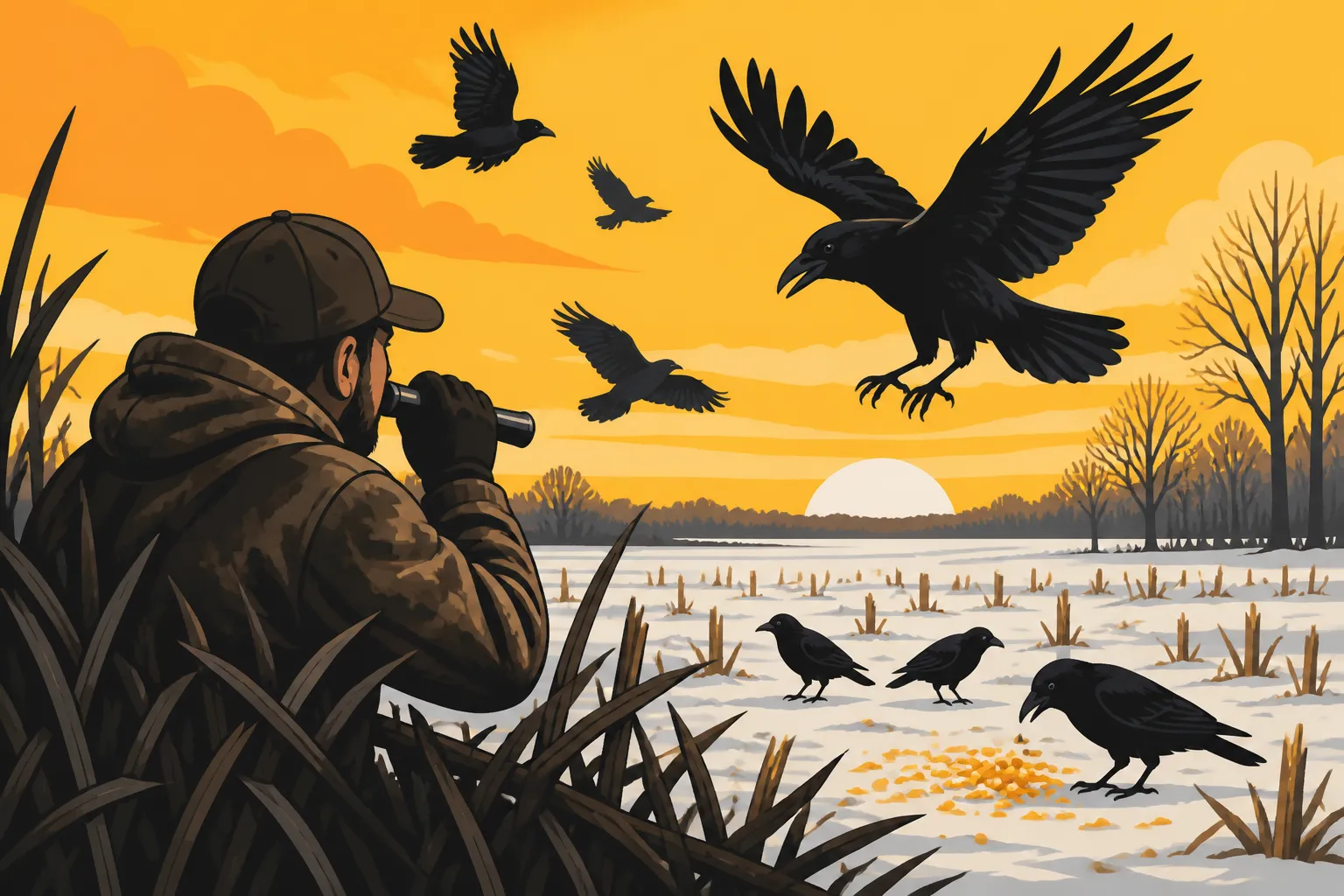
Think about common agricultural practices in Mississippi. After the fall harvest, fields of corn, soybeans, and even peanuts often leave behind considerable waste grain. These fields become a literal buffet for crows. They'll also frequent areas with livestock operations, looking for spilled feed, or even landfills and urban refuse sites, though hunting in those specific locales might be restricted or impractical. The key takeaway is that winter equals concentrated feeding, and these concentrations are where you want to be. Scouting these agricultural areas is paramount, and tools like the MDWFP App Without Cell Service can be invaluable for pinpointing property lines and identifying potential hotspots even when you're off the grid.
Roosts and Flight Patterns
Crows are highly social birds, especially in winter. They'll gather in massive communal roosts at night, sometimes numbering in the tens of thousands. These roosts are often located in dense timber, usually near a reliable water source and relatively close to their daily feeding grounds. As daylight breaks, these huge flocks will disperse, flying out to their various feeding areas, and then reconvene at the roost again as evening approaches.
Understanding these flight patterns is crucial. You're not just looking for a random crow; you're looking for the major flight paths leading from a roost to a significant feed site. If you can intercept crows along these routes, or set up right on a prime feeding area, your chances of success skyrocket. Pay attention to the timing – crows are most active in the early morning and late afternoon, just like deer. Knowing when and where they're flying will dictate your setup and calling strategy.
Scouting for Prime Winter Crow Feed Sites
You can't just drive around hoping to stumble upon a perfect crow hunt. Successful winter crow hunting in Mississippi demands thorough scouting, much like deer or turkey hunting. You're looking for specific conditions and evidence of crow activity.
Identifying Productive Agricultural Fields
The first step in scouting is to identify agricultural areas that are likely to hold winter feed. This means focusing on counties known for row crops or livestock. In the Delta, for example, vast expanses of corn and soybean fields are common, and scouting them after harvest is a must. Drive county roads, paying close attention to fields that show signs of waste grain or even fields that have been recently tilled, exposing new food sources.
Look for actual crow sign: large numbers of crows actively feeding, droppings on fence lines or power lines around fields, and noisy congregations. A good pair of binoculars is your best friend here. Don't be afraid to pull over and just observe. Watch their flight patterns, try to identify where they're coming from and where they're going. Remember, permission is always necessary for private land. Even if you're not planning to hunt a specific private field, understanding the crow movement in the general area can help you find suitable public land nearby, or guide your efforts to gain permission. Using mapping software, like those offered by GoHunt, can help identify different crop types, elevation changes, and potential access points, which is invaluable for both private and Public Hunting Land in Mississippi.
Pinpointing Roosts and Flyways
Finding the actual winter roost can be a game-changer. It takes patience, but the payoff is immense. Towards dusk, drive slowly through timbered areas, especially bottomland hardwoods or dense pine plantations. Listen intently for the increasing chatter of crows. As the sun sets, you'll often see streams of crows flying towards a central location. Follow them.
Once you've located a roost, you've essentially found the "hub" of crow activity for that area. From there, you can backtrack their morning flight paths to identify those key feeding grounds. You don't necessarily want to hunt right on the roost itself, as this can disturb them and make them move. Instead, set up along the main flyways leading out of the roost towards a known feeding site, or directly on a feeding site within a few miles of the roost. For example, if you're exploring areas like Delta National Forest, understanding how crows move through those expansive timber blocks can really narrow down your search for a productive spot. This is a lot like Scouting Mississippi Public Land Before Season for deer, just with a different target species.
Calling Strategies for Winter Crows
Once you've found a promising feed site or flyway, the real fun begins: calling. Crow calling isn't just about making noise; it's about mimicking their language to draw them in. Winter calling can be incredibly effective because crows are often more responsive to calls when food is scarce and competition is high.
Essential Crow Calls and Their Meanings
There's a variety of crow calls available, from mouth calls to electronic callers. Many hunters prefer mouth calls for their versatility and hands-on feel, but electronic callers can be extremely effective, especially when trying to replicate multiple bird sounds simultaneously.
Here's a breakdown of some common crow vocalizations and when to use them:
| Call Type | Purpose/Meaning | When to Use |
|---|---|---|
| Basic "Caw" | General communication, "I'm here." | Starting a calling sequence, establishing presence. |
| Distress Call | A crow is in trouble, being attacked by a predator. | Highly effective for drawing crows in, especially when combined with decoys. |
| Assembly Call | Gathering the flock, "Come join us!" | When trying to bring dispersed birds together, or to a specific location. |
| Fighting Call | Crows are squabbling over food or territory. | Can be very aggressive and effective, especially on high-traffic feed sites. |
| Young Crow Calls | Begging or excited young birds. | Can add realism to a feeding scenario, indicating plentiful food. |
You'll want to practice these calls to make them sound as natural as possible. A good calling sequence might start with a few basic "caws" to get their attention, then transition to a distress or assembly call once you see birds in the distance. The key is to make it sound believable.
Setting Up Your Calling Station
Your setup is just as important as your calling. Crows have incredible eyesight, so concealment is paramount. Think about where you want the crows to land or fly over, and then position yourself for the best shot opportunities.
Find natural cover like thick brush, fencerows, or the edge of a woodlot. A ground blind brushed in can be incredibly effective. Consider your background – you want to blend in. For example, when you're Brushing In a Blind on a Field Edge for deer, you're thinking about breaking up your outline; the same applies, if not more so, for wary crows. Decoys are a huge asset for crow hunting. Use realistic crow decoys, positioning them in an open area within shooting range, facing into the wind (as birds typically land into the wind). Adding a predator decoy, like an owl or a hawk, being "mobbed" by the crow decoys can be incredibly effective, triggering their natural instinct to harass a perceived threat. This is a common tactic in Predator Hunting in Mississippi, just adapted for a different target.
When you start calling, be prepared. Crows can come in fast and aggressively, especially if you're using a distress call. Keep your gun up and ready. If you use an electronic caller, place it out in front of you, away from your position, to draw their attention away from your hiding spot.
Gear and Safety Considerations
Like any hunting endeavor, being properly equipped and prioritizing safety are non-negotiable for winter crow hunting in Mississippi.
Recommended Equipment for Crow Hunters
Beyond your calls and decoys, there are a few other pieces of gear that will make your crow hunting experience more enjoyable and successful:
- Shotgun: A 12-gauge or 20-gauge shotgun with a modified or full choke is ideal. Crows are tough birds, and you'll want good pattern density.
- Ammunition: Load up with 7 ½ or 8 shot. While they're not huge birds, you'll often be shooting at flying targets, and a dense pattern helps.
- Camouflage: Full camo is a must. Head nets and gloves will help you disappear. The same effective camo you wear for Squirrel and Small Game Hunting in Mississippi will work great.
- Binoculars: Essential for spotting distant birds and identifying feed sites.
- Shooting Stool/Chair: You'll be sitting still for extended periods, so comfort helps.
- Game Bag: To carry out your harvest.
- Eye and Ear Protection: Always. No exceptions.
- Mapping Apps: As mentioned before, tools like GoHunt are fantastic for identifying property boundaries, scouting terrain features, and even marking potential crow hotspots. They can really help you maximize your time in the field.
Safety First: Rules and Best Practices
Crow hunting, while exciting, requires strict adherence to safety rules, especially since you might be hunting near populated areas or roads.
- Know Your Target and Beyond: Always be absolutely certain of your target, and what lies beyond it. Crows often frequent agricultural areas that might be close to homes, barns, or roads. Your shot must be completely safe. This is more critical than ever when hunting species that may be near human infrastructure.
- Permission is Key: Always obtain explicit permission from landowners before hunting on private property. This isn't just a legal requirement; it's a matter of respect and maintaining access for all hunters. Never assume you have permission.
- Respect Public Land Rules: If you're hunting on WMAs or other public lands, be aware of specific rules regarding target species, hunting hours, and firearm restrictions. Check the Mississippi Small Game Season Rules and Mississippi Public Land Hunting Hours before you go.
- Blaze Orange (Optional for Crows, but Wise): While blaze orange isn't typically required for small game like crows, if you're hunting near other hunters or in areas where deer hunters might be present, it's always a good idea to wear it for safety. Better safe than sorry.
- Eye and Ear Protection: As mentioned, always wear eye and ear protection. You'll be shooting multiple times, often in quick succession.
- Hunting Hours: Crows can be hunted during legal daylight hours. Consult the latest MDWFP regulations for specific times and any special conditions that might apply to your area.
Calling crows over a winter feed site offers a unique and engaging hunting experience during a typically quiet time of year. With proper scouting, effective calling, and a keen eye on safety, you can enjoy plenty of fast-paced action and sharpen your skills, making those Mississippi winter days fly by.
Disclaimer
Hunting is an inherently dangerous activity. This guide is for informational purposes only and does not substitute for formal hunter education or legal advice. Always consult the latest regulations from the Mississippi Department of Wildlife, Fisheries, and Parks (MDWFP) and adhere to all local, state, and federal laws. Prioritize safety, respect landowners, and practice ethical hunting at all times.