Public Hunting Land in Mississippi
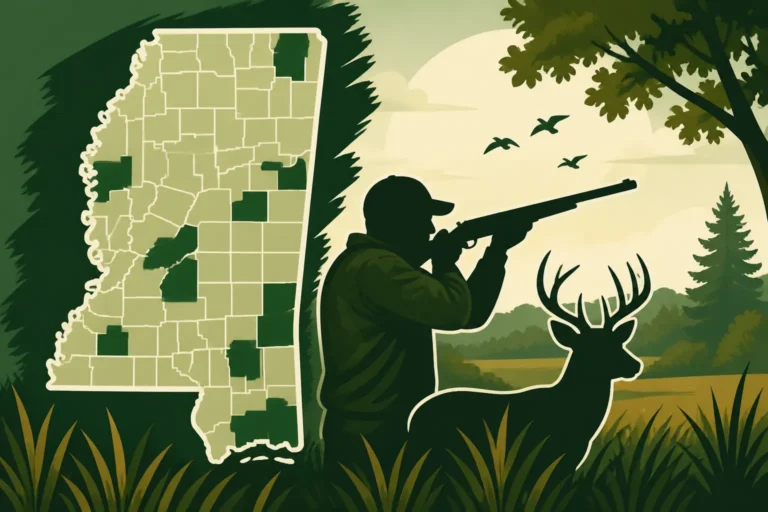
The thrill of the hunt in Mississippi is undeniable, but for many of us, access to prime private land can feel like an impossible dream, leaving us wondering where we can pursue our passion without breaking the bank or knowing the right people. This comprehensive guide is here to shed light on the incredible opportunities available on Mississippi's public hunting lands, detailing where to go, what to expect, and how to maximize your success in these shared natural treasures.
Understanding Mississippi's Public Land Landscape
It’s easy to feel overwhelmed when you think about public land hunting. Images of crowded parking lots and over-pressured game might flash through your mind, especially in a state like Mississippi where private timberlands and farmlands dominate so much of the landscape. But let me tell you, our state boasts a surprising amount of accessible hunting ground if you know where to look and, more importantly, how to approach it. This isn't just leftover, undesirable acreage; many of these areas are actively managed for wildlife and offer incredible experiences for deer, turkey, hogs, and waterfowl.
The Sheer Volume and Variety
When we talk about public hunting land in Mississippi, we're not just referring to one type of habitat. Our state is blessed with an incredible diversity, from the sprawling bottomland hardwoods of the Delta to the rolling piney woods and oak ridges of the central and southern regions. This variety means that whatever your preferred style of hunting, or whatever game species you're chasing, there's likely a public tract that fits the bill. We've got Wildlife Management Areas (WMAs) specifically managed for game, vast National Forests offering a more wild experience, and even unique opportunities like the Mississippi River Batture lands. It’s a tapestry of different landscapes, each presenting its own set of challenges and rewards. How Many Acres of Public Land Mississippi Has is a common question, and the answer is enough to keep you busy for a lifetime if you're willing to explore.
Think about it: one weekend you could be slogging through muddy sloughs in a Delta WMA, chasing a wary whitetail buck through flooded timber. The next, you might be calling a gobbler from a hardwood ridge in a national forest far from any paved road. This diversity is what makes public land hunting in Mississippi so appealing, but it also means you can't approach every piece of ground with the same strategy. Understanding the specific characteristics of each type of public land is key to developing effective tactics and setting realistic expectations for your hunt.
Overcoming the Challenges of Public Land
Let's be real, public land hunting isn't always easy. It often comes with increased pressure, diverse regulations, and the need for more intensive scouting. You won't always find manicured food plots or convenient shooting houses like on some private leases. However, these challenges are precisely what make success on public land so rewarding. The hunters who put in the extra effort, who scout thoroughly, learn the specific unit rules, and aren't afraid to walk a little further, are the ones who consistently find success.
One of the biggest hurdles is simply knowing where to go and understanding the boundaries. It's not uncommon to stumble upon a "No Trespassing" sign after following a game trail for a mile, or to realize you've crossed from a WMA into private property by mistake. This is where modern tools really shine, and we'll delve into how mapping applications can become your best friend. Another challenge is the competition, especially during peak seasons. But even heavily hunted areas hold game for those who are willing to put in the time to find overlooked pockets or hunt during less popular times. The key is to see these challenges not as roadblocks, but as opportunities to become a more skilled and adaptable hunter.
Wildlife Management Areas WMAs Your Best Bet
For many Mississippi hunters, Wildlife Management Areas, or WMAs, are the go-to for public land access. These areas are specifically managed by the Mississippi Department of Wildlife, Fisheries, and Parks (MDWFP) with wildlife conservation and public recreation, including hunting, as primary goals. This means you’ll often find better habitat management, established road systems, and clear boundaries. WMAs are typically smaller than national forests, but they often have higher game densities due to intensive management practices like prescribed burns, food plots, and timber thinning designed to benefit deer, turkey, small game, and waterfowl.
Navigating WMA Rules and Quota Hunts
Every WMA has its own unique set of rules and regulations, and trust me, they can vary significantly. What's legal on one WMA might get you a citation on another. Before you even think about hanging a stand or setting foot in the woods, you absolutely must check the current WMA regulations for that specific area. These rules cover everything from season dates and bag limits (which often differ from statewide regulations) to vehicle access, camping, and even what type of weapon you can use. Many WMAs also require a WMA User Permit in addition to your regular hunting license. Mississippi WMA Permit Requirement is a crucial detail to overlook.
Some of the most popular WMAs utilize a quota hunt system, especially for deer and turkey during prime times. These hunts are designed to limit hunter numbers and provide a higher quality hunting experience, but it means you can't just show up and hunt. You have to apply for these draws, often months in advance, and hope your name gets pulled. It can be frustrating when you don't get drawn, but the quality of hunting on a successful quota hunt can be well worth the effort. Always check the Mississippi Quota Hunt Application Window so you don't miss out! Don't forget that even on WMAs, understanding Mississippi Sunday Hunting Rules and Mississippi Public Land Hunting Hours is paramount to staying legal.
Key WMAs Across the State
Mississippi boasts a strong network of WMAs, each with its own character. For instance, in the Delta region, you'll find incredible bottomland hardwood tracts like Malmaison Wildlife Management Area, known for its healthy deer herd and excellent waterfowl opportunities. Further south, areas like Copiah County Wildlife Management Area offer more rolling terrain and pine timber, providing a different type of deer and turkey habitat.
- Malmaison WMA: Located in the heart of the Delta, this WMA is famous for its potential for big bucks and fantastic duck hunting in its flooded timber. It’s a challenging but rewarding landscape.
- Mahannah WMA: Another Delta gem, Mahannah is renowned for its deer, particularly older-age class bucks, and exceptional waterfowl hunting. It often features quota hunts to manage pressure.
- Pascagoula River WMA: Down in the southeastern part of the state, this WMA offers a vast floodplain forest system, perfect for deer, turkey, hogs, and small game. Its swampy nature can make for challenging access, but that often means less pressure.
- Copiah County WMA: Representing the central Hills region, this WMA provides a mix of pine and hardwood, offering more traditional deer and turkey hunting in rolling terrain.
- Trim Cane WMA: Situated in the Northeast, this WMA is known for its excellent small game hunting and some waterfowl opportunities, often with managed fields.
This is just a small sample, of course. Each WMA is unique, so researching specific areas through the MDWFP website or resources like Using the MDWFP Map Tool is invaluable. Getting familiar with the layout and terrain of a WMA is also crucial, especially if you're not physically able to scout it beforehand.
National Forests Vast Opportunities for Exploration
Mississippi is home to several National Forests, offering some of the largest contiguous blocks of public hunting land in the state. Unlike WMAs, National Forests are managed by the U.S. Forest Service with a broader mandate that includes timber production, recreation, and wildlife, but they often allow for a more expansive, free-ranging hunting experience, albeit with their own set of rules. These vast areas are perfect for those who enjoy a more primitive hunting style, willing to put in the miles to get away from the crowds.
Delta National Forest Bottomland Hardwood Paradise
When you talk about big woods hunting in Mississippi, the Delta National Forest immediately comes to mind. It's a truly unique place, standing as the only bottomland hardwood national forest in the nation. This dense, often wet, forest offers incredible habitat for White-Tailed Deer Across Mississippi, especially the big-bodied bucks the Delta is known for. The landscape here is characterized by towering oaks, cypress sloughs, and a labyrinth of old logging roads and drainages. Hunting here can be physically demanding, requiring hunters to navigate thick cover, standing water, and often soft ground.
But for those willing to embrace the challenge, the rewards can be substantial. The sheer size of the Delta National Forest means there are always new areas to explore, and the habitat is consistently productive for deer, hogs, and even Mississippi Waterfowl on the Mississippi Flyway in certain areas. Understanding how water levels affect deer movement is crucial here, as is being prepared for mosquitoes and mud. Many hunters utilize ATVs on designated trails to access deeper areas, but often the best spots require leaving the vehicle behind and venturing in on foot. Why Delta Forest Is the Only Bottomland Hardwood National Forest speaks to its unique ecological value and the hunting it provides. You’ll also find Sunflower WMA nestled within the Delta National Forest, a hotspot for duck hunters. Why Sunflower WMA Draws So Many Duck Hunters is a testament to its prime location.
Homochitto and Bienville Hills and Piney Woods
Moving away from the Delta, the Homochitto and Bienville National Forests offer a completely different hunting experience, reflective of Mississippi's central and southern landscapes.
- Homochitto National Forest: Located in Southwest Mississippi, the Homochitto is characterized by rolling hills, mature pine stands, and beautiful hardwood bottoms along creeks and drainages. It's a fantastic place for Wild Turkeys in Mississippi, especially if you enjoy a run-and-gun approach in the spring. Deer hunting here is also excellent, with good numbers of deer throughout the forest. Access is generally good, with a network of Forest Service roads, but getting away from the easy access points is key to finding less pressured game. Hunting the Homochitto for Turkey is a popular pursuit for many hunters.
- Bienville National Forest: Situated in Central Mississippi, the Bienville National Forest is another significant public land option, dominated by longleaf pine forests and interspersed with hardwood draws. This forest provides great opportunities for deer and turkey, as well as small game. The management here often involves prescribed burning, which creates excellent ground cover and browse for deer. Hunting the edges of recent burns or targeting the hardwood pockets can be very productive. Hunting the Bienville for Deer offers a different challenge than the Delta, with more emphasis on elevation changes and pine timber tactics.
These forests offer a chance to explore vast tracts of timber, allowing hunters to truly get lost in the experience – in a good way, of course! You’ll want to be familiar with rules regarding camping, vehicle use, and Treestand Rules on Mississippi Public Land or Ground Blind Rules on Mississippi WMAs, as these can vary slightly from WMA regulations.
Other National Forest Options
While the Delta, Homochitto, and Bienville are the largest and most well-known, Mississippi has other National Forests that provide public hunting opportunities:
- Tombigbee National Forest: Located in Northeast Mississippi, the Tombigbee offers a mix of pine and hardwoods across rolling hills. It's a solid choice for deer, turkey, and small game hunting. The terrain here can be quite diverse, from steep ridges to creek bottoms, offering varied hunting scenarios.
- DeSoto National Forest: Spanning a large area in Southeast Mississippi, the DeSoto is primarily a pine forest, with longleaf and loblolly pines dominating the landscape. It's known for its small game, deer, and turkey populations, with good opportunities for still-hunting through the open pine stands. The sandy soil and longleaf savanna habitat also provide unique challenges and beauty.
Hunting in these national forests often requires a bit more self-sufficiency, as amenities are sparse, and you might find yourself miles from other hunters. This is precisely what draws many to them – the chance for a truly wild and challenging hunt.
National Wildlife Refuges Unique and Often Regulated
National Wildlife Refuges (NWRs) in Mississippi, managed by the U.S. Fish and Wildlife Service, represent another vital category of public hunting land. These areas are established primarily for the conservation of wildlife and their habitats, and while hunting is often allowed, it's typically under a much stricter set of rules and sometimes through a limited permit system. NWRs are often critical for migratory waterfowl and endangered species, so their regulations reflect that focus.
Panther Swamp and Yazoo NWRs Waterfowl and Deer Havens
In Mississippi, many of our NWRs are found within the Delta, playing a crucial role in providing wintering grounds for waterfowl along the Mississippi Flyway. These areas often comprise vast tracts of flooded timber, cypress swamps, and agricultural fields, making them prime destinations for duck hunting and big game.
- Panther Swamp National Wildlife Refuge: This refuge, located in the Delta, is a prime example of a multi-species NWR. It's a haven for migrating waterfowl, offering exceptional duck hunting in its greentree reservoirs and natural sloughs. It's also known for producing some truly massive White-Tailed Deer Across Mississippi bucks due to its rich habitat and often limited public access, which allows deer to reach older age classes. Panther Swamp often employs quota hunts for deer to manage harvest and pressure. Panther Swamp Refuge Quota Hunts means you'll need to apply, but the potential reward is high.
- Yazoo National Wildlife Refuge: Another significant NWR in the Delta, Yazoo NWR is recognized for its importance to migratory birds, but also offers hunting opportunities for deer, waterfowl, and Feral Hogs Across Mississippi. Similar to Panther Swamp, hunting here is closely regulated, often with specific units and seasons, and sometimes requiring special permits or draws.
These refuges offer fantastic hunting, but they demand careful attention to the rules. Don't assume anything; always check the specific refuge's regulations directly with the U.S. Fish and Wildlife Service or the refuge office before planning your trip.
Understanding NWR Permit Systems
The most critical aspect of hunting National Wildlife Refuges is navigating their permit systems. Unlike National Forests, where general state licenses often suffice, NWRs frequently require special refuge-specific permits. These might be general annual permits, or more commonly, specific permits for quota hunts. The application process for these permits can involve specific deadlines, lottery drawings, and sometimes even fees.
The idea behind these systems is to control hunter density, minimize disturbance to other wildlife, and ensure a sustainable harvest. It's a small inconvenience for the chance to hunt in some of Mississippi's most pristine and wildlife-rich environments. Make sure you understand:
- Application Deadlines: Miss these, and you're out of luck for the season.
- Hunt Units: Many NWRs are broken into specific hunt units, each with its own rules and access points.
- Weapon Restrictions: Certain weapon types might be restricted or allowed only during specific seasons.
- Access Rules: Some areas might be walk-in only, others might allow ATVs on designated trails, and some might require boats.
Always treat NWRs with extra respect for their conservation mission. Your actions directly impact the ability of these areas to continue supporting diverse wildlife populations.
Mississippi River Batture Lands The Wild Frontier
For the truly adventurous hunter, Mississippi offers access to the expansive and untamed lands of the Mississippi River Batture. The "batture" refers to the land between the river's main channel and the levee, a dynamic and ever-changing landscape shaped by the river's floods and currents. This is public land in its most raw form, often wild, remote, and certainly not for the faint of heart. But for those willing to brave the elements and the unique challenges, the batture can offer incredible hunting for deer, Feral Hogs Across Mississippi, and waterfowl, often with very little hunting pressure.
Accessing the Batture Water and Levee Roads
Accessing the batture is often the first significant hurdle. Because it's situated between the river and the levee, much of the batture is only accessible by boat. This means launching into the Mississippi River or one of its tributaries and navigating to your chosen hunting spot. This can be treacherous, especially when water levels are high or currents are strong. A reliable boat, strong navigation skills, and extreme caution are absolute necessities.
However, some areas of the batture can be accessed via roads that run along the land side of the levee, or even through private land with permission from the landowner to cross. These access points are fewer and farther between, and often require a 4×4 vehicle, especially after heavy rains. It’s critical to understand that even if you can access the batture via a private road, you still need to ensure you are on the public batture land once you start hunting. Mississippi River Batture Public Access is a subject that demands careful research, as specifics can change with river conditions and land ownership. Always be aware of fluctuating river levels; what might be dry ground one day could be under several feet of water the next.
The Untamed Nature of Batture Hunting
Hunting the batture is a completely different ballgame from a managed WMA or a well-known National Forest. This is truly wild country, where nature dictates the terms. The habitat is typically dense bottomland hardwoods, river cane thickets, and willow brakes, all constantly being altered by the river. Game animals here are accustomed to frequent disturbances from floods and the river itself, making them incredibly wary and resilient.
- Adapt to Conditions: River levels are your biggest factor. High water can push deer and hogs onto higher ground or smaller islands, concentrating them in specific areas. Falling water can expose new mud flats and browse.
- Navigation is Key: Without a GPS mapping app, navigating the batture can be a nightmare. Sloughs, cutoffs, and flooded areas can quickly disorient even experienced woodsmen.
- Safety First: Hunting the batture means being prepared for anything. This includes snake encounters, getting stuck in mud, dealing with extreme weather, and being truly self-sufficient. There's often no cell service, and help can be a long way off.
- Unpredictable Game: Deer and hogs in the batture are constantly on the move, adapting to their environment. Scouting might reveal fresh sign one day, only for the area to be completely different a week later due to water changes.
Despite the challenges, batture hunting offers an unparalleled sense of adventure and the potential for an unforgettable hunt in a truly wild setting. It’s an experience that tests your woodsmanship and rewards your persistence.
Utilizing Digital Tools for Public Land Success
In today’s hunting world, digital mapping and information tools are no longer a luxury; they are an absolute necessity, especially when navigating the complexities of public hunting land in Mississippi. Gone are the days of relying solely on paper maps and compasses, though those certainly still have their place as backups. Modern apps and online platforms provide an incredible advantage, helping you identify boundaries, scout remotely, and understand game movement.
Mapping Apps for Boundary Identification
One of the most critical uses for digital tools on public land is boundary identification. Nothing ruins a hunt faster than inadvertently trespassing onto private property. Mapping applications like onX Hunt have revolutionized this aspect of hunting. These apps overlay property ownership data onto satellite imagery, clearly showing public land boundaries, private property lines, and even landowner names in many cases.
Imagine this scenario: you're walking a deep creek bottom in a National Forest, following what looks like a promising game trail. With onX Hunt on your phone, you can quickly glance at your screen and see that the creek makes a hard bend, and just beyond that bend, the land switches from public to private. This allows you to stay legal and avoid potential conflicts. These apps also allow you to:
- Mark Waypoints: Drop pins for stand locations, rub lines, scrape areas, water sources, and even your vehicle.
- Track Your Movement: See exactly where you’ve walked, helping you understand how far you’ve gone and how to get back.
- Analyze Topography: Understand elevation changes, creek drainages, and potential travel corridors.
- Identify Habitat: Use satellite imagery to spot different timber types, clear cuts, or old fields that might hold game.
Being able to clearly see where public land ends and private land begins gives you immense confidence and ensures you're always hunting legally. It's an indispensable tool for public land hunters.
Researching Opportunities with Online Resources
Beyond real-time mapping in the field, online resources are incredibly valuable for pre-season scouting and research. Websites like GoHunt offer detailed information, not just for Western big game, but also for general hunting insights and strategic planning. While their primary focus might be different, the principles of thorough research and understanding a unit's characteristics are universal.
For Mississippi, the MDWFP website is your absolute best friend. They provide:
- WMA Maps and Regulations: Detailed maps, season dates, and specific rules for each WMA.
- Harvest Data: Sometimes, you can find harvest statistics for certain WMAs, giving you an idea of game populations and success rates.
- News and Updates: Alerts about CWD zones, season changes, or area closures.
- Interactive Maps: Tools to help you visualize public land locations across the state.
Combining MDWFP resources with a powerful mapping tool like onX Hunt allows you to create a robust hunting plan. You can identify potential public land tracts, research their specific regulations, scout them virtually, and then use your app in the field to navigate confidently. This synergy of tools greatly enhances your chances of success and makes public land hunting much more approachable.
General Strategies for Public Land Hunters
Hunting public land successfully in Mississippi requires a different mindset and approach than hunting private land. It often boils down to preparation, persistence, and the ability to adapt. While every piece of public land is unique, some overarching strategies can significantly improve your odds of success.
Scouting Before Season Opens
This is probably the single most important piece of advice for any public land hunter. You simply cannot expect to show up on opening day to unfamiliar woods and consistently find success. Scouting, both remotely and in person, is paramount.
- Remote Scouting: Start with your mapping apps (like onX Hunt) and the MDWFP website. Look for features that tend to concentrate game: pinch points, funnels between timber blocks, creek crossings, ridge saddles, and varying habitat types like the edge of a clear-cut next to mature timber. Identify potential bedding areas and feeding areas. Scouting Mississippi Public Land Before Season is a step you simply cannot skip.
- On-the-Ground Scouting: Once you've identified promising areas, hit the woods well before the season. Look for fresh deer sign like rubs, scrapes, and tracks. Find turkey roosting areas, strut zones, and dusting bowls. Pinpoint hog rooting activity. Pay attention to food sources – what acorns are dropping, what browse is available, what crops are in adjacent private fields? During pre-season, you're not just looking for game; you're looking for where the game wants to be when the season opens. This includes identifying entry and exit routes that minimize disturbance.
- Trail Cameras (Where Allowed): If Trail Camera Rules on Mississippi Public Land permit, deploying cameras can give you invaluable intel on deer movement patterns, preferred travel corridors, and even specific animals using an area. Just be sure to check the rules, as many WMAs have restrictions.
Scouting isn't a one-and-done activity; it's an ongoing process. Conditions change, food sources deplete, and game patterns shift throughout the season.
Finding Unpressured Areas
One of the biggest frustrations on public land is dealing with other hunters. While you can't eliminate competition, you can certainly mitigate it by finding areas that see less pressure. This often means doing what others aren't willing to do.
- Walk Further: This is the golden rule of public land. Most hunters won't venture more than a quarter to half-mile from a road or parking area. If you're willing to put in a mile or two (or more!), you'll often find significantly less pressure and more undisturbed game. Finding Ground That Sees Fewer Hunters is often a matter of literally walking past others.
- Hunt Difficult Terrain: Don't shy away from swamps, steep ridges, thick briar patches, or areas with standing water. These are natural deterrents for many hunters, but often hold game that seeks refuge in these challenging environments.
- Utilize Water Access: If a WMA or National Forest has river, creek, or slough access, consider using a canoe, kayak, or small boat to get to areas unreachable by foot or vehicle. This is especially effective in many Delta WMAs and the batture lands.
- Hunt During Off-Peak Times: Opening weekend for gun season in Mississippi can feel like a carnival. If you can hunt during weekdays, during less popular parts of the season, or when the weather is less appealing (e.g., a drizzly, cold day), you'll often have the woods to yourself.
- Scout Smarter, Not Just Harder: Don't just follow the most obvious trails. Look for subtle terrain features, small isolated thickets, or overlooked pockets that deer and turkey might use as sanctuaries. Often, these spots are just a few hundred yards from a heavily trafficked area but feel worlds away.
Respecting the Resource and Other Hunters
Finally, a crucial part of public land hunting is practicing good stewardship and showing respect for the land and your fellow hunters. This ensures that these opportunities remain available and enjoyable for everyone.
- Leave No Trace: Pack out everything you pack in. Don't litter. Remove your treestands, blinds, and trail cameras according to regulations.
- Respect Boundaries: Double-check your location, especially near private land interfaces. If you suspect you've crossed a line, back out immediately.
- Be Considerate: Give other hunters ample space. If you encounter another hunter already set up in a spot, quietly back out and find another area. Avoid sky-lining yourself or making unnecessary noise.
- Follow All Regulations: Ignorance of the law is not an excuse. Know the specific rules for the area you are hunting, including weapon restrictions, bag limits, and hunter orange requirements.
- Report Violations: If you witness poaching or illegal activities, report them to the MDWFP. Protecting the resource is everyone's responsibility.
- Share Knowledge Responsibly: While it's great to share tips, consider the impact of publicly revealing your secret spots. Encourage others to do their own scouting and earn their success.
Public hunting land in Mississippi is a treasure, offering diverse opportunities for every type of hunter. By understanding the different types of public lands, utilizing modern tools, and adopting effective strategies, you can unlock incredible hunting experiences in the Magnolia State.
Disclaimer
This article is for general informational purposes only and does not constitute professional advice. Laws, prices and regulations vary by location and change over time. Consult a qualified professional for guidance on your specific situation.