Working River Cane Thickets for Deer
There’s nothing quite like the feeling of watching a big Mississippi buck vanish into a dense thicket, leaving you wondering if you’ll ever lay eyes on him again. River cane thickets, those seemingly impenetrable walls of green, are notorious for swallowing deer whole, making them one of the most frustrating yet rewarding habitats to hunt. This guide is all about equipping you with the knowledge and tactics to successfully unravel the mysteries of these cane brakes and bring that elusive whitetail home.
The Allure of River Cane Thickets for Mississippi Deer
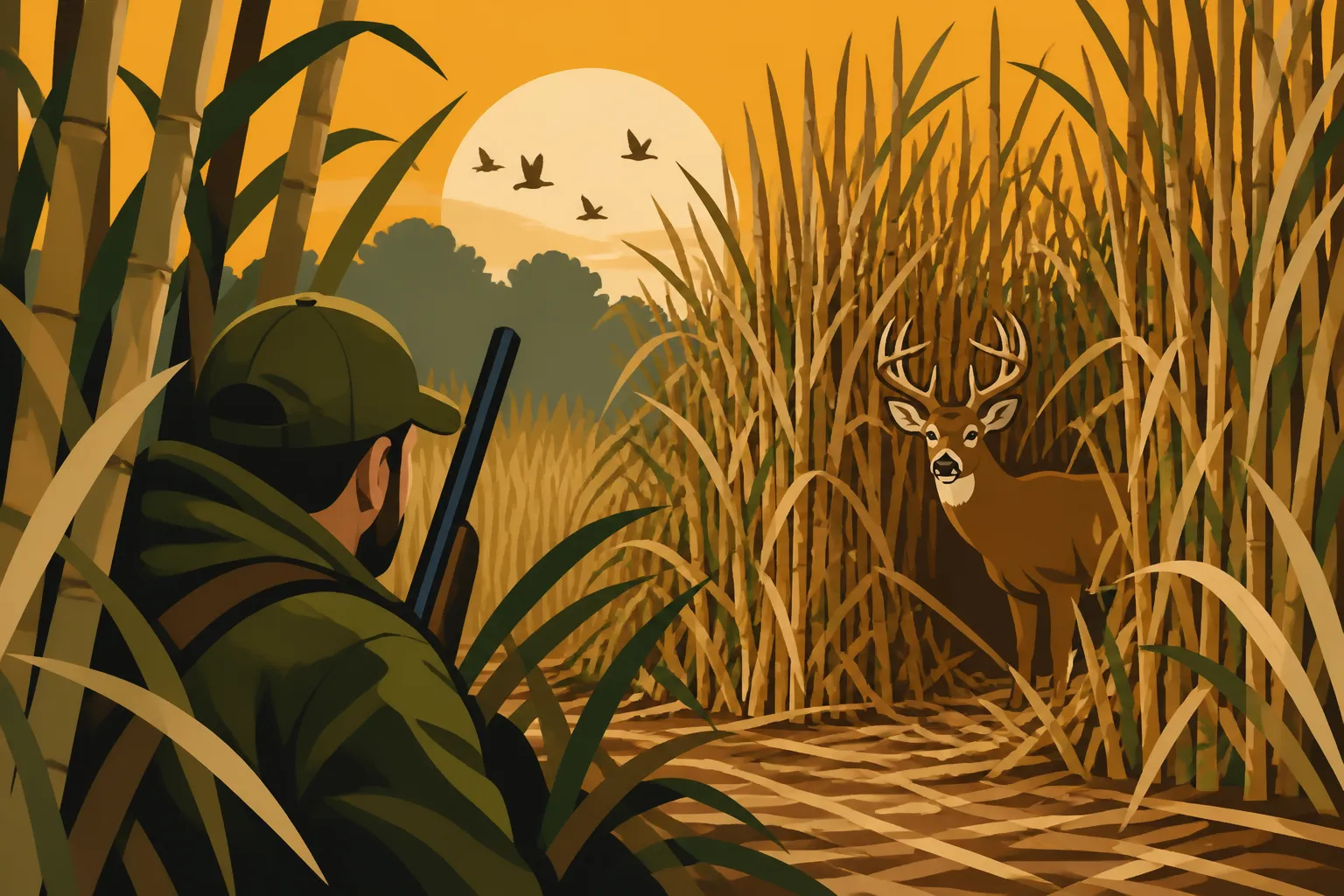
River cane (often referred to simply as cane) isn't just a plant; it's an ecosystem unto itself, and for a whitetail deer, it's a five-star hotel with an invisible shield. These dense stands of bamboo-like growth provide everything a deer needs to thrive, making them prime targets for hunters willing to put in the work. Understanding why deer gravitate to these areas is the first step in figuring out how to hunt them effectively.
Unparalleled Cover and Security
Imagine a place where no predator, human or otherwise, can easily penetrate. That's a river cane thicket from a deer's perspective. The sheer density of the stalks, sometimes growing so close together you can barely squeeze through, creates an almost impenetrable fortress. This extreme cover offers deer a sense of security unmatched in more open timber. Bucks, especially older, wiser ones, know that when they slip into a cane brake, they become incredibly difficult to find.
They'll bed down deep within these thickets, feeling the wind currents, listening for approaching dangers, and knowing that any movement towards them will be slow and noisy for a hunter. This cover isn't just for bedding; it’s a sanctuary during hunting pressure. When the woods fill with hunters on opening weekend, or during the peak of the rut in the Delta Unit, deer will retreat to these areas, waiting for the pressure to subside. These thickets act as natural deer refuges, allowing them to ride out intense hunting periods almost undisturbed.
Abundant Forage and Water Sources
While the cane itself isn't a primary food source for deer year-round, its presence often signifies a broader habitat rich in resources. Young cane shoots can be browsed, but more importantly, these thickets usually grow in fertile, low-lying areas. This means they are often adjacent to, or intertwined with, other crucial food sources like hardwoods dropping acorns, agricultural fields, or areas with diverse undergrowth. Deer can step out of the dense cane directly into a buffet.
Furthermore, river cane thrives in moist environments, typically along river bottoms, creek drainages, or sloughs. This proximity to water is a huge draw for deer, especially during warmer Mississippi hunting seasons. A deer might bed down in the cool, shaded depths of a cane thicket, only needing to move a few yards to get a drink from a nearby creek or slough. This combination of security, food access, and water makes river cane thickets ideal deer habitat, particularly in areas like the Mississippi River Batture Public Access lands where vast cane fields intersperse with flooded timber and open water.
Decoding Deer Movement in Cane
Hunting river cane effectively isn't about crashing through it; it's about understanding how deer use it. Just because it looks like an impenetrable jungle doesn't mean deer move randomly. They are creatures of habit, even in the thickest cover, and learning to read their travel patterns is key to success.
Identifying Primary Travel Corridors
Even in the densest river cane, deer create trails, or "tunnels." These aren't always wide, easy-to-spot paths like those in an open hardwood forest. Sometimes they're barely visible, requiring you to get down on your hands and knees to spot the subtle depressions in the leaf litter or the smoothed-down cane stalks. Deer will push through the least resistant path, creating narrow lanes that only they (and perhaps a determined hunter) can navigate.
These primary travel corridors often connect bedding areas deep within the cane to feeding areas on the edges, or to water sources. Look for where the cane appears to be "bent back" or where there's a distinct, low canopy tunnel formed by repeated deer passage. Finding these is like finding the arteries of the thicket; they tell you exactly where deer are concentrating their movement. Pay close attention to points where multiple trails converge, forming natural funnels within the cane itself. During the late season, when other food sources diminish, these trails leading from cane to whatever "Late-Season Food Sources for Mississippi Whitetails" are available become even more pronounced.
Scouting the Edges and Pockets
While deer spend a lot of time inside the cane, they often enter and exit along its edges. These transition zones—where cane meets open woods, a field, or a clear-cut—are critical scouting spots. Look for rubs and scrapes along the perimeter, especially where a distinct trail emerges from the cane. Bucks often use these edges to stage before stepping out into more open areas, or to check for does during the rut.
Also, be on the lookout for "pockets" within the cane. These are small, slightly less dense areas, perhaps a tiny clearing caused by a fallen tree, or a natural break in the growth. Deer might use these pockets as mini-staging areas, or even small bedding spots if they feel secure. Any deviation from the uniform density of the cane is worth investigating. A good pair of binoculars can help you pick apart the edges from a distance, looking for subtle movements or fresh sign.
Leveraging Technology for Insight
In challenging terrain like river cane, technology can be a huge advantage. Before you even set foot in the woods, use an app like GoHunt to pore over aerial imagery. The high-resolution satellite views can often reveal subtle differences in cane density, small clearings, or even faint trails that are impossible to spot from the ground. Look for areas where the cane transitions into other habitat types, such as bottomland hardwoods or agricultural fields, as these are often hot spots for deer movement.
When you're on the ground, use GoHunt's GPS features to mark every rub, scrape, trail, and bedding area you find. This creates a detailed map of deer activity that helps you build a picture of their movement patterns. You can also drop pins for potential stand locations or strategic entry/exit routes. The ability to use offline maps is particularly valuable in remote areas of Mississippi where cell service can be spotty. Planning your approach with GoHunt by identifying potential entry routes through standing soybeans or mapping out your approach to a likely bedding area in the cane before you ever leave your truck can drastically increase your chances of success and minimize disturbance.
Strategic Approaches to Hunting River Cane
Hunting river cane requires a shift in mindset and tactics. You can’t hunt it like open timber. It demands patience, stealth, and sometimes, a bit of strategic aggression.
The Art of Slow Still-Hunting
Still-hunting in river cane is less about covering ground and more about painstakingly picking apart the cover one step at a time. This isn't your grandfather's casual stroll through the woods. You need to move slowly, often taking minutes to move just a few yards. Your goal is to see the deer before it sees you, which means moving at a snail's pace, pausing frequently, and using your eyes and ears constantly.
Focus on listening for subtle sounds: a flicking ear, a quiet rustle, a deer shifting its weight. Look for horizontal lines (a deer's back) in a vertical world (the cane stalks). Utilize every available opening, no matter how small, to scan ahead. Breaking twigs and crunching leaves are almost unavoidable, so accept it, but try to do so deliberately and then pause for a long time afterward, allowing any deer to settle. Pay particular attention to the wind and thermals in Delta Bottomland, as a shifting breeze can give your scent away in an instant. This method is incredibly demanding, both physically and mentally, but when it works, it's one of the most rewarding ways to bag a deer.
Strategic Stand Placement on the Perimeter
While still-hunting in the cane can be effective, often the most successful strategy is to hunt the edges and transition zones. Deer frequently use the dense cane for bedding and security, but they must eventually move out to feed or water. This creates prime opportunities for stand placement. Look for trails that clearly lead into and out of the cane, especially those connecting to known food sources, water, or pinch points in the terrain.
Setting up a treestand overlooking such a trail, or on a field edge where deer are likely to emerge from the cane, can be highly productive. Make sure your stand is positioned to take advantage of prevailing winds, so your scent blows away from the deer's approach. If treestands aren't feasible due to dense canopy or private land restrictions, using a ground blind on Mississippi public land can be an excellent alternative, allowing you to set up directly on a cane edge or a well-used trail, offering concealment and a steady rest for your shot. The key is to ambush deer as they use these natural travel routes at dawn or dusk.
Executing Small, Controlled Drives
For particularly dense blocks of river cane that are difficult to still-hunt or stand-hunt, a small, controlled deer drive can be an effective tactic. This is not about a chaotic free-for-all; it requires careful planning, clear communication, and a small group of hunters (2-4 people works well). The idea is to have one or two "pushers" slowly, methodically, and quietly move through the cane, while "standers" are strategically positioned on known escape routes or trails leading out of the thicket.
The pushers should move with the wind, making just enough noise to encourage deer to move, rather than spook them into a full sprint. The standers must be ready, alert, and wearing their Mississippi Blaze Orange Requirements for safety. These drives are most effective when you know the general size and shape of the cane thicket and have identified key exit points beforehand through scouting. They can be incredibly productive for getting deer on their feet from seemingly impenetrable cover, pushing them towards patiently waiting hunters. This is a tactic often employed for deer drives with three or four hunters on smaller private tracts.
Essential Gear and Safety in Dense Cover
Hunting river cane is not for the ill-prepared. The dense, often thorny environment, coupled with the potential for hidden dangers, means you need to carry the right gear and prioritize safety above all else.
Clothing, Footwear, and Navigation
Your clothing needs to be tough and quiet. River cane stalks, especially when dry, can be brittle and noisy, and they'll snag easily. Choose durable, brush-resistant fabrics that won't make a lot of noise as you move. A good pair of waterproof, ankle-supporting boots is non-negotiable. You'll be traversing uneven, often muddy or wet ground, and possibly crawling through dense vegetation. Protect your feet and ankles.
Navigation in dense cane can be incredibly disorienting. What seems like a straight line from above can quickly turn into a maze on the ground. A reliable GPS unit or a smartphone with a pre-downloaded mapping app like GoHunt (which allows for offline use) is absolutely critical. Always mark your starting point and periodically drop waypoints as you move. A physical compass and map, laminated and kept dry, should serve as a backup. Never rely solely on a single navigation tool. Knowing your location, especially in a vast area like Where Delta National Forest Bucks Bed, can be a lifesaver.
Dealing with Unexpected Wildlife
River cane thickets, particularly those in low-lying, wet areas, are prime habitat for a variety of other wildlife, some of which can be dangerous. Snakes, particularly venomous species like cottonmouths and rattlesnakes, thrive in these environments. Always watch where you step, and consider wearing snake boots or gaiters. Never reach into dense cover without looking first.
Feral hogs are also very common in Mississippi's river bottom country and love the cover provided by cane. While they generally prefer to avoid confrontation, a sow with piglets can be aggressive if cornered. Be aware of your surroundings, listen for their distinctive rooting noises, and know how to react if you encounter them. Understanding Mississippi Feral Hog Regulations is crucial, as you may have an opportunity to harvest one while deer hunting.
Visibility and Communication
Even when still-hunting solo in dense cover, wearing at least some blaze orange is a smart move, exceeding the minimum Mississippi Blaze Orange Requirements for safety. If you're involved in a small drive, blaze orange is mandatory for all participants. The dense cane can severely limit visibility, making it easy to lose track of hunting partners or mistake movement for game.
Carrying a reliable two-way radio (for short-range communication during drives) or having a whistle for emergencies is also highly recommended. Before heading into any dense cane area, always inform someone of your hunting plans, including your exact location and expected return time. This simple step can make a critical difference if an accident occurs and you need assistance, especially in remote areas with limited access. Always ensure your Mississippi Legal Firearms for Deer Hunting are carried safely and responsibly, especially in dense cover where a stray branch could cause an accidental discharge.
| Hunting Method | Pros in River Cane | Cons in River Cane | Best Use Case |
|---|---|---|---|
| Still-Hunting | Extremely stealthy, intimate knowledge of deer movement, covers specific areas thoroughly. | Very slow, physically demanding, easy to get disoriented, limited visibility, requires immense patience. | Solo hunters targeting specific bedding areas, low-pressure situations, calm winds. |
| Stand Hunting | Provides elevated view (if possible), allows for scent control, less intrusive than still-hunting, can be very effective on travel corridors. | Limited mobility, reliant on deer using specific trails, difficult to set up deep within thicket, requires significant scouting. | Targeting transition zones, field edges, known funnels, or water sources where deer emerge from cane. |
| Small Drives | Effective for pushing deer out of impenetrable bedding, can be used to cover larger cane blocks. | Requires multiple hunters, precise communication, safety critical, can spook deer out of the area if not executed well. | Contained cane blocks with known exit routes, on public lands during periods of high pressure, for groups of 2-4 hunters. |
Disclaimer
Hunting is an inherently dangerous activity. This guide provides information for educational purposes only and is not a substitute for professional training, adherence to all local, state, and federal laws, and personal responsibility. Always prioritize safety, respect wildlife, and obtain all necessary licenses and permits before hunting. Conditions and regulations can change, so always consult the latest Mississippi Department of Wildlife, Fisheries, and Parks (MDWFP) guidelines.